Self-Storage Door Replacement: What Re-Dooring a Facility Involves
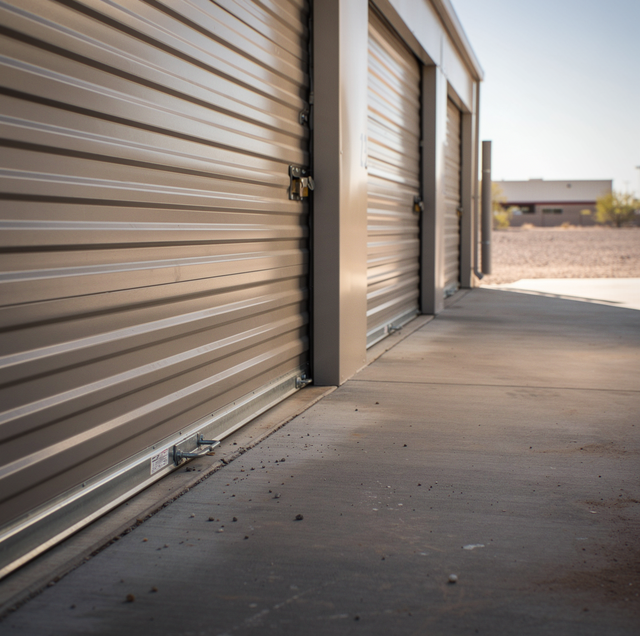
A storage building shows its age at the door line long before the roof, or the paving does. Sun-faded curtains, dented bottom bars, guides worn bright where doors have been forced up crooked for years: a prospective tenant walking the drive aisle takes all of that in within a few seconds and prices the property accordingly, whatever the office looks like.
Re-dooring a whole building is a different order of work from swapping one curtain, and it arrives with its own sequence. Your unit, your color, your hardware, and the schedule you run are all set in the first week, before a single door comes off, and the choices you make there follow your property for the next twenty years and more.
The Line Between Replacing One Door and Re-Dooring a Building
Janus International runs door replacement as a program in its own right, with a scope running from doors and hallways through installation and automation to facility restoration. You want that vocabulary in hand before you read the first bid.
One failed curtain is a part swap on one opening. A re-door is a batch: openings are counted and measured, one color is chosen for your whole property, crews are assembled and dispatched, and the old steel is hauled off your site.
The Survey That Has to Happen Before Anything Is Ordered
Nothing gets ordered off a walk-through. A survey counts openings by size across every building, measures clear width and height row by row, and records what sits behind each curtain: jamb condition, guide wear, the header, and the slab at the threshold.
Older properties drift. A row built in one decade and an addition built in another can differ by an inch, and an inch is the difference between a stock door and a custom size. Your survey sheet is the document an installer prices from, and a thin one buys you a thin bid.
Steel Gauge, Color Count and the Warranty Behind the Finish
Four products cover the self-storage side of the catalog: the 650 Series, the 750 Series, the 850 Series and a swing door. The 650 and 750 are formed from 26-gauge galvanized steel and offered in 36 colors under a 40-year limited paint warranty, a long horizon for a finish that sits in your drive aisles under full sun. Finish, though, is only one of the things that ages on a row. Abrasive grit works on a curtain that rolls and unrolls against its guides several times a week, and a bottom bar takes the truck that backs into it, so a property with high-turnover rows often replaces curtains long before the paint on them gives you trouble.
Color is the choice that lasts longest. One code written down on the survey sheet becomes the match every patch replacement on your property has to hit for the next decade or more.
Repainting an aging door in place looks like the easy alternative. A repaint changes the look of a row without changing what is wearing behind it, and it adds weight to the curtain. A curtain is counterbalanced for the weight it left the factory carrying, and every coat you add to it moves the door away from the balance a technician set.
Where Does a Swing Door Earn Its Place Instead of a Roll-Up?
A swing door is the answer where the geometry of a space works against a roll-up. It suits facilities with limited space, and the hallway version fits units as small as 5x5 or 5x7. Each swing door carries X-bracing across the leaf to prevent both flexing and door racking, the slow distortion that stops a door latching square. They arrive pre-assembled, and each one opens a full 180 degrees.
Two consequences follow for a re-door. A swing leaf needs clear floor arc, so a unit mix that puts two of them facing each other on a narrow run gives you leaves meeting in the middle. The self-storage doors are offered to an accessibility specification; whether a given opening you own has to meet it is a question for the designer working your building, and it belongs in your drawings well before the order goes in.
Sequencing a Re-Door Around Units That Are Still Rented
The units that are standing empty when the crew arrives are the free ones, and on a healthy property, that is a small fraction of your door count. Everything else belongs to a tenant with a lease and a lock, which turns the schedule you keep into the real constraint. You phase a re-door by row or by building, publish the dates in advance, and give your tenants on the affected run written notice with a window in it, so a tenant who wants to be present can be.
Sequencing follows the crew's productivity more than the site map. A team pulls and hangs a run of identical openings faster than a scattered handful, so crews work a full row instead of hopping between buildings, and your vacant units on that row change out first while notice runs on the rented ones. Drive aisles have to stay open for the truck bringing new curtains and the one taking old ones away, which on a tight site means closing one aisle at a time.
Rope off the run of units being changed out and keep tenants out of that aisle while a door is off its guides, because an unhung curtain can slip and fall the full height of the opening.
Move-outs are worth watching while the work runs. A unit that empties mid-project can be pulled forward into the current phase with no notice period attached, and a manager tracking your vacancy list against the crew's row order can recover days that way. Your gate hours stay as they are; the door line moves under them.
The Hardware a Facility Inherits With the Order
Hardware arrives with the door and stays with your building. The brackets, gears, chains, and tensioners sit together in one place on the door. That tells you where your parts are, and it is not an invitation to touch any of them.
The tension behind that convenience is real. Commercial doors in the same catalog come with spiral torque tubes, tension-holding devices, and bracket systems with adjustment, and a storage roll-up on your rows carries the same principle in miniature: a spring wound to lift the curtain and held under load throughout the whole travel. Setting or re-tensioning that counterbalance is the technician installing your door's responsibility, with the curtain secured.
Stay clear of the tensioner and the barrel on any door still hanging in its brackets and leave the counterbalance to the installing technician, because a door spring holds enough stored energy to throw a loose bracket the length of a hallway.
Drive-Up Bays and Office Openings on the Same Job
Your storage property is rarely all storage doors. The drive-through bay behind the office, the shop opening on the maintenance building and the door on a truck-rental return are commercial openings, and the same catalog runs Series 1000, 1100, 1950, 1950 Heavy Duty, 2000, 2500, 3100, 3400 and 3652 to cover them. The survey you commission should count them too.
Ordering those for the same job as the unit doors leaves one manufacturer, one color record, and one service history behind for every opening on your site, including the ones nobody rents. That is the practical end of a re-door: a building where your door line is no longer the oldest thing a tenant sees.
Frequently Asked Questions
Crew size and phasing drive your calendar more than the door count. A single crew working one row at a time moves faster than the notice periods you have to run ahead of it, so on most occupied sites the notice schedule runs longer than the install. Ask your installer for a per-row day count and build your tenant notices backward from it.
Sometimes. Guides that are straight, sound, and matched to your new curtain stay, which is why your survey records condition opening by opening. Corrosion at the base, a guide bent by a forklift, or a jamb moved by the slab pushes it into a teardown, and the bid you take should show both cases separately.
The latch is part of your door assembly and leaves with it, so your new curtain arrives with new latch hardware. A tenant's padlock stays theirs throughout, which is why your notice carries a date and a window: the tenant chooses what to do about the lock, and your office records that answer before the crew reaches the row.
Phases, on almost any occupied property. A whole-site changeover needs every one of your tenants noticed in the same week and every aisle open at once, and it leaves you no room when a truck is late, or an opening turns out to need jamb work. Building at a time keeps your notice volume manageable and lets your crew carry what it learned on your first building into the next one.
Cycle count. A 5x5 near your office turns over several times a year while a 10x30 at the back holds one for a decade. Every move-in and move-out runs the curtain end-to-end, and grit drawn into the guides finishes the job on your busiest rows.
Usually, with one stated exception to weigh first. The 650 and 750 Series share the 26-gauge galvanized steel, the 36-color palette, and the 40-year limited paint warranty, so your property on either can be patched and extended from one order sheet for years. The 850 Series sits outside that palette: it is formed from 24 gauge steel and comes in Satin White only. That makes it a deliberate pick where you really want the heavier gauge, and mixing it into a colored property leaves your own site carrying two finish standards from that day on.
A door-line survey across all your buildings is the first real step of a re-door — openings counted and measured by size, guide and jamb condition recorded, and a phased order sheet that your own crew schedule can then be built around. Quality Overhead Door serves Mesa and the East Valley. ROC #310144. Call (480) 838-8850.
