Garage Door Closes Then Opens Right Back Up? What’s Wrong
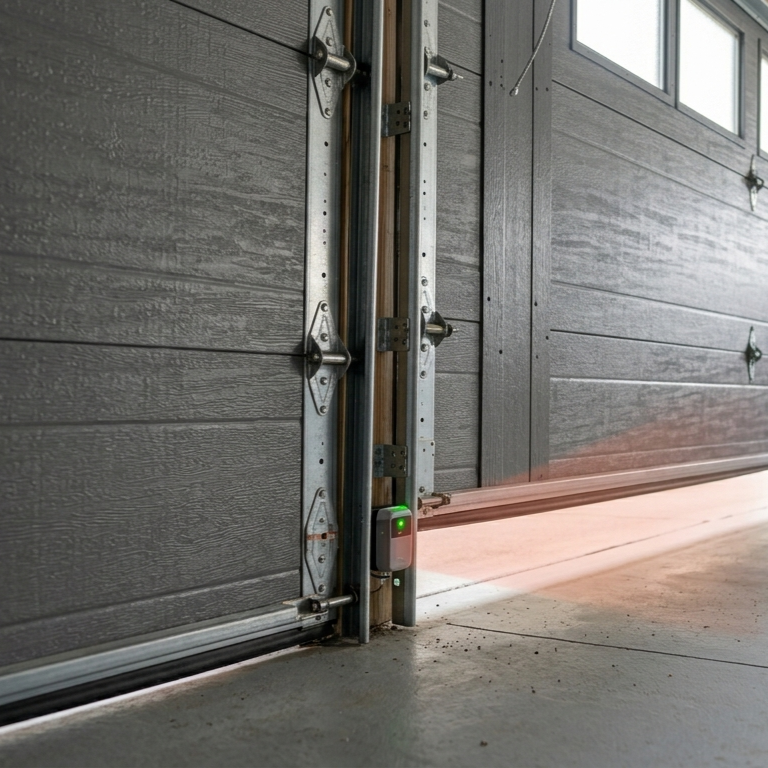
Quick Answer: A garage door that closes and then immediately opens back up is triggering its safety-reverse system. The opener is designed to reverse the door if its photo-eye sensors detect something in the doorway or if the door meets unexpected resistance while closing. Common causes are misaligned, dirty, or blocked sensors; a close-force setting that's too sensitive; resistance from a binding track, worn rollers, or a weakening spring; or an obstruction. The door isn't malfunctioning so much as protecting against closing on something. The fix is identifying which safety condition is being triggered — usually starting with the sensors — rather than overriding the reverse.
There are few things more aggravating than watching the garage door close, only for it to reverse and head right back up the moment it touches down. It feels like the door is fighting you. In reality, the opener's safety system is reversing the door because it senses a reason not to stay closed — and tracking down that reason is how you get the door to stay put.
The Safety Reverse, Explained
Every modern garage door opener has a safety-reverse function, and a door that closes and then immediately reopens is that function activating. It works off two inputs. The photo-eye sensors near the floor on each side of the door project a beam across the opening; if the beam is broken or the sensors can't see each other, the opener reverses the door. The opener also senses the force the door applies as it closes and seats; if it encounters more resistance than expected, it treats it as an obstruction and reverses. When either input says "something's wrong," the door goes back up.
So the door reopening isn't random — it's the opener concluding it shouldn't stay closed. The job is to figure out which input is triggering.
Cause One: The Safety Sensors
The photo-eye sensors are the most frequent culprit. They have to be aligned and able to see each other across the opening, and several things disrupt that. A sensor can get bumped out of alignment, so the beam misses its partner. Dirt, dust, or spiderwebs on a lens can block the beam. Clutter, a trash can, or any object partly breaking the beam near the floor, triggers it. Even direct sunlight on a sensor can interfere at certain times of day. When sensors are the cause, the door usually reverses right after starting to close or as it nears the floor, and there's often a blinking light on the opener or the sensor units signaling the fault — even with the doorway empty.
Cause Two: Force Settings and Resistance
If the sensors are fine, the cause may be the door meeting resistance that the opener reads as an obstruction. A close-force setting that's too sensitive makes the opener overreact to the door simply seating against the floor. Mechanical resistance — a binding or bent track, worn or sticking rollers, or a weakening spring that makes the door harder to move smoothly — can also register as an obstruction and trigger the reverse. In these cases, the door often feels rough, heavy, or noisy as it moves, and it may reverse at a particular point in its travel where the resistance occurs.
| Clue | Likely cause |
|---|---|
| Reverses with empty doorway, light blinking | Photo-eye sensors |
| Reverses right as it touches the floor | Force setting or floor obstruction |
| Door is rough, heavy, or noisy first | Track, roller, or spring resistance |
| Reverses only in afternoon sun | Sunlight on a sensor |
| Object or clutter near the door | Blocked sensor beam |
Cause Three: An Actual Obstruction
Sometimes the safety system is simply right. An object in the doorway, debris at the threshold, or something resting against the door can break the sensor beam or physically stop the door, causing it to reverse. Before assuming a fault, it's worth a look around the bottom of the door and the sensor path — the cause may be as simple as a stored item that drifted into the beam or a bit of buildup where the door meets the floor.
How to Narrow It Down
Start with the sensors, since they're the most common cause and the easiest to check. Make sure both sensor lenses are clean, that the units are aligned and pointing at each other, and that nothing is blocking the beam. A blinking sensor or opener light strongly points here. If the sensors check out and the doorway is clear, shift attention to resistance: notice whether the door feels heavy or moves roughly, which suggests a track, roller, or spring problem, and whether it reverses at a consistent spot. A door that's hard to lift by hand points toward a spring issue in particular.
If the door reverses because a spring is weakening or the door is hard to move, don't disable the safety reverse or force the door closed to get around it. The safety reverse is protecting you, and a door with a failing spring can become a falling hazard. Spring repairs involve extreme tension and are a job for a trained technician, not a DIY fix.
Why Overriding It Is the Wrong Move
When a door won't stay closed, some people try to force it down with the wall button held or adjust the opener to ignore the reverse. This defeats the purpose of the safety system, which is responding to a genuine condition — a blocked beam, real resistance, or an obstruction. Disabling it could allow the door to close on a person, pet, or object, or force a door with a failing spring to keep operating. The correct approach is to find and fix the trigger: clean and align the sensors, clear obstructions, and have the force settings and hardware checked. That restores a door that stays closed and a safety system that still works.
Frequently Asked Questions
Because the opener's safety-reverse system is activating. It reverses the door if the photo-eye sensors detect an obstruction in the doorway or if the door encounters unexpected resistance while closing. Common triggers include misaligned or dirty sensors, an overly sensitive force setting, resistance from the track, rollers, or a spring, or an actual obstruction. The door is protecting against closing on something.
Make sure both sensor lenses are clean and free of dust or spiderwebs, that the two units are aligned and pointing directly at each other, and that nothing is breaking the beam across the doorway. A blinking light on the opener or sensors usually indicates a sensor fault. Cleaning and realigning the photo-eyes resolves many cases of a door that reopens.
Often, because the sensors are misaligned or dirty and can't communicate, the opener thinks the beam is blocked even though the doorway is empty. It can also be an overly sensitive close-force setting or mechanical resistance that the opener misreads as an obstruction. The door reverses over "nothing" because the opener believes a safety condition exists.
It can. A weakening or broken spring makes the door harder for the opener to move smoothly, and the opener can interpret that resistance as an obstruction and reverse the door. If the door feels heavy, moves roughly, or is hard to lift by hand, a spring problem is a likely cause and should be inspected by a professional rather than forced past.
No. The auto-reverse is a critical safety feature that prevents the door from closing on a person, pet, or object. Disabling it to force the door closed removes that protection and can be dangerous, especially if the real cause is a failing spring. The trigger should be diagnosed and fixed rather than bypassed.
If cleaning and aligning the sensors and clearing obstructions don't fix it, it's time for a professional. The remaining causes — force-setting calibration, worn rollers, a binding track, or a failing spring — need proper diagnosis and repair, and some involve the door's safety behavior or dangerous spring tension. A technician can find the trigger and fix it while keeping the safety reverse working.
Fix the Reason, Not the Symptom
A garage door that closes then opens right back up is a safety reverse doing its job — reacting to a blocked sensor, real resistance, or an obstruction. Start with the sensors, clear the doorway, and notice whether the door moves roughly, which points to a spring or track issue. Whatever the cause, the answer is to fix the trigger, never to disable the safety reverse that's protecting you.
Garage door won't stay closed? — Get the sensors, force settings, and hardware checked to find and fix the trigger safely. Quality Overhead Door serves Mesa and the East Valley. ROC #310144. Call (480) 838-8850.
