One Side of Your Garage Door Sitting Higher? What It Means
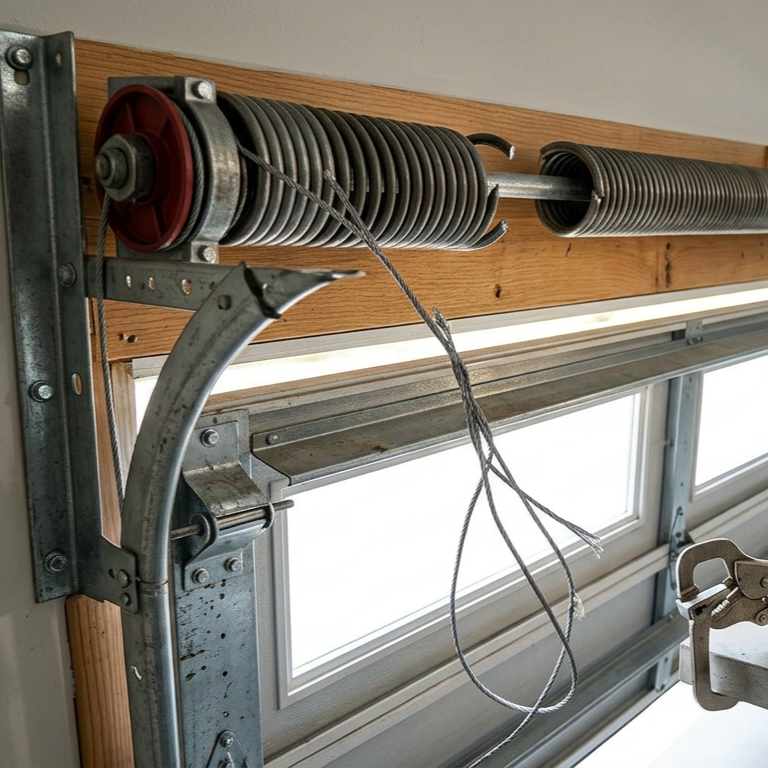
Quick Answer: A garage door that sits higher on one side has gone out of level, and the usual causes are a cable problem on the low or high side, a spring that has lost tension or broken, a track that's loose or out of alignment, or a roller that has jammed or come out of the track. The door rises evenly only when the cables, springs, tracks, and rollers on both sides share the load equally; when one side loses tension or support, the door cocks to one side. An out-of-level door strains the opener and remaining hardware and can jam or fail, so it's worth diagnosing — and the cable and spring causes are not safe to fix yourself.
A garage door is supposed to sit square in its opening and rise straight up. When one side ends up higher than the other — leaving the door visibly cocked or crooked — the balanced system that lifts it has developed a problem. Understanding what knocks a door out of level helps you catch it before the door binds or fails.
What Keeps a Door Level
A garage door stays level because matched components on both sides do equal work. Cables connect each side of the door to the spring system; the springs counterbalance the door's weight; the tracks guide the door's travel; and the rollers ride in those tracks to keep the door aligned. When both sides carry the same tension and support, the door rises and lowers evenly and sits square.
If one side loses tension or support, that balance is broken. One corner lifts more or less than the other, and the door tilts or sits higher on one side. The fix depends on identifying which component, on which side, has changed.
Cause One: A Cable Problem
The lifting cables are a frequent cause of an uneven door. If a cable slips off its drum, stretches, or breaks on one side, that side's connection to the lifting system changes, and the door cocks. Depending on which cable and how it failed, that side can end up sitting higher or lower than the other. A cable that has unwound, gone slack, or is visibly frayed is a strong clue. Because the cables operate under the spring system's tension, they're not a safe DIY repair.
Cause Two: A Spring That's Lost Tension
The springs counterbalance the door, and on a two-spring system, if one weakens or breaks, the balance between the two sides shifts. The side served by the failing spring loses lifting force, and the door can sit unevenly as a result. A broken torsion spring may show a visible gap in the coil, and the door often feels heavier and harder to open overall. Because a failed spring redistributes the whole load, it both throws the door out of level and strains everything else.
Cause Three: Track or Roller Trouble
The tracks and rollers keep the door square as it moves. A track that's loose, bent, or shifted out of alignment on one side lets the door drift out of level there, and the door may bind or scrape as it travels. A roller that has come out of the track, broken, or jammed does the same — that corner loses its guide and sits off. Track and roller problems often announce themselves with catching, grinding, or noise on the affected side.
| What you notice | Likely cause |
|---|---|
| Slack, frayed, or off-drum cable | Cable problem on that side |
| Door heavy, gap in spring coil | Weak or broken spring |
| Door scrapes or binds on one side | Loose or misaligned track |
| Roller out of the track | Broken or jammed roller |
| Door cocked, won't close square | Imbalance from any of the above |
Why an Uneven Door Is Worth Fixing
A door that sits higher on one side isn't just unsightly — the imbalance causes real problems. The opener has to work against the uneven load, wearing out faster. The hardware still doing its job takes on more than its share, accelerating the next failure. The door won't seal evenly at the bottom, letting in dust, water, and pests on the low side. And a door that's badly out of level can jam in its tracks or, if held up by a compromised cable or spring, fail suddenly. The tilt is an early warning that the system needs attention before a small imbalance becomes a stuck or fallen door.
Don't attempt to fix the cables or springs on an uneven door yourself. Both are under extreme tension as part of the counterbalance system, and one releasing suddenly can cause serious injury. An out-of-level door also means the load is distributed unevenly, which can make hardware fail unexpectedly. These repairs belong to a trained technician.
Why a Professional Should Diagnose It
Getting a door back to level means determining which component on which side failed, and several of the likely causes involve dangerous spring tension. A technician can safely identify whether it's a cable, spring, track, or roller, repair or replace the affected part, and rebalance the door so both sides lift evenly again. They also check the related hardware that the imbalance may have strained, heading off the next failure. Restoring level isn't just about how the door looks; it's about returning the safe, even operation, the whole system relies on.
Frequently Asked Questions
The door has gone out of level because one side lost tension or support — usually a cable that slipped, stretched, or broke, a spring that weakened or failed, or a track or roller out of alignment on that side. The door sits square only when both sides share the load equally, so a problem on one side leaves it cocked or uneven.
It can be. The imbalance strains the opener and overloads the hardware that's still working, which can lead to a sudden failure, and a badly cocked door can jam in its tracks. A door held up by a damaged cable or spring is especially risky. Beyond safety, it won't seal evenly. An out-of-level door warrants prompt diagnosis.
It's strongly advised against. The cables work under the tension of the spring system, and a cable or spring releasing during a repair can cause serious injury. Safely diagnosing and replacing cables takes the right tools and training. An uneven door caused by a cable issue should be handled by a trained technician rather than as a DIY repair.
Because one side is lifting unevenly relative to the other, so the door rises out of square and looks crooked or cocked. This points to a cable, spring, track, or roller problem on one side. The uneven lift is a balance issue that tends to worsen as the strained parts wear, so it's best diagnosed before the door binds or sticks.
Yes, over time. When the door is out of balance, the opener works against that imbalance to move it, running harder and wearing faster. The springs and cables, not the opener, are designed to carry the door's weight, so an unbalanced door shifts strain onto the opener it wasn't built for. Rebalancing the door takes that strain off.
A technician identifies which component failed on which side — cable, spring, track, or roller — then repairs or replaces it and rebalances the door so both sides lift evenly. They also inspect the related hardware that the imbalance may have strained. The aim is to restore even, square operation, not just to nudge the high side back down.
Square It Up Before It Sticks
A garage door sitting higher on one side has lost the balance that lets it rise straight and square, usually from a cable, spring, track, or roller problem on one side. It's more than a cosmetic issue — the imbalance strains the opener and hardware and can lead to a jam or sudden failure. Because the likely causes involve dangerous tension, a trained technician should diagnose and rebalance the door before the tilt becomes a bigger problem.
Garage door sitting crooked or uneven — Get the cables, springs, and tracks inspected and the door rebalanced safely. Quality Overhead Door serves Mesa and the East Valley. ROC #310144. Call (480) 838-8850.
