Why Your Garage Door Opens Slower When It's Hot Out
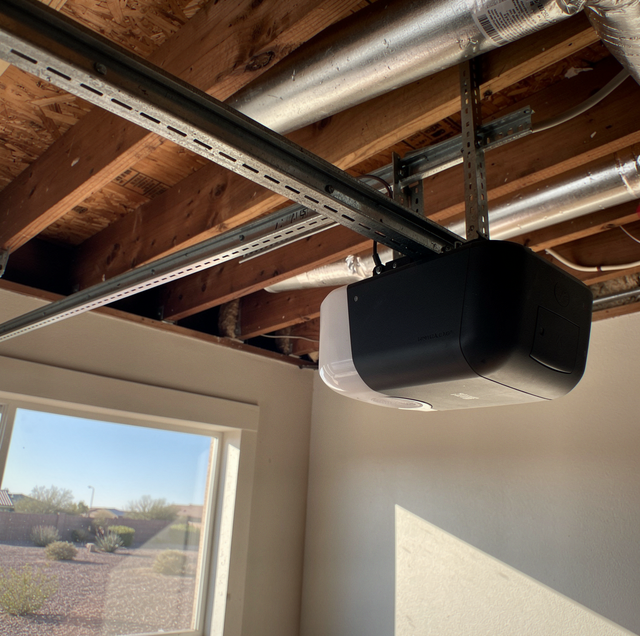
You hit the remote, and the door jumped into motion right away. Lately it hesitates for a second, then creeps up the track noticeably slower than it did in the spring, especially in the late afternoon after the garage has been baking for hours. It's tempting to blame "the heat" as if the door were simply tired, but heat itself is rarely the direct cause. It usually acts on one specific part that was already wearing out, and figuring out which one tells you whether this is a five-minute fix or a sign that something bigger is close to failing.
What Heat Actually Changes (and What It Doesn't)
Steel expands with temperature, but the amount is tiny. A torsion spring's steel wire grows by only a few thousandths of an inch across a hundred-degree swing, nowhere near enough to meaningfully change the spring's counterbalance force. So despite how it feels, heat isn't weakening the spring itself in any measurable way. What heat does change is everything around the spring and motor: lubricant viscosity, rubber and plastic tolerances, and heat-sensitive electronics. Slow-down almost always traces back to one of those, not to the steel losing strength.
The Usual Suspects, in Order of How Often They're the Cause
Lubricant breakdown on rollers and hinges. Standard grease thins out and runs off metal-on-metal contact points faster at high heat, and any dust or grit in the garage sticks to the remaining lubricant, forming a gritty paste that increases roller friction. This is the single most common reason a door slows down seasonally. A light petroleum-based spray lubricant like WD-40 makes this worse, not better, since it evaporates quickly in heat and attracts dust; a white lithium grease or a silicone-based garage door lubricant designed for track and hinge use holds up far longer.
Opener motor thermal protection. Many opener motors are rated for continuous duty only up to a certain ambient temperature, often cited around 104°F, and an attic-mounted rail sitting well above that on a hot afternoon can push the motor into a protective mode that intentionally slows or pauses the cycle to avoid overheating. This is more common with older AC-motor chain-drive openers than with newer DC-motor units, which tend to manage heat more gracefully.
Capacitor wear in older AC-motor openers.: Older chain-drive openers built around an AC induction motor rely on a start/run capacitor to get the motor moving with enough torque. Capacitors degrade faster the hotter they run, roughly losing half their working life for every 18 degrees Fahrenheit above their rated operating temperature. A capacitor that's most of the way through its life still works on a cool morning but visibly struggles on the hottest afternoons, right before it fails outright. If the door has been sluggish only in the heat for more than one season, an aging capacitor is a strong suspect, especially on an opener that's eight to ten years old.
Track binding from thermal expansion or a bent section: A track that's slightly out of parallel, even by an eighth of an inch, creates rolling resistance that worsens as the metal expands and contracts throughout the day. This usually shows up as a spot in the travel where the door hesitates at the same place every time, rather than a uniform slowdown throughout the cycle.
A battery backup losing capacity in heat: Newer openers with battery backup units, common on models built for areas with frequent power interruptions, often use lithium-ion cells that lose usable capacity faster at high storage temperatures. If the opener seems to run fine on wall power but the whole system feels sluggish, or the backup fails to hold a charge, heat-degraded battery cells are worth checking before assuming it's the motor itself.
How Opener Types Handle Heat Differently
Not all openers respond to heat the same way, and the drive type matters as much as the motor type. Chain-drive openers push a metal chain along a steel rail, and the lubricant coating that chain thins and can drip off the links faster in sustained heat, leaving a moment of dry metal-on-metal contact at the sprocket that shows up as a slight lag or clunk at the start of the cycle on hot days. Belt-drive openers use a reinforced rubber or polyurethane belt instead of a chain, and that belt material has its own thermal behavior: it can stretch slightly in sustained heat, and a belt that's already a few years old and starting to lose tension will sag more on the hottest days, translating into a noticeably slower, less crisp start to the cycle. Screw-drive openers, less common in newer installations, rely on lubricant coating the drive screw itself; heat that dries out or breaks down that lubricant creates the same kind of friction-driven slowdown as dry rollers, just concentrated on a single component instead of several.
Why the Slowdown Often Shows Up Only in Late Afternoon
If the slowdown is worse specifically in the late afternoon rather than first thing in the morning, that timing itself is a clue. By late afternoon, a garage that's been absorbing sun and ambient heat all day has usually reached its peak internal temperature, well after outdoor air temperature has already peaked, since building materials release stored heat gradually rather than tracking the outside temperature in real time. An opener rail or motor housing mounted near the ceiling sits in the hottest layer of the trapped air, which is why thermally related slowdowns cluster in the late afternoon and evening rather than appearing evenly throughout the day.
Quick Reference: Symptom to Likely Cause
| What You Notice | Most Likely Cause | What Helps |
|---|---|---|
| Gradual slowdown over weeks, worse by afternoon | Dry or dust-clogged rollers | Clean and relubricate rollers and hinges |
| Slowdown only on the hottest days, opener 8+ years old | Aging capacitor | Capacitor test/replacement |
| Hesitation at the exact same spot every cycle | Bent or misaligned track | Track inspection and realignment |
| Whole system sluggish, backup light dim or blinking | Heat-degraded backup battery | Battery inspection/replacement |
| Sudden slowdown plus grinding or popping noise | Spring or cable issue, not heat | Spring/cable inspection |
When It's Not Heat-Related At All
If the slowdown showed up suddenly rather than gradually, or it's paired with a grinding noise, a popping sound, or the door hanging slightly crooked, that points toward a spring or cable problem rather than a thermal one. A torsion spring nearing the end of its rated cycle life (commonly somewhere in the 10,000 to 15,000 cycle range for a standard spring) can start losing counterbalance force independent of the season, and a door that's truly under-sprung will move slowly in any weather, not just the heat. The distinction matters because relubricating rollers on a door with a failing spring won't fix the real problem, and continuing to run the opener against an under-tensioned door adds strain to the trolley and drive gear that a fresh spring wouldn't have caused.
Frequently Asked Questions
Not meaningfully. Steel's thermal expansion coefficient is around six millionths of an inch per inch per degree Fahrenheit, so even a large temperature swing changes the spring's dimensions by an amount too small to noticeably affect its counterbalance force. Heat-related slowdowns almost always come from lubricant, electronics, or track alignment rather than the spring itself.
White lithium grease or a silicone-based garage door lubricant formulated for track and hinge use resists heat and dust far better than a light petroleum spray. Petroleum-based sprays evaporate quickly at high temperatures and leave behind a thin residue that attracts rather than repels grit.
On a hot afternoon, the temperature around an attic-mounted rail can run well above the ambient outdoor temperature because heat accumulates in the enclosed attic, sometimes making it 20 to 30 degrees hotter than the air outside. That's part of why opener thermal protection engages more often in an attic-mounted setup than with a wall-mounted or jackshaft-style operator.
Less often than older AC-motor units, since DC motors and their soft-start/soft-stop logic tend to manage heat and torque more evenly across a cycle. They aren't immune to heat-related issues, but a DC opener that's slowing down is more likely pointing to a mechanical cause (rollers, track, spring) than to the motor overheating.
If the rollers are nylon with sealed bearings, they don't need lubrication on the roller wheel itself, but the bearing can still fail if grit works its way in, so cleaning and inspecting for play is more useful than adding grease. Steel rollers do need regular lubrication and tend to show wear (flat spots, rust pitting) sooner in dusty, high-heat conditions than sealed nylon rollers do.
A gradually slowing door from lubrication or capacitor wear isn't an immediate safety issue, but ignoring it lets the underlying wear continue, and a capacitor or motor that finally fails often does so mid-cycle, which can leave the door stuck partway open or closed until it's serviced.
Match what's actually happening against the table above before assuming the worst-case scenario — most of these trace back to a five-minute relube, and even the ones that don't (an aging capacitor, a spring nearing the end of its cycle count) are far easier to catch on a mild afternoon than the hottest day of the year, when everything about the door is working against you at once.
Request a same-day diagnostic visit — get the actual cause identified before a slow door turns into a stuck one. Quality Overhead Door serves Mesa and the East Valley. ROC #310144. Call (480) 838-8850.
