Insulated vs Non-Insulated Garage Doors: What Changes
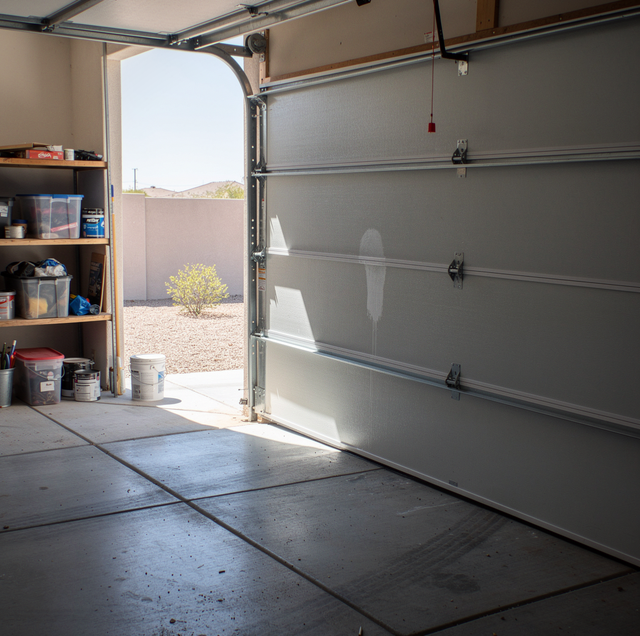
There's a common assumption that garage door insulation is a cold-climate feature, something you'd add in a place with hard winters and skip everywhere else. That's backwards. A single layer of uninsulated steel conducts heat straight through in both directions, which means an uninsulated door lets summer heat radiate into the garage just as readily as it lets winter cold through. If the space above the garage is a living area, or the garage itself doubles as a workshop, storage room, or laundry space, insulation changes the day-to-day experience of that room more than most homeowners expect.
How Garage Door Insulation Actually Works
A non-insulated door is a single-skin of steel, typically 24- to 27-gauge, with nothing behind it but hardware. Steel is a poor insulator on its own; heat moves through it almost as fast as it hits the outside surface, which is why an uninsulated door radiates noticeable heat into the garage on a hot afternoon and feels cold to the touch on winter mornings.
Insulated doors add a layer of rigid foam between the outer steel skin and either an inner steel skin or a vinyl-backed liner. Two foam types dominate the market. Polystyrene insulation is a rigid foam board cut to fit inside the panel cavity, typically delivering somewhere in the R-6 to R-9 range for a single-layer application. Polyurethane insulation is foamed in place between the two skins during manufacturing, expanding to fill every corner and bonding directly to both steel surfaces; it generally achieves a higher R-value per inch, often ranging from R-12 to R-18-plus depending on panel thickness. That foam-to-metal bond is also why polyurethane panels tend to feel noticeably more rigid than either polystyrene or non-insulated panels of the same gauge.
Where the Insulation Value Actually Shows Up
Reducing conducted heat through the panel is the headline benefit, but it isn't the only one, and it's worth being clear about what insulation does and doesn't fix.
Temperature swing in the garage: an insulated door slows heat transfer through the panel itself, which measurably reduces how hot the garage gets on a summer afternoon and how cold it gets overnight in winter. It does not stop heat radiating up from a sun-baked concrete slab, and it won't compensate for gaps elsewhere, like an unsealed service door or an uninsulated garage ceiling.
Noise dampening: the foam core between the skins absorbs vibration, so an insulated door runs noticeably quieter than a bare steel panel, both from the opener's own mechanical noise and from wind buffeting the panel surface. This is a genuine side benefit for anyone with living space directly above or beside the garage.
Rigidity and wind resistance: because the foam bonds to both skins on a polyurethane door, the panel resists flexing, which reduces the "oil-canning" rippling look that thin non-insulated panels can develop over time and improves how the door holds up against wind pressure.
Air sealing at the edges: insulated panels are typically manufactured with a tighter tongue-and-groove fit between sections, which reduces air infiltration around the panel joints, separate from whatever the bottom astragal and side weather seals are doing.
How the Panel Construction Changes Long-Term Durability
Insulation isn't just a comfort feature; it changes how the panel ages. On a polyurethane door, the foam bonds directly to both steel skins during manufacturing, effectively turning the panel into a single rigid unit rather than a thin sheet of metal. That bonded structure resists denting differently than a non-insulated panel does: an impact that would put a visible crease in a bare steel skin often just leaves a shallower mark on a polyurethane panel, because the foam behind the skin absorbs some of the impact energy rather than letting the steel deform freely.
Polystyrene-insulated doors don't get quite the same benefit, since the foam board sits inside the panel cavity without bonding to the steel skins the way foamed-in-place polyurethane does. The improvement in rigidity is smaller, though the R-value gain over a non-insulated panel remains meaningful for temperature control, even without the same dent-resistance boost.
Condensation and Moisture Behavior
An uninsulated steel door in a humid or temperature-swinging environment can develop surface condensation on the interior side when warm, moist air meets a cold panel, similar to what happens on a cold window. Insulated doors reduce this because the panel's interior surface stays closer to the garage's ambient temperature rather than directly tracking the outdoor temperature. This matters most for garages used as workshops or for storing moisture-sensitive items, where condensation dripping off an uninsulated door onto stored items or tools can cause problems over time, separate from the comfort question.
Side-by-Side Comparison
| Factor | Non-Insulated | Polystyrene Insulated | Polyurethane Insulated |
|---|---|---|---|
| Typical R-value | Near 0 | R-6 to R-9 | R-12 to R-18+ |
| Noise dampening | Minimal | Moderate | Best |
| Panel rigidity | Lowest | Improved | Highest |
| Panel thickness | 1-3/8 in typical | 1-3/8 in typical | Often 2 in |
| Approximate weight vs non-insulated | Baseline | Somewhat heavier | Notably heavier |
| Typical use case | Detached, unconditioned garage | Attached garage, moderate priority | Attached garage, living space above/beside |
What the Weight Difference Actually Affects
An insulated door, particularly a polyurethane one, weighs meaningfully more than a non-insulated door of the same size, sometimes by several dozen pounds on a standard double-car door. That added weight isn't just a spec-sheet number: torsion springs are wound to a specific torque based on the door's weight, so a spring set sized for a non-insulated door won't properly counterbalance a heavier insulated replacement. Swapping panel types on an existing door without recalculating spring wire size and wind count leaves the door out of balance, which shows up as a door that's hard to lift by hand or one that slams down faster than it should. Opener sizing can shift too: a heavier door sometimes calls for stepping up from a lighter-duty chain drive to a heavier-duty unit rated for the added load.
When Non-Insulated Still Makes Sense
Insulation isn't automatically the right call for every garage. A detached garage with no HVAC, no living space nearby, and light-duty storage use often doesn't return much practical benefit from the added cost and weight of insulation. Some workshop setups also prefer the ventilation and drying benefit of a door that isn't sealed as tightly, particularly where fumes, moisture, or dust need to escape rather than build up. And if the budget priority is simply replacing a failing non-insulated door with another reliable one, that's a reasonable choice as long as the spring system is sized correctly for whichever panel is installed. Climate-controlled storage or a home gym set up in the garage is the clearest case where the insulation gap actually shows up day to day, since even a few degrees of difference across a whole afternoon changes how usable that space feels; a garage used mainly for parking and occasional yard-tool storage tends to feel that difference far less.
Frequently Asked Questions
No, and this is a common source of disappointment right after an upgrade. A slab that's spent all day absorbing radiant heat keeps releasing it into the garage well into the evening no matter what the door is made of, so a garage that still feels warm after sunset with a brand-new insulated door usually has floor thermal mass working against it rather than an underperforming door. A reflective floor coating or simply keeping the door closed during peak sun hours does more for that specific problem than door insulation ever will.
Often, yes. Non-insulated and polystyrene-insulated panels are commonly built around 1-3/8 inch thick, while polyurethane panels frequently run closer to 2 inches. That difference can affect compatibility with hinge and track hardware, which is why insulation upgrades usually require a full door replacement rather than swapping panels on an existing frame.
It can, and the strain tends to show up unevenly across the cycle rather than as constant extra effort. An opener that's underpowered for a heavier insulated door usually struggles most in the last foot or two of opening, where the spring's mechanical advantage is weakest, so hesitation or a reversal specifically near full-open after an insulation upgrade is a stronger tell than general sluggishness through the whole cycle.
Yes, to a degree. A standard single-pane window insert creates a thermal weak point compared with the solid insulated panel around it. Insulated glass units (double-pane, sometimes with a low-E coating) close most of that gap if window inserts are a must-have feature.
Indirectly. The added rigidity from the foam-to-steel bond reduces panel flex as the door travels through the track, and a door that isn't flexing or binding slightly at each section joint puts less irregular load on the opener's trolley and drive mechanism than a thinner, non-insulated panel can under wind pressure.
Not necessarily a different type, but fit matters more. A thicker insulated panel changes the ground clearance and the angle the bottom astragal seal meets the floor at, so a seal designed for a 1-3/8 inch non-insulated panel doesn't always compress correctly against a 2-inch insulated one. Getting the astragal sized to the actual panel thickness matters for keeping dust and drafts out at the floor line, regardless of which insulation level is chosen.
Generally yes, since more foam volume between the skins absorbs more vibration, but the biggest noise factor is often the opener and hardware, not the panel alone. A well-insulated door paired with worn, dry rollers can still be noisy; insulation reduces panel-transmitted noise specifically, not every source of garage door sound.
Not directly, since insulation doesn't change how the door operates mechanically. What it does affect is how much the garage's temperature drifts during an extended outage when the HVAC in an attached space isn't running; an insulated door slows that drift compared with a non-insulated one, which can matter if the garage shares wall or ceiling space with a temperature-sensitive room.
A useful gut check: stand in the garage around 4 p.m. on a hot day and notice whether it's a room you'd want to spend twenty minutes in. If the answer's no, insulation is solving a real, felt problem rather than a marginal one, and that's worth weighing against the added weight before assuming a straight swap is as simple as it looks. Get the spring and opener sized for the new panel's actual weight before installation day, not after — that's the step that turns a comfort upgrade into a callback when it's skipped.
Get a free estimate on an insulated door upgrade — find out which insulation level actually fits your garage and attached spaces. Quality Overhead Door serves Mesa and the East Valley. ROC #310144. Call (480) 838-8850.
