Steel vs Wood Garage Doors: Which Survives Extreme Heat?
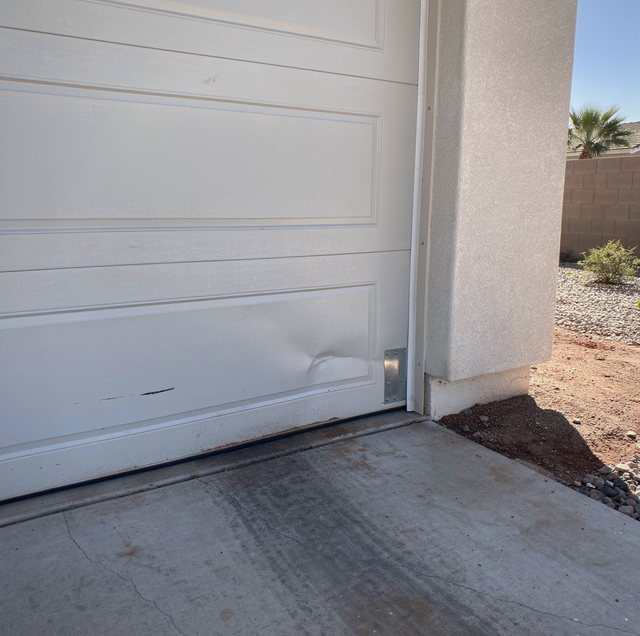
Park next to a ten-year-old steel garage door and a ten-year-old wood one, and you'll usually see two very different stories written on the surface. The steel door might have a few dings, but the paint is intact. The wood door often shows hairline cracks radiating from the panel joints, a grayish cast to the grain, and maybe a warped stile that no longer sits flush against the jamb. Neither material is "bad." They just fail in opposite ways when sun and heat get involved for years on end, and knowing which failure pattern you're willing to live with is most of the decision.
What Sun and Heat Actually Do to a Garage Door
Two separate forces act on any exterior door, and they act on the wood and steel differently.
The first is ultraviolet light. UV breaks down lignin, the polymer that holds wood fibers together and gives wood its color. As lignin degrades, the surface grays and the fibers loosen, which is why an unfinished or under-maintained wood door starts to look chalky and rough within a few years in a high-UV location. Steel doesn't have lignin to break down, but UV still degrades the polymer binders in paint and powder-coat finishes over time, which is why steel doors eventually chalk or fade even though the metal underneath is unaffected.
The second force is thermal cycling: the daily swing between a hot afternoon and a cooler night, repeated for years. Steel expands and contracts with heat, but its coefficient of expansion is tiny (roughly six millionths of an inch per inch per degree Fahrenheit), so a 16-foot-wide steel door might grow by only a fraction of an inch on the hottest day. That's rarely enough to cause structural problems on its own, though it can stress the paint layer at panel seams over many cycles, showing up as fine surface cracking long before the steel itself is compromised. Wood behaves very differently: it expands and contracts mainly with moisture content, not temperature directly, but big day-to-night temperature swings in a low-humidity climate dry the wood fibers out faster, and wood that dries unevenly across a panel warps, cups, or opens up at glued joints.
Steel Doors in Sustained Heat and Sun
A steel garage door is built from galvanized steel skins, typically 24-gauge or 25-gauge for residential doors, sometimes bonded to a foam core for rigidity. The galvanizing resists corrosion, and the factory finish (usually a baked-on polyester or polyurethane powder coat) is engineered to hold color and resist chalking far longer than a field-applied paint job would.
Where steel struggles is dent resistance and, over the very long run, finish fatigue. A 25-gauge panel dents more easily than a 24-gauge one, so a stray bike pedal or a ladder bump leaves a permanent mark that stain or paint can't fix as easily as on wood. And because the finish is a thin polymer layer over metal rather than a material that's colored all the way through, once UV starts chalking it, the fix is a repaint rather than a light sanding and re-stain.
Wood Doors in Sustained Heat and Sun
Real wood doors, typically built from cedar, redwood, or a mahogany veneer over an engineered core, offer a depth of grain and color that no embossed steel panel fully replicates, and dents can often be sanded and refinished rather than replaced outright. That repairability is wood's biggest practical advantage over steel.
The tradeoff is maintenance frequency. In a climate with intense year-round sun exposure, a wood door's finish (whether stain or paint) typically needs renewing every two to three years to keep UV and moisture out of the grain, compared with five or more years in a milder climate. Skip that maintenance, and the exposed grain starts absorbing and releasing moisture unevenly, which drives stile separation and panel cupping. Solid stile-and-rail doors handle this better than veneer-over-hardboard doors, because a veneer that delaminates from its substrate can't simply be sanded and refinished the way solid wood can.
Real-World Wear Patterns After a Decade of Service
Ten years in, the two materials tend to fail in ways that match exactly what the mechanism section predicts. A steel door with an intact finish usually still has crisp panel lines and consistent color, with wear concentrated at the bottom panel (the part closest to ground moisture, sprinklers, and impact from stray items rolling against it) and at the corners where hardware attaches. Rust, when it shows up, almost always starts at a scratch or chip in the finish that exposes bare metal, not as a general surface failure.
A wood door at the same age, if refinishing was skipped even once or twice, typically shows graying at the raised panel edges first (the highest points, catching the most direct sun), hairline checking along the grain on flat panel faces, and separation at glued joints where the wood has shrunk unevenly. Solid stile-and-rail construction usually still functions fine structurally even when the finish has failed, since the joinery is mechanical (mortise-and-tenon or doweled) rather than adhesive-dependent, while a veneer-over-hardboard door that's lost its finish is more likely to show delamination at the edges where moisture worked its way under the veneer layer.
Weight, Track, and Hardware Considerations
Wood doors, especially solid stile-and-rail construction in a heavier species, typically weigh more than a comparably sized steel door, which matters for the torsion spring system counterbalancing it. A heavier wood door needs a spring set wound for that weight; if a wood door has ever been repainted with a heavier build-up of paint layers over the years or had solid wood panels swapped in during a repair, the added weight can throw off a balance that was originally set correctly, something worth checking if a wood door has started feeling harder to lift over time.
Track and roller wear also plays out a little differently between the two. Because wood doors flex slightly more at the panel joints than a rigid steel skin does, hinges and rollers on a wood door tend to see marginally more lateral stress over thousands of cycles, which is one reason hinge and roller inspections matter more on an aging wood door than people typically expect.
Side-by-Side Comparison
| Factor | Steel Door | Wood Door |
|---|---|---|
| UV resistance of finish | Strong (baked powder coat) | Moderate (stain/paint wears faster) |
| Refinish interval in high-sun climates | Rarely needed if finish is intact | Typically every 2 to 3 years |
| Dent resistance | Moderate; depends on gauge | Higher (dents often sandable) |
| Warping/cracking risk | Low | Higher with humidity swings |
| Repairability of surface damage | Usually a full panel swap | Often sandable and refinishable |
| Weight (affects springs/opener) | Lighter, more consistent | Heavier, varies by species |
| Insulation options | Widely available (foam core) | Available but less common |
Which One Actually Fits Your Situation
If the door faces west or gets unbroken afternoon sun for most of the year, steel's baked finish holds up with the least ongoing attention, and its predictable, consistent weight makes spring and opener sizing simple to get right the first time. If the garage door is a major curb-appeal feature (a carriage-style entry visible from the street) and you're willing to refinish on a schedule, real wood delivers a look that embossed steel panels approximate but don't quite match, and minor damage is often repairable rather than a full replacement.
Hardware matters too. On a wood door, hinges and track brackets are typically lag-bolted into the stile rather than through thin sheet metal, so loose hardware from wood shrinkage is a five-minute tightening job rather than a sign of failure. On a steel door, watch the bottom panel first: it takes the most impact and moisture exposure, and a rusted-through bottom panel is one of the more common reasons a steel door gets replaced years before the rest of it wears out.
What Changes the Math
A few things shift the comparison in practice. Doors facing north or shaded most of the day see far less UV stress on either material, narrowing the maintenance gap considerably. A door under a deep porch overhang or covered entry sheds direct sun and most wind-driven grit, which extends the finish life on both steel and wood. And if the door sits near sprinklers or gets splashed with irrigation water regularly, wood's moisture sensitivity becomes the bigger factor, since repeated wetting and drying at the same spot accelerates the very warping that dry, sunny weather alone would take much longer to cause.
Frequently Asked Questions
Most exterior wood doors need a fresh coat of exterior-grade stain or paint every two to three years in a high-UV climate, versus five to seven years in a milder one. Spar urethane and marine-grade finishes with UV inhibitors extend that interval somewhat, but no topcoat is permanent once it starts chalking.
It depends on gauge. A 24-gauge steel skin resists dents noticeably better than a thinner 25 or 27-gauge economy panel, but neither dents as gracefully as wood, which tends to compress rather than crease, and can often be sanded smooth again.
Yes. An opaque, breathable exterior paint blocks UV more completely than a semi-transparent stain, which is why many high-sun installations use paint on wood doors. The tradeoff is that paint hides the grain entirely, and a non-breathable formula can trap moisture under the film and cause peeling.
Some, though manufacturer data on multi-decade heat aging varies by foam type and formulation, and there isn't a firm, universally agreed-on answer either way. What shows up in the field more often than the core itself failing is a slight "oil-canning" ripple across a panel as the foam-to-steel bond ages after years of extreme thermal cycling. This is cosmetic rather than structural in most cases and isn't, on its own, a reason to replace an otherwise sound door.
Many steel doors come with a wood-grain embossed texture and a factory stain-look finish, giving much of wood's visual warmth with steel's lower maintenance. The embossing doesn't change the panel's gauge or dent resistance, so it's still a steel door in every functional sense.
Warranty structures vary by manufacturer, but steel door finishes commonly carry longer prorated warranties against fading and chalking than wood door finishes, since natural wood movement isn't something a manufacturer can fully warrant against. Hardware warranties (springs, hinges, rollers) are typically similar for both door types, since the hardware is the same regardless of panel material.
None of this is really a material contest so much as a question of which failure mode you'd rather manage for the next fifteen years: steel means watching the bottom panel for rust-through, wood means keeping a refinishing calendar and actually sticking to it. Whichever way you're leaning, match the replacement door's real weight to the spring system before install day — that's the detail that gets skipped when people shop by looks alone, and it's the one that determines whether the new door lifts like it should on day one.
Schedule a free replacement-door estimate — get a straight comparison of steel and wood options sized to your garage before you decide. Quality Overhead Door serves Mesa and the East Valley. ROC #310144. Call (480) 838-8850.
