Rolling Steel vs. Sectional Doors: Which Fits Your Facility?
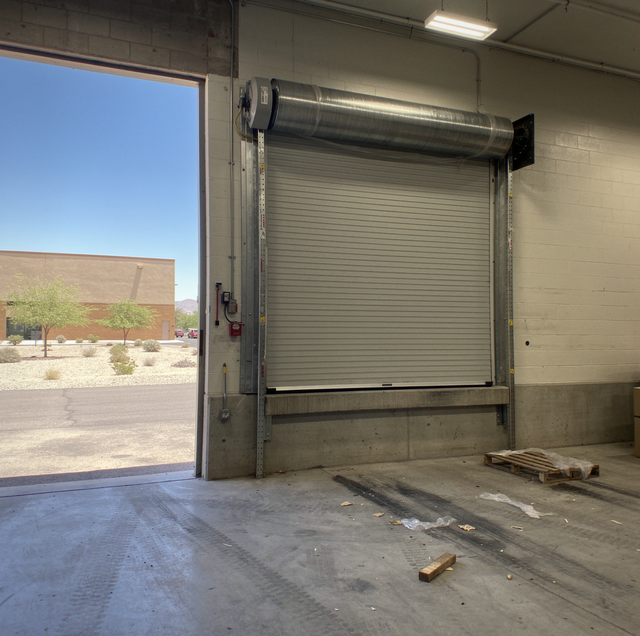
A facility manager staring at an empty bay opening usually has two real options on the table: a rolling steel door, where a curtain of interlocking slats coils up into a barrel above the opening, or a sectional door, where hinged panel sections ride vertical tracks and curve back along the ceiling. Both do the same basic job of closing a large opening, but they solve the mechanical problem in different ways, and those differences show up directly in headroom needs, cycle life, security, and what a repair call actually looks like.
How Each Door Type Physically Works
A rolling steel door is built from a curtain of narrow, interlocking steel slats, commonly 20- to 22-gauge galvanized steel, that coil around a barrel mounted above the opening. A torsion spring inside that barrel provides the counterbalance, and the curtain rolls straight up rather than traveling back along the ceiling. Because the moving parts are concentrated at the barrel and in the vertical guide tracks on either side, there's very little that has to travel horizontally into the building.
A sectional door is built from individual insulated or non-insulated steel panels, typically 24- to 25-gauge, hinged together and riding on rollers inside vertical tracks that curve into horizontal tracks running back along the ceiling. Torsion springs mounted on a shaft above the header provide the counterbalance, similar in principle to a residential door but scaled up for commercial loads and often paired with a heavier-duty jackshaft operator.
Headroom and Backroom Requirements
This is usually the first thing that rules out one option. A rolling steel door needs comparatively little vertical clearance above the opening, often somewhere in the 12 to 16-inch range for the barrel and hood, and essentially no horizontal backroom since the curtain doesn't travel into the ceiling space. A sectional door needs headroom roughly equal to the track's curve radius on top of the door height (commonly another 16 to 18 inches), plus backroom extending into the building for the horizontal track run, which can be a dealbreaker in a facility with ductwork, sprinkler lines, or conveyor systems crowding the ceiling near the opening.
Cycle Life and Daily Use
Rolling steel doors are often favored in continuous-use dock environments because there are fewer moving parts to wear: no individual panel hinges, no roller-and-track interface at each section, just the curtain, its guide tracks, and the barrel assembly. Heavy-duty sectional doors paired with commercial-grade jackshaft or trolley operators are also engineered for high daily cycle counts, sometimes rated for 50 to 100-plus cycles a day in continuous-duty applications, so cycle life alone doesn't automatically favor one type; it depends on the specific operator and spring system installed, not just the door style.
Security and Impact Resistance
An interlocking rolling steel curtain resists prying and forced entry reasonably well because each slat locks into its neighbor, leaving no single weak seam the way a sectional door's panel-to-panel joints can present. Rolling steel curtains also tend to hold up better against wind-driven debris impact across the full curtain surface. Sectional doors can be reinforced with heavier gauge steel and impact-rated panels, but the seams between sections remain a structural consideration that a solid rolling curtain doesn't have in the same way.
Safety Sensor and Entrapment Protection Differences
Both door types require entrapment protection, but the hardware looks different. A rolling steel door commonly uses a monitored sensing edge along the bottom bar, an electrical strip that detects contact and reverses the door if it hits an obstruction on the way down. A sectional door typically pairs a photo-eye sensor pair mounted near the floor on either side of the opening with an optional bottom-edge sensor, similar in concept to a residential setup but rated for the larger commercial door and operator. Facilities running rolling steel doors in dusty or debris-heavy environments sometimes prefer a sensing edge over a photo eye, since airborne dust and forklift traffic can interfere with a photo eye's line of sight in ways that don't affect a physical sensing edge.
Panel Gauge, Reinforcement, and Wind Load
Both door types can be specified with heavier-gauge steel and additional structural reinforcement when wind load or impact resistance is a priority. Sectional doors often include horizontal steel struts along the back of wider panels to prevent bowing under wind pressure, especially for openings wider than a standard single-car residential door. Rolling steel curtains handle wind load differently, relying on the interlocking slat profile itself plus wind-locks in the guide tracks that engage under pressure to keep the curtain from bowing out of the guides. Which approach an engineer specifies depends on the opening's wind exposure rating and local building requirements for that specific facility.
Retrofitting an Existing Opening
Converting an opening from one door type to the other isn't usually a simple swap. A bay originally built for a rolling steel door, with minimal header clearance and no horizontal backroom, often can't accept a sectional door without structural changes to create the needed track clearance. The reverse conversion (sectional to rolling steel) is usually much simpler, since a sectional opening's clearances are typically already adequate for a rolling steel barrel and guide tracks that need less room, not more. That asymmetry is worth knowing before assuming either door style can be swapped in later without any construction work.
Side-by-Side Comparison
| Factor | Rolling Steel Door | Sectional Door |
|---|---|---|
| Headroom needed | Low (approx. 12-16 in) | Higher (door height + 16-18 in) |
| Backroom (horizontal track) | Minimal to none | Required |
| Typical gauge | 20-22 gauge slats | 24-25 gauge panels |
| Insulation options | Available, generally lower R-value | Available, generally higher R-value |
| Window/vision options | Limited (perforated slats) | Easy to add per-panel |
| Repair unit | Bottom bar, guides, curtain section | Individual panel |
| Common fit | Loading docks, security-focused bays | Standard warehouse/service bays with headroom |
Maintenance and Repair Differences
The parts that wear on a rolling steel door are the bottom bar, the side guides the curtain rides in, and the barrel's counterbalance spring; damage to the curtain itself (a dented or bent slat section) is often more involved and costlier to repair than swapping one bad piece, since a damaged section of interlocking slats sometimes has to be cut out and pieced back in rather than unbolted and replaced whole. A sectional door's wear points are the standard torsion spring, rollers, hinges, and track alignment. A damaged individual panel can typically be unbolted and swapped without touching the rest of the door. That repair-unit difference is worth weighing alongside the upfront headroom question, since it affects how long a facility is down if something gets damaged.
Which Fits Which Facility
A loading dock with heavy daily truck traffic, limited ceiling clearance, and a priority on security tends to favor rolling steel. A service bay or warehouse opening with adequate headroom, a need for higher insulation values, or a desire for vision panels to see activity on the other side tends to favor sectional. Facilities that need both security and vision sometimes run rolling steel on exterior-facing openings and sectional on interior or lower-security bays, rather than treating it as an all-or-nothing choice across the whole building.
Frequently Asked Questions
Yes. Rolling steel doors typically use a tubular motor installed inside or beside the barrel, or a chain hoist for manual operation, while sectional doors commonly use a jackshaft operator mounted on the torsion shaft or a trolley operator similar to a scaled-up residential unit. Both styles can be motorized or manual depending on the operator selected.
Not quite to the same level. Rolling steel curtains are available as single-wall or double-wall with a foam insert, generally landing in a lower R-value range (roughly R-3 to R-5) than insulated sectional panels, which commonly reach R-12 or higher with a polyurethane core. Facilities with strict temperature-control needs often lean toward sectional for that reason.
Only in a limited way. Rolling steel typically uses perforated slats for visibility rather than true glass windows, which reduces security compared with a solid curtain. Sectional doors can have individual glass-window panels installed in nearly any section, making them the easier choice when visibility into the bay matters.
Sectional wins on turnaround, and for a specific reason: a single damaged panel unbolts and a replacement bolts in, usually without touching the rest of the door. Rolling steel repairs often take longer for a second reason beyond the slat work itself — an impact hard enough to damage a run of slats frequently knocks the guide track out of alignment where the curtain rides, so the repair usually includes track realignment on top of replacing or re-forming the affected slats, not just the visible curtain damage.
Yes, fire-rated rolling steel doors are a common option for openings that require a fire-separation barrier, typically paired with a fusible link or heat-activated release that automatically closes the door when triggered. Fire-rated sectional options exist as well, though rolling steel is more commonly specified for that purpose in warehouse and dock environments.
Both can be engineered to a specific design-pressure rating, but verifying that rating in the field looks different for each. A rolling steel door's wind locks only work if the guide tracks are anchored into sound structural framing, so a building with deteriorated header framing can undercut a correctly rated rolling door's real-world performance. A sectional door's wind rating depends more on strut count and spacing matched to the actual opening width, so a wind-rated sectional door shouldn't be assumed to carry the same rating if it's later resized or reinstalled in a different opening.
A standard sectional door install on a properly prepped opening often takes a single day for the door and track system, with operator wiring sometimes following as a second visit. A rolling steel door install can take longer on the front end because the barrel assembly and guide tracks need precise alignment across the full width of the opening, though the lack of horizontal backroom construction can offset that if the building didn't already have clearance for a sectional door's track run.
Downtime is really what this decision comes down to for most facilities: rolling steel trades easy retrofitting for a costlier slat-and-track repair when something does get hit, while sectional trades headroom for a bolt-and-swap panel fix. Neither tradeoff is universally right, and getting it backward on a new build means living with it for twenty years instead of spending twenty minutes measuring headroom and backroom before the order goes in.
Schedule a commercial door assessment — get headroom, cycle-load, and security needs matched to the right door style for your bay. Quality Overhead Door serves Mesa and the East Valley. ROC #310144. Call (480) 838-8850.
