Belt vs Chain vs Screw Drive Opener: Which One Fits?
Quick Answer: Chain drives are the most affordable and best for heavy or detached-garage doors, but they run louder. Belt drives are the quietest and smoothest, worth it when a room sits above or beside the garage. Screw drives use fewer parts and open fast, with noise that lands in the middle.
Shopping for a new garage door opener sounds simple until you hit the drive type question. Belt, chain, or screw? The label barely tells you what you're buying, and the wrong pick can mean a rattling ceiling above a bedroom or an underpowered motor that quits early. The drive type is the single mechanical choice that shapes how quiet the opener is, how long it lasts, and how much upkeep it asks of you.
How A Garage Door Opener Actually Moves The Door
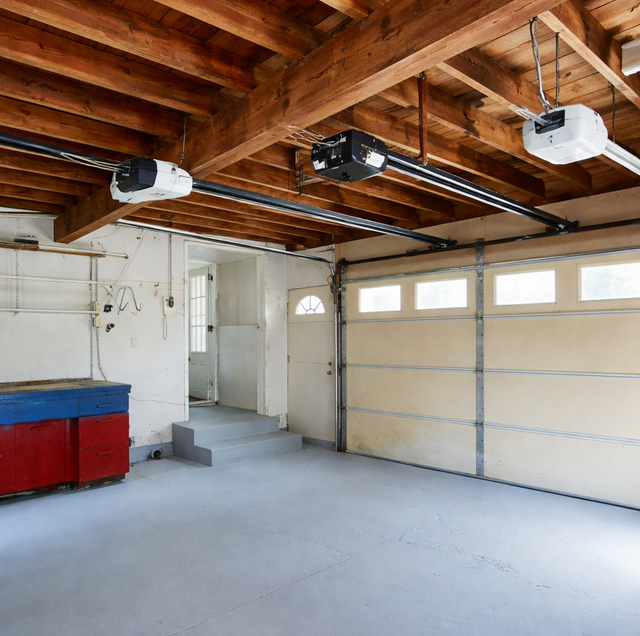
The motor on your ceiling does not lift the door directly. It pulls a small wheeled carriage called the trolley along a rail, and the trolley is connected to the top of the door by an arm. When the trolley travels toward the motor, the door rolls up; when it travels away, the door rolls down. The heavy lifting is done by the springs above the door, not the opener. The opener's real job is to give those balanced springs a controlled nudge and to hold the door where you want it.
What separates the three drive types is only one thing: the mechanism that moves that trolley along the rail. A chain pulls it, a belt pulls it, or a rotating threaded rod drives it. Everything else- the motor, the safety sensors, the wall button- works the same across all three. Once you see the comparison through that lens, the trade-offs get a lot clearer.
Chain Drive: The Durable Workhorse
A chain drive uses a metal chain, much like an oversized bicycle chain, looped around a gear on the motor. As the gear turns, the chain hauls the trolley up and down the rail.
Strengths: Chain is proven, affordable, and strong. Because metal links resist stretching under load, a chain drive handles heavy doors and oversized doors without straining. For a detached garage or a workshop where a little noise does not matter, it is often the most sensible choice and the easiest on the budget. Parts are common, so repairs down the road tend to be simple.
Trade-offs: Metal on metal is loud. A chain drive produces a distinct rattle and some vibration that travels through the ceiling framing, which you will hear in any room sharing a wall or floor with the garage. Chains also need occasional attention: the chain can develop slack over time, and the links want a light lubricant now and then to run smoothly and stay quiet. Skip that upkeep and the noise gets worse.
Think of the chain drive as the pickup truck of openers. It is not the smoothest ride, but it pulls hard, takes abuse, and rarely leaves you stranded.
Belt Drive: The Quiet Operator
A belt drive swaps the metal chain for a reinforced rubber or polymer belt, often strengthened with steel or fiberglass cords running through it. The motion is identical, but the material changes everything you hear.
Strengths: A belt glides where a chain clatters. There is no metal-on-metal contact, so a belt drive is markedly quieter and smoother, with far less vibration reaching the rooms around the garage. This is the go-to for an attached garage, especially when a bedroom, nursery, or home office sits directly above or beside it. A belt drive also requires less routine maintenance than a chain, since there is no chain to lubricate.
Trade-offs: A belt drive usually costs somewhat more up front than a comparable chain unit. The belt itself is durable and reinforced, though on a very heavy door in constant daily use some owners weigh whether they want a belt or a beefier chain. For the vast majority of attached-garage homes, the quiet is worth the modest step up in price.
Screw Drive: The Simple, Fast Mover
A screw drive works differently from both. Instead of pulling the trolley with a chain or belt, it uses a long threaded steel rod. The motor spins the rod, and the trolley rides along the threads like a nut turning down a bolt, moving toward or away from the motor as the rod turns.
Strengths: With fewer moving parts than a chain assembly, a screw drive is mechanically simple and tends to move the door quickly. Less linkage means fewer components that can wear out or fall out of adjustment, and there is no chain to tension or lubricate the same way.
Trade-offs: A screw drive can run noticeably louder than a belt, since the trolley threading along the rod creates its own hum and the whole assembly transmits vibration. Older screw drives also had a reputation for being temperature-sensitive, because the lubricant on the rod could stiffen when cold and thin when warm, changing how smoothly the trolley moved. Modern screw drives largely solve this with improved, weather-stable lubricants and better designs, so a current-generation unit handles temperature swings in both directions far better than the models that earned the old reputation. Still, it is a fair question to ask about any specific unit.
The Newer Option: Wall-Mount Jackshaft Openers
A fourth style skips the ceiling rail entirely. A wall-mount, or jackshaft, opener bolts to the wall beside the door and turns the torsion shaft directly to raise and lower it. There is no trolley and no long rail overhead.
Because the motor is small and mounted low on the wall, these units are very quiet and free up the entire ceiling of the garage, which is a real gain if you want overhead storage, a car lift, or a tall vehicle to clear. They tend to sit at the premium end and require a door with the right hardware to accept them, so they are not a fit for every garage, but they solve the ceiling-space and noise problems in one move.
The Deciding Factors
Rather than chasing the "best" opener, match the drive to your situation.
Noise tolerance and garage location: If any living space shares a wall or floor with the garage, lean belt or wall-mount. For a detached garage or a shop, a chain is fine and saves money.
Door weight: A heavy solid-wood or fully insulated door needs an opener with enough pulling power. An underpowered opener strains against a heavy door, runs hot, and fails early, so the opener has to be rated for the weight it will actually move. Chain and higher-horsepower units shine here.
Budget: Chain is the value pick, screw sits in the middle, and belt and wall-mount run higher. Weigh the up-front difference against years of daily use.
Maintenance appetite: Chain wants periodic lubrication and tension checks. Belt and screw ask for less hands-on attention.
Ceiling space: If you need the ceiling clear, only the wall-mount frees it completely.
Features Worth Having No Matter The Drive
The drive type sets the character of the opener, but a handful of features matter regardless of which one you choose.
Battery backup keeps the door working during a power outage, so you are not stuck hauling a heavy door by hand or locked out of your own garage.
Rolling-code security changes the access code every time the remote is used, which blocks the old code-grabbing tricks that once let thieves capture and replay a signal.
Photo-eye safety sensors are the small units mounted a few inches off the floor on each side of the door. They project a beam across the opening, and if anything breaks it while the door is closing, the door reverses. Every opener must have working sensors, and you should test them monthly by waving an object through the beam as the door closes, since a failed sensor turns a closing door into a crushing hazard for a child or pet.
Wi-Fi connectivity lets you check whether the door is open, close it, and get alerts from your phone, which pays off any time you drive off wondering if you left it up.
A Note On Safety And Installation
The opener is only one part of the system, and the parts you do not see are the dangerous ones. A professional installer also sets the force and travel limits correctly, so the door closes fully without slamming and reverses properly on contact. Those settings are what keep a powerful motor from becoming a hazard, and they are easy to get wrong without the right tools and training.
The high-tension springs and cables that counterbalance the door store enormous force and are strictly professional territory, separate from the opener itself, never a DIY adjustment. A failed photo-eye sensor turns a closing door into a crushing hazard for a child or pet, so test the sensors monthly by waving an object through the beam as the door closes.
Frequently Asked Questions
Most openers run 10 to 15 years with basic care. The motor usually outlives the drive component, so on a chain unit you may replace or re-tension the chain before the motor gives out. Doing an annual balance test, disconnecting the opener and lifting the door halfway by hand to confirm it holds position, catches spring problems that would otherwise overwork the motor and shorten its life.
Not directly. The drive mechanism and rail are matched as a unit, so you cannot thread a belt onto a rail built for a chain. Switching drive types means installing a new opener and rail assembly. What you can sometimes retrofit for less noise are vibration-isolating mounts and a rubber belt-style buffer at the motor, but the core drive itself is not interchangeable.
Power rating and drive type work together. A 3/4-horsepower or higher motor gives the muscle a heavy insulated door needs, while the drive type determines how that power is delivered and how loud the delivery is. A high-powered belt drive can handle a heavy door quietly; the mistake is pairing a heavy door with an under-rated motor of any drive type, which leads to early burnout.
The most common causes are misaligned photo-eye sensors or a close-force setting dialed too low. If the two sensor lenses are knocked out of alignment or their indicator lights blink, the beam reads as blocked, and the door refuses to close. A close-force limit set too conservatively also triggers a false reverse. Both are adjustments a technician makes during setup, and neither should be forced past without diagnosing the cause.
If you want to gauge whether a specific unit still has the old weakness, ask what lubricant the rod uses: a synthetic, wide-temperature grease resists the stiffen-and-thin problem, while a plain petroleum lube is the one that struggled at the extremes. The symptom to watch for is a rod that squeals or the door that slows or hesitates only on the coldest mornings, then runs normally once the garage warms up. If you see that pattern, a fresh application of the right grade of lubricant, not a new opener, is usually the fix.
A chain drive benefits from a light lubricant on the chain and a tension check about twice a year. A screw drive's rod wants a thin coat of the manufacturer-specified lubricant roughly once a year. A belt drive needs almost nothing beyond keeping the rail clean, since there is no chain to oil. Across all three, the rollers, hinges, and springs, not the drive, are what most often need annual professional attention.
Ready for a quieter, dependable opener sized to your door — book a professional install and skip the guesswork. Quality Overhead Door serves Mesa, Phoenix, and Scottsdale. ROC #310144. Call (480) 838-8850.
