Garage Door Rollers: 5 Wear Signs You Should Never Ignore
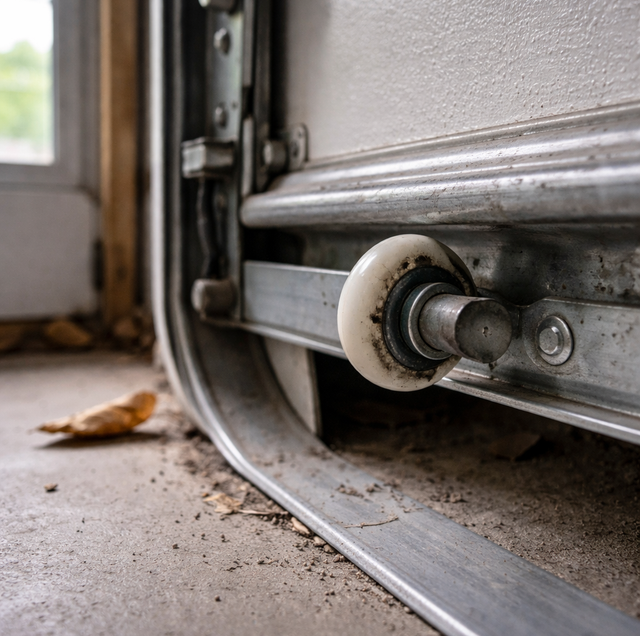
Quick Answer: Garage door rollers are the small wheels that ride inside the vertical and horizontal tracks, guiding and carrying the door as it moves. Worn rollers show up as grinding or squealing, side-to-side wobble, chipped nylon, or flat spots that make the door bind or jump the track. Most roller swaps are a reasonable homeowner job, but the bottom roller sits inside a bracket under high cable tension and must be left to a technician.
What Garage Door Rollers Actually Do
Every panel of a sectional garage door has small wheels set into its edges. Those wheels are the rollers, and they sit inside the U-shaped metal tracks running up each side of the opening and back along the ceiling. As the opener or your hand moves the door, the rollers spin along the track and keep each panel aligned while the whole assembly changes direction at the curved section where vertical meets horizontal.
Rollers do two jobs at once. They guide the door so it travels in a straight, controlled path, and they carry a share of the door's weight against the track as it moves. A standard steel double door can weigh well over 150 pounds, and that load rides on eight to ten rollers. When the wheels roll cleanly, the door glides. When they drag, grind, or wobble, that same weight starts fighting the track, and the friction wears both the rollers and the metal channel they run in.
That is why rollers matter more than their size suggests. A worn roller is not just a noisy nuisance. It changes how the load transfers through the whole system, and a door that no longer tracks straight puts uneven strain on the hinges, the opener, and the springs above it.
The Common Roller Types
Rollers are grouped mostly by wheel material and whether they spin on a bearing. The wheel is the round part that contacts the track, and the stem is the short rod that pokes out from the center to seat the roller in its hinge or bracket.
Steel rollers without bearings: The most basic wheel is solid steel with no bearing, riding directly on the stem. These come standard on many builder-grade doors because they cost little. They handle weight, but metal-on-metal contact makes them loud, and without a bearing they wear their own axle over time. As the fit loosens, the wheel starts to wobble in the track.
Steel rollers with ball bearings: Step up and you get a steel wheel that spins on a set of ball bearings pressed into the hub. The bearings let the wheel turn freely instead of grinding on a fixed stem, so the door runs smoother and the wheel lasts far longer. Bearing count varies, and higher counts generally roll more evenly under load. Steel bearing rollers are strong, though the metal tread still carries some noise.
Nylon rollers with sealed bearings: The quietest option is a nylon wheel running on sealed ball bearings. The nylon tread muffles the sound where the wheel meets the track, and the sealed bearing keeps grit out of the moving parts, which is a real advantage in a dusty garage. Quality nylon rollers are often marketed with 10 to 13 sealed bearings and can outlast a plain steel wheel by years. The tradeoff is that cheaper hollow nylon can chip if it takes a hard knock, so the wheel material and build quality both matter.
The pattern across all three is the same. A ball-bearing roller runs quieter and smoother and lasts longer than a plain wheel on a fixed stem, because the bearing removes the grinding contact that wears a stem-only roller out.
How Rollers Seat in the Hinges and Track
On a sectional door, the panels are joined by hinges along each horizontal seam. Most of those hinges have a sleeve on the outer end, and the roller stem slides into that sleeve so the wheel sits out to the side, ready to ride the track. At the top of the door, a bracket holds the roller that guides the door into the curved track. At the very bottom, the roller seats into the bottom fixture, called the bottom bracket, on each corner.
The stem length matters. A stem that is too short lets the wheel sit shallow in the track and pop out under load, and one forced into the wrong sleeve binds. When a technician sizes replacement rollers, stem diameter and length are matched to the existing hinges so every wheel seats to the same depth and the door tracks evenly.
Wear Signs to Watch For
Rollers usually warn you before they fail outright. A door that runs on tired wheels tells on itself through sound and motion.
Grinding or squealing: A steady grinding or a sharp squeal as the door moves is the classic sign of a bearing that has dried out or a stem-only wheel scraping metal. Squealing that lubrication does not fix points to a worn bearing rather than a dry track.
Wobble and side play: Watch a roller as the door travels. If the wheel rocks or shifts side to side in the track instead of spinning true, the bearing or the stem fit has loosened. A wobbling wheel no longer carries load squarely, and it drags the panel edge against the track.
Chipped nylon or flat spots: Look at the tread itself. Chipped or cracked nylon and flat spots worn onto a wheel mean it is no longer round. A flat-spotted roller thumps once per rotation and skips instead of rolling, which you can feel as a stutter in the door's travel.
Binding or jumping the track: A door that hesitates, catches, or jumps out of its track at the curve is the serious end of roller wear. When enough wheels drag, the door twists as it moves, and a panel can pull a roller clear of the channel. A door off its track is unsafe to operate and should be stopped until it is inspected.
Think of a worn roller like a shopping cart with one seized wheel. The cart still moves, but it pulls to one side and grinds the whole way, and the harder you push, the more it fights you. A garage door does the same, except the load fighting back is over a hundred pounds and the drag transfers straight into the opener and springs.
Why Lubrication and Clean Tracks Extend Roller Life
Rollers wear faster in grit and dry friction than they do from mileage alone. Two habits stretch their life. Keep the tracks clean, wiping out dust and debris that would otherwise grind between wheel and channel, and lubricate the moving parts a couple of times a year with a proper garage door lubricant.
Avoid heavy grease and general-purpose sprays that attract dust and gum up over time. Before any hands-on check, disconnect the opener and keep your fingers out of the hinges and joints where a moving panel can pinch.
Apply lubricant to the roller bearings, hinges, and springs, not to the inside face of the track, since a slick track lets the door slip rather than roll. Skip the bearing on sealed nylon rollers, and avoid heavy grease or general-purpose sprays that attract dust and gum up over time.
When You Can Swap a Roller and When You Cannot
Replacing a worn intermediate roller, one of the wheels along the middle hinges, is within reach for a careful homeowner. The panel rests in the track, no spring or cable pulls on that hinge, and the wheel can be worked out and a new one seated once the door is positioned so that hinge is at the curve. Disconnect the opener first, and only work on a door that is fully on-track with an intact spring.
The bottom roller is a different animal, and this is the line that matters most. The bottom roller seats into the bottom bracket, and the lift cable attaches to that same bracket under high tension from the springs. Loosening or removing that bracket releases stored spring force through the cable, and it can whip loose with enough energy to cause serious injury.
The bottom roller seats into the bottom bracket, and the lift cable attaches to that same bracket under high tension from the springs. Loosening or removing that bracket releases stored spring force through the cable, and it can whip loose with enough energy to cause serious injury. The bottom roller and bottom bracket are pro-only, every time.
When Worn Rollers Signal a Bigger Problem
Sometimes new rollers are only half the story. If wheels keep wearing out fast, or a fresh roller starts wobbling within weeks, the rollers are usually reacting to something upstream.
A track that is bent, dented, or knocked out of alignment forces the wheels to fight their way through, chewing them up quickly. A spring that has weakened or gone out of balance makes the door heavy on the rollers, loading them past what they were meant to carry. Loose or cracked hinges let panels shift so the wheels no longer sit square. And a door that has been off its track, even once, can leave a subtle twist that keeps grinding rollers down.
The tell is repetition. One worn roller is normal wear. A pattern of them, a door that keeps binding after a fresh set goes in, or new noise that follows a roller swap all point to the track, hinges, or spring system. Those are diagnostic calls, because the high-tension spring and cable components are not safe to test or adjust by hand.
Frequently Asked Questions
It depends on the build. Plain steel rollers on a fixed stem often need attention within a few years of daily cycling, while sealed nylon rollers with a full set of bearings are commonly rated in the range of 10,000 to 20,000 open-close cycles. A household that cycles the door four times a day runs through roughly 1,500 cycles a year, so a good nylon set at the higher end of that range can last well over a decade if the tracks stay clean.
If a door is more than several years old and one roller has failed from age, the rest are usually close behind, and swapping the full set keeps the door running evenly rather than mixing new smooth wheels with old dragging ones. A single roller damaged by a one-off impact is fine to replace on its own. The bottom rollers stay part of any full set only when a technician handles them, because of the cable tension.
Yes. The opener is sized to move a balanced door, not to drag a binding one. When rollers grind, and the door fights the track, the opener works harder on every cycle, which can overheat the motor, strip the drive gear, or trip the force settings so the door reverses partway. Quiet, free-rolling wheels are part of what keeps the opener within its rated load.
The number refers to the wheel diameter, and it must match the track width your door was built for. Two-inch rollers are the residential standard on most sectional doors, while three-inch rollers appear on wider or heavier commercial doors. A wheel that does not match the track rides wrong and pops out, so diameter is matched to the existing track rather than chosen for preference.
Cold thickens old grease and stiffens dried-out bearings, so a roller that is quiet in mild conditions can grind or squeal when temperatures drop, then quiet down again as things warm and loosen. It works the other way too, since warm conditions can thin lubricant and let a marginal bearing chatter. Noise that changes with temperature usually means the bearings are near the end of their service life regardless of season.
They do, and the reason is the contact surface. A nylon tread absorbs the vibration where the wheel meets the steel track instead of transmitting it as a steel wheel does, which drops the rolling noise noticeably. The sealed bearing inside a quality nylon roller adds to the quiet by keeping the spin smooth, so the material and the bearing together are what make nylon the low-noise choice.
Book a roller inspection before a worn wheel jumps the track — keep your door quiet, safe, and moving smoothly. Quality Overhead Door serves Mesa, Phoenix, and Scottsdale. ROC #310144. Call (480) 838-8850.
