Garage Door Opener Runs but the Door Won’t Move? Why
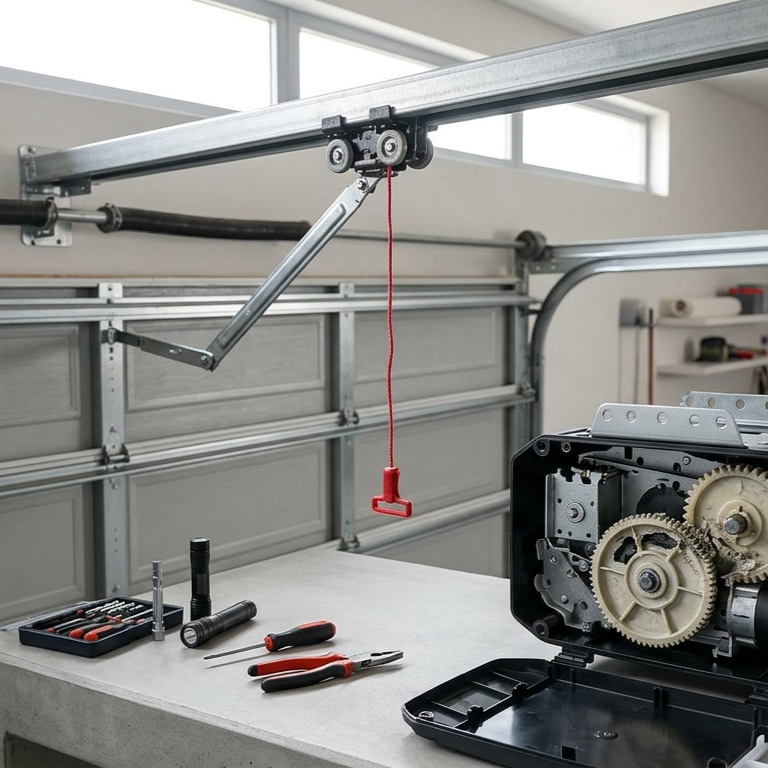
Quick Answer: When the opener motor runs but the door stays put, the connection between the motor and the door has been lost. The most common cause is the trolley being disengaged — the emergency release cord was pulled, putting the door in manual mode. Other causes are a stripped trolley or drive gear inside the opener, a broken or disconnected drive belt or chain, or a problem with the carriage. Separately, a broken spring can leave the door too heavy for the opener to lift even though the motor and drive are fine. Identifying whether the issue is a disconnected drive or a door that's too heavy points you to the fix.
It's a puzzling situation: you press the button, the opener hums and runs like normal, but the door doesn't budge. The motor clearly has power, yet nothing happens. This almost always means the link between the running motor and the door has been broken somewhere, and the most common reason is also the easiest to fix.
How the Opener Moves the Door
A garage door opener doesn't grab the door directly. The motor drives a belt, chain, or screw along the rail above the door, and a trolley (also called a carriage) travels along that rail. An arm connects the trolley to the top of the door. When the motor runs, it moves the trolley, the trolley pulls or pushes the arm, and the door opens or closes. For the door to move, every link in that chain — motor, drive belt or chain, trolley, and arm — has to be connected and intact.
When the motor runs, but the door stays still, one of those links has been broken. The motor is doing its part; the connection to the door isn't there.
Cause One: The Trolley Is Disengaged
This is the most common reason, and the simplest. Every opener has an emergency release — a cord with a handle, usually red — that disconnects the trolley from the drive, allowing you to operate the door by hand during a power outage. If that cord has been pulled, the door is in manual mode: the motor and drive still run, but they're no longer connected to the door, so the door doesn't move. This happens by accident more than people expect — a tall vehicle, a curious child, or someone bumping the cord can release it.
The fix is usually to re-engage the trolley, often by pulling the cord toward the door or running the opener to let it reconnect, depending on the model. If the motor runs but the door is loose and easy to lift by hand, a disengaged trolley is likely the cause.
Cause Two: A Stripped Gear
Inside the opener, a plastic drive gear turns the mechanism that moves the belt or chain. Over years of use, this gear can wear down and strip its teeth. When it does, the motor spins but no longer drives the trolley, so you hear the motor running — sometimes with a grinding or whirring sound — while the door stays still. A stripped main gear is a common internal failure on older openers, and it requires opening the unit to replace the gear.
| What you observe | Likely cause |
|---|---|
| Motor runs, door loose and liftable by hand | Trolley disengaged (manual mode) |
| Motor whirs/grinds, door still | Stripped drive gear |
| Belt or chain hangs loose or off | Broken or derailed drive |
| Trolley moves but door doesn't follow | Disconnected or broken arm |
| Door extremely heavy, motor strains | Broken spring (door too heavy) |
Cause Three: A Broken Belt, Chain, or Carriage
If the drive belt or chain has broken or come off its track, the motor turns, but there's nothing transmitting that motion to the trolley. Similarly, if the trolley itself has broken or the arm connecting it to the door has come loose, the trolley may move while the door doesn't follow. These mechanical breaks in the drivetrain all produce the same symptom: a running motor and a still door.
The Other Possibility: A Broken Spring
There's a different scenario worth knowing. If the opener is fully connected and the drive is working, but a spring has broken, the door may simply be too heavy for the opener to lift. In that case, the motor strains and may move the door slightly or not at all, because the counterbalance that normally offsets the door's weight is gone. The clue here is that the door is extremely heavy to lift by hand, whereas a disengaged trolley leaves the door light and easy to lift. Distinguishing "the drive is disconnected" from "the door is too heavy" is the key fork in diagnosing this.
If you suspect a broken spring — the door is very heavy to lift by hand and the opener strains against it — do not keep running the opener or try to force the door. Operating against a broken spring strains the opener, and a door without its counterbalance can fall. Spring repairs involve extreme tension and are a job for a trained technician.
How to Start Diagnosing
Begin with the easiest check: try lifting the door by hand (with the opener not running). If the door is light and moves freely, the trolley is likely disengaged — re-engaging it may solve everything. If the door is extremely heavy, suspect a broken spring, and stop there rather than forcing it. If the door is connected and normal weight but the motor just whirs, the issue is likely inside the opener — a stripped gear or broken drive. From there, a technician can open the unit, confirm the cause, and repair the gear, belt, chain, or carriage, or address the spring, as needed.
Frequently Asked Questions
Because the connection between the motor and the door has been broken. The most common reason is the trolley being disengaged after the emergency release cord was pulled, which puts the door in manual mode. Other causes include a stripped drive gear, a broken belt or chain, or a broken arm or carriage. A broken spring can also leave the door too heavy for the opener to lift.
It's the cord with a handle, usually red, that disconnects the trolley from the opener so you can operate the door by hand during a power outage. If it's been pulled, the door is in manual mode, and the motor runs without moving the door. Reconnecting it typically involves pulling the cord toward the door or running the opener to re-engage the trolley, depending on the model.
Often, a whirring or grinding noise — the motor spinning freely without driving the mechanism. The plastic main gear inside the opener can wear down and strip its teeth over the years of use, so the motor runs but no longer moves the trolley. This is a common internal failure on older openers and requires replacing the gear inside the unit.
Try lifting the door by hand with the opener off. If the door is light and lifts easily, the trolley is probably disengaged, or the drive is disconnected — an opener-side issue. If the door is extremely heavy, a broken spring is likely, leaving the door too heavy for the opener to lift. The door's weight by hand is the key clue.
Re-engaging a disengaged trolley is a safe, simple fix that many homeowners can do. But a stripped gear, broken drive, or especially a broken spring should be handled by a professional. Spring repairs in particular involve extreme tension and are dangerous to attempt. If re-engaging the trolley doesn't solve it, it's best to have a technician diagnose the cause.
That usually points to a broken spring. With the counterbalance gone, the door is too heavy, so the opener strains against the full weight and moves it little or not at all. Continuing to run the opener in that state strains it further and is unsafe, since the door can fall. A very heavy door with a straining opener should be inspected promptly.
Find the Broken Link
When the opener runs but the door won't move, the connection between motor and door is broken somewhere — most often a disengaged trolley, sometimes a stripped gear or broken drive, and occasionally a door left too heavy by a broken spring. Lifting the door by hand tells you a lot: light and loose points to the drive, heavy and stuck points to a spring. Start there, and avoid forcing a heavy door, which is the one scenario that turns a repair into a hazard.
Opener running but the door won't budge — Get the trolley, drive, and springs checked to find the broken link and fix it safely. Quality Overhead Door serves Mesa and the East Valley. ROC #310144. Call (480) 838-8850.
