Garage Door Reversing Just Before It Reaches the Ground? Why
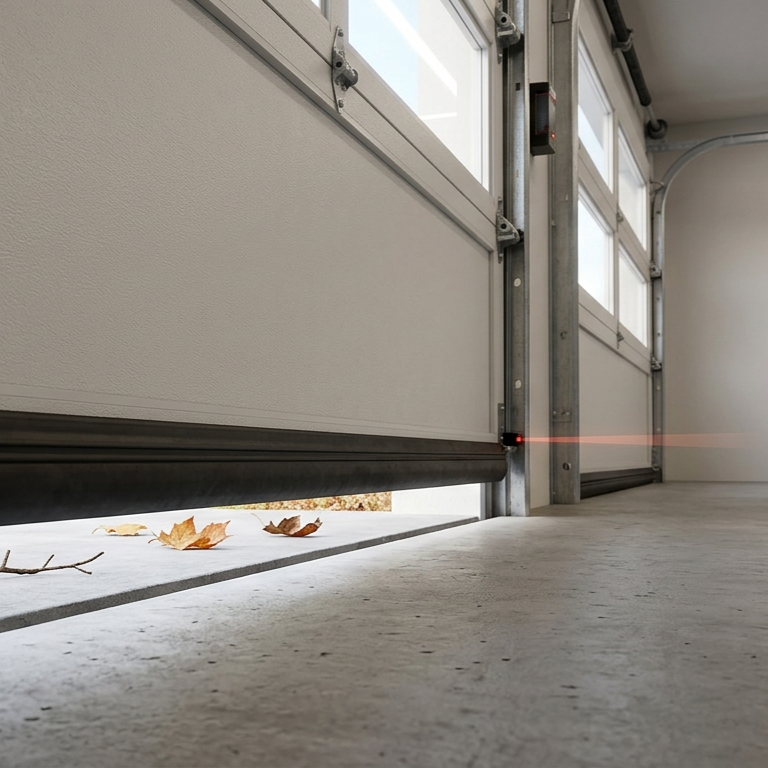
Quick Answer: A garage door that reverses right before it reaches the floor is usually responding to its safety settings. The most common causes are a down-travel limit set wrong, so the opener thinks the door has already reached the floor and reverses; the close-force setting being too sensitive, so normal resistance near the bottom reads as an obstruction; or an actual obstruction or buildup at floor level — even debris or an uneven floor. Worn rollers or a binding track near the bottom can also create resistance that triggers the reverse. The opener is protecting against crushing something, so the fix is finding what it's reacting to, not overriding the safety.
It's a frustrating pattern: the garage door comes down almost all the way, then stops just shy of the floor and rolls back up. The door is doing this on purpose — its opener has safety systems that reverse it when something seems wrong near the bottom of the travel. Figuring out what it's reacting to is the key to making it close all the way.
Why Openers Reverse Near the Floor
Garage door openers are built to avoid closing on a person, pet, or object. To do that, they track two things as the door descends: how far the door has traveled and how much force it's using. If the door reaches what the opener believes is the closed position, or if it meets more resistance than expected on the way down, the opener reverses the door as a safety response. Near the floor is exactly where these systems are most active, because that's where the door is most likely to encounter an obstruction. So a door reversing just before the ground is usually one of these safety mechanisms triggering.
Cause One: The Down-Travel Limit Is Off
The opener has a setting that tells it how far the door should travel to reach the fully closed position. If that down-travel limit is set incorrectly — telling the door to go slightly farther than the actual floor level — the door reaches the floor, can't go farther, and the opener interprets that as an obstruction, so it reverses. This is one of the most common causes of a door that reverses right at the bottom. Adjusting the travel limit to match where the floor is often resolves it.
Cause Two: The Close-Force Setting Is Too Sensitive
Separately from travel distance, the opener monitors the force the door uses. If the close-force sensitivity is set too tight, the normal, slight resistance the door encounters near the bottom — the door settling, a bit of friction in the track — can be misread as an obstruction, triggering a reverse. A force setting that's too sensitive makes the door reverse over nothing. This setting needs to be calibrated so the door closes reliably while still reversing on a genuine obstruction.
Cause Three: A Real Obstruction or Buildup
Sometimes the opener is right — there's something in the way. A small object, accumulated debris, leaves, or even ice or an uneven, raised section of the floor near the door can physically stop the door from seating, prompting the reverse. The door's weather seal at the bottom, hitting an obstruction, counts too. It's always worth looking along the floor where the door meets it, because the fix can be as simple as clearing what's there.
| What's happening | Likely cause |
|---|---|
| Reverses at the same point near the floor | Down-travel limit set too far |
| Reverses with nothing visibly wrong | Close-force set too sensitive |
| Reverses over a spot on the floor | Obstruction, debris, or uneven floor |
| Door is rough or noisy near the bottom | Worn roller or binding track |
| Reverses with empty doorway, sensor light blinks | Photo-eye sensor issue |
Cause Four: Rollers, Track, or Sensors
Mechanical resistance can also trigger the reverse. A worn roller or a track that's bent or binding near the bottom adds friction as the door descends, and the opener can read that extra force as an obstruction. And while the photo-eye sensors most often cause reversing higher in the travel, a sensor issue can contribute too — if a sensor is misaligned or dirty, it may interfere with closing. A blinking light on the opener or sensors points toward the photo-eyes, while roughness or noise near the bottom points toward rollers and track.
Why You Shouldn't Just Force It Closed
When a door keeps reversing at the bottom, the temptation is to hold the wall button to force it down or to crank up the force setting until it stays closed. That's the wrong move, because the reverse is a safety feature responding to a real condition — a misset limit, excess resistance, or an actual obstruction. Overriding it removes the protection that exists to keep the door from closing on someone or something. The right path is to identify the trigger: check for obstructions along the floor, then have the travel limits and force settings calibrated and the rollers, track, and sensors inspected. That fixes the cause while keeping the safety intact.
Before anything else, look along the floor where the door closes and run your eye down the tracks. Clearing a bit of debris, a stray object, or buildup at the threshold is the easiest possible fix — and it's worth ruling out before adjusting any opener settings.
When to Call a Professional
Adjusting travel limits and force settings, and inspecting rollers, tracks, and sensors, is fiddly work where getting the balance wrong matters — set the force too loose and the door won't close; too tight and it reverses over nothing, or worse, the safety reverse stops protecting properly. A technician can calibrate the settings correctly, check the hardware for the resistance that's triggering the reverse, and verify the safety reverse still works as it should. Because these settings are tied directly to the door's safety behavior, it's worth getting them right rather than guessing.
Frequently Asked Questions
Usually, because the opener's safety system is triggering near the floor. The down-travel limit may be set too far, so the door hits the floor and the opener reads it as an obstruction; the close-force may be too sensitive; or there may be a real obstruction or buildup at floor level. Worn rollers or a binding track can also create the resistance that triggers it.
It's the setting that tells the opener how far the door should travel to reach the fully closed position. If it's set to go farther than the actual floor, the door reaches the ground, can't continue, and the opener interprets that as hitting something and reverses. Adjusting the limit to match where the floor actually is often fixes a door that reverses at the bottom.
Yes. A small object, debris, leaves, ice, or an uneven or raised section of floor where the door seats can physically stop it and trigger the safety reverse. The bottom weather seal hitting an obstruction counts too. It's always worth looking along the floor where the door closes, since clearing an obstruction is the simplest possible fix.
No. Increasing the force to override the reversing defeats a safety system that's responding to a real condition, whether a misset limit, excess resistance, or an actual obstruction. That could let the door close on something it shouldn't. The cause should be diagnosed — obstructions cleared, limits and force calibrated, hardware checked — rather than forced past.
Often, because the close-force setting is too sensitive or the down-travel limit is off, the opener misreads normal resistance or a too-far setting as an obstruction. Worn rollers or a binding track can add friction the opener mistakes for an obstacle. The door reverses over "nothing" because the opener thinks it has hit something based on force or travel.
You can safely check for and clear obstructions along the floor and tracks. Adjusting travel limits and force settings, and inspecting rollers and sensors, is more delicate because these settings control the door's safety behavior. If clearing obstructions doesn't fix it, it's best to have a technician calibrate the settings and check the hardware so the door closes reliably and the safety reverse still works.
Find the Trigger, Keep the Safety
A garage door that reverses just before the ground is a safety system reacting to something near the floor — most often a misset travel limit, an over-sensitive force setting, or a real obstruction. Start by clearing the threshold and tracks, then have the settings and hardware checked. The one thing not to do is force the door past its safety reverse, because that protection is there for a reason.
Garage door reversing before it closes — Get the travel limits, force settings, and hardware checked so it closes reliably and safely. Quality Overhead Door serves Mesa and the East Valley. ROC #310144. Call (480) 838-8850.
