Garage Door Stuck Halfway? 7 Causes and Fast Fixes
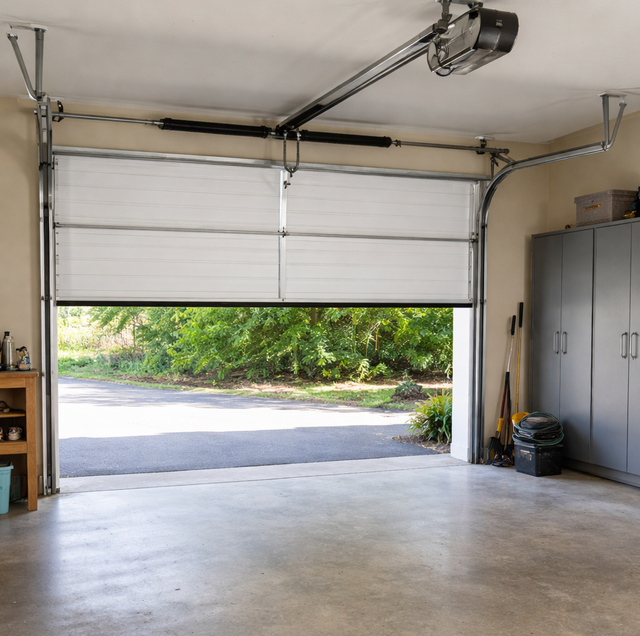
Quick Answer: A garage door that stops halfway is usually a mechanical or sensing problem, not a dead motor. The common culprits are a broken spring, an obstruction or damaged track, a roller that jumped the rail, an opener travel or force limit set wrong, a stripped trolley or drive gear, or a door that has lost its balance. Stop hitting the button, cut power if the door hangs in place, and keep everyone out from under it until you know why it stalled.
A door that runs all the way most days and then parks itself at chest height is telling you something specific. It did not lose interest. Some part of the lift system reached a point it could not push past, and the opener either gave up or was told to give up. The frustrating part is that the same stall, a door frozen halfway, comes from causes that could not be more different from each other. A snapped spring and a pebble in the track produce nearly the same symptom, but one is a same-day safety hazard and the other you can sweep out yourself.
Sorting out which one you have starts with understanding what actually lifts the door, because the opener is the smallest part of that story.
What Actually Lifts A Garage Door
The motor on your ceiling is not strong enough to hoist a garage door by brute force, and it was never meant to. A sectional door weighs anywhere from 130 to over 350 pounds depending on size and material. The real lifting is done by the springs, either a torsion spring wound on a shaft above the opening or a pair of extension springs stretched along the horizontal tracks. Those springs store energy and counterbalance almost the entire weight of the door, so the opener only has to nudge a load that already feels close to weightless.
That design is the key to the halfway stall. The opener is a small electric motor pulling a trolley along a rail. It has just enough muscle to move a balanced door and no more. The moment the door stops being balanced, or something physically blocks it, the opener runs out of push and stops. Think of the motor as a person sliding a heavy dresser that sits on furniture wheels. As long as the wheels roll, one hand moves it. Knock a wheel off and that same person is suddenly shoving dead weight across bare floor. Nothing changed about the person. Everything changed about the load.
The Broken Spring Case
This is the one to rule in or out first, because it is both the most common cause of a mid-travel stall and the most dangerous. When a torsion spring snaps, the counterbalance vanishes. The door instantly becomes the full 200-plus pounds it really weighs, and the opener, sized only to move a balanced door, cannot lift that. Often it will climb a foot or two on momentum and then stall, leaving the door hanging partway with nothing holding it but the opener's small motor and drive.
The tell is usually visible. Look up at the spring on the shaft above the door. A broken torsion spring shows a clean gap, a two-inch separation where the coil parted, as if someone unscrewed a section out of the middle. Extension springs along the side tracks will hang loose or dangle. You may also have heard a loud bang earlier, like a firecracker or a snapped bat, which is the spring letting go.
A door held up only by the opener after a spring break can come down hard and fast. Do not stand under it, do not reach under it to grab anything, and do not try to force it closed. Spring and cable work is done under extreme tension and belongs to a technician with the right winding bars and clamps.
Obstruction Or Damage In The Track
The rollers ride in a steel track shaped like a J. Anything in that channel- a stone kicked up off the floor, a hardened clump of old grease mixed with grit, a screw that backed out of a hinge- becomes a wall the roller cannot climb over. The door rises smoothly until the lead roller hits the blockage, then stops cold at that exact height every time.
Damage does the same thing in a subtler way. A track that got clipped by a bumper or bent at a bracket develops a narrowed spot or a kink. The roller reaches the pinch, binds, and the door stalls. If your door stops at the same point on every attempt, look closely at both vertical tracks right around the height where the bottom of the door sits when it freezes. A dent, a bright rub mark, or a section pulling away from the wall points straight at the problem.
Homeowner-safe check: With the door down and power cut, you can wipe out loose debris from the lower track with a rag and shine a light along the channel for obvious damage. Straightening bent track or realigning brackets is a repair job, not a wipe-down, because a track knocked out of true throws off the whole door's travel.
A Roller Off The Track
Rollers can jump the rail entirely, usually where the vertical track curves into the horizontal section overhead. A worn roller with a wobbly stem, a loose hinge, or a track that spread slightly at the curve lets the wheel pop out of the channel. Once one roller is out, that corner of the door drops or twists, the door goes crooked in the opening, and it jams against the frame or the track lip. It looks alarming because the door sits at an angle, one side higher than the other.
A roller out of track is not something to push back in while the door is under spring tension and hanging in the opening. The door can shift suddenly once the roller re-seats, and a leaning door has a lot of stored energy. Leave it where it is and get hands on it that can secure the door first.
Opener Travel Or Force Limits Set Wrong
Every opener has two adjustments that decide how it behaves: travel limits, which tell it where fully open and fully closed are, and force limits, which set how hard it is allowed to push before it assumes something is in the way and stops. These drift over time, and a door that has slowly gotten harder to move as rollers age will eventually exceed a force limit that used to be fine.
When the force limit is set too low for the door's real resistance, the opener interprets normal friction as an obstruction and halts partway, often reversing a few inches for good measure. A travel limit set too short can stop an opening door before the top. The clue that points here rather than at a mechanical fault: the door itself moves freely by hand through the whole range, yet the powered run keeps stalling at roughly the same height, and the motor sounds fine.
Adjusting these is done with small dials or buttons on the motor head, and the values are specific to your door's weight and wear. Setting force too high to muscle past a stall defeats the safety the limit exists for, so this is worth having dialed in correctly rather than cranked up to mask a deeper drag.
A Stripped Trolley Or Drive Gear
The trolley is the sled that the opener pushes along the rail, and it latches onto the arm connected to the door. Inside a chain or belt opener, a plastic drive gear turns the sprocket that moves everything. Both wear out. When the trolley's engagement wears out, or the main drive gear's teeth shear off, the motor spins and hums, but the door barely moves or stops mid-run because the connection between motor and door is slipping.
The signature here is sound. You hear the motor running its full cycle, a healthy whir, while the door either creeps or sits still. On a screw-drive unit, a stripped nut on the shaft does the same thing. Chewed-up plastic shavings in the bottom of the trolley or below the motor head confirm it. This is a mechanical replacement inside the opener, and it is a different fix from anything to do with springs or track.
An Out-Of-Balance Door
Balance is the quiet cause behind a lot of halfway stalls that do not have an obvious broken part. Over years, springs lose tension, cables stretch, and rollers stiffen unevenly. The door slowly gets heavier for the opener to move, and one day it crosses the line where the motor can no longer carry it all the way, so it stops partway up on the heaviest part of the travel.
You can test balance yourself, and it is the single most useful check a homeowner can do.
To check balance, pull the red release cord to disconnect the opener, then lift the door by hand to about waist height and let go. A balanced door stays put or drifts only slightly, while a door that slams down or shoots up is badly out of balance and has been quietly overloading the opener. That is a spring-system adjustment for a technician, not a lubrication issue, though dry rollers make it worse.
Heat and cold both play into this. Wide temperature swings expand and contract the steel and shift spring tension, so a door can drift out of balance across a hot summer just as it can stiffen in a cold snap. It is not a one-season problem, which is why balance is worth checking whenever the door starts feeling different, not only after the first freeze or the first heat wave.
The One Thing Not To Do
The reflex when a door freezes is to keep pressing the button, hoping the next try goes through. Resist it. If the stall is a broken spring, repeated attempts strain the opener's motor and drive against a load it was never built to lift, and you can burn out the unit or strip its gear on top of the spring you already need fixed. If a roller is off track or the track is bent, forcing power into the jam can bend more track or wrench a hinge loose. Pressing the button five more times turns a one-part repair into a three-part repair.
Instead, cut power to the opener if the door is holding its position, keep the area under the door clear, and note what you observed: a bang beforehand, a gap in the spring coil, a door sitting crooked, a motor that hums without moving. Those details tell a technician within a minute whether they are bringing spring hardware, track parts, or an opener component, and get you back to a working door faster.
Frequently Asked Questions
Sometimes, and only if you have confirmed the springs are intact. Pull the red emergency release cord to disconnect the door from the opener, but do this only after checking that no torsion spring shows a gap and no extension spring hangs loose. Releasing a door whose counterbalance has failed lets the full unsupported weight drop at once. If the springs look sound and the stall was a limit or gear issue, a released door can often be lifted by hand and propped, but keep a hand on it the whole time.
More than most people guess. A standard uninsulated steel door runs roughly 130 to 150 pounds, an insulated double door commonly lands around 200 to 250, and a solid wood or wood-clad carriage door can top 350. With the spring broken, that entire figure lands on whatever is holding the door, whether that is the opener, a person's hands, or nothing. That weight is why a partly open door with a failed spring is treated as a drop hazard rather than an inconvenience.
That behavior points to the force setting or the safety sensors rather than a broken part. Openers are built to reverse when they sense resistance, so a door that climbs, hesitates, then backs down is usually reading friction or a false obstruction as something in its path. A misaligned pair of photo-eye sensors near the floor, knocked out of line by a bump, can also trigger a reverse mid-travel even when nothing physical is blocking the door.
Usually yes, and it is worth reporting. A single sharp bang, often described as sounding like a gunshot, is the classic sound of a torsion spring snapping as the stored tension releases all at once. People frequently hear it from inside the house without the door even being used, since a spring can fail while the door is closed and only reveal itself the next time you try to open it. If you hear that noise, assume a spring until a technician confirms otherwise.
Lubrication helps a door that is merely stiff, but it will not fix a stall caused by a broken spring, a bent track, a jumped roller, or a stripped gear, and it can mask a balance problem long enough for it to get worse. Use a garage-door-specific silicone or lithium spray on rollers, hinges, and the spring coils, never petroleum grease that collects grit, and never on the track itself where the rollers need to grip. If lube changes nothing, the cause is mechanical and needs a look.
Not long if a spring has failed, because the only thing holding it is the opener's drive, which was not designed to bear that load and can let go without warning. Clear the space beneath it immediately, disconnect power so a stray button press cannot drop it, and keep children and pets well away. A door stalled by a limit setting or a track obstruction with intact springs is less urgent, but any door parked mid-opening is worth resolving the same day rather than living around.
Get a stuck door diagnosed before you force it — protect your opener, your springs, and everyone under the door. Quality Overhead Door serves Mesa and the East Valley. ROC #310144. Call (480) 838-8850.
