
Carriage House Garage Doors in Mesa, AZ
Stamped steel, overlay, composite or real wood carriage house doors, measured and installed by a Mesa Amarr dealer. See them in our showroom before you choose. Phone quotes are free, and an in-home measure is $35.
- Women-Owned Family Business
- ROC #310144
- Licensed, Bonded & Insured
- 90-Day Labor Warranty
- Google Rated
- Amarr Dealer
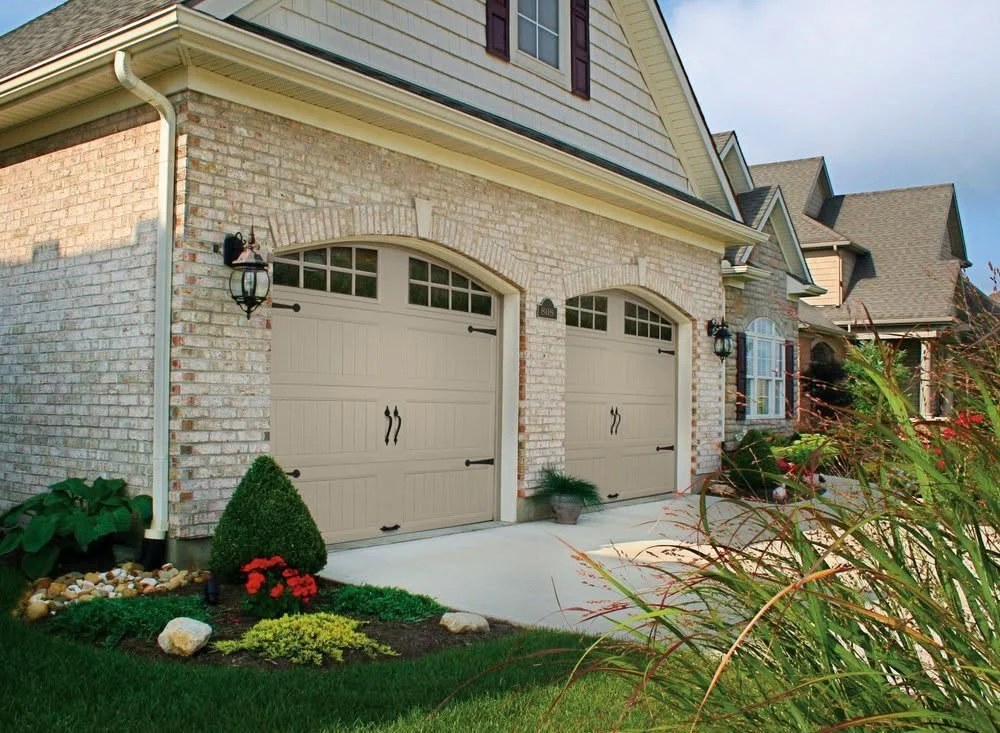
A carriage-house door is a sectional door that goes up like any other, dressed to look like a pair of swinging barn doors. If you have been looking at them online and cannot work out why two that look identical are built completely differently, this page explains why: there are four ways manufacturers achieve the look, they differ a great deal in how close you can stand before the illusion breaks, and the decorative hardware is a separate decision with a rule most people meet too late.
Four Ways to Get the Carriage Look
The look is the same from the street. What is under it is not.
Stamped steel:
The carriage pattern is pressed into the steel skin at the factory, so the recesses and the raised panels are formed in the metal itself. There is nothing applied and nothing to come loose, which makes it the lowest-maintenance route by a clear margin. Amarr's Heritage Carriage House collection is published as heavy-duty 24-gauge steel with permanent stamped carriage designs and a lifetime warranty, which is the kind of specification that tells you what the construction is for.
Overlay on steel:
A steel door with trim applied to the face in the carriage pattern: stiles, rails, and sometimes a cross-buck. This is the route with the most design freedom, because the overlay layout is a choice rather than a stamping die, and it is how manufacturers offer hundreds of combinations. Amarr's Carriage Court collection pairs steel sections with a variety of overlay designs and publishes its sections at 1-3/8 inches.
Composite overlay:
The same idea with a molded composite trim carrying real depth and grain, on a steel or engineered core. Of the three manufactured constructions, it is the closest to reading as carriage joinery from a few feet away because the trim stands proud of the door face rather than being formed into it. The trade-off is that a bonded layer has edges, and edges are where this construction fails rather than fading or denting. Our faux-wood and composite page covers what the material is and what to ask about those edges.
And the fourth:
actual wood. A real stile-and-rail carriage door, which is the only version that is what it appears to be. It also carries a refinishing calendar that this climate makes demanding. Our custom garage doors page owns that conversation.
The practical hierarchy. Stamped steel for the lowest maintenance and the least fuss. Overlay on steel for design choice. Composite for the closest look. Wood for the real thing and the commitment.
Where the Illusion Breaks, and at What Distance
From the street, all four work. At twenty feet and above, in daylight, a stamped steel carriage door reads as a carriage door. That is a legitimate reason to choose the simplest route.
-
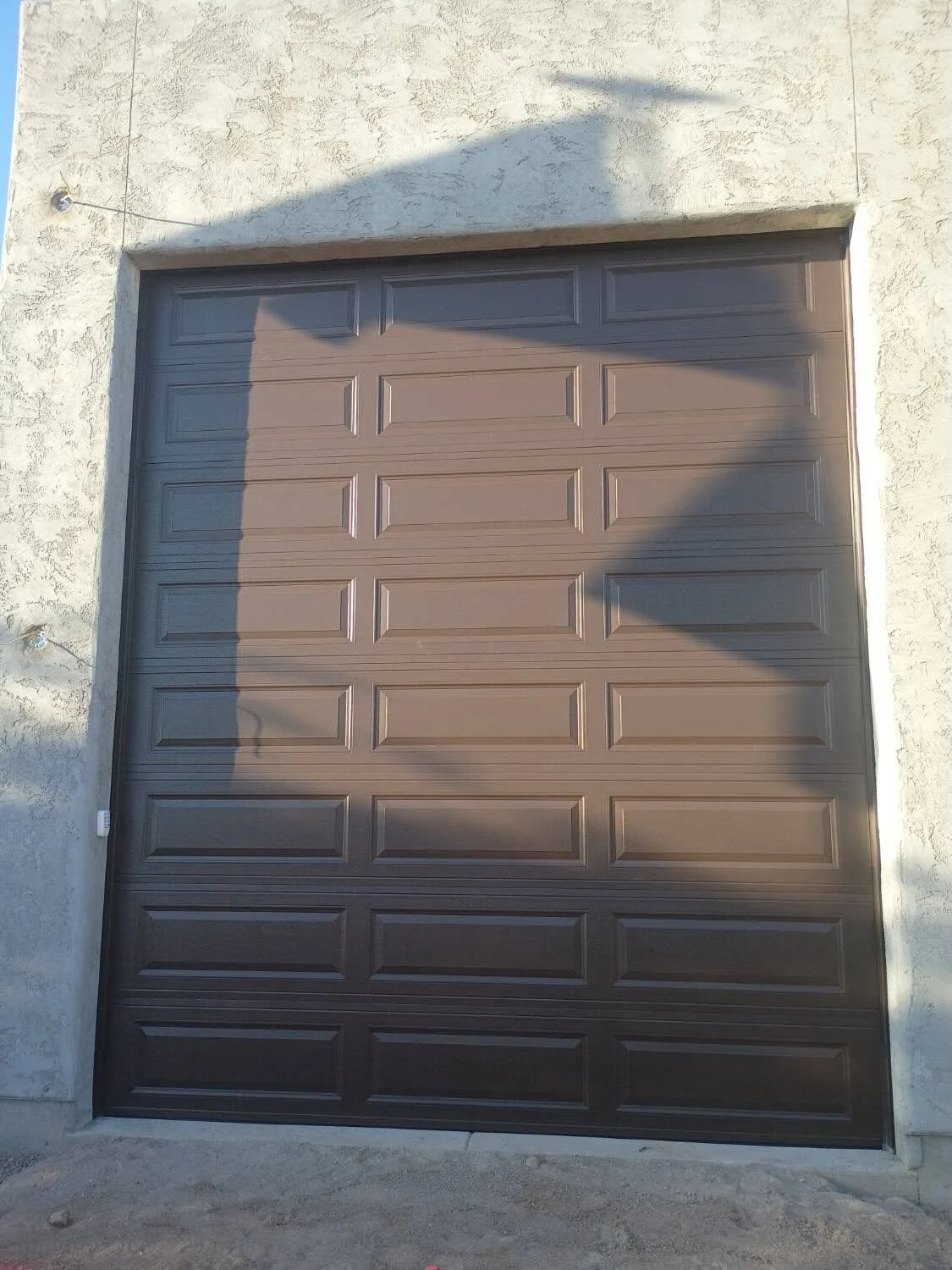
At about ten feet, the stamped version starts to give itself away, and the tell is the depth of the shadow line where a stile meets a rail. A stamping is a shallow forming of a thin skin. A real joint or a thick applied overlay casts a deeper, harder shadow. Once you have noticed it, you will keep noticing it on your own door, which is an argument for being honest about this before you buy rather than afterward.
-
Where you stand matters more than it sounds. On a door set back behind a deep driveway, stamped steel is enough, and insulation or the opener will do more for you. On a door you walk past every day on the way to the front entry, an overlay or composite door is worth the extra cost.
-
At arm's length, overlay and composite hold up, and stamped steel does not. The overlay has genuine thickness standing off the door face, which is the entire point of it.
The Hardware Question Nobody Raises
Decorative hardware is a separate decision from the door. Hinge straps, handles, ring pulls, and clavos are applied items; they are usually optional on the order, and they are most of what makes the carriage look convincing at close range. A carriage door without them often looks like a paneled door rather than a carriage door.
They are decorative, and they do nothing. The straps are not hinges, and the handles do not open anything. On a sectional door, the real hinges are on the inside between the sections, and the door is opened by the opener. Anybody suggesting otherwise is describing a different kind of door.
Here is the rule that catches people. Some architectural guidelines in this valley limit what decorative hardware is permitted. One association's published requirements, quoted on our Sun Lakes page, state that decorative hardware is limited to metal hinges and handles. If your community has a rule written like that, a door specified with clavos, a cross-buck, and a full strap set may not be approvable, and you will find out after the deposit rather than before.
And on a door you already own, the panel decides the hardware. Straps and handles are applied to the face of a section, so the layout beneath them determines whether they work at all. Check the layout before you buy a hardware kit anywhere.
So on a door you are ordering, the order is: check the rule, then the hardware, then the door. Not backward, which is how it usually happens.
- And on finish, dark hardware against a light door is the combination that reads most strongly from the street, and the same association's rules require a single color across the whole door regardless of panel configuration. Worth knowing before you plan a two-tone.
Windows, Which Are Most of the Effect and Most of the Constraint
A carriage door's top section is where the glazing goes, and on this style it does more work than on any other, because a row of lights across the top is what signals "carriage" as strongly as the stiles do.
Three things the glazing changes. The weight from which the spring set is calculated. The stiffness of the top section, which is why a strut goes in with a long run of glass. And the heat, on a west or south elevation.
And the constraint, again from published guidelines. One association permits windows in the top panel or down one side, and requires that the windows be matched across a pair of doors. Matched is the document's word, not ours, so ask your association what it accepts before a configurator decides it for you. Our steel doors page covers what windows change mechanically; our full-view and glass page covers glazing types properly.
Obscure glazing is reasonable even here, where the windows are decorative. It keeps the light and the look and removes the view into the garage entirely.
What We Fit
This is where being an Amarr dealer matters most. Amarr's carriage range is broad: Heritage Carriage House with permanent stamped designs, Carriage Court with overlay designs on 1-3/8-inch steel sections, Classica with three steel sections and larger windows, Hillcrest, Designer's Choice, and Amarr by Design, which lets a door be configured from its most popular carriage styles or built to a layout.
We install and service Clopay as well, whose carriage-relevant collections include Coachman, Grand Harbor, and the Canyon Ridge composite carriage-house lines, published in four-layer and five-layer construction. It is worth asking what the extra layer actually is, because a layer can be insulation rather than overlay depth, and two quotes that differ by a layer may not differ in the way you assume. We are not in Clopay's dealer program, and we say so, because it is checkable.
No door is stocked. The door is built after it is ordered, so the factory lead time runs from your approval to your door, and a made-to-order door requires a 50% non-refundable deposit.
Which collection suits your house is a question for the elevation, not for a web page. We will put samples next to a picture of your own front.
Why This Style Suits This Valley's Housing
Not a sales argument. An observation about the housing stock here.
A great deal of this metro went up in a short span of tract building in architectural styles that carriage detailing flatters: stucco elevations with tile roofs, Territorial and Ranch derivatives, and the broad Southwestern vernacular that most tract builders here worked in. A plain flush steel door on one of those elevations reads as exactly what the builder chose it to be, which is the least considered item on the front of the house.
The garage door is frequently the largest single plane facing the street. On a double- or triple-bay house, it can be more of the elevation than the front door, the windows, and the entry combined. That is what this style is for, and it is why a door is one of the few exterior changes that alters how the whole house reads.
And the practical note. Because so much of that housing went up in a few years, many of those original builder doors are of a similar age, and our San Tan Valley page explains why that pattern is sharper in some communities than others.
What we will not claim is a figure for the effect a door has on a home's value. Those numbers circulate widely; they come from national remodeling surveys rather than from this market, and we are not going to put one on a page about your house.
What Affects the Price
- Which of the four constructions you choose, which is where most of the difference sits.
- The overlay layout, where a simple two-panel arrangement and a full cross-buck with applied trim are different amounts of material and labor.
- Windows, and how many sections carry them.
- Decorative hardware, which is usually priced as an addition.
- Insulation level, because a carriage look is available on single-, two- and three-layer construction and the appearance does not tell you which. Our steel doors page has that comparison.
- The counterbalance, because an overlay or composite door is heavier than the plain steel door it replaces and the spring set is specified to the real weight.
- Financing is available through Wisetack.
How It Goes
- 1.
Check your architectural guidelines first, for material, hardware, window placement, and color. The hardware and window sections above are why, and it is the step that prevents the one mistake you cannot undo.
- 2.
Call, or come to the showroom with a photograph of the front of the house.
- 3.
A technician measures the opening if you are ordering, and that visit is $35.
- 4.
You get an estimate by email, listing the door, the overlay, the glazing, the hardware, and the spring set separately.
- 5.
50% down when the order goes in, non-refundable, because the door is built for one opening.
- 6.
On installation day we hang the door, balance it by hand with the opener disconnected, reset the opener's force and travel to the new weight, and test the safety reverse and the photo eyes.
- 7.
The hardware goes on last, and it is worth standing in the street to look before anybody packs up.
Frequently Asked Questions
Does a carriage-house door open outward like a barn door?
No. It is a sectional door that goes up on tracks like any other. The look is applied: the straps and handles are decorative, and the real hinges are inside, between the sections.
Which construction looks most convincing?
Composite overlay, then steel overlay, then stamped steel. The framing that matters is distance: from the street every version works, and at arm's length only the first two do.
Can I add decorative hardware to the door I already have?
Often yes, if the door's style can carry it, and it is one of the most visible changes available on an otherwise sound door. On a door whose panel layout is wrong for it, hardware will look stuck on.
Will my HOA approve one?
What gets refused is usually the detail and not the style: hardware beyond what the guidelines permit, window placement, or a two-tone finish where a single color is required. Check all three before you choose.
Is a carriage door heavier than a plain one?
An overlay or composite one is, yes, and that matters because the spring set is specified to the door's real weight. A stamped steel door weighs essentially the same as an equivalent plain steel door.
Can I have a carriage look and good insulation?
Yes, and it is what most people here should want. The carriage appearance is available on three-layer insulated construction, and the look tells you nothing about what is behind it. Ask for the construction type explicitly.
What is a cross-buck?
The diagonal bracing pattern in the lower half of a traditional carriage door, forming an X or a Z. It is the single most recognizable carriage motif, and it is the one most likely to run into a hardware or trim restriction.
Can a carriage look be put on a commercial building?
Yes, and it is more common than people expect on a workshop, a studio, or a converted bay. The construction choices are the same; what changes is the size and the counterbalance. Our commercial sectional steel page covers the commercial side.
Do the straps rust in this climate?
Factory-finished decorative hardware holds up well. What shortens its life is sprinkler overspray hitting the lower part of the door, which is the same thing that takes the bottom panel on any steel door. Our steel doors page covers that.
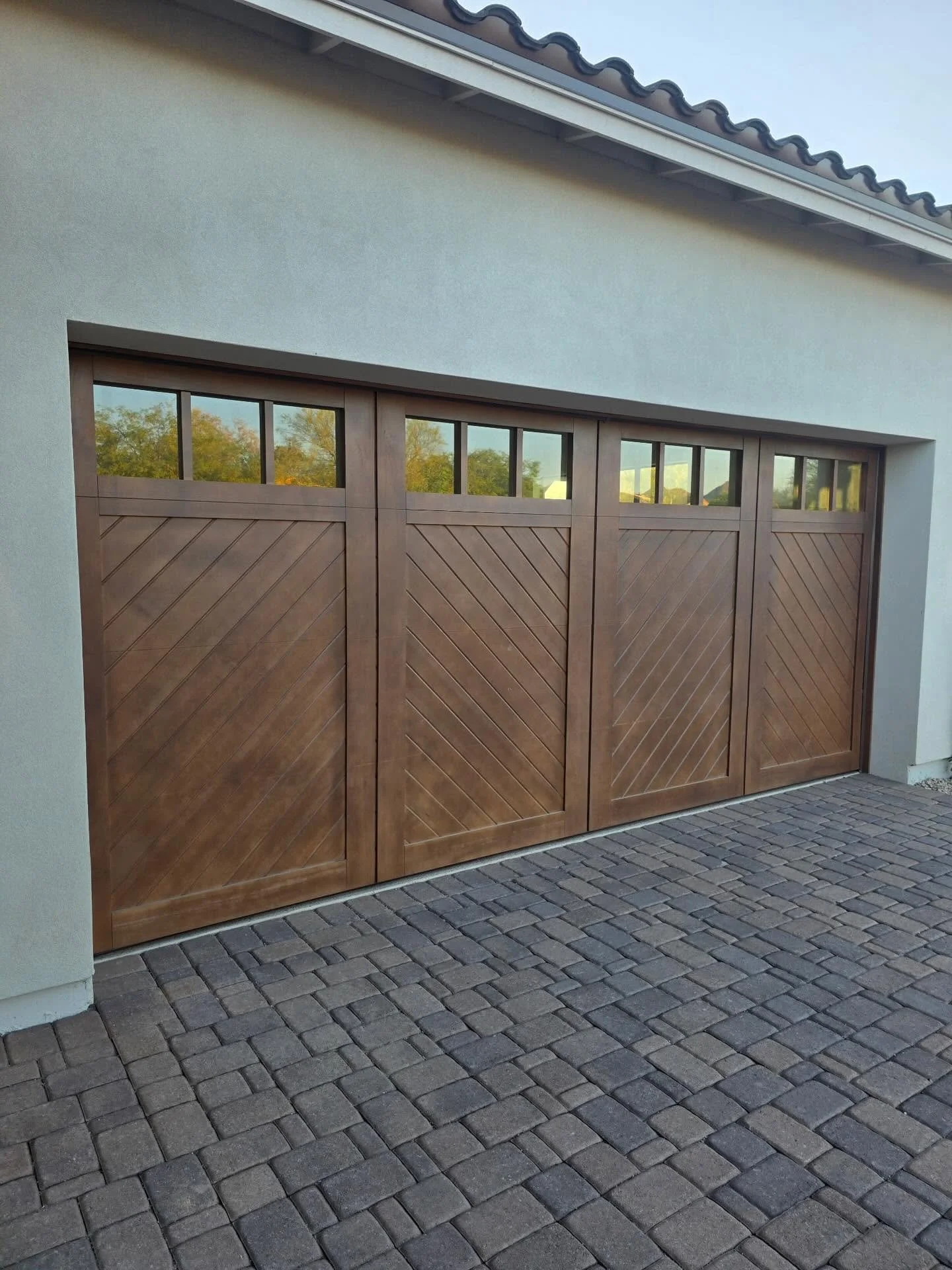
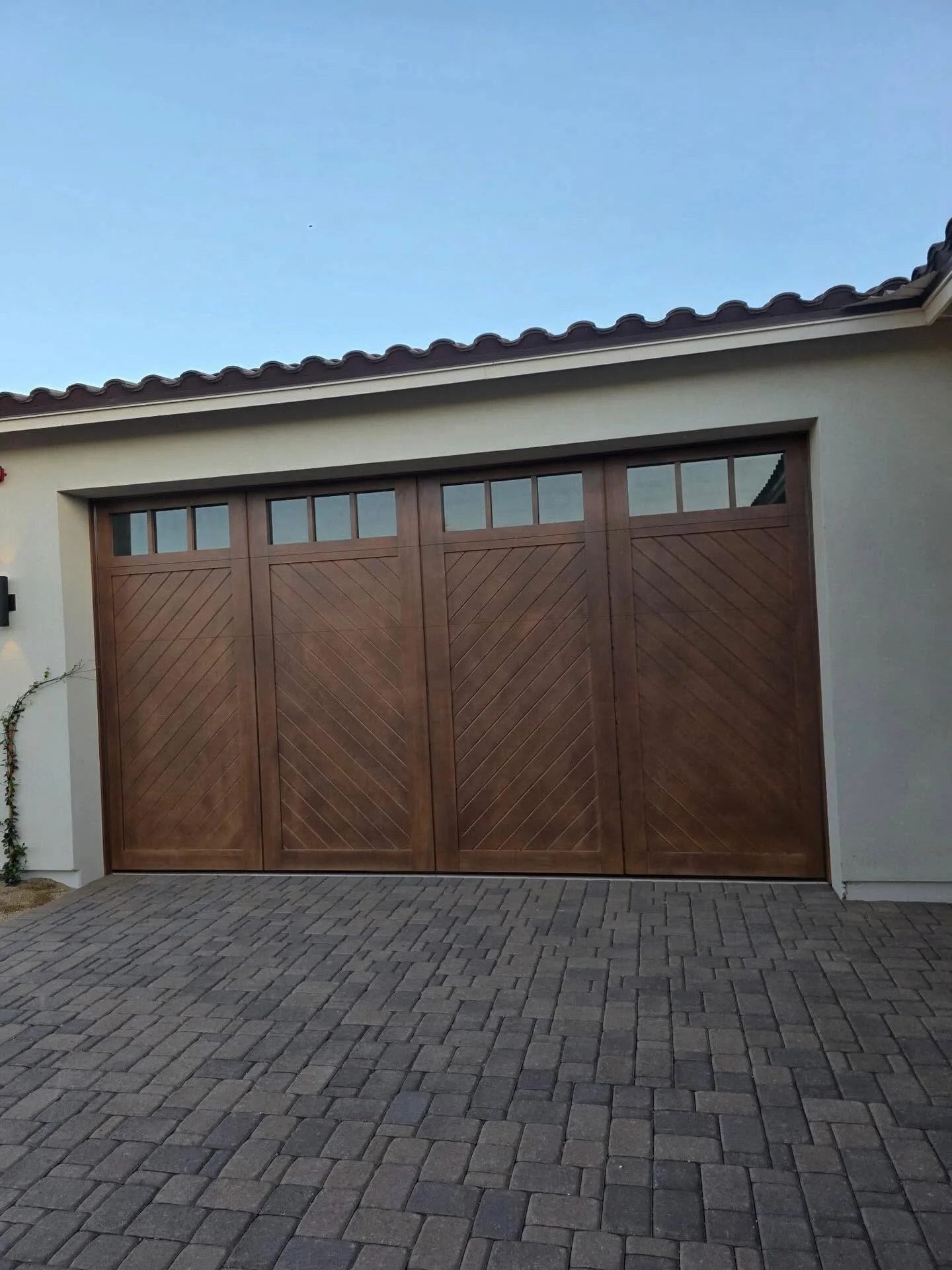
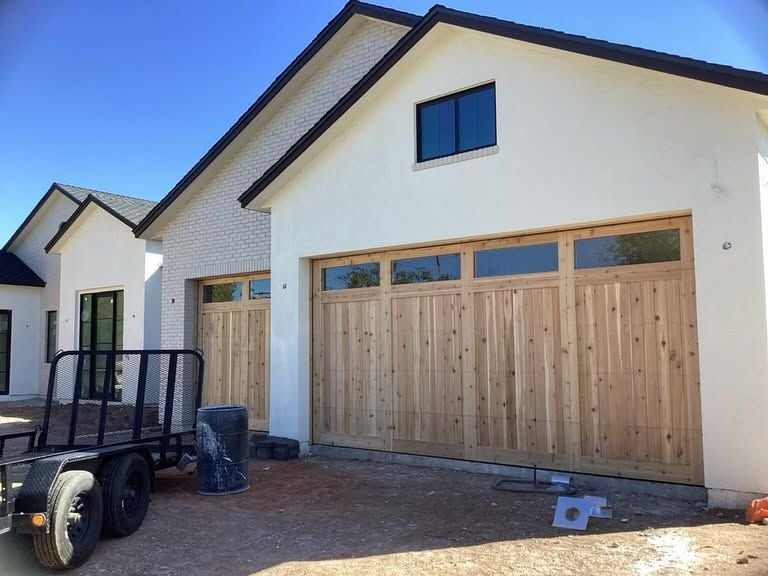
Carriage-House Doors We Have Installed
What Customers Say
"Both installers work with respect of working areas. Additionally Lou finished the weather stripping to complete the scope of work."
Where We Work
Garage door repair and service across the Phoenix metro:
- Mesa,
- Gilbert,
- Chandler,
- Tempe,
- Scottsdale,
- Phoenix,
- Queen Creek,
- Apache Junction,
- Glendale,
- Peoria,
- Ahwatukee,
- Fountain Hills and
- Paradise Valley.
Check your hardware rule before you fall for a door.
It is the one step that keeps this a straightforward purchase instead of a painful one, and it takes a phone call to your association. Then bring us a photograph of the house.