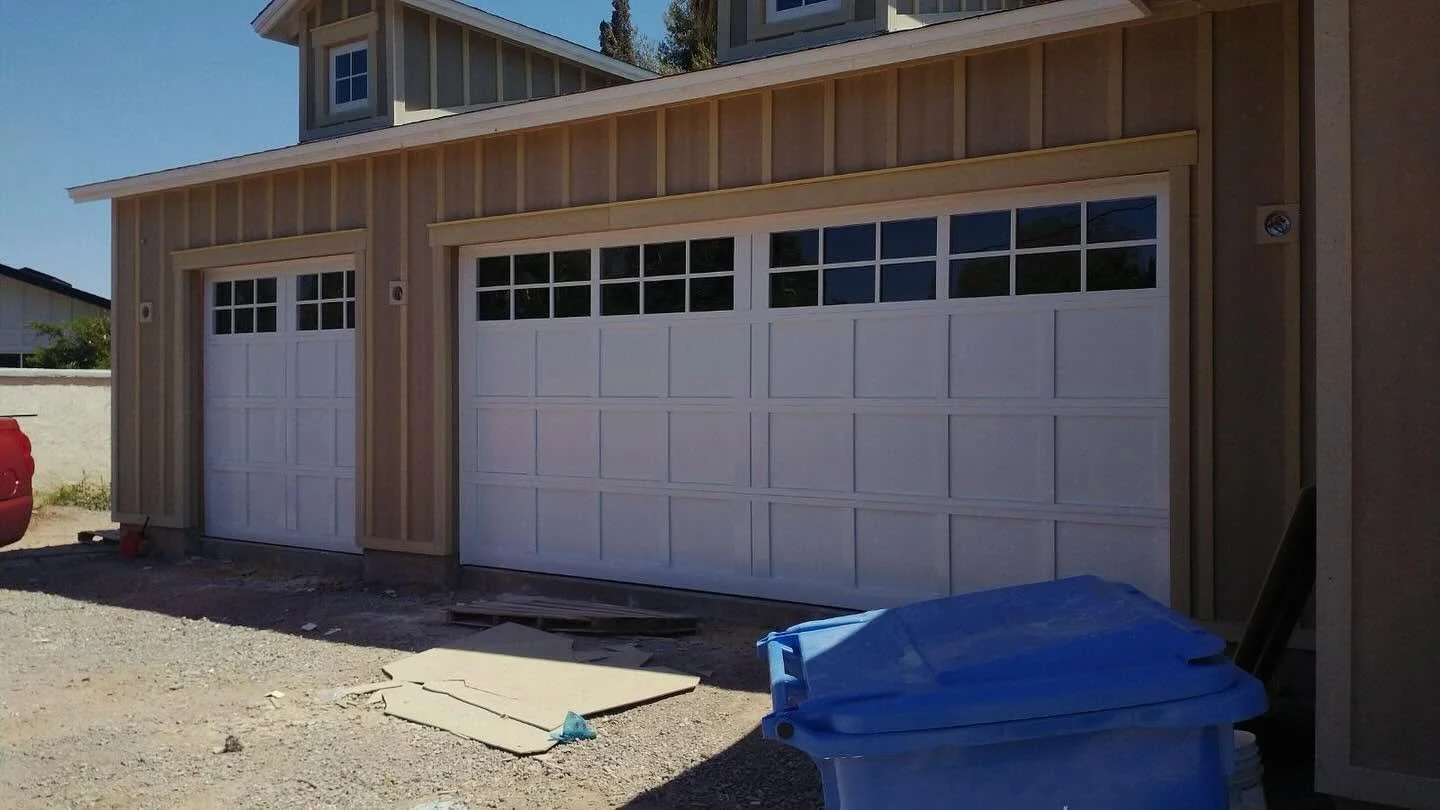
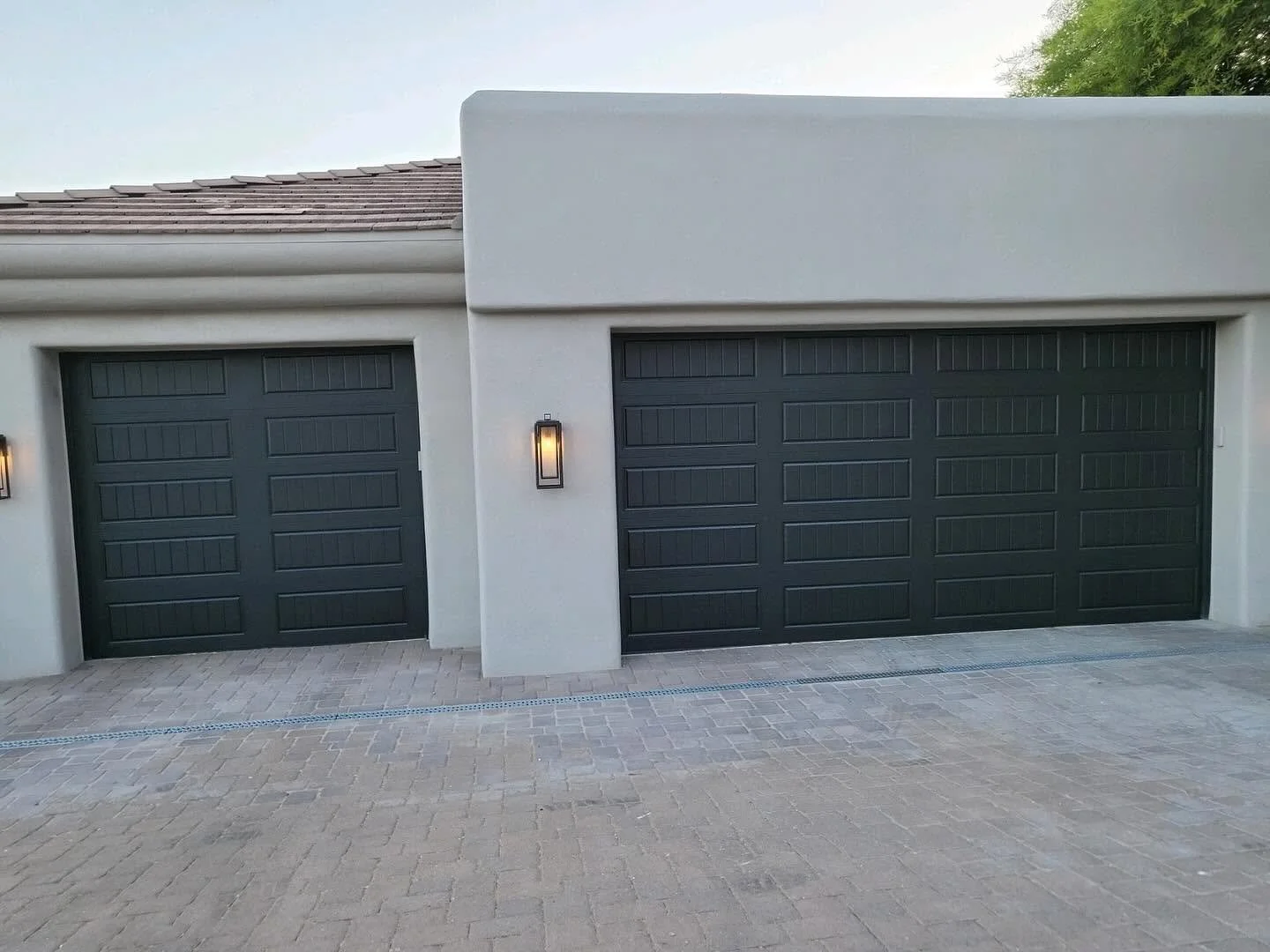
Garage Door Service in Fountain Hills, AZ
Garage door repair, springs, openers and new doors for Fountain Hills hillside homes, including sloped drives, low headroom and non-standard openings we measure on site. $85 service call, $250 after hours and weekends.
- ROC #310144
- Licensed, Bonded & Insured
- Women-Owned Family Business
- 90-Day Labor Warranty
- Google Rated

Fountain Hills is the town where the shape of the ground most often changes the job. Ahwatukee's foothills raise the same questions on individual streets; here it is most of the town. The town reports its own elevation as 1,520 feet at the fountain and 3,000 feet on Golden Eagle Boulevard, a spread of roughly 1,500 vertical feet within one town's limits.
That produces steep driveways, hillside lots, garages cut into slopes, and a set of practical problems most valley garages never have.
The Town's Own Paperwork Asks About Your Garage
Fountain Hills takes slope seriously enough that its grading paperwork asks about your garage.
Fountain Hills' Zoning Ordinance has a section on Land Disturbance Standards. Where applicable, a development or grading plan must be submitted to the Town Engineering Department and the Community Development Department before a zoning clearance is issued. The application asks for a survey by a registered land surveyor or civil engineer, topographic contours, and cross-sections perpendicular to the slope.
And it asks this, specifically:
If a garage(s) is proposed, give proposed elevation or grade at garage floor and at existing street level at drive entry. Give percentage of total average slope, and percent and length of single steepest portion of driveway.
On permits generally, Fountain Hills adopted the 2024 International Codes, effective September 1, 2025, and its amended exemption list is notably tighter than the model code: a short list with no door item. So we are not going to tell you a door swap is exempt here. Ask the town, and if your project involves the ground at all, ask early.
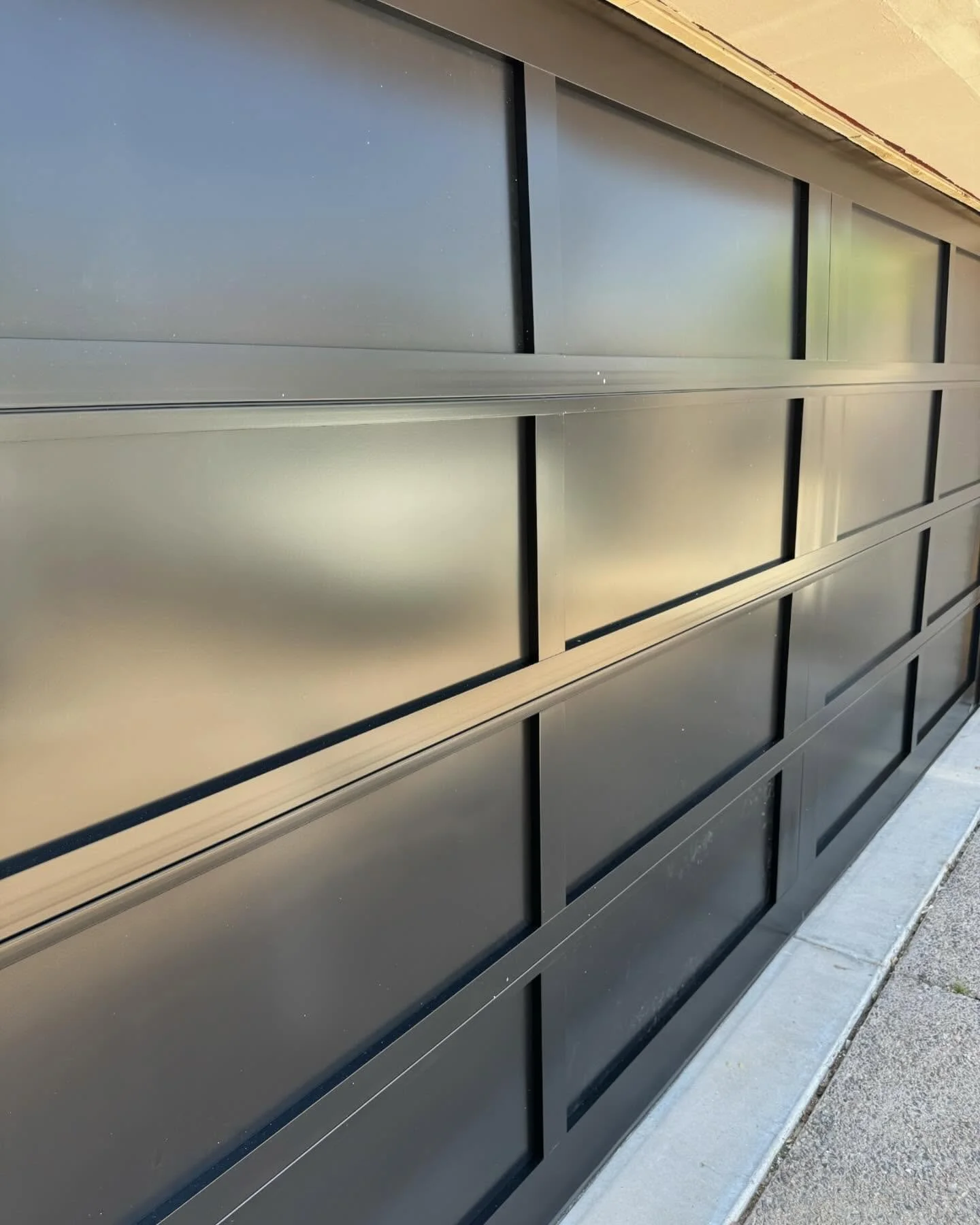 Garage door service in Fountain Hills, AZ
What Slope Actually Does to a Garage Door
Four things, and all four are real service calls.
A gap at one end that no seal will close. If the garage floor is out of level, or the drive falls away sharply from the threshold, a standard bottom seal will not close the gap on the low side. This is the single most common Fountain Hills complaint we hear. It is usually solvable with a taller bottom seal profile, or with a floor-mounted threshold that gives the seal something to meet. It is a measured job, and anyone quoting it over the phone is guessing.
Doors that go out of balance faster. A door hung in an opening that is not square, in a structure built into a slope, works its hardware unevenly. One side wears before the other, the door begins to sit crooked, and the opener takes up the difference until it can no longer.
Headroom that was never planned around modern hardware. A garage cut into a hillside frequently has a lower ceiling than a flat-lot garage of the same era. There are low-headroom track configurations for that, and there are jackshaft openers that mount on the wall beside the door rather than on the ceiling. A jackshaft drives the torsion bar directly, so on a door still running extension springs it comes with a spring conversion attached, which is usually an improvement anyway.
Access. On a steep drive, getting a truck and a new door into position is part of the job. Mention the drive when you book, and we will plan for it.
The Housing Is Newer Than the Topography Suggests
On the U.S. Census Bureau's American Community Survey 2024 five-year estimates, the median Fountain Hills home was built in 1994. Of 13,177 housing units, 12.1 percent predate 1980 and just 0.7 percent predate 1970.
Steep and dramatic does not mean old, and Fountain Hills trips people up on this.
What that means at the door. We are rarely looking at a one-piece tilt-up here, and rarely at an opener predating the 1993 entrapment-protection requirement. Mostly it is a sectional steel door on a torsion spring, in a house from the eighties or nineties, often on its fourth or fifth set of builder-grade springs.
A builder-grade torsion spring is a 10,000-cycle spring, and that figure was the minimum of a standard rather than a rating. At four openings a day, that is a little under seven years. A 1994 house has been through that cycle four times over.
The complication here is geometry. Non-standard openings, wide openings on properties with a view to build around, and garages that sit at an angle to the street are all more common here than the housing age would predict.
New Doors on a View Lot
Fountain Hills has an unusually high share of properties where the garage is part of a considered elevation, and that changes the conversation.
The garage door is often the largest surface facing the street. On a hillside property where the house steps down or the garage sits forward of the living space, it can be most of what anyone sees. That is a design decision as much as a purchase, and it is worth treating as one.
Width and weight are the constraints that bite. A wider opening means sections that flex more across the span, which is what struts are for, and more load through the hardware. A heavier door needs the spring matched to its actual weight rather than to its size, and the opener sized for the door itself. Get the spring wrong, and the door is either too heavy to lift by hand or drifts up on its own, and the opener ends up doing work it was not built for.
Insulation is worth deciding rather than assuming. If the garage is parking and storage, a good bottom seal and proper weatherstripping usually get you most of the comfort. If it is a workshop or a room somebody spends time in, the calculation changes and an insulated door is doing a different job.
We do not stock doors. Our suppliers hold them, and they are ordered per job; anything beyond a standard size and color is built to order. On a non-standard opening, which is common here, that lead time is longer, and we tell you ours before you commit.
If your community has architectural review, a new door may be a reviewable change. Arizona's Planned Communities Act, at A.R.S. § 33-1817(B)(3), provides that approval of a construction project's architectural designs, plans, and amendments shall not be unreasonably withheld. The practical problem is timing: approval is not usually a same-week process, and a broken door is a today problem. We do not make the submission for you, but we will give you the door specification in writing so it has substance.
What We Get Called Out For
Springs. The dominant call, as everywhere.
Bottom seals and thresholds, for the slope reason above. More common here than anywhere else on our map.
Balance and realignment, for the same reason.
Openers, including sizing questions on wider or heavier doors.
Doors off track. If yours has come off, stop using it and do not pull the emergency release while the door is up.
Noise and rollers. Steel rollers with a handful of ball bearings get loud in their second decade, and the housing here is well past it.
Cables. A frayed cable is a warning rather than an emergency, and worth dealing with before it lets go.
Where we stop. Secondary entrapment protection has been required on residential garage door operators manufactured on or after January 1, 1993, satisfied by a photo eye, an edge sensor, or an equivalent device. Our own rule is simpler than the regulation: if there are no photo eyes, we do not touch the motor. We will service the door and provide you with a quote for a replacement head.
Dust and Wind in Fountain Hills
The National Weather Service's Phoenix office states that during an average year, one to three dust storms generally move into the Phoenix area, predominantly from the southeast, usually lasting ten to thirty minutes, though dusty conditions can persist afterward.
Our rule of thumb: south- and east-facing doors take the most grit, so on those we check the bottom seal and side weatherstripping first.
The Same Boundaries Everywhere
What we do: garage doors and openers, residential and commercial, including doors and openers we did not install.
What we do not do: locks, handles, or rekeying, which are locksmiths' jobs. A new outlet or circuit for an opener, which is an electrician's job before ours. Jambs, framing, drywall, and stucco after a collision, where the door is ours, but the surrounding building is not. Garage screens and retrofitting windows into an existing door. Mobile and manufactured homes. The motor on an opener with no photo eyes. And home warranty dispatch, which we are not taking on right now.
In a slope problem, the door side is ours, and the ground side is not; we will tell you plainly which one you have.
There is no minimum job.
Frequently Asked Questions
There is a gap under one end of my door and new seals have not fixed it.
That is the classic sloped-drive or out-of-level-floor problem, and a standard bottom seal cannot close it. A taller seal profile or a floor-mounted threshold usually can. It needs measuring.
Do I need a permit to replace a garage door in Fountain Hills?
The town's exemption list is short, and no door appears on it, so we will not tell you it is exempt. Fountain Hills went to the 2024 International Codes in September 2025. Ask the town about your specific job.
My lot is on a slope. Does that mean extra approvals?
For a door in the existing opening, no. For anything that changes the building or the ground, the town's land disturbance process may apply, and its application asks for your garage floor elevation and the steepest section of your driveway. Ask early.
Can you fit an opener if my ceiling is low?
Usually. Low-headroom track configurations exist, and a wall-mounted jackshaft opener avoids the ceiling entirely. A jackshaft requires a torsion spring system, so on an extension-spring door, a conversion is included.
Do you come out this far?
Yes, for repairs and for installation.
Do you work on doors you did not install?
Yes, whoever installed them and whoever made them.
What Customers Say
"Excellent knowledgeable tech came out for the quote."
Every Service We Offer in Fountain Hills
Fountain Hills is where topography drives the job, so seals, tracks and balance work come up more often than the flat-valley average.
Repairs. Garage door repair covers all of it: springs, openers, cables and tracks, off-track recovery, panels, rollers, safety sensors, weather seals, balance and realignment, noisy doors, collision damage, lockouts and remote and keypad programming. Emergency repair is the same list after hours and on weekends, at the $250 call fee rather than $85.
New doors and openers. New door installation and opener installation, including a jackshaft conversion on a low ceiling, plus custom doors and the four ways to buy a door: steel, faux wood and composite, full-view glass and carriage house. Also insulation, panel reinforcement, high-cycle springs, extension-to-torsion conversion, high-lift and jackshaft conversion, and RV and oversized doors.
Maintenance. The 22-point tune-up, which is the same inspection a service call includes, booked on its own instead.
Commercial. Overhead door repair, operators, roll-up and rolling steel, sectional steel, loading dock doors, dock levelers, seals and bumpers, and self-storage doors. Our commercial hub is the way in.
We do not do locks and rekeying, electrical work, jambs, framing, drywall, or stucco, and we do not work on mobile or manufactured homes. Those boundaries are the same in Fountain Hills as everywhere else we go.
Where We Work
Garage door repair and service across the Phoenix metro:
- Mesa,
- Gilbert,
- Chandler,
- Tempe,
- Scottsdale,
- Phoenix,
- Queen Creek,
- Apache Junction,
- Glendale,
- Peoria,
- Ahwatukee,
- Fountain Hills and
- Paradise Valley.
Steep drive, gap at one end, or an opening that is not a standard size?
Tell us which, and mention the drive when you book. Office hours are Monday to Friday, 7:00 a.m. to 3:00 p.m., and a person answers after hours.