
Garage Door Opener Repair in Mesa, AZ
The service call is $85, which covers a 22-point inspection and the first half hour of labor. A person answers after hours, and after-hours and weekend work carries a $250 call fee.
- Women-Owned Family Business
- ROC #310144
- Licensed, Bonded & Insured
- 90-Day Labor Warranty
- Google Rated
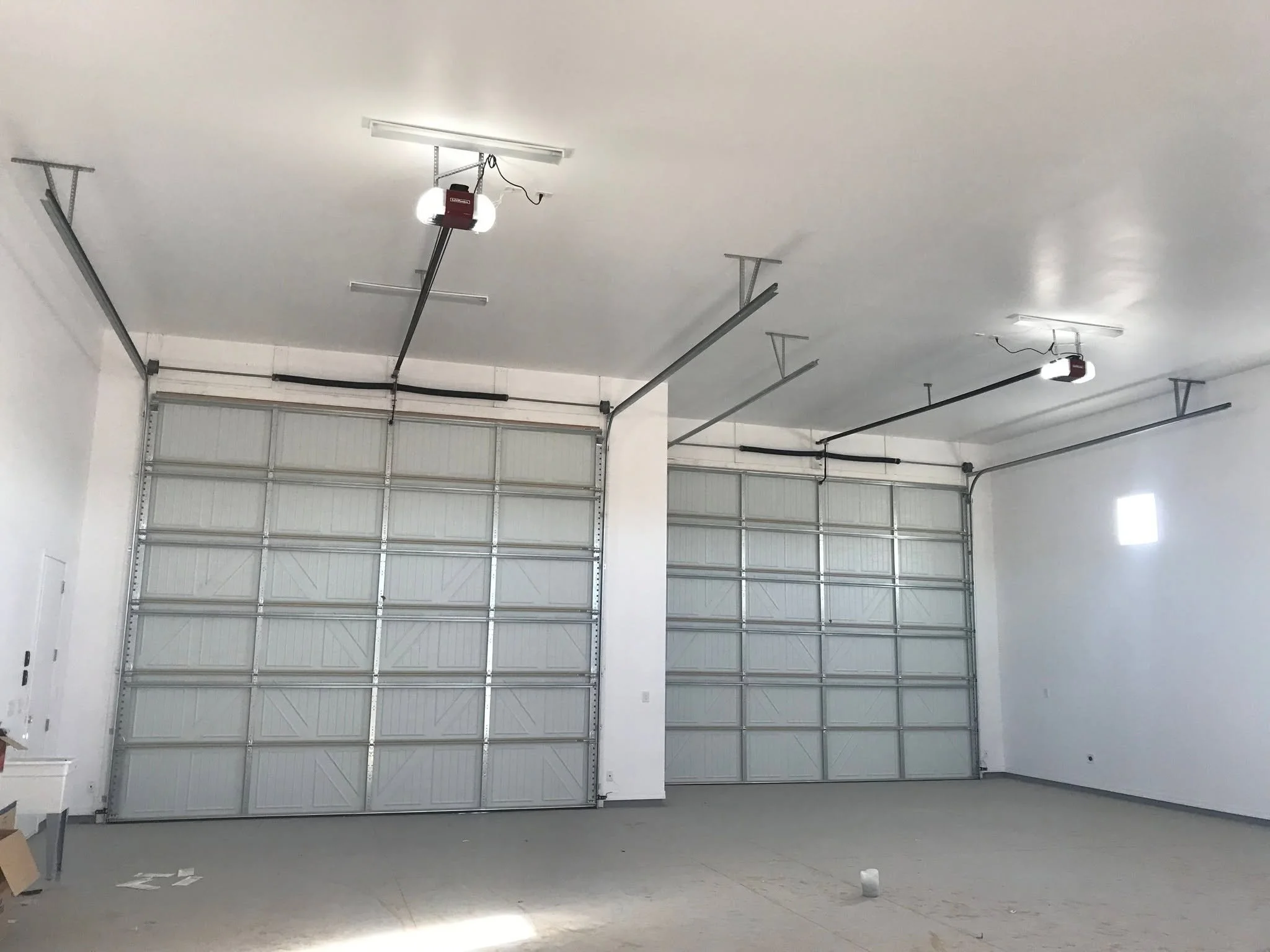
The most common call we get about openers isn't that the opener is dead. It's that the motor runs, the light comes on, everything sounds normal, and the door doesn't move.
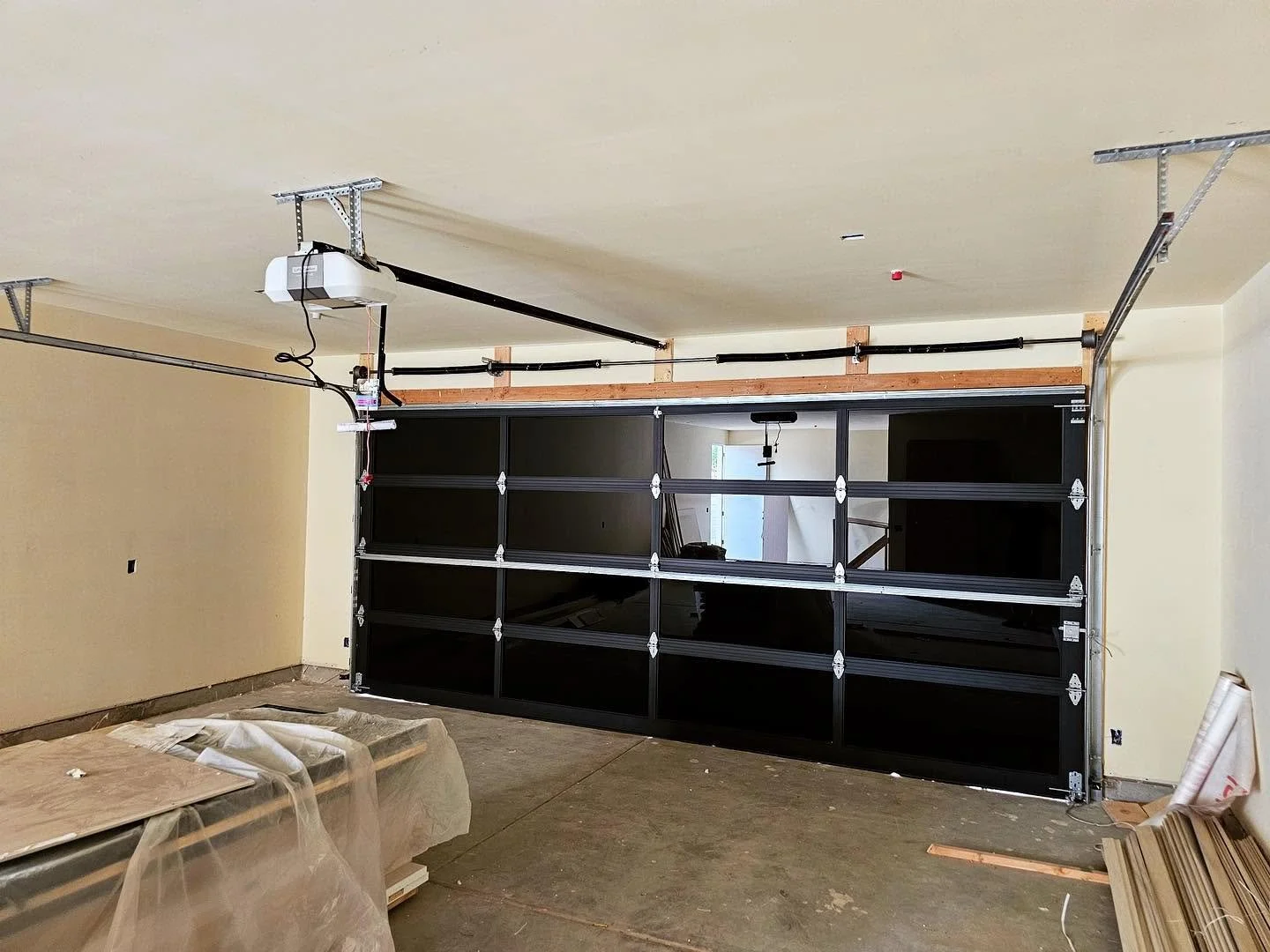
That symptom has two completely different causes with very different price tags, and there's a 60-second test you can do yourself that tells you which one you're dealing with. It's on this page, below, because you should be able to work it out before you call anybody.
We repair openers from any brand, including those we didn't install and those nobody makes anymore. When a repair is the right answer, we'll do it; when the machine has genuinely reached the end, we'll tell you that too.
Opener repair, Mesa & the Phoenix metroThe Test That Tells You Which Problem You Have
Before you book anything, do this. It takes a minute, and it's the single most useful thing a homeowner can learn about a garage door.
With the door fully closed, pull the emergency release cord, the red handle hanging from the rail. That disconnects the door from the opener. Now lift the door by hand.
If the door lifts easily and stays put three or four feet up, the door side is not the fault, and the opener is where to look. You're looking at a drive or motor fault, and that's this page.
If the door is extremely heavy or drops the moment you let go, your opener is probably fine, and your door's counterbalance has failed. That's a spring problem, not an opener problem, and it's a different repair with a different price. Stop, reconnect nothing, and go and read the spring page instead.
If the door lifts but binds, scrapes, or goes up crooked, it's the door again, and probably tracks, rollers, or cables.
You'll find companies telling you to pull the release cord and others telling you never to touch it. Both are half-right, and the distinction they omit is whether the door is closed.
What Your Opener Is Doing, and What It Usually Means
Find the line that matches yours. Most of these are repairs, and several are things you can check before anyone comes out.
| What you are seeing | What it usually is |
|---|---|
| Motor runs, door doesn't move at all | Stripped gear and sprocket, failed drive, or a disconnected trolley |
| Motor hums or buzzes, nothing turns | Failed start capacitor, sometimes a seized motor |
| Door opens fine, won't close | Safety sensors, nine times out of ten |
| Door closes only while you hold the button | The safety system has failed its self-check. This is the opener working correctly |
| Door reverses just before it touches the floor | Sensors, travel limits, or force settings |
| Door moves slower than it used to | Worn drive, failing capacitor, or a door problem |
| Grinding or clicking from the motor head | Gear and sprocket, usually mid-failure |
| Opener lights flash, and nothing happens | A diagnostic code. Count the flashes; it means something specific |
| No response from remote or wall button | Power, breaker, GFCI, or the lock button on the wall control |
| Remote works, wall button doesn't, or the reverse | Narrows it to the control itself |
| Keypad stopped working | Battery, or it needs reprogramming. A small job |
| Works sometimes, not others | Radio interference, a dying remote battery, or a logic board on its way out |
| Burning smell | Stop. Unplug it and call. Don't run it again |
Three things worth checking before you book anything: Is the outlet live, and is it on a GFCI that has tripped? Is the lock or vacation button on the wall control engaged, which stops remotes from working and is a genuinely common false alarm? And are both sensor lights on and steady?
What Actually Breaks
The gear and sprocket
The single most common opener repair. In a chain- or belt-drive system, a plastic worm gear turns a steel sprocket. Plastic against steel eventually loses. The symptom is exact: the motor runs at normal speed and sounds normal, and the door doesn't move at all. Sometimes you'll hear a grinding note underneath. It's a repair, not a replacement, and it's one of the smaller jobs on an opener.
The belt, chain, or screw drive
A belt can shred, a chain can jump the sprocket or snap, and a screw drive can strip. The door either doesn't move or moves in lurches with slack in the drive.
The trolley
The carriage that connects the drive to the door arm. If someone has pulled the release cord and it hasn't re-engaged, the opener will run happily while the door sits there. Occasionally this is the whole problem, and the fix takes a minute.
The capacitor
A failed start capacitor produces a humming or buzzing motor that won't turn or turns weakly. It's a component-level repair on most units.
The logic board
The circuit board that runs the whole machine. Symptoms are erratic: intermittent response, phantom operation, blinking lights with no obvious pattern, remotes that pair and then don't. Boards are also the part most affected by the conditions described below.
The limit and force settings
The opener needs to know where the floor is and how hard to push. If the travel limits have drifted, the door stops short or reverses at the bottom. If force settings are wrong, it reverses when it meets normal resistance. Both are adjustments.
The safety sensors
The two photo eyes near the floor. If they're misaligned, dirty, obstructed, or their wiring is damaged, the door will open normally and refuse to close. This is the most common "my door won't close" cause by a wide margin.
Remotes, keypads, and the wall button
A dead remote, a keypad that stopped working, or a wall control that no longer responds is a much smaller problem than an opener fault. It's worth ruling out first, and we'll tell you how to check over the phone.
Why Your Door Won't Close, and Why Holding the Button Works
If your door opens fine but refuses to close, and holding the wall button down continuously closes it, nothing is broken the way you think. That behavior is required by federal law.
Since January 1993, every residential garage door opener manufactured in the United States has had to include external entrapment protection. The Consumer Product Safety Commission's rule, implementing the Consumer Product Safety Improvement Act of 1990 and the UL 325 standard, followed the Commission's reports of 48 children between the ages of two and 14 who died after becoming entrapped under doors with automatic openers since 1982. The rule requires an electric eye or an edge sensor, and it requires the opener to check that safety device on every single close cycle and to fall back to constant-contact operation if the check fails: an open circuit, a short, a misalignment, or a lost signal.
So when your door will only close while you hold the button, the opener has detected a fault in its safety system and has deliberately dropped into a mode where a human being has to be present and watching. The machine is working correctly, and it is telling you to fix the sensors.
Why sensors misalign in Mesa specifically: Manufacturers require the photo eyes to be mounted no higher than six inches above the garage floor. That isn't a preference; it's a safety requirement. It also means the sensors live permanently in the six-inch band closest to the slab, which is exactly where blown dust settles and where water sheets in under a worn bottom seal during a monsoon storm. Add a bracket knocked by a bike or a trash can, and you have the three causes that account for nearly all of it.
What the Phoenix Metro Does to Openers
There's one heat claim about openers that's genuinely well supported.
Heat is hard on the circuit board inside your opener. Its electronic parts age roughly twice as fast for every 18°F hotter they run, and an unconditioned Mesa garage spends months well above room temperature. That is why boards fail sooner here than in milder climates, and why we take a board fault on an eight-year-old opener seriously instead of writing it off as a fluke.
An unconditioned garage in Mesa runs well above the house's interior for much of the year. Phoenix averages 111 days a year at or above 100°F and 21 days at or above 110°F in the 1991 to 2020 normals, and 2025 delivered 122 days over 100°F and 37 days over 110°F. You don't need a measured garage temperature to see where that leads: a board that spends months at a time above room temperature ages faster than the same board in a mild climate.
That's the honest version. What we won't tell you is a specific garage temperature, because no measured study of Phoenix garage interiors exists, or a number of years your board will last, because there's no field data for it. What we can tell you is that opener electronics fail earlier here than the manufacturer's expectations assume, and that's why you should take a board fault on an eight-year-old unit more seriously than you would in San Diego.
Two more local factors: Monsoon season runs from June 15 to September 30, and the National Weather Service notes that thunderstorm gusts in the Southwest almost always exceed 40 mph, with the strongest exceeding 100 mph. Those storms take power down across the Valley, and a power outage with no battery backup means a door you can't open without pulling the release cord. California has legally required battery backup on every new residential opener since July 2019. Arizona has no such requirement, so it's your choice.
What Affects the Price
We don't publish repair prices. What we can tell you is what moves them.
Which failure it is: A gear and sprocket kit and a logic board are not in the same range.
Whether the part is still made: Discontinued openers sometimes need a part chased down, and sometimes there isn't one.
Whether it's the opener at all: If the release-cord test points at the springs, that's a different job.
Sensors versus wiring versus board once the "won't close" fault is diagnosed.
Whether repair still makes sense, which is the next section.
Scheduled visit or after-hours call-out: After hours and on weekends, the call fee is $250 instead of $85.
Repair or Replace
We repair by default. Here's where that stops making sense.
Repair, almost always, if: The opener is under about 10 years old, the fault is a gear, belt, chain, trolley, capacitor, sensor, remote, or setting, and the unit has working photo eyes.
Have the conversation if: The unit is ten to fifteen years old, and the failure is the logic board or the motor. At that point, you're putting a major component into a machine whose other components are the same age.
Replace, and we'll say so plainly, if: the opener was made before 1993 and has no photo eyes. Those units predate the federal entrapment rule, and we won't touch the motor on an opener with no photo eyes. That isn't a sales position; it's the line we hold.
Also worth replacing rather than repairing: a chain drive on an attached garage under a bedroom, where a belt drive solves a noise problem you've probably stopped noticing; and any opener with no battery backup in a household where being unable to open the door during a monsoon outage would actually matter.
How the Visit Goes
- 1.
You call, and we schedule it.
After hours, a person answers the phone.
- 2.
Text reminder before the appointment, and an ETA text from the technician on the day.
- 3.
He runs the release-cord test first to establish whether he's fixing an opener or a door.
- 4.
He checks the simple things first.
Power at the outlet, the breaker, the GFCI, the lock button on the wall control, the sensor lights, the remotes.
- 5.
He reads the diagnostic codes.
Modern openers report faults through the LED blink pattern on the motor head, which usually narrows down the problem before anything is opened up.
- 6.
He diagnoses the actual fault and checks the mechanical side while he's there: the rail, the trolley, the door arm, the travel limits, and the force settings.
- 7.
You get an estimate, including whether we recommend repair or replacement, and why.
- 8.
You decide.
Nothing happens until you've approved it.
- 9.
The repair is done, and the safety reverse is tested before he leaves. Every visit, no matter the fault.
- 10.
You pay by card, check, cash, Zelle, or Venmo. Financing is available through Wisetack.
Why Bring Us Out
We'll tell you it's the springs when it's the springs: The release-cord test is on this page, above, for exactly that reason. Being sent an opener technician for a spring problem wastes everyone's morning.
We repair components: Gears, capacitors, boards, sensors, trolleys, and settings are all component-level repairs, and that's how we quote them.
Any brand, including the discontinued ones: LiftMaster, Chamberlain, Genie, Craftsman, Linear, Wayne Dalton, and units nobody supports anymore.
We check the safety reverse on every visit: Whatever we came out for.
We won't work on an opener with no photo eyes: You'll hear that on the phone rather than after a technician arrives.
If we get it wrong, we make it right. We honor our 90-day labor warranty and every manufacturer's parts warranty.
What Mesa Customers Say
"We bought a garage door opener and a garage door from quality. Our garage door opener west twenty years old and the belt went out on it. We thought we were gonna have to buy a new one and found out that the belt had a lifetime warranty. …"
Brands
We're a LiftMaster and Amarr dealer, and we repair every brand. We also install and service Clopay, Raynor, Wayne Dalton, Martin, Janus and Linear Pro, and we repair First United doors.
Frequently Asked Questions
The motor runs, but the door doesn't move. What is it?
Do the release-cord test above first. If the door lifts easily by hand, it's almost always the gear and sprocket, a failed drive, or a disconnected trolley, and all three are repairs. If the door is heavy by hand, it's the springs.
Why does my opener hum and not move?
Usually a failed start capacitor, sometimes a seized motor. The humming is the motor trying to start with nothing to start it.
Why does my door reverse just before it hits the floor?
Either the safety sensors are catching something, or the travel limits are set so the opener thinks the floor is lower than it is, or the force setting is too sensitive. All three are adjustments.
Why will my door only close if I hold the button down?
Because the opener has found a fault in its safety system and dropped into constant-contact mode, as federal rules require. See the section above. Fix the sensors and the behavior goes away.
What do the blinking lights on my opener mean?
Most modern units report faults by flashing the LED on the motor head a set number of times. On Chamberlain and LiftMaster units, 10 flashes indicate the safety sensors, and 2 flashes usually mean the lock button on the wall control is engaged. The exact code table varies by model, and it's the first thing our technician reads.
Has the garage door safety standard changed recently?
Yes, and almost nobody mentions it. The Consumer Product Safety Commission aligned its rule with the seventh edition of UL 325, effective May 13, 2024. It doesn't change anything you need to do to an opener you already own, but it's the standard any new unit is built to, and it's worth knowing the rules here are still being tightened.
My sensor lights are on, but the door still won't close.
Steady lights on both units usually mean the sensors themselves are fine and the problem is in the wiring between them and the motor head, or in the board. That's a visit.
Should my sensors be replaced in pairs?
Yes. They're a matched transmitter and receiver, and mixing generations or brands rarely works.
How high should the sensors be mounted?
No higher than six inches above the floor. This is a manufacturer safety requirement, not a preference, and a sensor mounted high enough to clear a child defeats the purpose.
How long do garage door openers last?
Ten to fifteen years is the usual range nationally. In an unconditioned Mesa garage, expect the electronics to be the first thing to go and expect it sooner than that, for the capacitor reasons above.
My opener is dead. What do I check first?
The outlet, then the breaker, then whether the outlet is on a GFCI that's tripped. A surprising number of "dead opener" calls are a tripped GFCI after a monsoon storm.
Can a power surge kill an opener?
Yes, and monsoon season is when it happens. The logic board is the usual casualty.
The power's out, and my car is inside. What do I do?
With the door closed, pull the release cord and lift by hand, provided the door is balanced. If it's heavy, don't force it. This is the situation battery backup exists for, and it's worth thinking about before the next storm.
Do I need battery backup?
Arizona doesn't require it. California has since 2019. Given how reliably monsoon storms take power down across the Valley, our own answer is yes, and it's what we'd fit on our own houses.
Belt drive or chain drive?
Belt if the garage is attached and especially if there's a bedroom above it. Chain lasts well and is perfectly good on a detached garage.
Why does my remote only work sometimes?
Usually a dying battery, sometimes radio interference, occasionally a receiver on its way out. Try a new battery before you assume the worst, and try a second remote to see whether it's the remote or the opener.
What's a wall-mount opener, and do I want one?
A jackshaft opener mounts on the wall beside the torsion shaft instead of on a rail across the ceiling. It frees up the whole ceiling, which matters if you have a lift, overhead storage, or a high-lift track for an RV. It needs a torsion system, so a door on extension springs isn't a candidate.
How much horsepower do I need?
For most residential doors, it isn't the deciding factor because the springs carry the weight and the opener only guides it. Where it does start to matter is with wide, heavy, insulated doors and anything over eight feet tall, where an extension kit is usually needed as well. If somebody is selling you horsepower to solve a heavy door, the heavy door is the problem.
Can you connect it to my phone?
Yes, on units that support it, and we can add it to many existing openers.
Is the emergency release cord a security risk?
It's reasonable to ask, and on some door and seal combinations the handle can be reached from outside. The fix is a shield that keeps it out of reach without stopping you from using it from inside. We would not tie or cut the cord, which disables a mechanism you may need.
How long does an opener repair take?
Most are under two hours. A full replacement is usually two to three.
Will you repair an opener you didn't install?
Yes. Most of them.
Getting More Years Out of It
Openers are low-maintenance machines, and the few things that help are quick.
Wipe the sensor lenses: Twice a year, and again after any monsoon dust storm. A dry cloth is enough. This is the simplest preventive job on the whole door, and it heads off the most common fault on this page.
Grease the opener rail, not the motor: This is the one exception to the rule elsewhere on this site about keeping lubricant out of a track: the opener rail is not the door track, and on a chain drive it takes a light coat of white lithium grease. The opener head itself needs nothing.
Give it a surge protector: Monsoon storms take power out across the Valley several times a season, and the logic board is what pays the price.
Replace remote batteries before they die completely: A weak remote produces intermittent behavior that people mistake for a failing opener.
- Garage door service in Mesa, AZ
The rest of the routine is the same on every door: lubricant, the annual balance check, and the safety-reverse test. All of it is on our tune-up page.
Where We Work
Opener repair across the Phoenix metro:
- Mesa,
- Gilbert,
- Chandler,
- Tempe,
- Scottsdale,
- Phoenix,
- Queen Creek,
- Apache Junction,
- Glendale,
- Peoria,
- Ahwatukee,
- Fountain Hills and
- Paradise Valley.
Run the test, then tell us what happened.
Pull the release cord with the door closed and lift it by handEither way, you'll know more than most people do when they call, and we'll know which technician to send.