
Garage Door Spring Repair in Mesa, AZ
Heard a bang and the door won't lift? Stop using it. We replace torsion and extension springs on any brand, measure every spring, and price the job before anything comes apart.
The service call is $85, covering a 22-point inspection and the first half hour of labor. A person answers after hours, and after-hours and weekend work carries a $250 call fee.
- Women-Owned Family Business
- ROC #310144
- Licensed, Bonded & Insured
- 90-Day Labor Warranty
- Google Rated
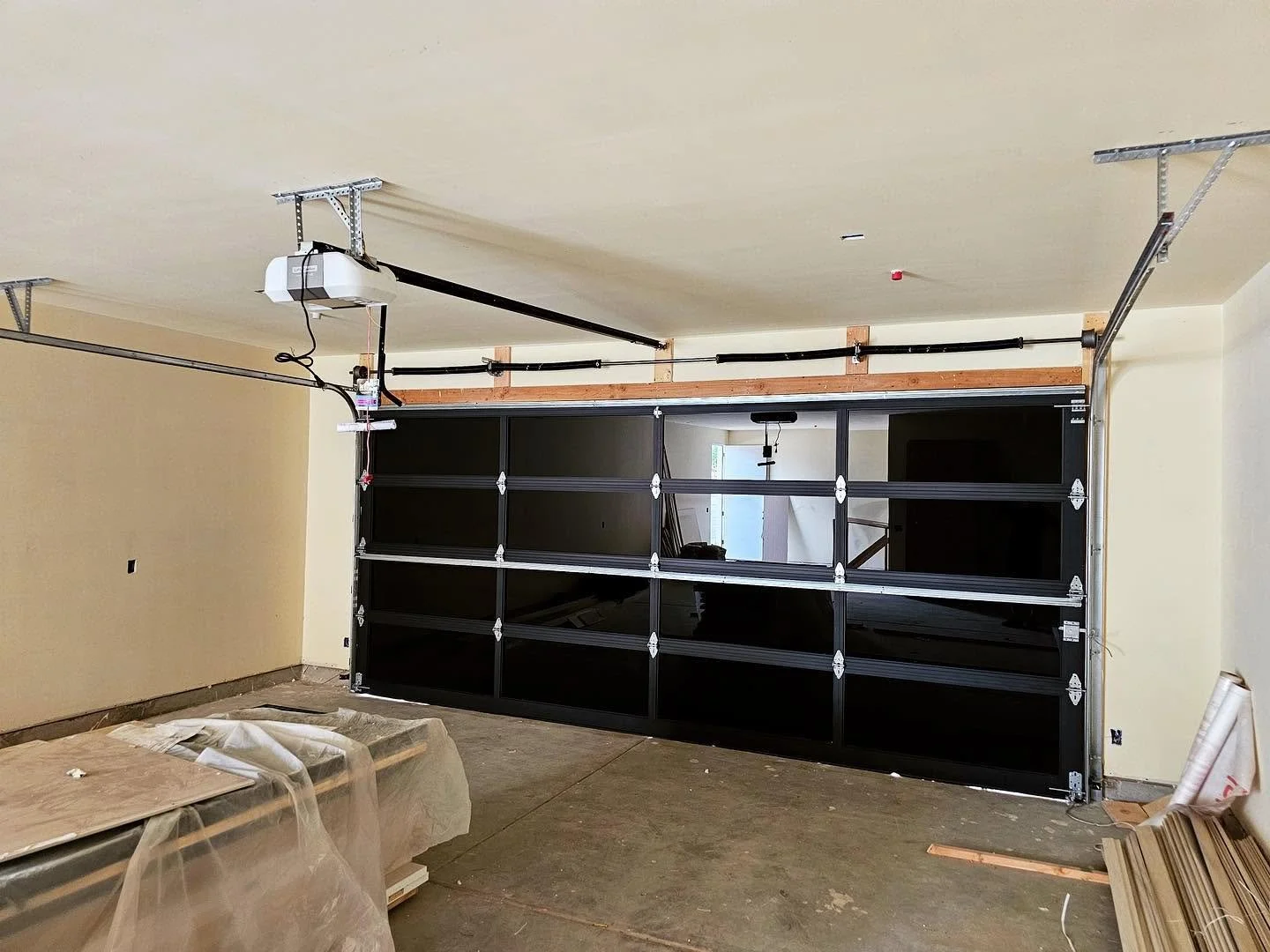
A broken spring is the loudest failure a garage door has. Most people hear it from inside the house and think something fell over. Then they press the remote, the opener strains, and the door lifts two inches and stops.
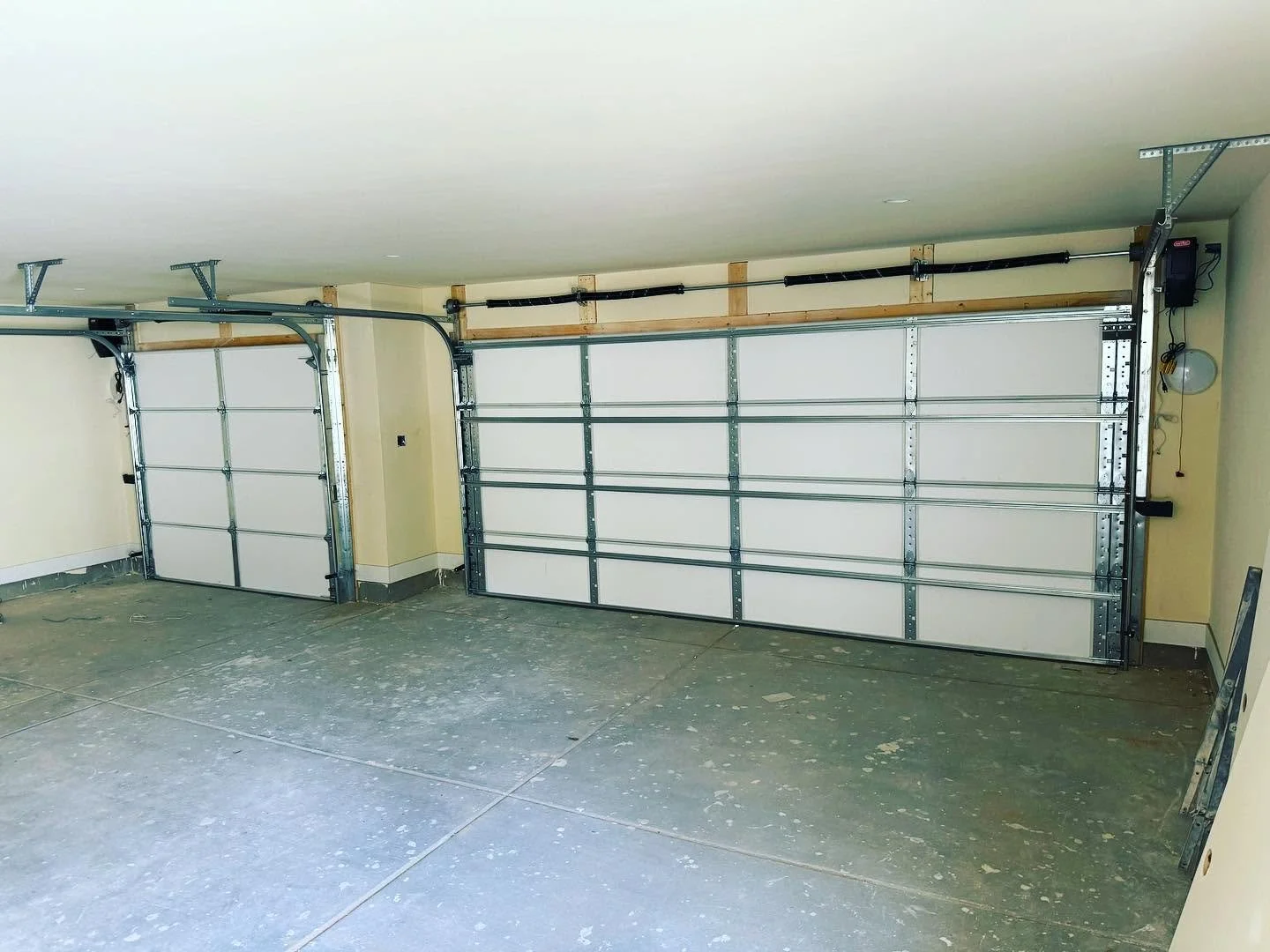
That is not a coincidence, and it is not the opener's fault. The springs carry the entire weight of your door. The opener only guides it. When a spring lets go, a door that felt weightless yesterday is suddenly two hundred pounds or more sitting on a motor built to move about ten.
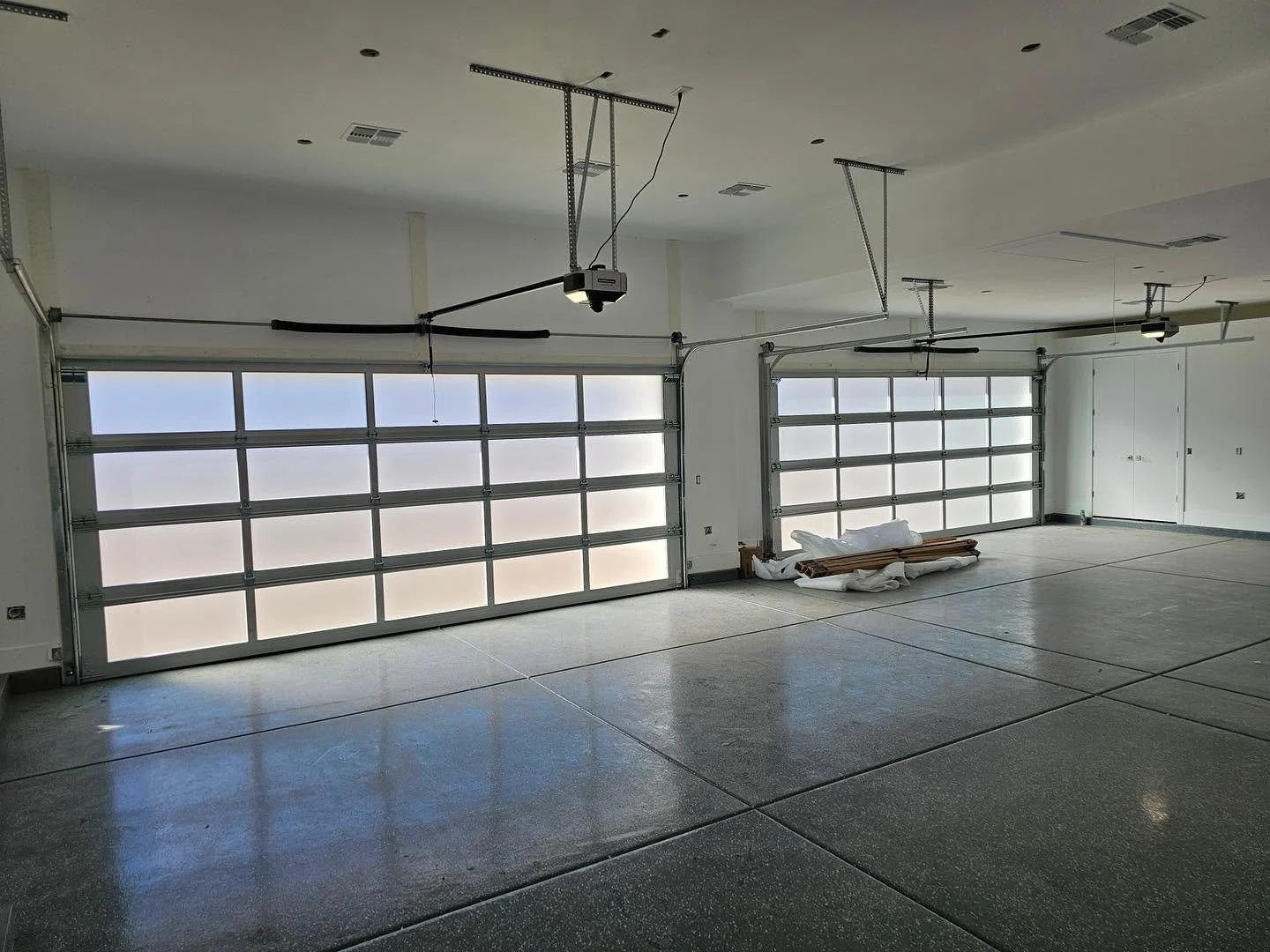
We replace torsion and extension springs across the Phoenix metro, on doors we installed and doors we didn't. The technician measures the spring, tells you what your door actually needs, and prices the job before anything comes apart.
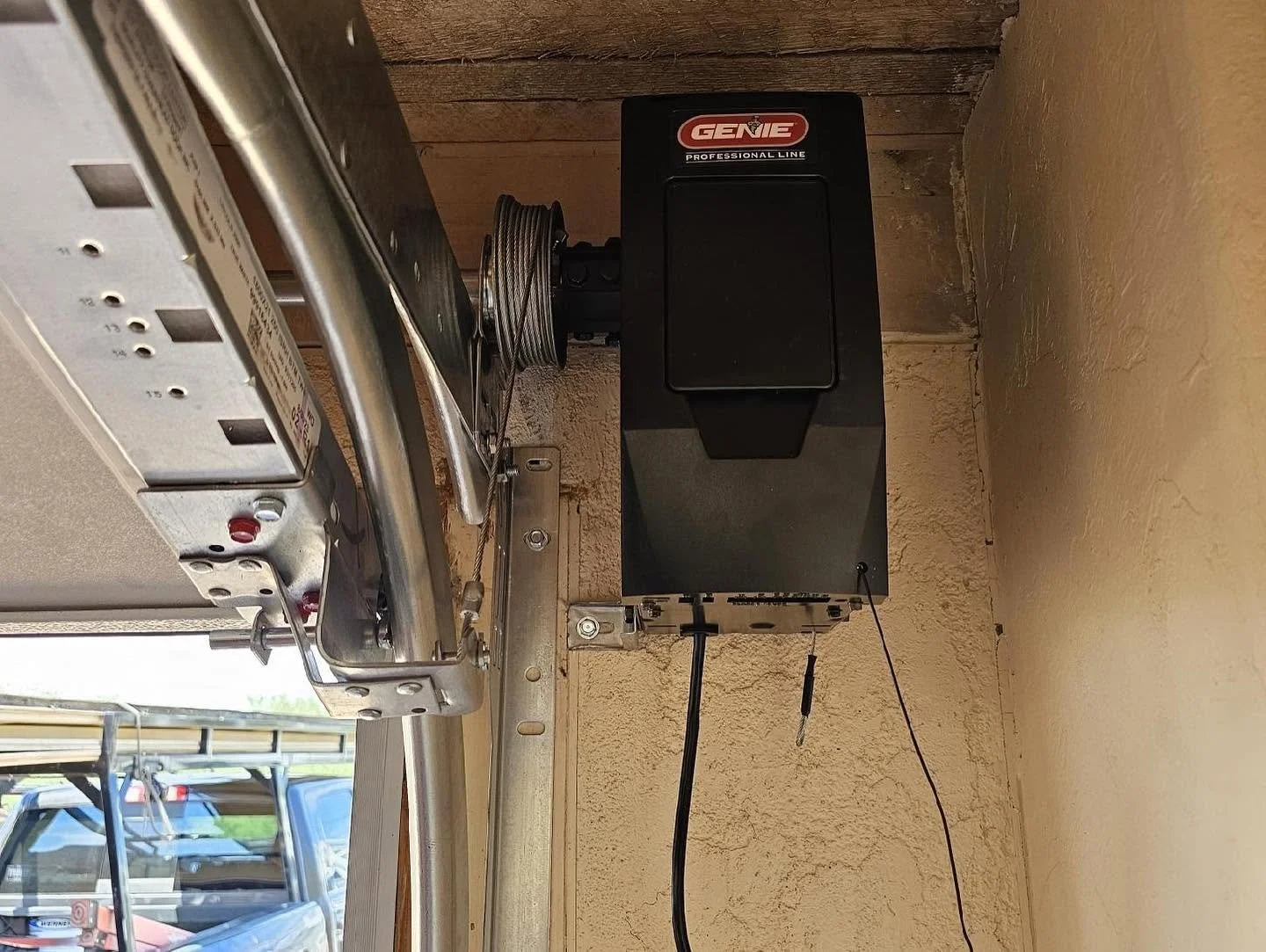 Spring repair, Mesa & the Phoenix metro
What the Spring Actually Does
Almost every wrong assumption about garage doors starts here, so it's worth thirty seconds.
DASMA's figure for garage doors ranges from 90 pounds to over 500, and a typical residential door falls well within that range. Your opener is rated to move far less than that. It works because the springs above the door store energy when the door comes down and give it back when the door goes up, so the opener is only ever nudging a load that's already close to weightless.
That's the counterbalance principle, and it's why a properly balanced door will hold where you leave it three to four feet off the floor when you pull the release cord and lift it by hand. Chamberlain's own guidance allows for a slow, gentle drift either way. What fails the test is a door that slams shut or shoots upward with force, and a door doing either has been leaning on the opener for a while.
Torsion springs do this by twisting. They sit on a shaft above the opening, and as the door lowers, cables wound onto drums at each end of that shaft turn it and wind the spring tighter. Extension springs do it by stretching, mounted along the horizontal tracks and pulled longer as the door comes down. Both store the same energy. Torsion does it in a more controlled way, in a smaller space, with the load carried on a shaft rather than on stretched steel beside your car.
The practical consequence for you: when the spring fails, the opener lifts the whole door. That is the moment to stop, not the moment to press the button harder.
How to Know It's the Spring
You heard a bang and nothing looks wrong
The sound is the stored energy in the spring releasing all at once. People describe it as a gunshot, a car hitting the house, or something heavy falling off a shelf. Often nothing in the garage has moved, and there's no obvious damage, because the only thing that changed is a coil of steel above the door.
The opener runs, but the door barely moves
The motor sounds normal. The door lifts a few inches, shudders, and stops or slides back down. The opener is doing exactly what it's designed to do, and the counterbalance it depends on is gone.
The door is suddenly far too heavy to lift by hand
If you've already tried lifting it and found it far heavier than it used to be, that's your answer. Don't go and try it now to confirm. A door whose spring has broken is carrying its full weight, and the annual balance check described further down is a test for a working door, not a diagnostic for a broken one.
There's a two-inch gap in the coil
On a torsion spring, above the door and along the shaft, look for a clean break with a visible gap between the two halves. It's the most reliable visual confirmation there is, and it's usually obvious once you know to look.
The door hangs crooked or one side sags
On a two-spring door, one spring breaking leaves the other pulling alone. The door goes up at an angle, binds in the tracks, and starts putting load through hardware that was never meant to take it.
It opens a few inches and slams back down
Common on extension-spring systems. The remaining tension isn't enough to hold the door, and gravity wins before the opener can catch it.
What We Do
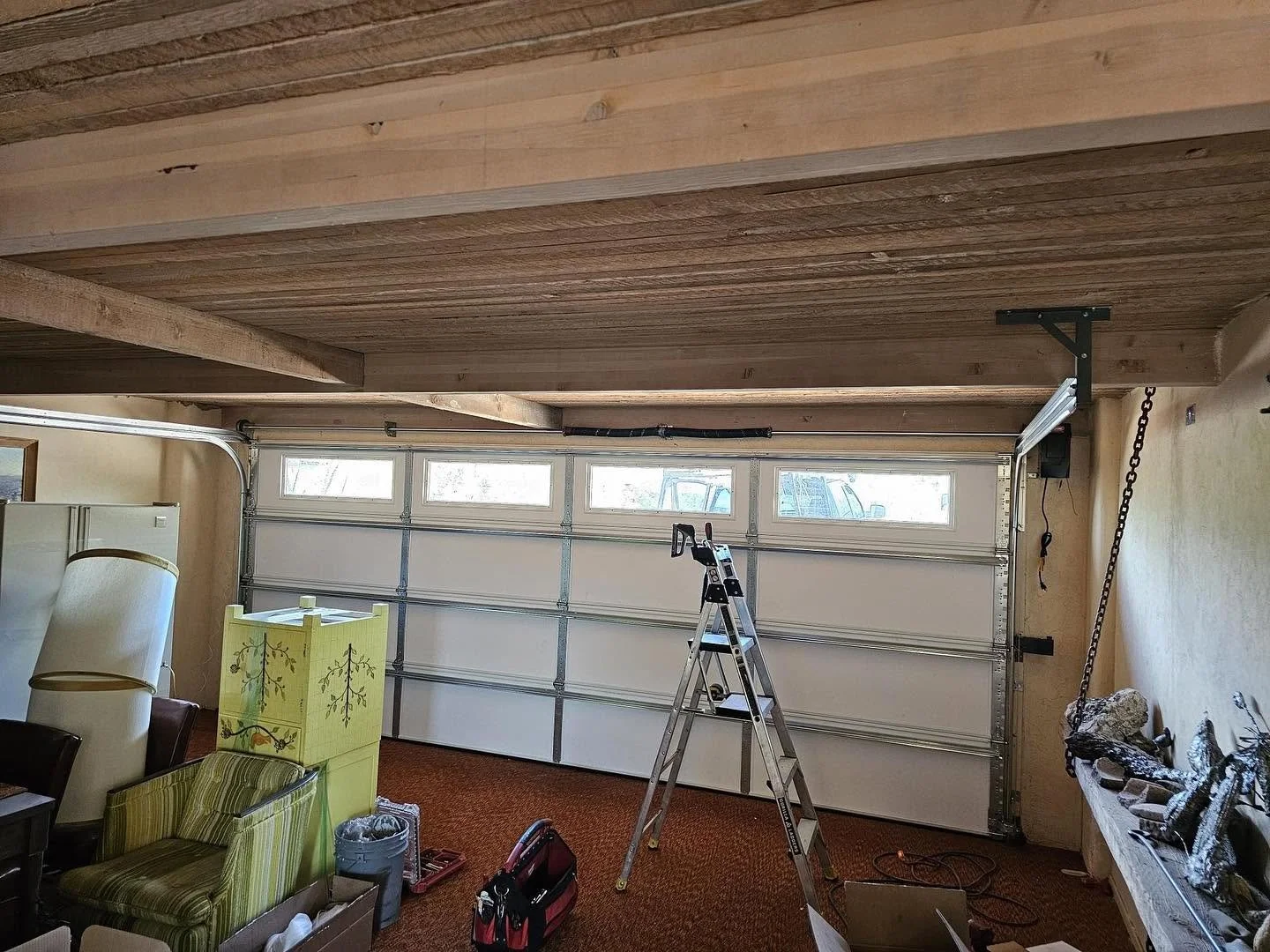
Torsion spring replacement
The horizontal spring, or pair of springs, mounted on a shaft above the door opening. This is what most Phoenix-area doors built in the last thirty years use. We replace in matched pairs on two-spring systems, for reasons set out below.
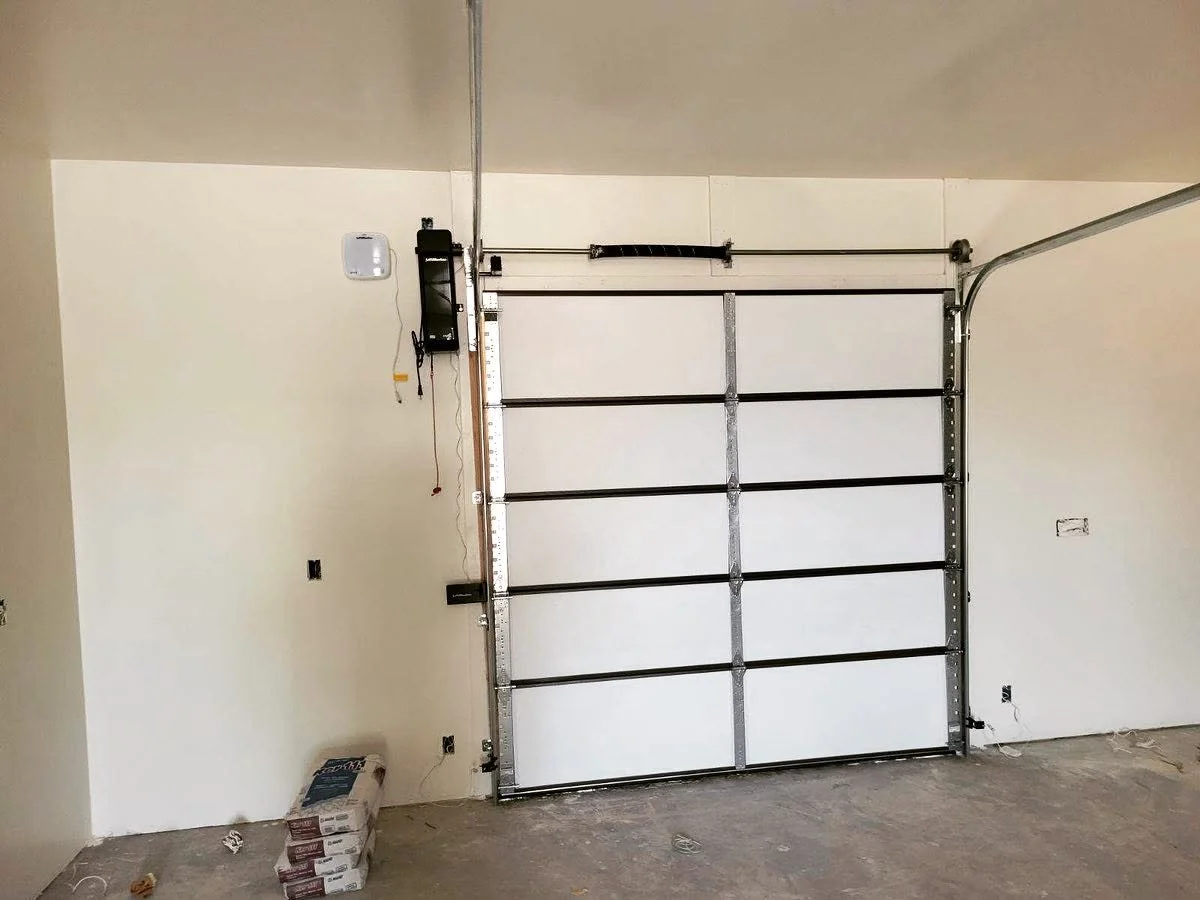
Extension spring replacement
The long springs running parallel to the horizontal tracks on either side, more common on older doors and low-headroom garages. If your extension springs don't have safety cables running through them, we'll fit them. An extension spring under tension with no containment cable becomes a projectile when it breaks, and it's the single most dangerous configuration still in service on residential doors.
Wayne Dalton TorqueMaster systems
A sealed torsion system with the springs enclosed inside the tube. Several companies in the valley decline these because the counterbalance can't be inspected visually and the failure presents differently. We service them.
Cycle rating selection
10,000-cycle through 100,000-cycle. High-cycle springs are custom ordered. Which rating suits your door is determined by your actual daily use, and the technician will ask you about it before quoting.
Companion hardware while the system is apart
Cables, drums, the center bearing, and end bearing plates are all exposed when the springs come off, and that is when we look at them. If something's worn, we'll show you and price it. If it's fine, we'll say so.
Conversion from extension to torsion
Worth considering when your extension springs are due anyway, especially if you want a wall-mounted jackshaft opener. If your extension springs have containment cables, conversion is optional, not a safety fix.
What Affects the Price
We don't publish repair prices, because a number on a web page is a guess and you'd be right to distrust it. What we can tell you is exactly what moves it, so you can judge any quote you're given, including ours.
One spring or two: On a two-spring door we replace both. The mechanical reasoning is set out below so you can check it.
Cycle rating: A 20,000- or 50,000-cycle spring is physically larger than a builder-grade 10,000.
Door weight and size: A 16-foot insulated double door needs materially more spring than a single-car pan door.
Wire size, inside diameter, length, and wind direction: Four measurements, all of which have to be right.
Whether the door is one-piece, TorqueMaster, or a conversion: These take longer.
Condition of the cables, drums and bearings: Sometimes they're fine. Sometimes they're the actual reason the spring failed.
Whether it's a scheduled visit or a call-out at night or on a weekend: a call-out carries an emergency rate, and we'll tell you the figure before anyone is dispatched.
You'll get the figure from the technician on site after the door has been measured and before any tools are brought out.
How the Visit Goes
- 1.
You call, and we schedule it.
After hours, a person answers the phone.
- 2.
You get a text reminder before the appointment, and the technician texts an ETA on the day.
- 3.
He isolates the door.
Power off at the opener, door secured, before anything else happens.
- 4.
He measures the spring.
- 5.
He inspects the rest of the counterbalance.
Cables for fraying, drums for grooving, bearings for play and contamination, the shaft for straightness.
- 6.
You get an estimate covering what he found and what each part of it costs.
- 7.
You decide.
Nothing is done until you've approved it, and taking time to think or getting a second quote is normal.
- 8.
The old springs come off under control, using winding bars, with the tension released in stages.
- 9.
The new springs go on and get wound to spec for your door's weight and height, not to a rule of thumb.
- 10.
He balance-tests it.
Opener disconnected, door lifted by hand to three or four feet, and it should hold there, without slamming down or pulling up.
- 11.
He cycle-tests it under the opener, checks the safety reverse, and reconnects.
- 12.
You pay by card, check, cash, Zelle, or Venmo. Financing is available through Wisetack.
What the Phoenix Metro Does to Garage Door Springs
Most of what gets said about Arizona heat and garage door springs is wrong, so here's the version we can actually support.
Heat does not weaken spring steel at garage temperatures.
Oil-tempered spring wire is tempered during manufacture at temperatures in the hundreds of degrees. Nothing that happens in a Mesa garage in August comes close to that, and a spring's life is governed by how many times it has been wound and unwound, not by how hot the room got. Anyone telling you the heat wore out your springs is guessing.
What the climate genuinely does affect is contamination and habit:
DASMA, the industry standards body for door manufacturers, addresses this directly in its technical data sheet on spring cycle life. Two of its findings apply here.
The first is that surface rust matters: it reduces the effective area of the spring wire, and corrosion pits become the points where fatigue cracks start and accelerate.
The second is more specifically ours. DASMA notes that doors left open for long periods on a regular basis expose their springs to greater swings in temperature, moisture, and air quality, and recommends that doors in climates subject to extreme heat be kept closed where possible.
Heat does not wear out springs. Dust and rust do: valley dust dries out lubricant faster, and rust pits are where spring wire cracks. That is why we lubricate the bearings whenever the springs are off, and why keeping the door closed in summer helps.
Why Bring Us Out
We measure every spring: Two common torsion wire sizes, .2343 and .2375, are close enough to be indistinguishable to the naked eye if you measure them carelessly. Across twenty coils, that difference is about a sixteenth of an inch. Guess wrong, and you've installed a spring that can't lift the door it's on. This is why measuring takes a few minutes on site.
We fit safety cables to extension springs: Where a door has extension springs and no cables, the cables go on the estimate with the reason attached.
Any brand, any age, including the awkward ones: One-piece tilt-up doors. TorqueMaster. Doors and openers somebody else installed. There's no minimum job and no minimum invoice.
We chase the right part: High-cycle springs are custom ordered. If your door needs one, that's what it gets.
You'll hear the boundary on the phone: If the job turns out to be something we don't do, you'll be told before a technician is standing in your driveway, not after.
If we get it wrong, we make it right: Ninety days on our labor, and every manufacturer's parts warranty honored.
Why Both Springs Get Replaced, and Why the Measurement Matters
On a two-spring door, both springs were installed on the same day and have done exactly the same number of cycles. When one breaks, the other isn't healthy. It's the same age, with the same fatigue history, and it's now doing all the work alone. Replacing one is buying a second service call, and not a distant one.
There's a mechanical reason as well. Springs are matched to balance the door. A new spring and a fatigued one produce different torque, so the door lifts unevenly, binds in the tracks, and loads the rollers and hinges asymmetrically. The uneven wear that follows is what turns a spring job into a track job.
The measurement question is where most of the damage in this trade is done. A torsion spring is defined by four things: wire diameter, inside diameter, overall length, and wind direction. Get any of them wrong, and the spring is either too weak to lift the door or strong enough to fight the opener on the way down. Door Doctor Manufacturing, one of the trade's spring suppliers, estimates that roughly 30% of manufacturers and service companies mix wire sizes when replacing springs, and notes that using properly matched springs is what allows a system to reach its rated cycle life. That statistic is the single best argument for watching whether the person quoting you actually measured anything.
One more thing DASMA documents that almost nobody mentions: repainting your garage door can put it outside its spring specification because paint adds weight, and the counterbalance was calculated for the door's original mass. A technician can check that with a scale once the counterbalance is disabled. If your springs keep breaking and nobody can tell you why, that is often the answer.
DASMA documents a second failure mode unrelated to age: improper stretch. On a torsion spring, too little stretch causes the coils to scrape against each other on every cycle. Too much and the spring snakes along the shaft and rubs anyway. It can arise at winding or develop later from side-to-side shaft movement, which means a spring can be the right spring, correctly fitted, and still be wrong.
What Mesa Customers Say
"We are very happy with Overhead Garage Doors. They everyone was so nice and was prompt in getting our repairs done. We would recommend them to anyone with garage door issues. We thank you for a great job!"
Brands
We fit springs to whatever door you have. On the door and opener side, we're a LiftMaster and Amarr dealer, and we install and service Clopay, Raynor, Wayne Dalton, Martin, Janus, First United, and Linear Pro Access.
Frequently Asked Questions
How long do garage door springs last?
They're rated in cycles, not years, and one cycle is one open plus one close. The industry's own standard, ANSI/DASMA 102, defines a residential door as one "normally expected to be operated less than 1,500 cycles per year," which works out to about four times a day. That's where the familiar "seven to ten years" comes from, and it's why your own daily count matters more than any average.
Are high-cycle springs worth it?
Often, and the reason is not what people assume. A high-cycle spring isn't better steel. It's a physically larger spring, thicker wire, and usually longer, producing the same lifting torque with less stress per coil.
Can I replace just the broken one?
You can, and we'd rather you didn't, for the reasons above. If you want only the broken one replaced after we've explained it, that's your call, and we'll do the work.
Can I open the door with a broken spring?
Sometimes, and that's the problem. The opener may drag it partway up, which burns out the motor, bends the top section, or lets the door drop. Unplug the opener and leave it.
Can I lift it by hand?
Please don't. A double door is a couple of hundred pounds, and the springs are what carry that weight. With one broken, all of it is on you, and it can come down faster than you can move. If your car is trapped, call us, and we'll talk you through it on the phone.
Can I replace a torsion spring myself?
This is the one repair we'd tell anyone not to attempt. A wound torsion spring holds enough energy to break bones; the tension has to be released in stages with winding bars, and getting the wind direction wrong on reassembly is dangerous. Rollers, remotes, and weather seal are more reasonable, with one exception: leave the bottom two rollers alone, because the bottom bracket holds the cable and the spring tension behind it.
How do I tell whether I have torsion or extension springs?
Torsion springs sit horizontally on a shaft above the door opening. Extension springs run along the horizontal tracks on either side, parallel to the ceiling. If you can see long springs stretched out beside the tracks, they're extension springs.
Do extension springs need safety cables?
Yes, and if yours don't have them, we'll fit them. The cable runs through the middle of the spring and contains it if it breaks.
Why do my springs keep breaking?
Cycle fatigue is the usual answer, but if it's happening repeatedly, look at the less obvious causes: the wrong wire size installed last time, improper stretch, contaminated bearings that put side load on the shaft, or a door that's heavier than its counterbalance was calculated for. Repainting a door can do that last one.
How long does the job take?
Once the technician is on site, a straightforward pair of torsion springs normally takes 45 to 90 minutes, including balance and safety testing. Allow longer for TorqueMaster systems, extension-to-torsion conversions, or where cables, drums, or bearings also need work.
Do you do this at night and on weekends?
A person answers the phone after hours. Most of the time we book you into the next working slot at the standard rate. If you need someone out that night or over a weekend, that's a call-out at an emergency rate, and we'll give you the figure before you agree to it. We don't run 24-hour dispatch, and we won't promise you a truck in an hour.
My door closes too fast and slams. Is that the springs?
Usually yes. A door that accelerates on the way down has lost counterbalance, so gravity is winning against a spring that can't hold it anymore. It's also genuinely dangerous, because a slamming door is a crushing hazard and it's punishing the bottom section and the hinges every cycle. Don't wait on this one.
The door won't stay open halfway. What does that mean?
It depends on whether it fails by hand or only under power, and those are different faults. If it drifts down when you let go of it by hand, the springs are under-tensioned or fatigued; if it creeps up, they are over-tensioned. Stopping partway while the opener is driving it can be the counterbalance, but it can equally be a force limit, a sensor, or the door binding on something. Our balance and realignment page separates the four.
What's the difference between the lift cable and the safety cable?
The lift cable runs from the bottom bracket up to a drum and does the actual work of raising the door. A safety cable is different: it threads through the middle of an extension spring and does nothing until that spring breaks, at which point it prevents the pieces from traveling across your garage. Torsion systems don't need them. Extension systems do, and plenty of older Mesa doors don't.
Will you work on a door you didn't install?
Yes. Most of our spring work is on doors somebody else installed.
Making the Next Set Last Longer
You can't stop cycle fatigue. You can stop the things that shorten a spring's life below its rating.
Lubricate every three to six months, and more often here:
That interval is Clopay's, which notes that in dusty climates lubricant may not last as long and may need to be reapplied more frequently. Use the right thing. Clopay's guidance is silicone spray or white lithium grease, not WD-40 or other light oils, which attract dust and cause premature wear. In a Serious PM-10 area, that carries more weight than in most of the country. Silicone on hinges and metal rollers, lithium grease on the springs, nothing on nylon rollers, and nothing in the tracks: wipe those clean and dry, because lubricant in a track channel holds grit against the roller. One caveat: follow your own door manufacturer's guidance where it differs, as Martin and Raynor do.
Keep the door closed in summer. DASMA's technical guidance recommends this in extreme-heat climates, because an open door exposes the springs to wider swings in temperature, moisture and dust.
Test the balance once a year: Pull the release cord with the door down, lift it by hand to three or four feet off the floor, and let go. It should hold. If it drifts, something in the counterbalance has changed, and it's worth finding out now. The full annual routine is on our tune-up page.
Don't hang things from the door or the tracks, and don't let a technician torch-cut a spring to length on your driveway. Molten splatter on adjacent coils creates brittle spots, and DASMA lists it as a cause of premature failure.
Keep the tracks clean: Dust blown by a monsoon storm settles in the horizontal tracks, which is why Clopay shortens the interval.
Where We Work
Spring repair across the Phoenix metro:
- Mesa,
- Gilbert,
- Chandler,
- Tempe,
- Scottsdale,
- Phoenix,
- Queen Creek,
- Apache Junction,
- Glendale,
- Peoria,
- Ahwatukee,
- Fountain Hills and
- Paradise Valley.
Tell us what the door did.
The bang, the two-inch lift, the crooked hang. The call costs nothing, and what you describe tells us what to prepare a technician for. He measures the spring on the door and prices it before anything comes apart.