

Commercial Door Operators in Mesa & the Phoenix Metro
Repair, replacement and safety-device checks for trolley, jackshaft and hoist operators on sectional, rolling steel and dock doors. We size the duty class to your real cycle count, so the next operator lasts. ROC #310144.
Office hours are Monday to Friday, 7:00 a.m. to 3:00 p.m. A person answers after hours, and after-hours and weekend work carries a $250 call fee.
- ROC #310144
- Licensed, Bonded & Insured
- Women-Owned Family Business
- 90-Day Labor Warranty
- Google Rated
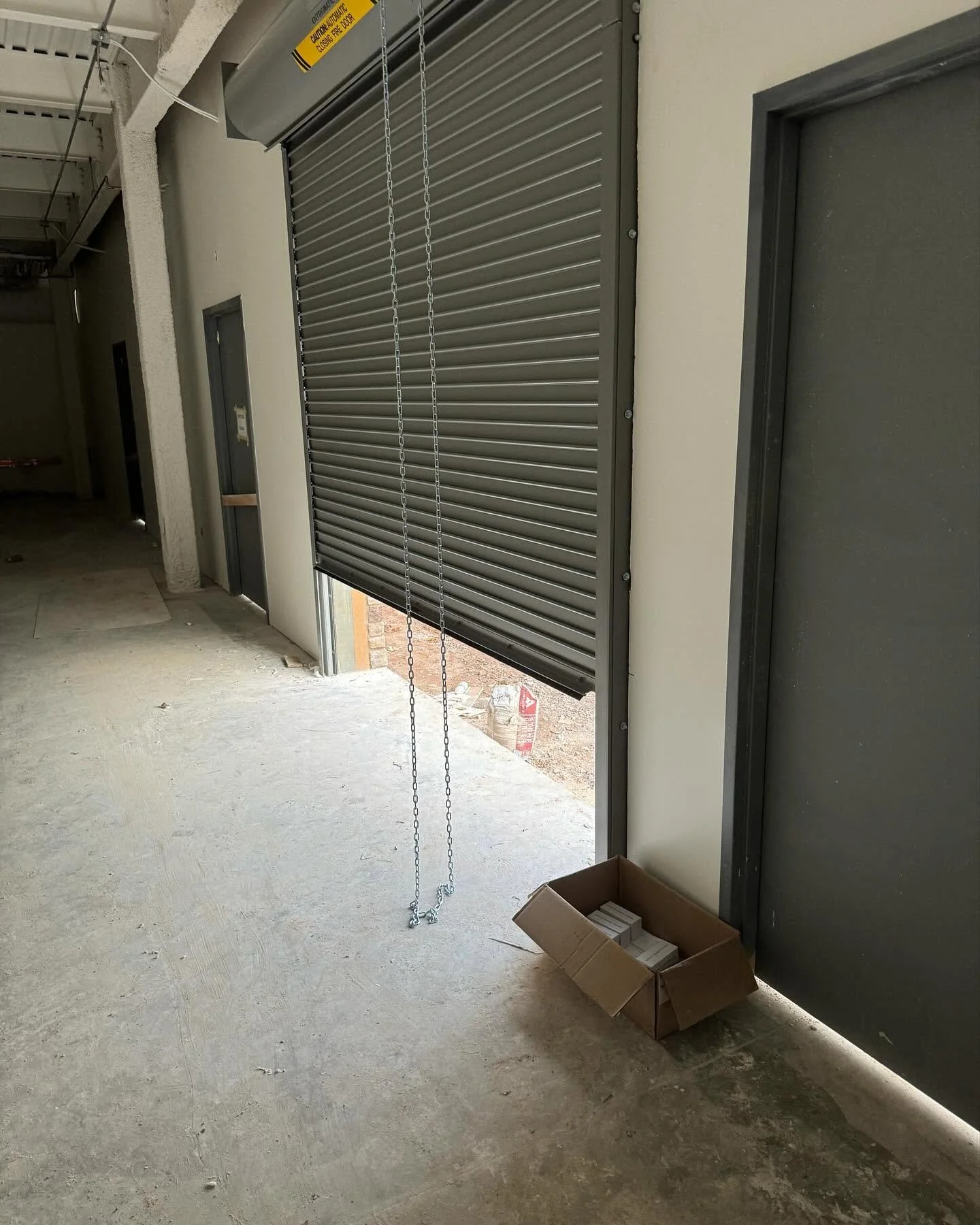
Commercial door operators are not the same as garage door openers. They are rated by how many cycles an hour they are built to run; they are controlled differently, and the safety rules that apply to them are not the ones you are used to.
This page covers the part most quotes skip: what duty class you actually need, what safety devices your door should have, and how to check in four minutes whether the ones you have still work.
We are a LiftMaster dealer, and we repair and replace commercial operators of any brand, including ones we did not install.
The Thing Nobody Tells Commercial Buyers
Start here, because it changes how you should read everything else.
Residential garage door openers manufactured for sale in the United States have had to meet a federal safety requirement since January 1993. That is why home openers have external entrapment protection, either photo eyes or edge sensors, and reverse when triggered.
That federal requirement does not cover commercial operator installations on rolling doors and commercial garage doors. Those are DASMA's words, from an engineer on its own technical committees, not our interpretation.
Four things follow.
No routine inspection catches it. The gap is specific: a workplace door is still subject to the electrical acceptability requirements that apply to any powered equipment, and a facility is still subject to workplace inspection. What does not exist is a rule forcing a sensing edge or photo eyes onto a commercial door, or anything that routinely checks whether the ones installed still work.
Constant pressure exists because of this. The industry's position is that when a door has no sensing edge on the bottom bar, no photo eyes, or those devices are not working properly, the close button must be held down for the entire travel. A person watches the door the entire way. That is the fallback specified by the standard when automatic protection is absent.
Which means a specific, common, and dangerous situation. A door whose sensing edge has failed but still closes on a single press has quietly lost its only protection and gained nothing to replace it. Nothing announces this. The door works exactly as it did yesterday.
So the decision sits with the building. Not with an inspector, not with a manufacturer, and not with us. What we can do is tell you what is installed, what works, and what the options are.
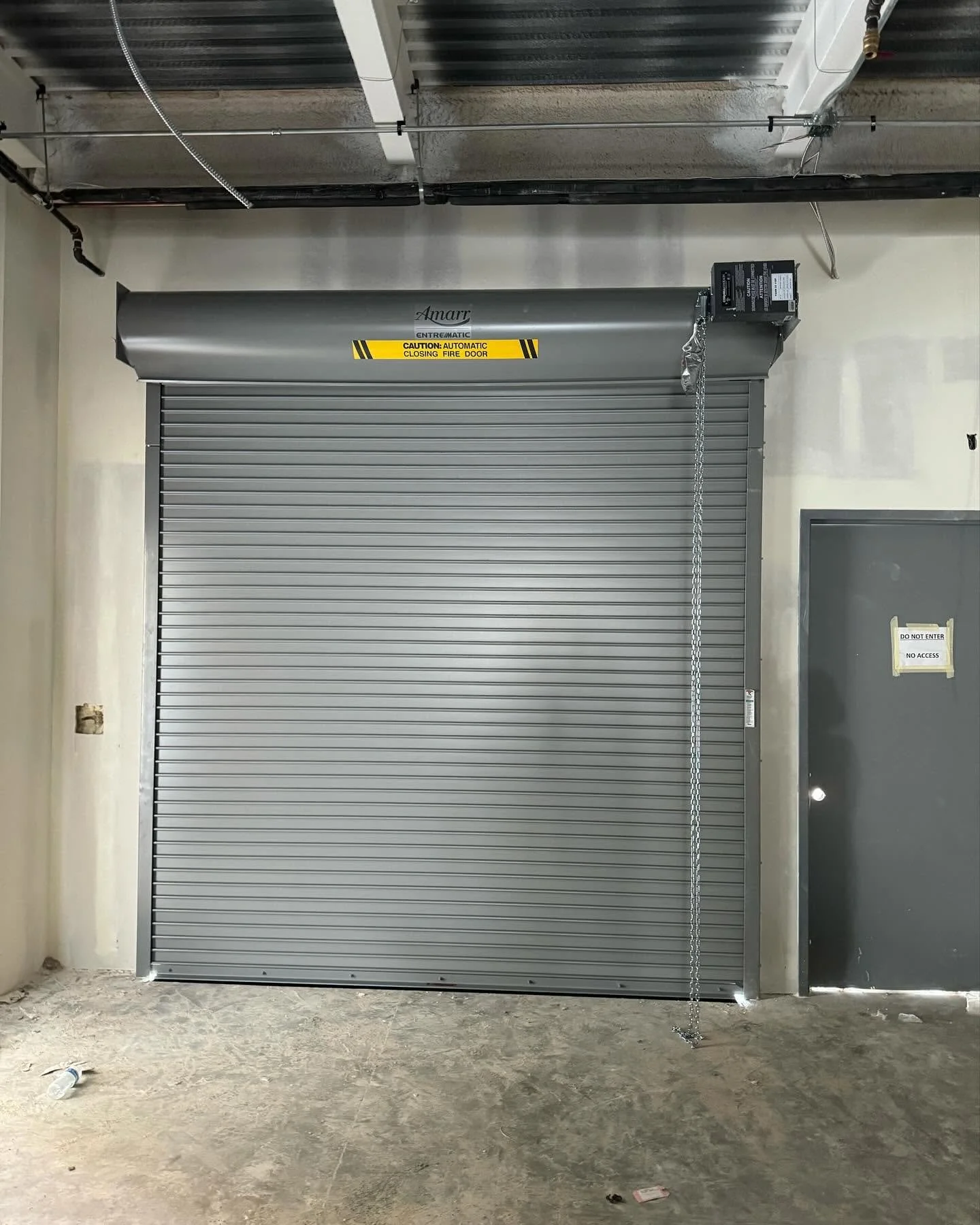
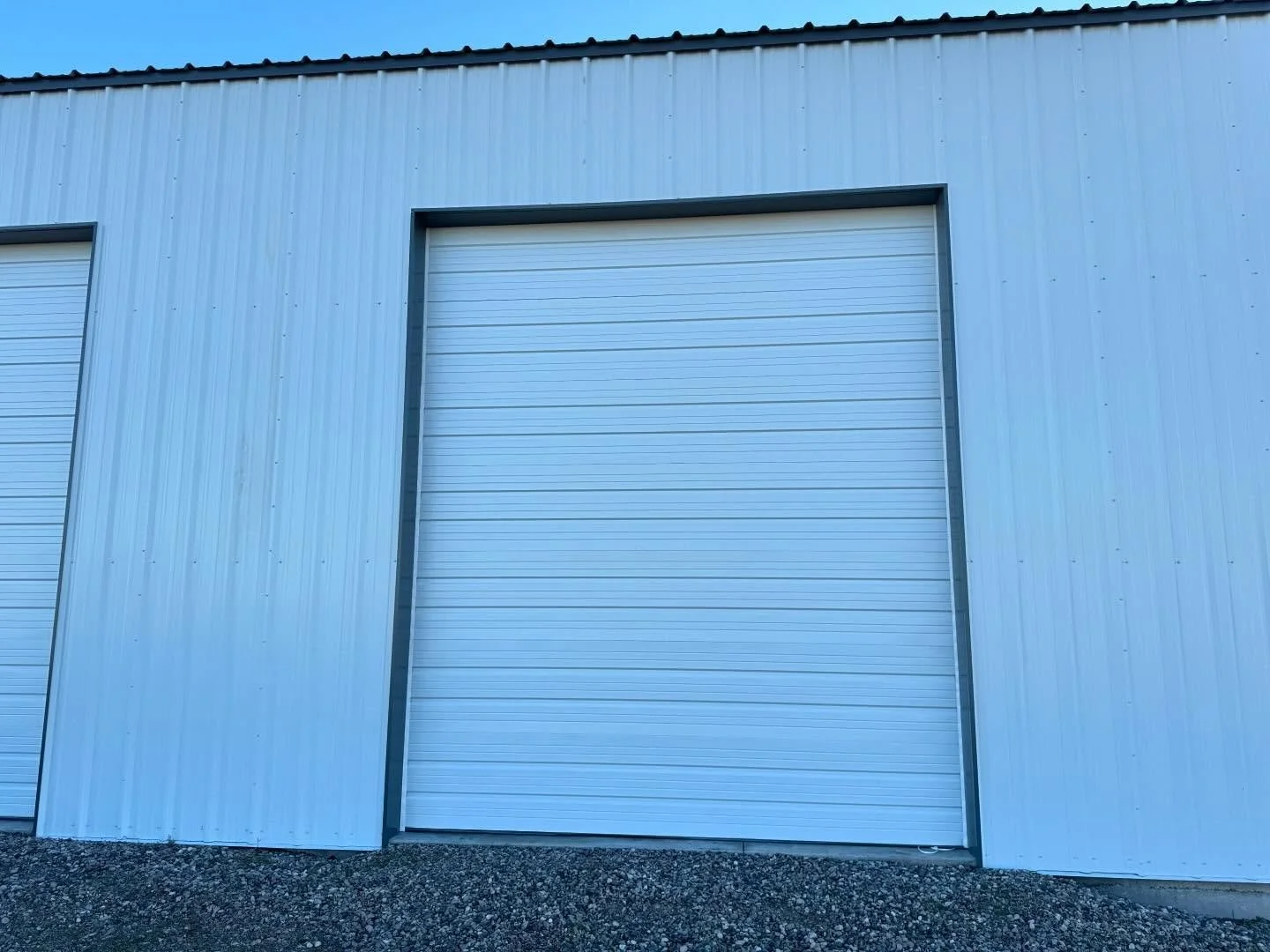
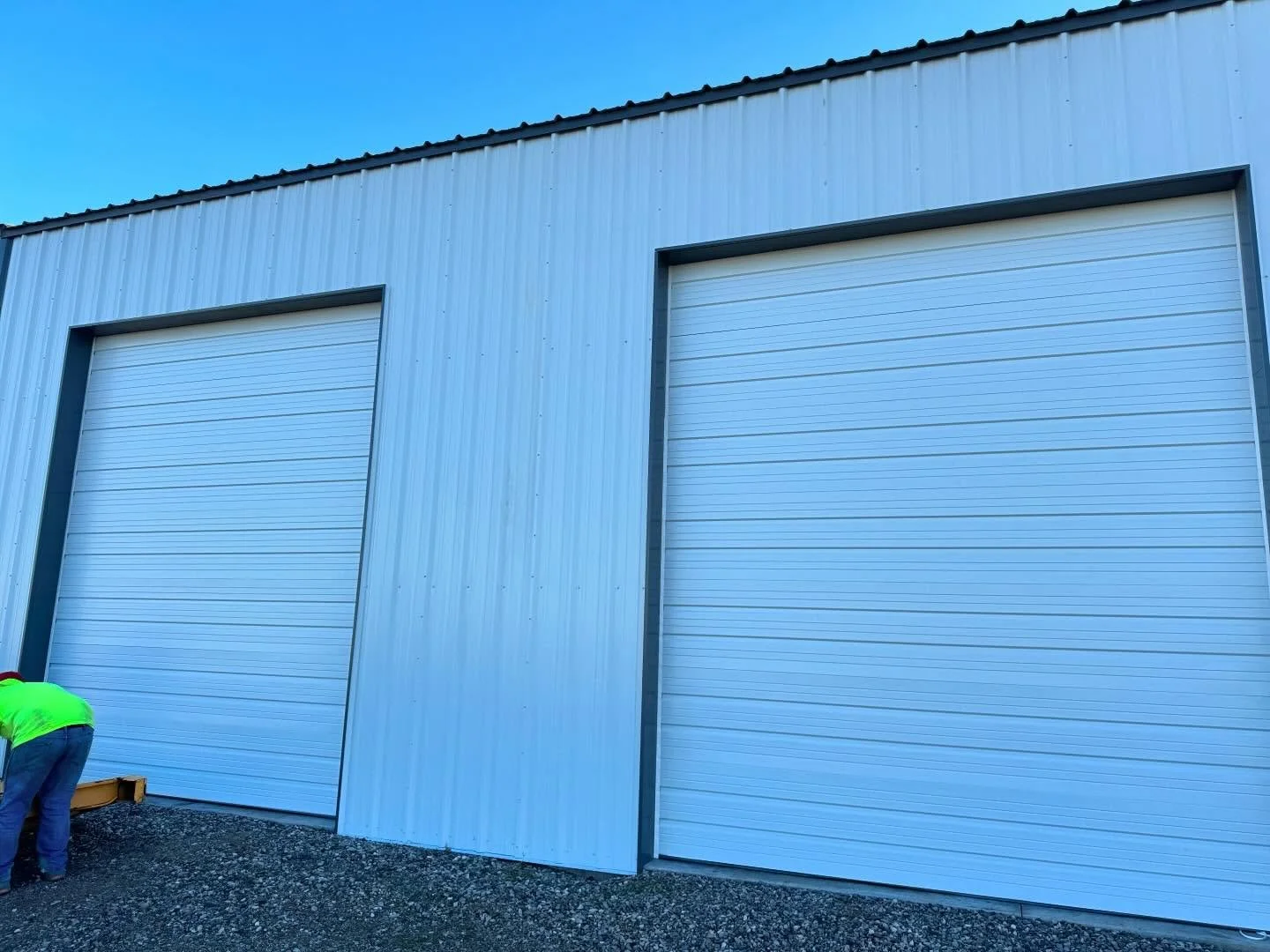 Commercial doors in Mesa, AZ
The Four-Minute Walk-Around
You can do this today, on every powered door on the site, without tools.
Stand at the control and look at the door. Can you see the door from the button that operates it? DASMA's guidance is that operation of the door should be visible from the control switch location, and on a constant-pressure installation, where the close button has to be held, being able to see the door is the whole point of the arrangement. This one fails silently, because buildings get reconfigured and racking goes up long after the door was installed.
Press close and let go. Does the door keep closing? If it does, it is running in automatic mode, which means it needs working automatic protection. Go to step three. If the door stops when you release the button, it is on constant pressure.
Test the sensing edge at both ends. Not the middle. Push the safety edge near the left guide and near the right guide, separately, while the door is closing. An edge that responds in the middle and not at the corners has failed exactly where a person is most likely to be.
Look for a listing label on the operator. Electrical equipment in a workplace has to be "acceptable", a term defined at 29 CFR 1910.399. Listing or labeling by a nationally recognized testing laboratory, recognized under 29 CFR 1910.7, is the usual route to that, and the applicable standard for these operators is ANSI/CAN/UL 325. It is not the only route: inspection by an authority having jurisdiction, and for custom-built equipment, a manufacturer's determination on retained test data, also count. Which is why an operator with no listing label is a question, and worth asking.
Find the manual release and try it. With the power off, can the door be operated by hand, and does somebody on site know how?
Any "no" on that list is worth a work order. None of it requires a technician to establish.
Duty Class, and Why You Keep Replacing This Operator
When we are called to a commercial operator that has failed early, the most common reason we find is that it was never rated for the traffic through that opening.
Operators are rated in cycles per hour and cycles per day, and the classes are real specifications. On one major manufacturer's commercial range, they run roughly like this:
| Class | Cycles per hour | Cycles per day |
|---|---|---|
| Light duty | around 7 to 8 | around 25 |
| Medium duty | around 12 | around 50 |
| Industrial duty | around 25 | not published |
The manufacturer's own warning is the useful part: exceeding a unit's cycle specifications can reduce unit longevity. That is the whole explanation for an opening that eats an operator every two years.
Note that it is two numbers, not one, and the daily one is easy to miss. An opening that runs six cycles per hour over an eight-hour shift is comfortably within a light-duty hourly rating and has done nearly twice its daily one. Both have to fit.
And the selection depends on the door, not just the traffic. The size, weight, and number of cycles together determine which type of operator is required. A heavy rolling door on a light-duty operator is a slow failure with a predictable ending.
How Commercial Operators Mount
Trolley operators run along a rail above the door, which is the arrangement most people picture. They need headroom and backroom.
Jackshaft operators mount at the side and drive the shaft directly. They free the ceiling, which matters where there is racking, piping, or a crane, and they suit high-lift and vertical-lift arrangements.
Hoist operators drive the shaft via a chain-and-sprocket arrangement and carry a manual chain hoist for use when the power is out. Common on larger rolling doors.
Which you need is decided by the door and the building, not by preference. A jackshaft is the standard option for a rolling steel door. On a sectional, it depends on the track: the standard prohibits jackshaft operation on standard-lift and low-headroom applications unless the door manufacturer specifies provisions to keep the cables tight. Our commercial sectional page covers why.
One thing worth knowing about mounting height. Where an operator on a commercial rolling application is installed less than 8 feet above the door, the pinch points must be protected by covers supplied by the operator manufacturer. If your operator sits low and its drive is open, that is a real finding.
Sensing Edges, Photo Eyes, and What Counts
The vocabulary matters here because the products are genuinely different.
A sensing edge runs along the bottom bar and reacts to contact. Four technologies are in common use: pneumatic, which senses a change in air pressure inside a hollow profile; electric, an electrical and mechanical device in the astragal that both senses and seals; infrared, which runs a beam inside the profile; and cable, where two cables inside a neoprene astragal establish a sensing field and any disturbance to that field stops and reverses the door. They are not interchangeable, and knowing which you have matters when one needs to be replaced.
Photo eyes are a beam across the opening. On its own, a non-monitored pair provides secondary protection, supplementing a primary sensing device on the bottom bar.
Monitored means the operator watches the device. A monitored system knows when its safety device has failed and reacts accordingly. A non-monitored device that fails simply stops working while the door keeps going.
One practical detail worth knowing: the sensing edge should function on the way down and not on the way up. If yours reacts on the up cycle, something is wired or adjusted wrongly.
And a maintenance point people miss: on many doors the bottom bar carries the sensing edge and the weather seal in the same assembly. A worn astragal on a powered door can be both a seal failure and a safety failure at once, which is why we treat the bottom bar as a single component.
Warning Devices, Which Have No Residential Equivalent
Nobody puts a strobe on a house. For openings where forklifts and people share the same doorway, the manufacturer's accessory range includes red and green traffic lights, strobe lights, sirens, and bells. They exist because a commercial door is a large moving object in a space where vehicles and people mix, and because on many sites the person operating it cannot see everyone on the other side.
They are accessories, separate from the operator itself, and in our experience they do not appear on a replacement quote unless somebody raises them.
Where we would raise it: any opening where pedestrian and vehicle traffic mix, any door that opens onto a walkway, and any door where the control is far enough from the opening that the operator cannot see who is on the other side.
Why the Operator Isn't Always the Problem
The most consequential misdiagnosis in this trade, and it is worth being direct about it.
The industry's guidance is explicit: an unbalanced or jerky door will impose excessive wear on the operator and potentially cause premature failure.
An operator that burned out on a door which had been running rough did not fail on its own. Replacing it without correcting the door buys the same failure again, on a shorter timescale. It is the reason an opening can go through operator after operator while the actual fault sits untouched above the door.
So the door gets measured before the operator gets quoted. On a rolling door, that means the force on the hand chain. On a sectional, it means the balance with the operator disconnected. Our commercial repair page covers both, including the numbers.
Installation Faults You Can Check Your Building For
These are the things that turn a good operator into a recurring problem, and most of them are visible.
Anchors in masonry. Thru-bolts should be used in hollow masonry walls. Concrete block is ubiquitous in Phoenix industrial construction, and industry guidance calls for service when expansion anchors appear loose in masonry walls. A loose anchor on an operator mount is not a small thing.
Sway. An operator that moves as the door starts is an operator whose mounting needs bracing. It gets worse, never better.
Limits. With the limits set correctly, the bottom bar should not be driven tight against the guide stops, and the curtain should not sag when the door is closed. Both of those are limit settings, and both do damage over months.
Clutch adjustment. A clutch that has not been set to the manufacturer's instructions is on the industry's own list of operator faults, and it is not something to guess at.
The interlock. A slide lock left engaged will stop an operator from running, and it should: the interlock exists to prevent the motor from driving against a locked door. This is a genuinely common commercial fault with no residential equivalent, and the fix is usually a five-second one. Note that we work on the interlock as door hardware; the lock cylinder itself is a locksmith's job.
Drivetrain wear. Keystock and keyways, set screws, sprocket alignment, roller chain wear and gear teeth. Ordinary wear items on a commercial drive, and all of them worth catching before they have to be replaced.
When the Power Goes Out
Three different things, often confused.
Manual override lets the door be operated by hand, usually by chain.
An emergency release device disconnects the door from the operator, allowing it to be opened without power. On a door people need to get through, this is the one that matters, and it is worth knowing where it is before you need it.
Emergency electric operation is a battery or uninterruptible power supply that keeps the operator running through an outage. Not standard, worth specifying where an opening cannot be allowed to stop.
What we would ask about your site: if the power goes out during a shift, which openings do people need to get through, and does anyone on the floor know how to release them?
The Electrical Boundary
We do not do electrical work, and it is worth explaining why that is the right answer.
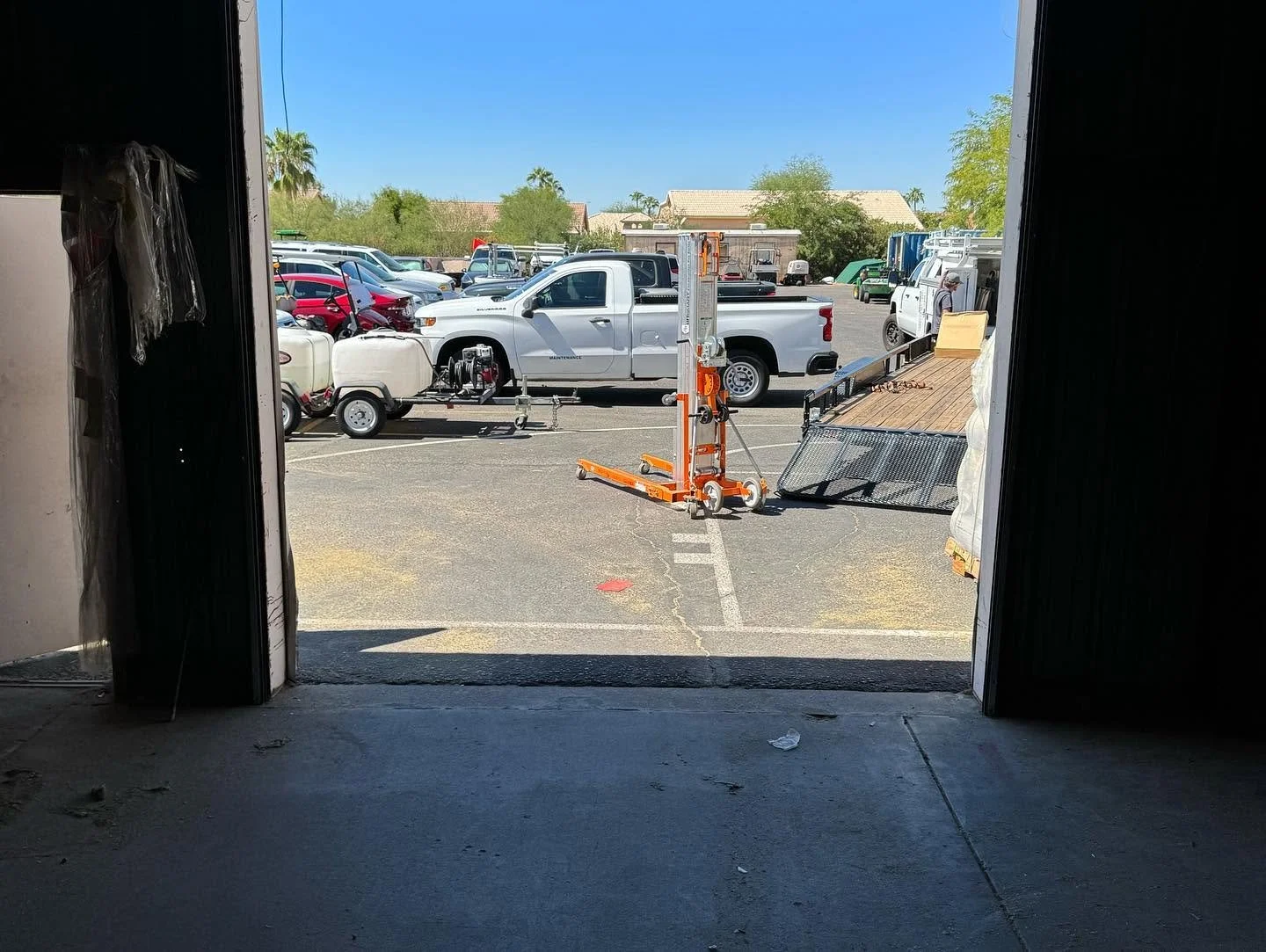
The industry's own description of how this work divides is that door and operator dealers install the motor-operated commercial sectional and rolling doors, while companies other than door and operator dealers install the electrical service for them, and that coordination between the two is essential for a safe and effective installation.
In practice, if your operator needs a new circuit, a disconnect, or any alteration to the service, an electrician handles it. We will tell you precisely what is needed and where, so your electrician can price it without a second visit, and we will schedule around them.
What we do handle is everything from the operator's connection point inward: the operator, its drive, its limits, its controls, its safety devices and their wiring back to the operator.
Controls, and Where They Go Wrong
The control side is where many commercial operator faults actually live, and it is the part nobody photographs.
Push-button stations. Open, close and stop, usually in a single enclosure. Where a door has more than one station, the same visibility logic applies to each of them, and not just the main one, which is worth a thought about any station added long after the door went in.
Three-button versus constant pressure. A three-button station with a working sensing edge lets the door run automatically. Remove the working edge and the same station should be reconfigured so that close requires a held button. That reconfiguration is a real job, and it is what should happen while a replacement edge is on order. A door left to close automatically, with no working edge and no photo eyes, can close on a person or a vehicle, which is the entrapment hazard the held button is designed to address.
Timers and auto-close. An opening that closes on a timer is closing with nobody at the button, which puts the whole job on the sensing devices. Worth knowing which of your doors do this.
Wiring runs. Control wiring on commercial doors gets damaged by forklifts, pulled during racking installs, and left unsupported after previous repairs. In the case of an intermittent fault, it is worth eliminating the wiring and controls before anyone prices an operator.
What Affects the Price
Duty class, which is the decision with the longest tail.
Mounting type: trolley, jackshaft, or hoist, and what the building allows.
Door type and weight, because the operator is specified to the door.
Safety devices. Sensing edge type, photo eyes, monitored or not, and any warning devices.
Controls. How many stations there are, where they are, and whether the wiring runs are usable.
What the electrician needs to do first, which is not on our invoice but is on your project.
Access. Working height, whether a lift is needed, and whether the opening can be closed during working hours.
Whether the door needs work first, which it often does.
A scheduled visit or an after-hours call-out, which carries a rate we tell you before dispatch.
How the Visit Goes
- 1.
You call or send the form, with the door type, the opening, and roughly how many times a day it cycles.
- 2.
We schedule it and tell you the rate before anyone is dispatched.
- 3.
A trained door systems technician comes out.
- 4.
He identifies the operator: make, model, duty class, mounting, and whether it carries a listing label.
Make, model, duty class, mounting, and whether it carries a listing label.
- 5.
He measures the door, because that decides whether the operator is the problem.
- 6.
He runs the five checks above: line of sight, single-press close, sensing edge at both ends, listing label, manual release.
- 7.
You get an estimate with parts and labor separated, and where a replacement is proposed, the duty class is named against the cycle count you gave us.
- 8.
You decide.
Nothing is ordered until it is approved.
- 9.
On completion, limits are set, the clutch is adjusted, safety devices are tested at both ends of travel, and the manual release is demonstrated to somebody who works there.
- 10.
You get a record of what was found and what was done, per door.
- 11.
You pay by card, check, cash, Zelle or Venmo. Financing is available through Wisetack.
Why Bring Us Out
We quote the duty class against your actual cycle count. Not against the door size, which is how the wrong operator gets installed.
We measure the door before we sell you an operator. Because an unbalanced door is what killed the last one.
We check the safety devices whether or not you asked. The federal rule that protects residential openers does not apply to your commercial door, so if anyone is going to look, it is whoever you called.
We name what is installed and whether it is monitored. Sensing edge type, photo eyes, and what the operator actually knows about their condition.
We are straight about the electrical boundary, and we will tell your electrician exactly what to leave us.
Any brand, any age, including operators we did not install. No minimum job or invoice.
If we get it wrong, we make it right. Ninety days on our labor, and every manufacturer's parts warranty honored.
What Customers Say
Frequently Asked Questions
Is a commercial operator just a bigger garage door opener?
No. It is rated by cycles per hour and per day; it is often mounted to the side; it is controlled differently; and the federal safety requirement that applies to residential openers does not extend to it.
Do commercial doors need photo eyes?
Not as a matter of federal law, which surprises most people. The requirement covering residential openers does not apply to commercial operator installations. What the standard does say is that where there is no working sensing edge and no photo eyes, the close button has to be held down for the whole travel.
Our door closes on one press, and the safety edge is broken. Is that allowed?
That is exactly the situation the constant-pressure requirement exists to prevent. A door running in automatic mode without proper protection is the finding we would most want to correct on any site.
How do I know which duty class we need?
Count the cycles on that opening for a day, and note the busiest hour. Both numbers matter. Then the operator is specified based on the door's size and weight, as well as the traffic.
Why do we keep replacing the same operator?
Two usual causes. Either it is under-rated for the traffic, in which case the manufacturer's own warning applies and exceeding the cycle specification shortens its life; or the door is unbalanced and has been wearing the operator out. Both are measurable, and neither is visible from the invoice.
What is a jackshaft operator?
One that mounts at the side of the door and drives the shaft directly rather than pulling the door along a ceiling rail. It frees the ceiling, which matters under racking, piping, or a crane, and it suits high-lift and vertical-lift doors.
Can we get the door open in a power outage?
That depends on what is installed. There are three different things: a manual override, an emergency release that disconnects the door from the operator, and battery or uninterruptible power that runs the operator through an outage. Worth establishing which you have before you need it.
The operator hums but the door doesn't move.
Check the slide locks and any interlock first, because an engaged lock will stop the operator by design. If they are clear, it is a drive, a clutch, or the door binding, and it needs somebody.
Our door is on a timer. Anything special?
It is the arrangement in which a failed sensing edge matters most, because the door closes with no one at the button. Worth confirming the edge works at both ends, and worth a conversation about warning devices.
The door works sometimes and not others.
Worth eliminating the wiring and the controls before the operator. Control runs on commercial doors get clipped by forklifts, pulled during racking installs and left unsupported after previous repairs, and all of those produce an intermittent fault that looks like a failing operator.
We have a second control station at the back of the bay.
Then it needs the same line of sight to the door that the main one does. Stations added years after the door was installed are among the more common findings because nobody rechecks the original requirement when the building changes.
Do you install the power supply?
No, an electrician does. That is the correct division of work for this trade, and we will specify exactly what is needed so your electrician can price it in a single visit.
Do you work on dock door operators?
Yes, and the considerations are the same with more traffic. Our loading dock page covers what else is going on at that opening.
Can you add warning lights or a siren to an existing door?
Usually. Red and green lights, strobes, sirens, and bells are standard accessories on commercial operators and are worth raising at any opening where forklifts and people share the same doorway.
How often should a commercial operator be looked at?
The industry's guidance for rolling doors is to have a trained technician inspect them at least annually, with the performance of electric doors evaluated quarterly. Beyond that, the interval should follow the cycle count rather than the calendar, and we would build a schedule in line with the published guidance.
Where We Work
Commercial door operator service across the Phoenix metro:
- Mesa,
- Gilbert,
- Chandler,
- Tempe,
- Scottsdale,
- Phoenix,
- Queen Creek,
- Apache Junction,
- Glendale,
- Peoria,
- Ahwatukee,
- Fountain Hills and
- Paradise Valley.
Run the four-minute walk-around first, then tell us what failed.
Line of sight from the control, whether the door closes on a single press, whether the sensing edge works at both ends, whether there is a listing label, and whether the manual release works. Any "no" on that list is worth the call, and knowing which one changes what we bring.