High-Cycle Garage Door Springs in Mesa, AZ
Springs rated from 10,000 to 100,000 cycles, sized to your door's actual weight, so a busy household replaces springs far less often.
The service call is $85, covering a 22-point inspection and the first half hour of labor. A person answers after hours, and after-hours and weekend work carries a $250 call fee.
- Women-Owned Family Business
- ROC #310144
- Licensed, Bonded & Insured
- 90-Day Labor Warranty
- Google Rated
If your door opens six or more times a day, a standard 10,000-cycle spring may last under five years. A higher cycle rating is the one real choice on a spring quote, and it decides how long the next set lasts.
What a "cycle" Is, and Why the Word Matters
One cycle is one full open and one full close. Up and back down again. Not two.
That definition comes from the door industry's own standard, ANSI/DASMA 102, which defines it for exactly this reason: a number on a spring means nothing until everybody agrees what it counts.
So a cycle rating is a design life, not a warranty and not a promise. DASMA's own technical data sheet on the subject, TDS #190, says plainly that spring cycle life may not necessarily coincide with door cycle life. That document publishes no cycle figures at all. Nobody in this trade works from an industry table on how long each rating lasts, because there isn't one. Anyone who quotes you a flat number of years is converting a rating into a guarantee that the standard does not make.
What the rating actually describes is how the spring was wound and from what. A higher-rated spring is physically larger: longer, or made from heavier wire, or both, so each cycle asks less of the steel. That is the whole mechanism. There is no coating, no additive, and no technology in it.
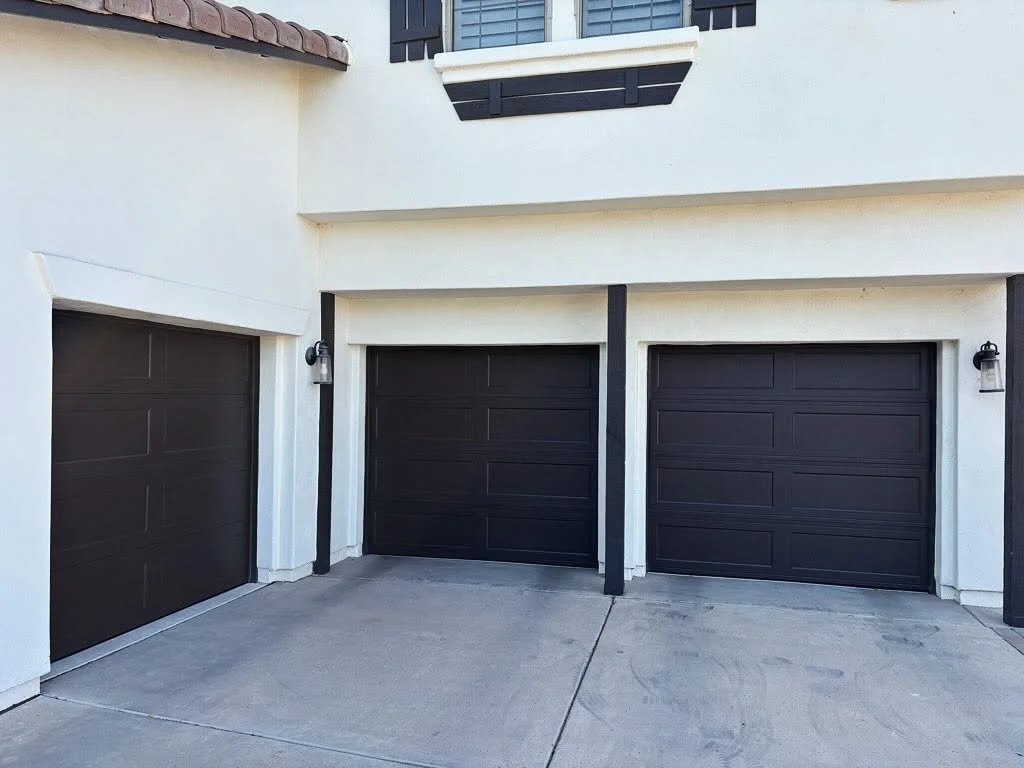 High-cycle springs, Mesa & the Phoenix metro
The Arithmetic, Which Takes About Ten Seconds
This is the part worth doing before anybody quotes you, and you can do it standing in the kitchen.
Count how many times your door opens on a normal day. Then divide the rating by that number and divide by 365.
| Cycle rating | At 2 cycles a day | At 4 a day | At 6 a day | At 10 a day |
|---|---|---|---|---|
| 10,000 | about 14 years | about 7 years | about 4.5 years | under 3 years |
| 20,000 | about 27 years | about 14 years | about 9 years | about 5.5 years |
| 50,000 | n/a | about 34 years | about 23 years | about 14 years |
| 100,000 | n/a | n/a | about 46 years | about 27 years |
Read across the columns. The rating is meaningless on its own; your daily count is what turns it into a number of years. Two households with identical doors and identical springs can be a decade apart.
There is one sourced figure to anchor yourself against. ANSI/DASMA 102 defines a residential door as one "normally expected to be operated less than 1,500 cycles per year", which works out to about four times a day. That is the industry's own idea of a normal household, and it is where the familiar "seven to ten years" for a builder-grade spring comes from. If you are above four a day, you are above what the standard calls normal use, and the familiar number does not describe you.
And be honest about the count. People guess two and the real figure is often six. Every trip out, every trip back, a teenager, a dog walk, a bike, a second car, the trash out to the curb. If the garage is the family's front door, you are not on two.
Those n/a cells are not an error. Past a certain point, the arithmetic stops being the argument, because no spring outlives the door it hangs behind, and a 46-year calculation is a number on paper.
The Three Tiers, and Who Each One Is Actually for
10,000 cycles is the builder-grade standard, and it is what we find hanging in garage after garage in this valley.
It is not a defective product. It is a spring specified to a housebuilder's cost, on the assumption of a household that uses the door twice a day, and it does what it was specified to do. If your door genuinely opens twice a day, it is the right spring, and we will tell you so.
20,000 cycles: the upgrade for a garage your family uses as its front door.
It is the tier least likely to appear on a builder's quote, because a housebuilder is not paying for a spring that outlives the sale. On the arithmetic above, a garage running six times a day moves from roughly four and a half years to about nine.
Anything above 10,000 cycles is custom ordered.
In practice, the builder-grade rating is the one that comes off the truck, and everything above it is ordered for your door's calculated weight. It is the right answer in three specific situations: a door that runs a lot of times a day, a door that is genuinely difficult to get at, and a door whose weight is punishing a standard spring anyway. On an RV or oversized door, it is frequently the specification that makes the whole counterbalance sensible, and our RV and oversized doors page covers that side.
What we will not do is tell you the top of the range is the right answer.
Ask us what we would put on our own garage, and the answer is high-cycle, because we open ours a lot. On a door that opens twice a day, it would be an upgrade doing nothing.
Why the Weight Has to Be Measured First
A cycle rating is not a product you can choose off the shelf, because a spring is specified for a door, not for a number of cycles.
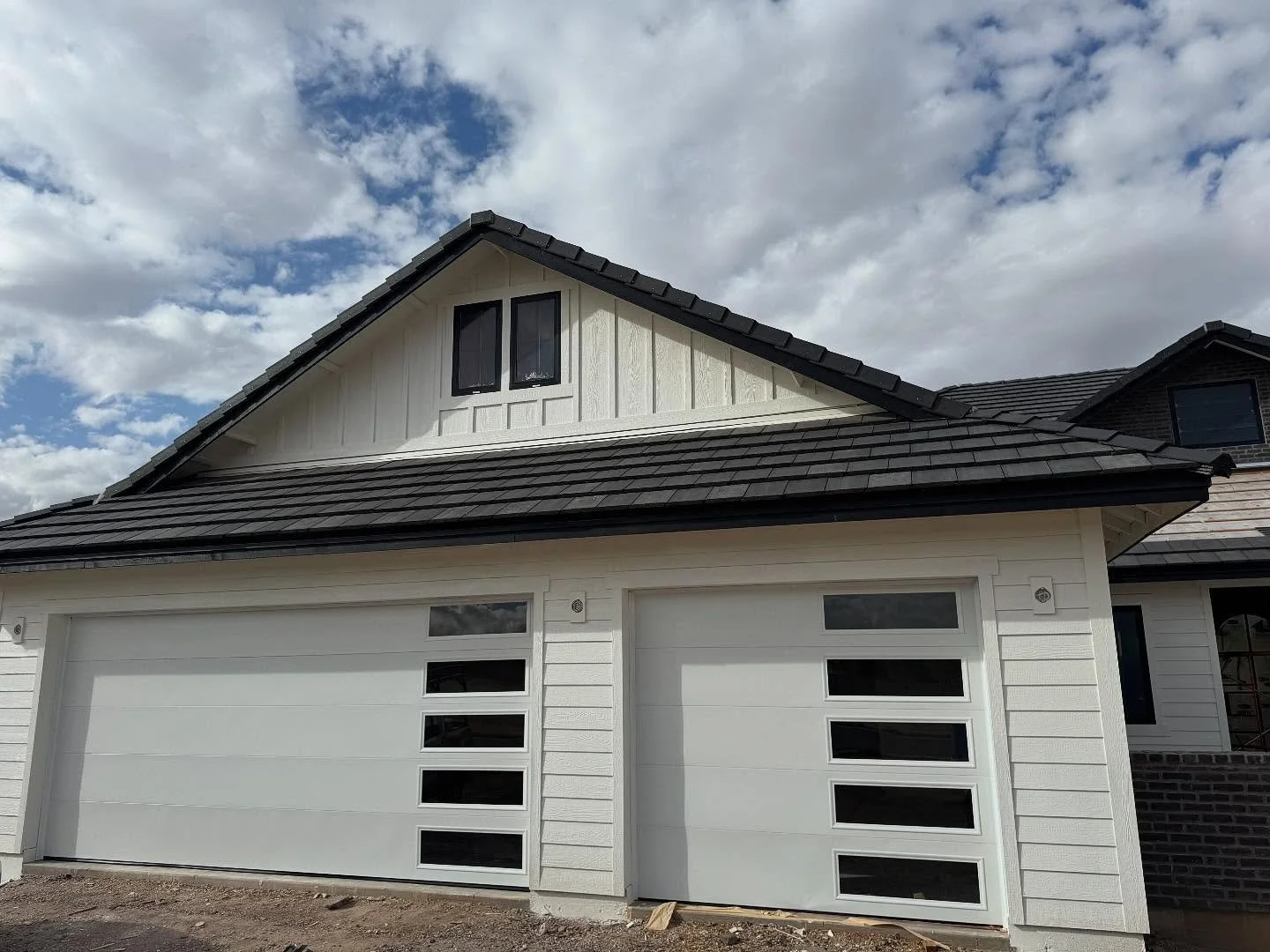
The spring is calculated from the door's actual weight, the drum it runs on, and the travel it serves. Two doors of identical dimensions can differ widely in weight: insulation, a window section, a hand-painted finish, an added strut, a replacement panel from a different line. Our spring repair page sets out how that measurement is taken.
So "high-cycle" describes the result, not the part. The same cycle requirement produces a different spring on a light insulated door than on a heavy one. Anybody offering you a cycle rating without weighing or calculating your door is quoting a category.
Which is also why both springs get replaced together on a two-spring door. A new spring beside a tired one as old as the spring that broke is a door half-balanced, and the old one is the one that decides when you are back here. Our spring repair page has the long version.
And that is why high-cycle is custom ordered. A bigger spring for your specific door weight is not a common part on a truck. It has a lead time, and anything made to order takes a 50% deposit.
What Cycle Rating Does Not Fix
Worth saying plainly, because the upgrade gets sold as an answer to things it has nothing to do with.
It does not make a door quieter. Noise is rollers, bearings, hinges, track alignment, and lubrication. Our noisy door page covers what actually causes it.
It does not make a door lighter or easier to lift. Balance does that, and balance is a question of whether the spring matches the weight, not of how many cycles it is rated for.
It does not protect the opener. A correctly balanced door protects the opener, at any rating.
It does not stop rust. A spring in a garage that gets sprinkler overspray or stands open to blown grit has a shorter life than its rating, whatever the rating is.
And it does not extend a warranty. Ours is ninety days on labor, and the manufacturer's terms are the manufacturer's, at every tier.
The Right Moment to Choose Is When You Buy the Door
Almost everybody meets this decision at the worst possible time: standing in the garage with a broken spring, a car behind it, and somebody waiting for an answer.
A new door's spring set is calculated at the order. The door is weighed on paper before it is built, the drums and the shaft are specified with it, and the cycle rating is simply one of the figures that goes on the order form. Choosing a higher rating at that moment is a line on a quote. Choosing it four years later is a separate visit and a separate part for work that is otherwise identical.
So if you are already buying a door, ask what rating the quote assumes. A new-door quote is often written around a 10,000-cycle set because that is the catalog default, and the difference never comes up unless you raise it. Our new doors page covers the rest of what a complete quote should list.
The same applies to a conversion. If the counterbalance is being rebuilt for high lift or converted from extension springs, the spring set is being recalculated from nothing regardless, so the rating is a decision you are making anyway at that point. Our high-lift and jackshaft page has that job.
What to Ask Whoever Quotes You
Four questions. They work on us, and the answers tell you most of what you need to know about who is standing in your garage.
"What is the cycle rating of the spring you are quoting?" A quote that does not state it is quoting whatever the supplier sends.
"What does my door actually weigh?" The answer should be a number, arrived at by weighing or by calculation from the door's own specification. "About average for that size" is not an answer.
"What are the wire size, length and inside diameter of what you are fitting?" Those three plus wind direction are the whole specification. Anybody fitting springs can read them off the old one and tell you what the new one is.
"What happens to the balance after you fit it?" The door should be lifted by hand with the opener disconnected and left at three or four feet to see whether it stays. If nobody does that in front of you, nobody has checked the work.
How the Visit Goes
- 1.
You call.
Tell us what the door is doing and roughly how many times a day it opens.
- 2.
A technician comes out.
The service call is $85 and covers a 22-point inspection of the whole door plus the first half hour of labor.
- 3.
He reads the old spring and weighs the door.
Wire size, length, inside diameter, and wind direction, because those four are the specifications of what is coming off.
- 4.
You get the arithmetic.
Your daily count, what each available rating works out to in years, and what each costs.
- 5.
You decide, and you approve the estimate by email before anything is ordered or wound.
- 6.
A 10,000-cycle spring usually goes on the same visit.
Anything higher is custom ordered: you get the current lead time, and a 50% deposit holds the order.
- 7.
Both springs on a two-spring door, wound to the calculated figure.
- 8.
He balances it by hand with the opener disconnected, resets the opener's force and travel to the new spring, and tests the safety reverse.
What Affects the Price
The rating.
The door's weight, because a heavier door at the same rating is a bigger spring.
Whether it is stocked or ordered. We carry the common parts; a high-cycle spring for a specific weight generally is not one of them.
Whether the whole counterbalance needs attention. Drums, cables, bearings, end bearing plates, and the shaft itself are separate parts, and a spring that broke because a bearing seized is a different job from a spring that reached the end of its life.
Whether the door is on extension springs, in which case the conversation starts somewhere else entirely. Our spring conversion page has it.
Financing is available through Wisetack.
Frequently Asked Questions
Is a high-cycle spring the right call?
On a door that opens six or more times a day, usually yes. The table above shows how to check for yourself.
Can I put high-cycle springs on any door?
Nearly always, provided the headroom allows a larger spring and the shaft and bearings are sound. A technician checks that when he measures.
Will a 50,000-cycle spring last five times as long as a 10,000?
On the arithmetic, yes. DASMA's own position is that spring cycle life may not coincide with door cycle life, and rust, a seized bearing, an out-of-balance door, or sprinkler overspray will all take a spring before its rating does.
My spring broke after three years. Was it defective?
Possibly, but the likelier answer is a 10,000-cycle spring on a door that opens eight times a day, which is about three and a half years of arithmetic. That is a specification question rather than a fault.
Can I put a high-cycle spring on a door that already has a broken one?
Yes, and it is the moment to decide, because the spring is coming off anyway. The rating is a choice about the replacement, not a reason to replace early.
Does high-cycle mean a thicker spring that will not fit?
Sometimes, and this is the constraint that decides it for some doors. A higher rating means a physically larger spring, thicker in the wire and usually longer, and the length has to fit on the shaft beside everything else already there. On a standard seven-foot residential door with limited shaft length, an ultra-high-cycle spring sometimes will not physically fit. That is a real limit, and you will hear it when the technician measures.
Are high-cycle springs the same as "lifetime" springs?
No, and be careful with that word. "Lifetime" is a marketing term with no definition in the standard. A cycle rating is at least a number you can divide.
Can you tell me the rating of the springs I have now?
Usually yes, from the wire size, length, and inside diameter, read off the spring itself. It is one of the twenty-two points on a service call.
What Customers Say
"Our garage door, installed by QOD several years ago, was operating unevenly. We are really grateful that they came out quickly, checked everything over"
Where We Work
Garage door repair and service across the Phoenix metro:
- Mesa,
- Gilbert,
- Chandler,
- Tempe,
- Scottsdale,
- Phoenix,
- Queen Creek,
- Apache Junction,
- Glendale,
- Peoria,
- Ahwatukee,
- Fountain Hills and
- Paradise Valley.
Count how many times your door opens tomorrow, then call us.
That one number decides more about which spring you want than anything else on your door, and it costs nothing to work out.