

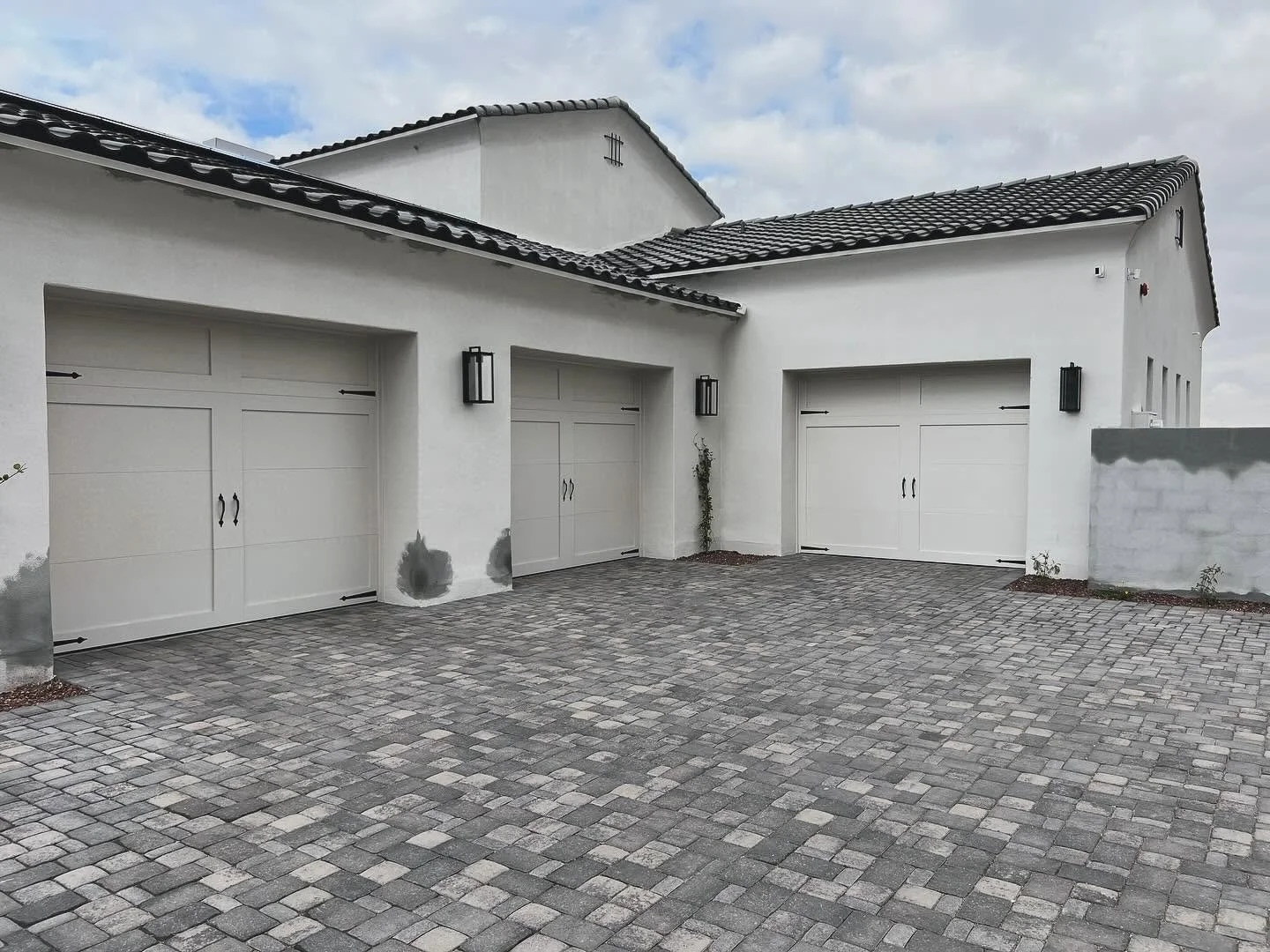
Noisy Garage Door Repair in Mesa, AZ
Grinding, squealing or banging? We find whether it is the door or the opener, fix most noise in one visit, and work on any brand. Women-owned, family-run and licensed (ROC #310144).
The service call is $85, covering a 22-point inspection and the first half hour of labor. A person answers after hours, and after-hours and weekend work carries a $250 call fee.
- Women-Owned Family Business
- ROC #310144
- Licensed, Bonded & Insured
- 90-Day Labor Warranty
- Google Rated
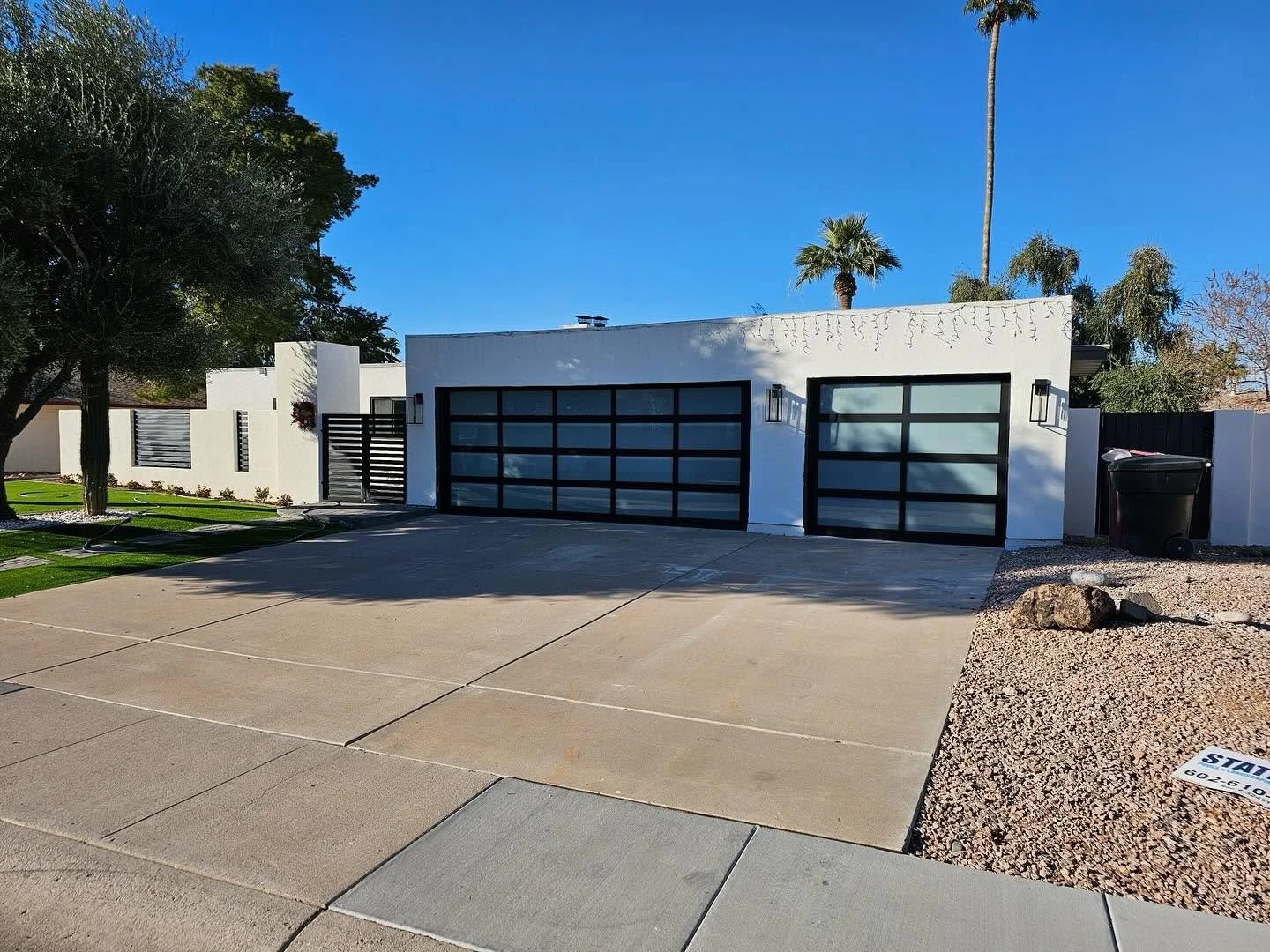
Garage doors get loud slowly. It happens over a couple of years, you stop noticing, and then a neighbor mentions it or a guest jumps.
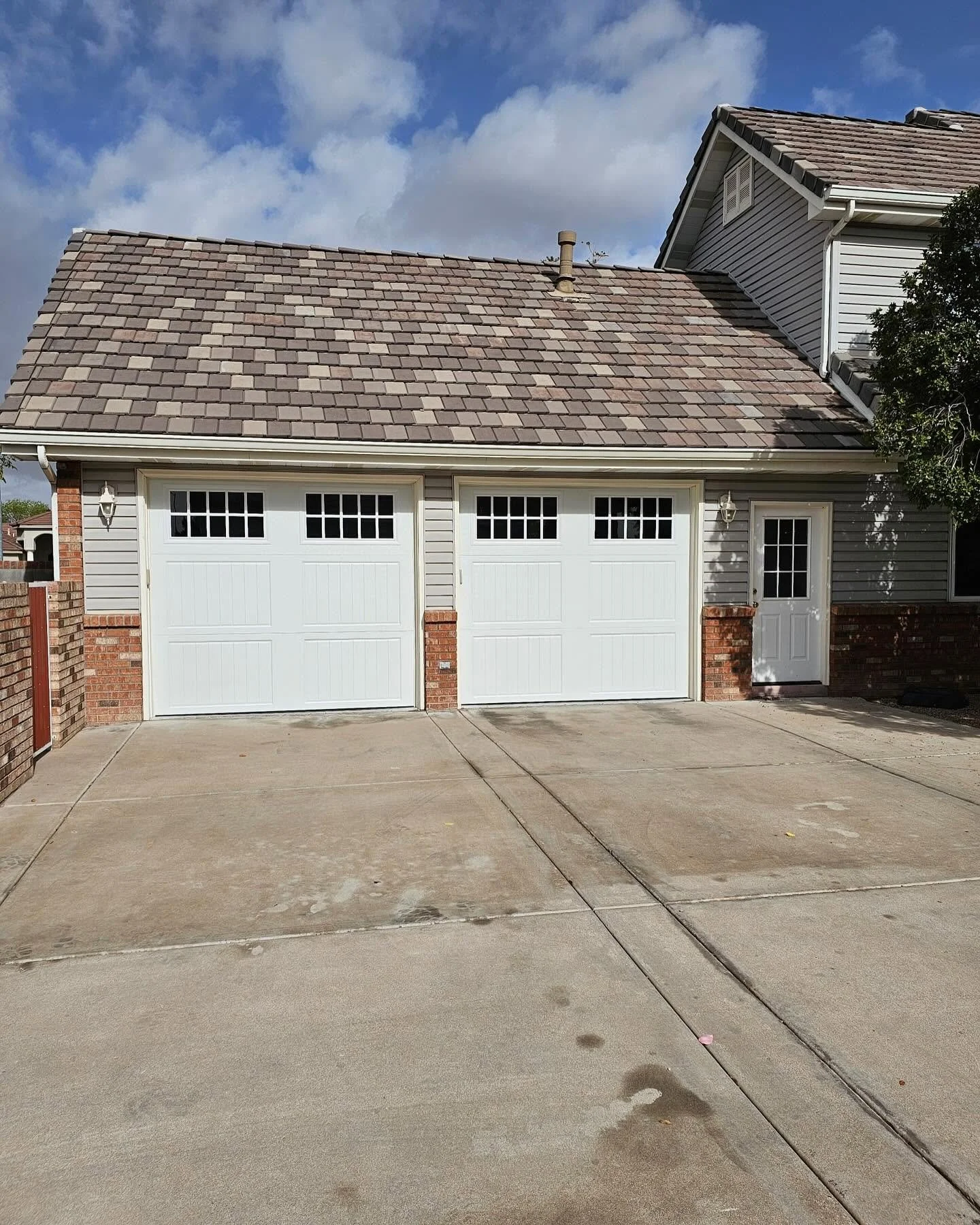
Most of it is fixable in one visit, and some of it you can fix yourself with the right can of spray and twenty minutes. One noise means stop using the door today.
That one is a single loud bang, like a gunshot, usually heard from inside the house. That's a spring; the door is now far heavier than the opener can handle, and the rest of this page can wait.
Everything else on this page is a repair, not an emergency.
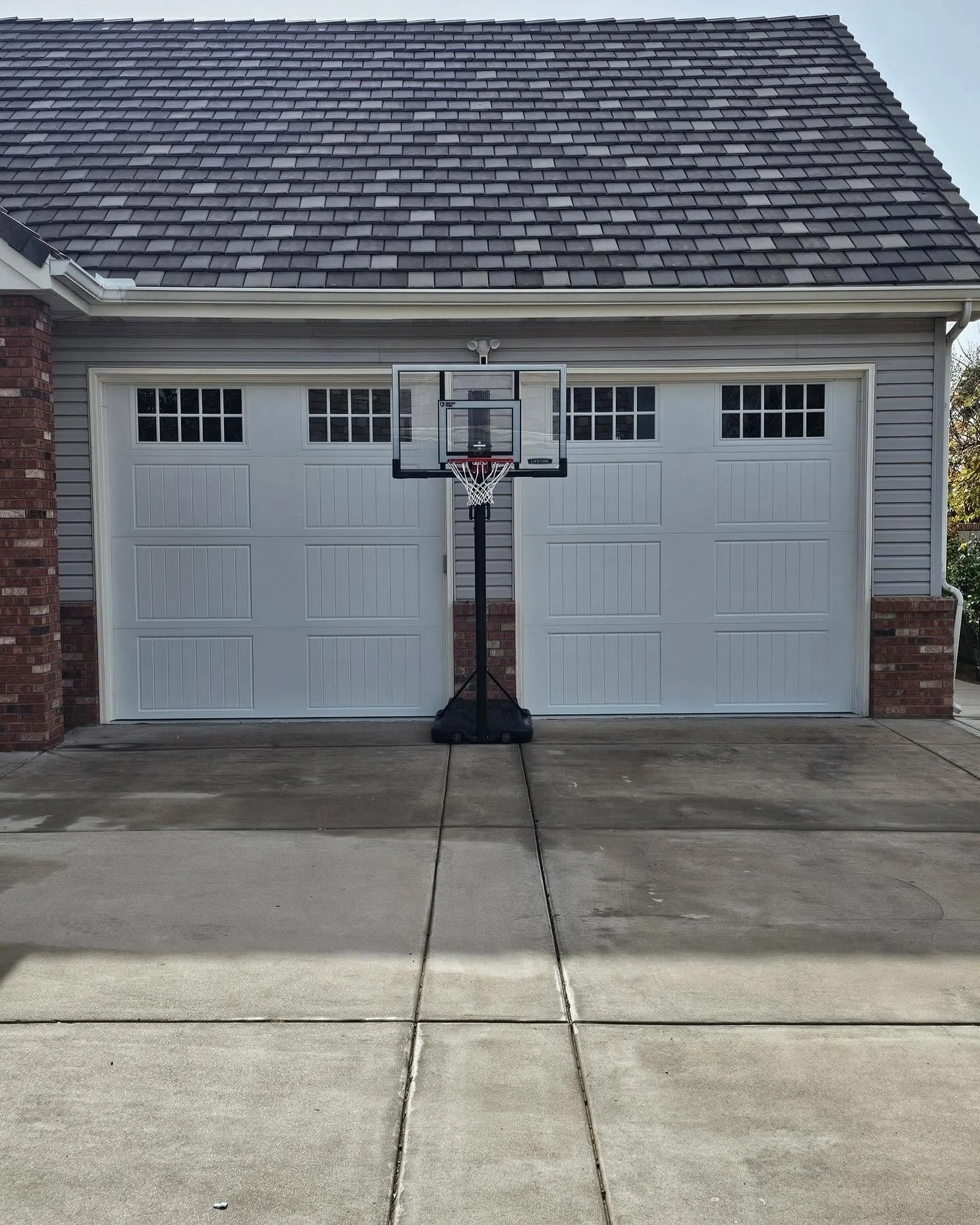 Quieting a noisy garage door, Mesa & the Phoenix metro
What Your Door Is Telling You
| The sound | What it usually is | Urgency |
|---|---|---|
| One loud bang, then the door is heavy | A broken spring | Stop using it |
| Grinding, metal on metal | Worn rollers, dry or dirty track, a failing bearing | Soon. It gets worse every cycle |
| Squealing or squeaking | Dry hinges, rollers or bearings | Routine. Usually lubrication |
| Rattling, especially near the top of travel | Loose hardware: hinge bolts, track lags, roller brackets | Routine, but don't leave it |
| Popping or snapping as the door moves | Sections flexing at the hinges, or a torsion spring binding | Worth looking at |
| Scraping at one point in travel | Something rubbing: a bent track, a section catching, a cable near hardware | Soon |
| Clicking | A cracked roller, a chipped hinge, or debris in the track | Soon |
| A straining hum from the motor | The opener working against a door that has gotten heavy | The door, not the opener |
| A chirp at start-up that stays in one place on the wall | A dry shaft bearing | Soon |
Here is a useful tell: a roller or hinge noise travels with the door as it moves, while a bearing noise stays in one fixed spot on the wall. That one observation narrows most diagnoses to a part.
Is It the Door or the Opener?
Two machines make noise, and the fix differs. There's a two-minute test that separates them. Skip it if you heard a bang or can see a clean gap between two coils of the spring: that is a broken spring, and the door stays closed.
1. With the door fully closed, unplug the opener.
2. Pull the emergency release cord, the red handle on the rail.
3. Raise and lower the door by hand, slowly, through its full travel, and listen.
Noise that's still there is the door. Rollers, hinges, bearings, track, springs.
Noise that disappeared is the opener and its rail. A chain slapping, a worn trolley, a dry rail, a gearbox on the way out. That's an opener repair.
What Makes a Garage Door Loud
Steel rollers. The noise source we most often find on a residential door, in our experience. Builder-grade doors are commonly fitted with unsealed steel rollers that run metal-on-metal in a steel track. They're loud when new and louder at five years.
Worn or unsealed bearings. A roller's bearing is what lets the wheel turn freely. When it seizes, the roller slides rather than rolls, which causes both noise and wear problems.
Dry hinges. Fourteen to twenty of them on a typical sectional door, and every one is a pivot.
Loose hardware. A door that cycles four times a day runs around 1,500 cycles a year, and every one shakes the assembly. Hinge bolts, track lag bolts, and roller brackets all back out slowly.
The shaft bearings. The bearing plates carrying the torsion shaft above the door. When one dries out, it tends to chirp at start-up and then grind, and it's a sound people routinely misattribute to the rollers.
A dry or dirty track. Grit in the channel is abrasive, and rollers have to push through it.
The door's own panels. A single-layer steel section is a large thin sheet with air behind it, and it behaves like one, amplifying everything the hardware does. Insulation in the cavity damps that, which is a real side benefit of an insulated door and is covered on our insulation page.
Springs. A little squeak from a spring is usually normal. DASMA, the door industry's own standards body, says as much, and there's more on that below.
And the door being out of balance, which makes everything else work harder and louder.
When the Noise Is Actually a Balance Problem
This one matters because it's the cause we most often find has been overlooked, and fixing the symptom doesn't address it.
A garage door is held near weightless by its springs. The opener guides it. When the counterbalance drifts out, the opener starts carrying real weight, and everything downstream of that gets louder: rollers press harder into the track, hinges take load they weren't designed for, and the motor strains audibly at the start of travel.
You'll have found this already if you did the test in the section above. A balanced door lifts easily by hand and holds where you leave it, three to four feet off the floor. Chamberlain's guidance allows for a slow, gentle drift either way; what fails is a door that slams shut, shoots upward, or has to be fought to lift at all.
So a door that has gotten loud and heavy is not a lubrication job. Spraying it will quiet it for a few weeks and leave the actual fault in place. Our balance and realignment page covers what that repair involves.
The Thing Almost Everyone Gets Wrong About Lubricant
More garage doors are made worse by the wrong spray than by no spray at all. Here's the manufacturer's own guidance.
Clopay's position, part by part:
Hinges:
silicone or white lithium grease. Yes.
Springs: white lithium grease, worked along the coils. Yes.
Bearings and bearing plates: yes.
Nylon rollers: nothing at all. This is the one that surprises people, and it's the opposite of what most homeowners do. If your rollers are nylon, Clopay's instruction is to leave them dry.
The tracks: nothing, ever. Clopay is explicit that lubricant in the track channel just makes it harder for the rollers to move and forces the opener to work harder. Tracks get wiped clean and left dry.
WD-40 and other oil-based sprays: no. Clopay's guidance is to avoid them. The practical objection is that they attract dust, and dust in a bearing is what you were trying to prevent.
Rollers, and the One Spec That Isn't What It Looks Like
Replacing steel rollers with nylon is the most effective single noise fix available on a garage door, and it's the one most people get sold slightly wrong.
What makes the difference in noise is nylon running against steel track rather than steel against steel.
What doesn't make the difference: the ball count. Rollers are sold by ball count, 10-ball and 13-ball among them, and the number is presented as a quality tier. It isn't a noise rating; it's a load rating. At a DASMA industry roundtable, a Clopay engineer went on record saying a particular 13-ball roller "was inferior to any we tested." More balls means more load capacity, not a quieter or better-made roller.
So what to ask for: nylon, sealed bearing, and a stem length correct for your door. Not the highest number on the box. Stem length is the specification that determines whether the roller stays in the track at all, and our roller replacement page covers it properly, along with how the door's hinges are involved.
Replace them as a set. They're all the same age, and mixing one new sealed roller in with the tired ones leaves you with the same noise and a bill. See roller replacement →
What DASMA Says About Squeaky Springs
Every company in this trade has an incentive to make every noise sound like an emergency, so it's worth quoting the industry body instead.
DASMA's wording is that springs can squeak and be noisy, that this is caused by normal use, and that it does not necessarily indicate a problem. It's coils moving against each other. A little lithium grease quiets it, and on its own it is not the sign of a spring about to break.
There is one real noise-related spring fault, and it's about how the spring was wound rather than how old it is. DASMA documents that a torsion spring with insufficient stretch sits with its coils in constant scraping contact during operation, and that excessive stretch allows the spring to snake on the shaft and rub as well. Either can arise from the original winding or develop later from side-to-side shaft movement. That's a counterbalance fault; it isn't something you'll diagnose from the driveway, and our balance page covers it from the other direction.
Hinges, Hardware and the Parts People Forget
Rollers get all the attention. Three other things are quietly making the noise.
Hinges. A sectional door has a lot of them, and they're numbered because the offset changes as you move up the door. Two failure modes: a dry hinge squeaks, and a worn hinge clicks or knocks, because the pin hole has gone oval and the section shifts a fraction before the hinge catches it. Lubricant fixes the first and does nothing for the second. A hinge that has worn oval at the pin needs replacing.
Loose hardware. Hinge bolts, roller bracket bolts, and the lag bolts holding the vertical track to the jamb. All of them back out slowly under 1,500 cycles a year. The fix is a socket and ten minutes, and the failure to do it is how a rattle becomes a track that's no longer holding the door square.
The struts. Wide doors have horizontal braces across the sections. A loose or missing strut lets a section flex as it goes over the curve, and that flex is what we usually find behind the popping people describe as the door "complaining" near the top of travel. On a wide door running an opener, a strut across the top section is doing real work.
And the bearing plates. At the top corners, and on wider doors, a center bearing as well. These are the noise people most often blame on rollers. Location is what tells them apart, and a bearing is the one that stays put on the wall.
What Affects the Price
Lubrication and adjustment alone, which is the smallest version of this visit.
How many rollers and whether you're doing the set.
Hinges and whether any have worn oval at the pin.
Bearings and whether the springs have to come down to reach the center one.
Track if something is bent or a bracket has pulled.
Whether the door needs rebalancing, which is often the real cause underneath the noise.
Whether the noise turns out to be the opener, which is a different repair.
A scheduled visit at the $85 service call, or an after-hours or weekend call-out at the $250 call fee.
How the Visit Goes
- 1.
You call, and we schedule it.
After hours, a person answers the phone.
- 2.
Text reminder before the appointment, and an ETA text on the day.
- 3.
The technician isolates the door from the opener using the test above, before assuming anything.
- 4.
He runs the door by hand through full travel and listens at each stage.
- 5.
He checks the balance, because an unbalanced door is loud and the noise is a symptom.
- 6.
He inspects rollers, hinges, bearings, track and hardware, and tightens what has worked loose.
- 7.
You get an estimate, separating what's causing the noise from what's simply due.
- 8.
You decide.
Nothing happens until you've approved it.
- 9.
The work gets done, and the door is lubricated correctly, part by part.
- 10.
Cycle test and safety reverse before he leaves.
- 11.
You pay by card, check, cash, Zelle, or Venmo. Financing is available through Wisetack.
Why Bring Us Out
We separate the door from the opener before quoting. The test above is on this page precisely so you can do it first and know what you're buying.
We lubricate by part, to the manufacturer's spec. That includes leaving nylon rollers and tracks alone.
We'll tell you when the noise is a symptom. A loud door that's also out of balance doesn't need a can of spray; it needs the balance fixed, and the noise goes with it.
We won't sell you ball count. Sealed nylon at the right stem length is the specification that matters.
Any brand, any age, including one-piece tilt-up doors and doors we didn't install. No minimum job or invoice.
If we get it wrong, we make it right. Ninety days on our labor, and every manufacturer's parts warranty honored.
Keeping It Quiet
Lubricate every three to six months, and more often here, per Clopay's own guidance for dusty climates. Silicone or white lithium grease on hinges and bearings, lithium on the springs, nothing on nylon rollers, nothing in the tracks.
Wipe the tracks out after a dust storm. A damp cloth, then dry.
Check the hinge and track bolts once a year. A quarter turn is normal. Snug, not cranked.
Watch a roller as the door moves. It should turn.
And if it gets loud suddenly, that's different. Gradual is wear. Sudden is something that broke or moved.
What Mesa Customers Say
"I had a really loud garage door that was about ten years old. The door would bounce at the bottom of travel and make a loud bang when opening it. Lou came out and replaced my rollers and adjusted the whole door now everything works like new. … It’s nice to know my door isn’t gonna fall off the tracks."
Frequently Asked Questions
Why is my garage door suddenly so loud?
Sudden is different from gradual. Gradual is wear, usually rollers and dry hinges. Sudden means something changed: a roller bearing seized, hardware came loose, a hinge cracked, or the door has come out of balance. Sudden and accompanied by a bang is a spring, and that one means stop.
Is a noisy garage door dangerous?
Usually not by itself. Grinding, scraping, and clicking mean parts are wearing against each other, and the wear will progress, but they aren't emergencies. The ones to stop for are a bang, a door that has become heavy, or a visible cable or spring problem.
Can I fix a noisy garage door myself?
Some of it. Lubrication and snugging loose bolts are reasonable homeowner jobs, and they resolve a good share of noise. Rollers are borderline. Anything involving the springs, cables, or bottom brackets is not, because those carry the full spring tension of that side of the door, and DASMA's position is that they are under extreme tension and for trained technicians only.
What lubricant should I use?
Silicone spray or white lithium grease. Not WD-40, not household spray, and nothing on nylon rollers or in the tracks. One caveat: Martin specifies 10W-40 motor oil on its own doors, and Raynor rules out grease. Follow the manufacturer on those.
Why does my door squeak even after I lubricate it?
Either the squeak is coming from somewhere you didn't spray, most often the bearings above the door, or the noise isn't lubrication at all. A dry hinge squeaks. A worn hinge clicks. Those need different things.
Will nylon rollers really make it quieter?
Yes, and it's usually the largest single improvement available. Nylon against steel track, with a sealed bearing. Ask for sealed and the right stem length.
How many rollers does a door have?
Two per section, plus the top fixtures, so about ten on a four-section door and twelve on a five-section one. They get done as a set.
My opener is louder than my door. What are the options?
If the test above points at the opener, a belt drive or a wall-mount unit is the usual answer, and a wall-mount takes the motor off the ceiling entirely. The mounting matters too: an opener bolted rigidly to the ceiling joists sends vibration straight into the structure, and isolation pads between the unit and the mount help. Our opener installation page covers the choice.
Is a squeaky spring a warning?
Usually not. A bang is the warning.
The door is loud only in the morning. Why?
Grease thickens when it's cold, and springs are marginally stiffer cold and softer hot, so a door sitting close to the edge of something will read differently on a January morning than on a July afternoon. It's a real effect, it's small, and it isn't a fault on its own. What it tells you is that the door is already borderline, usually on lubrication or balance, which is worth catching before summer.
Does a noisy door mean it's about to break?
Not usually, and that's worth saying because plenty of companies imply otherwise. Noise means friction, friction means wear, and wear means a repair sooner than you'd like. The noises that actually precede a failure are the bang, a grinding that gets rapidly worse over days, and any new noise that comes with the door moving differently.
Can I just replace the rollers myself?
The ones in the middle sections, carefully, yes. The bottom rollers are the ones to leave alone: they sit in the bottom brackets, which carry the full spring load through the lift cables, and those brackets are the single most dangerous fittings on a garage door. There's no version of a homeowner needing to take one off. If you're doing rollers yourself, do the middle ones and leave the top and bottom to somebody with the door clamped.
What's that clunk when the door changes direction at the top?
Usually, it's the door transitioning onto the curve of the track, and that's normal to a point. It gets louder when the rollers are worn, when a strut is loose, or when the track radius is marginal for the door's headroom. If it's new, something moved.
How long does the visit take?
About an hour for lubrication, adjustment, hardware, and a set of rollers. Longer if bearings need replacing, because that means reducing the spring tension.
Will this stop the door from waking the house?
Usually a long way toward it. Rollers, hinges, correct lubrication and tight hardware fix most of it. If there's a bedroom directly above the garage and the opener is a chain drive, the last part of the answer is the opener.
Where We Work
Noise repair across the Phoenix metro:
- Mesa,
- Gilbert,
- Chandler,
- Tempe,
- Scottsdale,
- Phoenix,
- Queen Creek,
- Apache Junction,
- Glendale,
- Peoria,
- Ahwatukee,
- Fountain Hills and
- Paradise Valley.
Do the two-minute test, then tell us what you heard.
Unplug it, pull the release with the door closed, and run it by hand. Whether the noise survives tells us which machine we're fixing, and that's most of the diagnosis before anyone drives out.