
Off-Track Garage Door Repair in Mesa, AZ
The service call is $85, covering a 22-point inspection and the first half hour of labor. A person answers after hours, and after-hours and weekend work carries a $250 call fee.
- Women-Owned Family Business
- ROC #310144
- Licensed, Bonded & Insured
- 90-Day Labor Warranty
- Google Rated
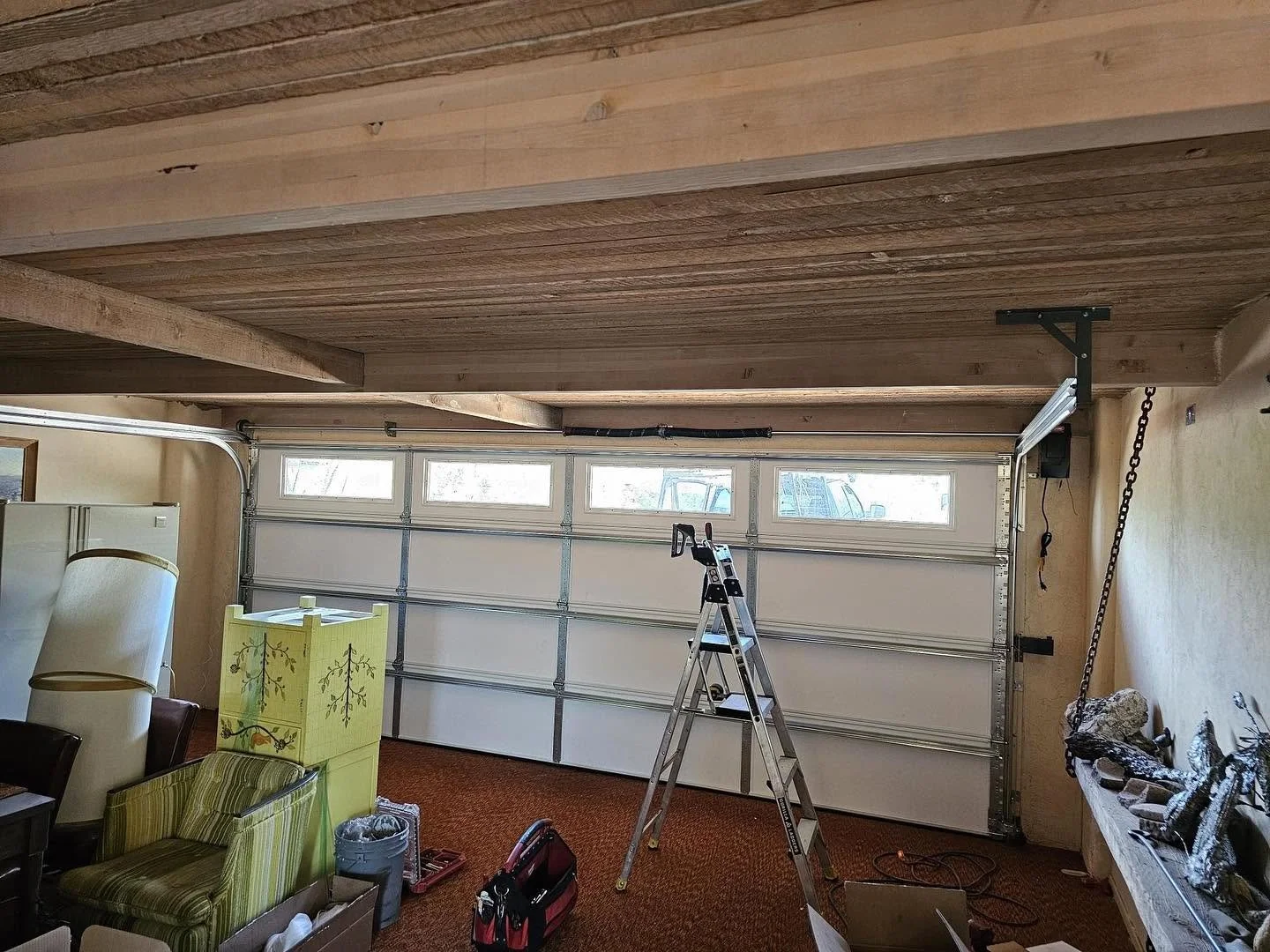
A door that has come out of its tracks is the one garage door failure that is genuinely dangerous to stand under.
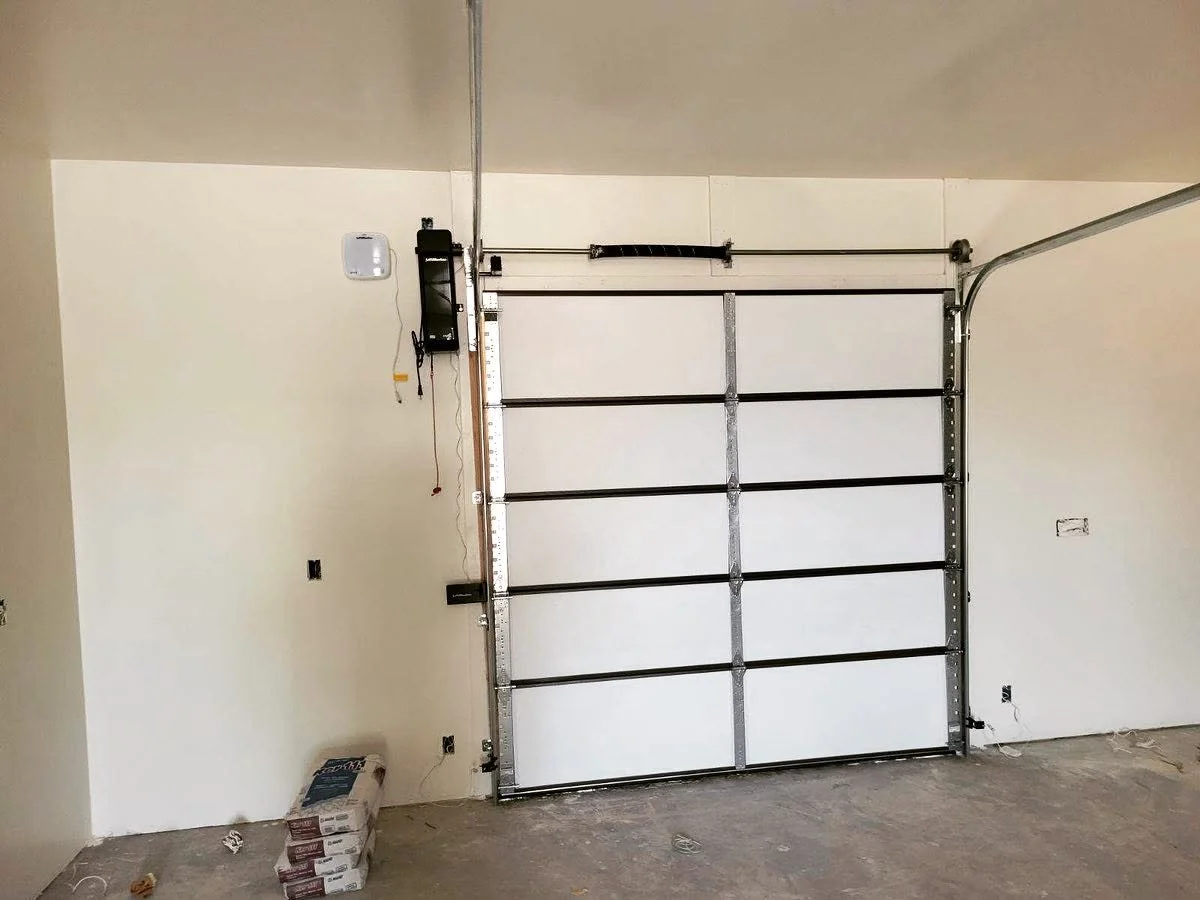
It is being held up by whatever is left: a cable that may be frayed, a bracket that may be bent, a roller that may be the only thing still seated in the track. There is nothing holding it in place by design anymore.
Stop using it. Don't press the button again, and don't try to lift it. If it's open, keep people and cars out from under it. If it's closed, leave it closed. Then call us, and we'll walk you through what to do until a technician gets there.
Off-track door repair, Mesa & the Phoenix metroWhat to Do in the Next Five Minutes
1. Stop operating it.
Every attempt bends more track and can pull the door farther out.
2. Kill the power at the breaker, not by pulling the release cord.
More on that below, because it matters.
3. Get everything out from under it.
Cars, bikes, people, the dog.
4. Don't pull on the door, and don't push the rollers back in.
The cables are under load, and the bottom brackets are under spring tension.
5. Take a photo from a safe distance if you can, and text it to us.
It genuinely helps us send the right parts.
How to Tell a Door Is Off Track, or About to Be
Some derailments are obvious. The useful ones are the warnings you get first, because a door caught at this stage is a much smaller repair.
The door is visibly crooked: One side is higher than the other, or the top section is leaning. A door hanging at an angle is either off track already or being held by one cable.
There's a gap between a roller and the track: Look along both vertical tracks with the door closed. Rollers should sit consistently in the channel at every height. A gap that opens and closes as your eye travels up means the track is bent or the door is drifting out.
It grinds, scrapes, or bangs at one point in its travel: A repeatable noise at the same height every time is a mechanical interference at that height, usually a bend, a loose bracket, or a seized roller. Noise that changes character is worth acting on.
It jams partway, or stops and reverses at the same place: The opener meets resistance, and its force setting does what it's supposed to do. People often adjust the force up to push through it. That's how a small track problem becomes a derailment.
You can see a frayed cable: Look at the cable running from the bottom bracket up the side of the door. Individual strands lifting off the bundle mean it's failing. When it goes, that side drops.
The door shudders or wobbles as it moves: Loose track hardware, or rollers with worn stems that no longer hold the door square to the track.
A roller stem is bent, or a roller isn't turning: Watch the door move. Rollers should rotate. One that slides instead of rolling is dragging, and dragging is what walks a door out of a track.
Caught early, most of this is a roller set, a cable, or half an hour of track adjustment. Caught after the door comes down, it's a much bigger day.
Why Doors Come Off Their Tracks
A broken lift cable
The most common cause. One cable snaps or unwinds off its drum; that side of the door loses support, it drops and twists, and the rollers on that side pull out of the track. If your door went off track on one side only, look here first.
Something in the track's path
A trash can, a ladder, a bicycle, a bag of soil. The door comes down onto it, the safety reverse doesn't catch it because the obstruction is at the side rather than in the sensor beam, and the door binds and jumps the track.
Impact
Somebody backed into it. Even a low-speed contact can bend a track or a bottom bracket enough to derail the door on its next cycle.
Worn or failed rollers
A roller with a seized bearing or a broken stem doesn't roll; it drags. Dragging widens the gap between the door and the track until the roller finds its way out.
Loose track hardware
The lag bolts and brackets that hold the vertical track to the jamb work loose over the years of cycling. Once the track can move, the alignment that keeps the rollers captured becomes unreliable.
Bent or misaligned track
Sometimes the consequence of one of the above, sometimes the cause of the next one. A track that's been straightened badly by somebody in a hurry is a door that will come off again.
The one that gets missed: the wrong track for your headroom
This is the reason a door comes off, gets put back, and comes off again. Track comes in different radii, typically 12 inches and 15 inches, and in standard-lift, low-headroom, and high-lift configurations. The radius has to suit the headroom between the top of the opening and the ceiling. Too little headroom for the track that's installed, and the door buckles and jams at the transition on every cycle, working the rollers and the top section until it derails. A shop that only re-seats the door will never find this. It's the first thing we look at on a repeat off-track call.
Why This Isn't a DIY Job
Not because it looks hard. Because of what's holding the door.
DASMA puts garage doors anywhere from 90 pounds to over 500 pounds. That weight is carried by springs wound to a specific torque, typically many turns of tension, and by two lift cables under that same load. When a door goes off track, those forces are still there, and they're now acting through a geometry nobody designed for.
The bottom bracket is the part to leave alone: It sits at the bottom corner of the door, and it is where the lift cable terminates. It is under the full spring tension of that side of the door at all times. Unbolting it, or trying to free a roller by removing it, releases that tension instantly, and it is the single most-cited cause of serious injury in this trade. There is no version of a homeowner needing to touch that bracket.
Pushing a roller back in doesn't fix anything either: If a roller came out, something let it. Re-seating it without finding the cable, the bracket, the track, or the roller that caused it means the door goes off again, usually within days, and usually with more damage.
What a technician brings that you don't: winding bars to take tension off the springs safely, locking pliers to clamp the door in position while it's supported, track anvils and a rubber mallet to true a track without kinking it, a level, and replacement rollers and cables so the root cause is fixed on the same visit. The sequence matters as much as the tools: secure the door, release tension, correct the cause, re-seat, re-tension, balance, then test.
What the Phoenix Metro Adds
Three local factors show up repeatedly in off-track calls here.
Blown dust in the tracks and rollers: desert dust is gritty mineral silt. It settles in the horizontal tracks and wears out roller bearings, and a dry, dragging roller is a derailment waiting to happen. That's why Clopay recommends lubricating more often in dusty climates.
The wrong lubricant makes it worse: Clopay's own guidance is silicone or white lithium grease and specifically not WD-40 or oil-based sprays, because they attract dirt and dust and cause premature wear. In a federally designated particulate area, that advice is worth more than it is elsewhere, and oiled tracks are among the most common things we find on repeat off-track calls.
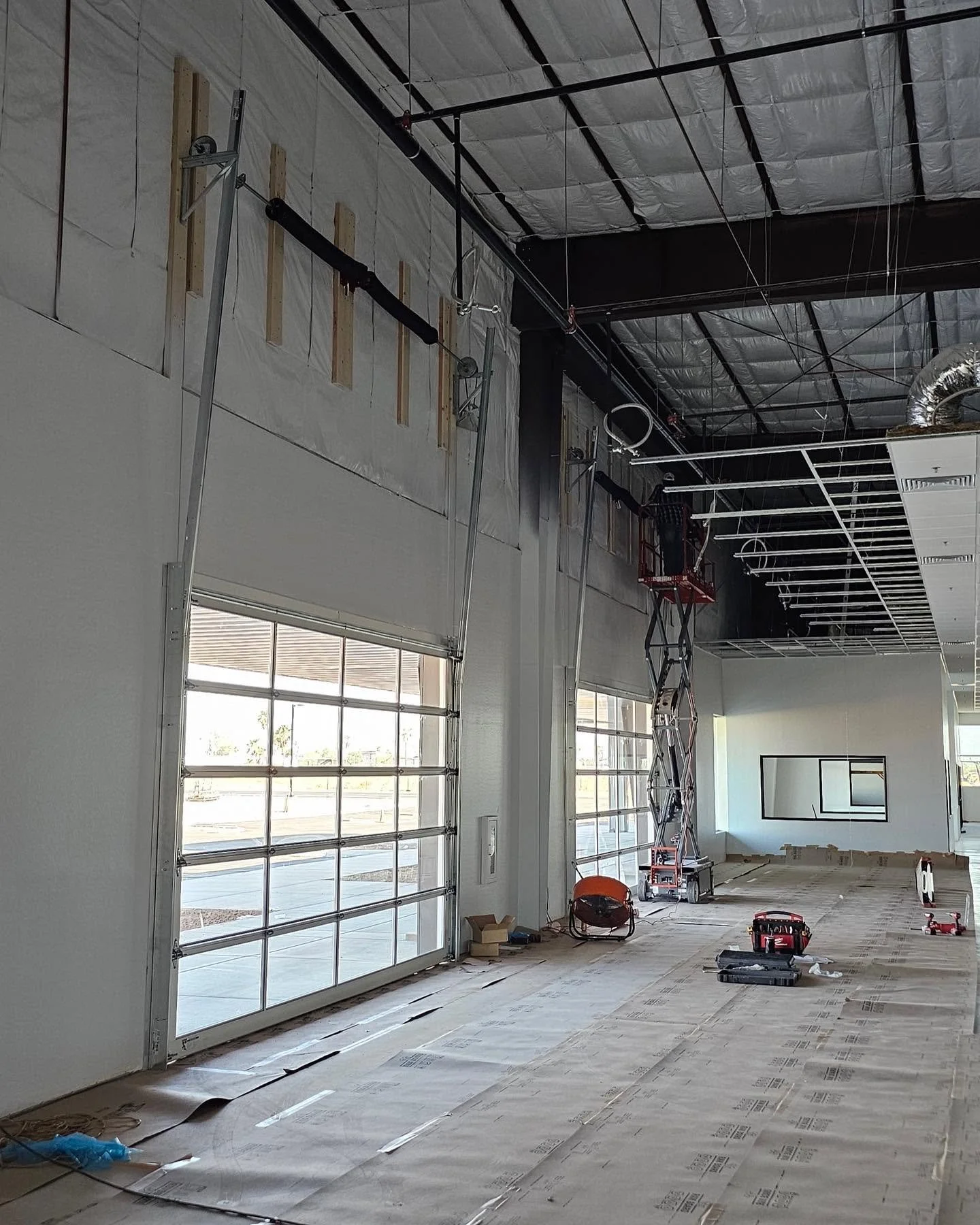
Wide doors flex: On 16-foot and RV-width openings, monsoon gusts put real load into a large panel, and proper struts and bracing are what keep a door from flexing enough to walk a roller out of its track.
What Affects the Price
Beyond the $85 service call, there is no set price, because it depends on what caused it and what the door did on the way out.
Whether it's a re-seat or a rebuild: A door that jumped one roller is not the same job as a door hanging by one cable with two bent sections.
Cables and drums, which are frequently the root cause.
Track, which can sometimes be trued and sometimes has to be replaced.
Rollers and whether it's worth doing the whole set while the door is apart.
Bottom brackets and hinges if the door twisted.
Panel damage if a section creased. That may be a panel replacement.
Whether the opener took damage from being run against a jammed door.
Scheduled visit or after-hours call-out. After hours and on weekends the call fee is $250 instead of $85.
How the Repair Goes
- 1.
You call, and we'll tell you what to do in the meantime.
After hours, a person answers.
- 2.
Text reminder before the appointment, and an ETA text on the day.
- 3.
The technician secures the door first.
Clamped and supported before anything is loosened, so it can't move while he's working under it.
- 4.
Power off at the opener.
- 5.
He releases spring tension in a controlled way using winding bars, if the repair needs it.
- 6.
He finds the cause behind the symptom.
Cable, bracket, roller, track, hardware, or headroom and track radius.
- 7.
You get an estimate covering the cause and everything the derailment damaged along the way.
- 8.
You decide.
Nothing is done until you've approved it.
- 9.
The cause gets fixed, then the door is re-seated in the track.
- 10.
Tension is restored, and the door is balanced.
The opener is disconnected, and the door is lifted by hand to three or four feet, where it should hold.
- 11.
He cycle-tests it under the opener and checks the safety reverse before reconnecting anything permanently.
- 12.
You pay by card, check, cash, Zelle or Venmo. Financing is available through Wisetack.
Repair or Replace
Most off-track doors are repairable, and we'd rather repair yours.
Repair is the answer when: one or two rollers came out, the cause is a cable, a roller, a bracket or an obstruction, the track can be trued, and the sections are straight.
It becomes a conversation when two or more sections are creased or kinked, the top section has pulled away from its hinges, the door twisted enough to distort the stiles, or the door is old enough that matching a replacement panel is doubtful.
Replacement is honest advice when the door folded. A section that has creased has lost its structure, and no amount of straightening can restore it. If that's where you are, we'll say so, and we'd rather tell you before doing significant work on a door that needs replacing.
Why Bring Us Out
We look for why it came off, not just how to get it back on: The root causes above are the whole job. Re-seating a roller takes 15 minutes and isn't a repair.
We check track radius and headroom on repeat calls: If your door has come off more than once, this is very often the reason, and it's the thing a re-seat-only shop never diagnoses.
We won't tell you to pull the release cord blind: The distinction between when that's safe and when it drops the door is above, and in full on our emergency repair page.
Any brand, any age, including one-piece tilt-up doors and doors we didn't install. No minimum job or invoice.
We'll tell you the boundary on the phone: If a car hits your door and pushes it through the jamb, we repair the door. Framing, drywall, and stucco are somebody else's trade, and you'll hear that before we drive out.
If we get it wrong, we make it right: Ninety days on our labor, and every manufacturer's parts warranty honored.
Stopping It From Happening Again
Replace the rollers as a set, not one at a time:
They're all the same age. Nylon rollers with sealed bearings run more quietly and, more usefully here, keep abrasive dust out of the bearings. On a door that's just come off track because a roller seized, doing the set is the simplest insurance on the page.
Keep the tracks clean and dry:
Wipe the horizontal tracks with a damp cloth after a dust storm, and leave nothing in them. Keep lubricant out of the track channel, where it holds grit against the rollers. Use silicone on hinges and steel rollers, and silicone or white lithium grease on the springs. Leave nylon rollers dry, and skip oil-based sprays like WD-40 unless your door's manual calls for them.
Check the track bolts once a year:
The lag bolts holding the vertical track to the jamb work loose. A quarter turn a year is normal, and loose track is how rollers escape.
Don't store anything where the door lands:
The most preventable cause on the whole list.
Get the balance checked annually:
A door out of balance drags itself along one side of the track and wears rollers unevenly.
On a wide door, check the struts.
Sixteen-foot and RV-width doors need adequate bracing, and monsoon gusts are the load they're bracing against.
What Mesa Customers Say
Frequently Asked Questions
Can I just push the rollers back in?
No, and it's the most common thing people try. If a roller came out, something allowed it to, and re-seating without fixing that means it happens again with more damage. It also puts your hands next to cables and brackets under spring tension.
Is it safe to leave the door hanging overnight?
Safer than operating it, but only if nothing is under it. Get cars and people clear, kill the breaker, and keep the space empty until a technician arrives.
Is it safe to use a door that's off track?
No. Not once, not carefully, and not just to get the car out.
Should I pull the emergency release cord?
Not on an off-track door. Kill the power at the breaker instead. The cord is safe when the door is closed and the springs are working, and with an off-track door, you usually can't confirm either.
Will I need a whole new door?
Usually not. Most off-track doors are repairable. It changes if sections have creased or the door twisted enough to distort the frame.
Can an off-track door damage my opener?
Yes, and it's one of the reasons to stop pressing the button. An opener straining against a jammed door strips gears and burns motors, which turns one repair into two.
How long does the repair take?
Most are one to two hours. Longer if cables, drums, track, or multiple rollers are involved, or if the door needs sections replaced.
Why does my door keep coming off track?
Something structural hasn't been addressed. In our experience, the usual suspects are a bent track that was straightened rather than replaced, rollers that were never changed, loose track hardware, or a track radius that is wrong for the headroom. That last one is the least diagnosed.
A car hit my door. Is that off track or panel damage?
Often both. An impact can crease a section and knock the door out of the track in the same moment. We repair the door, including single-panel replacement where the rest of it is sound. What we don't do is the jamb, framing, drywall, or stucco, and if your car went through those as well, you'll need a second trade. We'll tell you that on the phone.
Will my insurance cover this?
Often, when the damage was sudden and accidental. Usually not for wear and tear. Our panel replacement page goes through it properly, including why it's worth comparing your deductible against the repair before you file.
How do I know if the track is bent?
Look along the vertical track from floor level with the door closed. It should be straight and parallel to the door edge. Gaps that change width as you look up, or a visible kink, mean it's bent. If you can see daylight between roller and track at some heights and not others, that's the same thing.
Is it safe to be in the garage with an off-track door?
Not underneath it, and not beside it while it's under load. If the door is closed and the power is off at the breaker, moving around the garage is reasonable. If it's open or partway, treat the whole footprint under the door as off-limits until somebody has it secured.
How long will I be without the garage?
Once the technician is on site, the work itself is usually one to two hours. Where a section, a custom-length cable, or a track has to be ordered, we'll tell you the timeline before we start, and we'll do what we can to leave the door closed and secured while we wait.
Can I open it manually in the meantime to get my car out?
Please ask us on the phone before you try. On some off-track doors it's possible with two people and care. On others, particularly where a cable has gone, attempting it is how people get hurt and how a repairable door becomes a replacement. Describe it to us first.
How do I stop it from happening again?
The prevention section above covers it, but the short version is this: replace rollers as a set, keep the tracks clean and correctly lubricated, check the track bolts once a year, don't store anything where the door lands, and if it has come off more than once, get the track radius and headroom checked.
My door is crooked but still working. Is that off track?
It's on its way. A door hanging unevenly is usually due to a cable or balance problem, and continuing to run it is how it becomes a derailment.
Can weather do this?
Indirectly. Blown dust in the bearings and monsoon gusts flexing a wide door both contribute here. Cold-weather binding, which you'll read about on national sites, isn't really a Mesa problem.
Where We Work
Off-track recovery across the Phoenix metro:
- Mesa,
- Gilbert,
- Chandler,
- Tempe,
- Scottsdale,
- Phoenix,
- Queen Creek,
- Apache Junction,
- Glendale,
- Peoria,
- Ahwatukee,
- Fountain Hills and
- Paradise Valley.
Leave it where it is and call us.
Don't lift it, don't press the button, and don't pull the cord. Tell us what happened and what it looks like now, send a photo if you safely can, and we'll tell you what to do until a technician gets there.