
Garage Door Tune-Up in Mesa, AZ
The service call is $85, which covers a 22-point inspection and the first half hour of labor. A person answers after hours, and after-hours and weekend work carries a $250 call fee.
- Women-Owned Family Business
- ROC #310144
- Licensed, Bonded & Insured
- 90-Day Labor Warranty
- Google Rated
Most garage door failures announce themselves for weeks before they happen. A tune-up is the visit when someone who knows what those signals look like goes over the whole system, tests the parts that are supposed to stop the door from hurting someone, and tells you what is wearing out before it leaves you stranded.
This is what the $85 service call is for. It covers the twenty-two points below and the first half hour of labor, so a tune-up that turns up something small often fixes it too.
What makes this page different from every other tune-up page you'll read today: we publish what the twenty-two points actually are. Further down there's a numbered list, and every point on it is something you can watch us do or ask us about afterward.
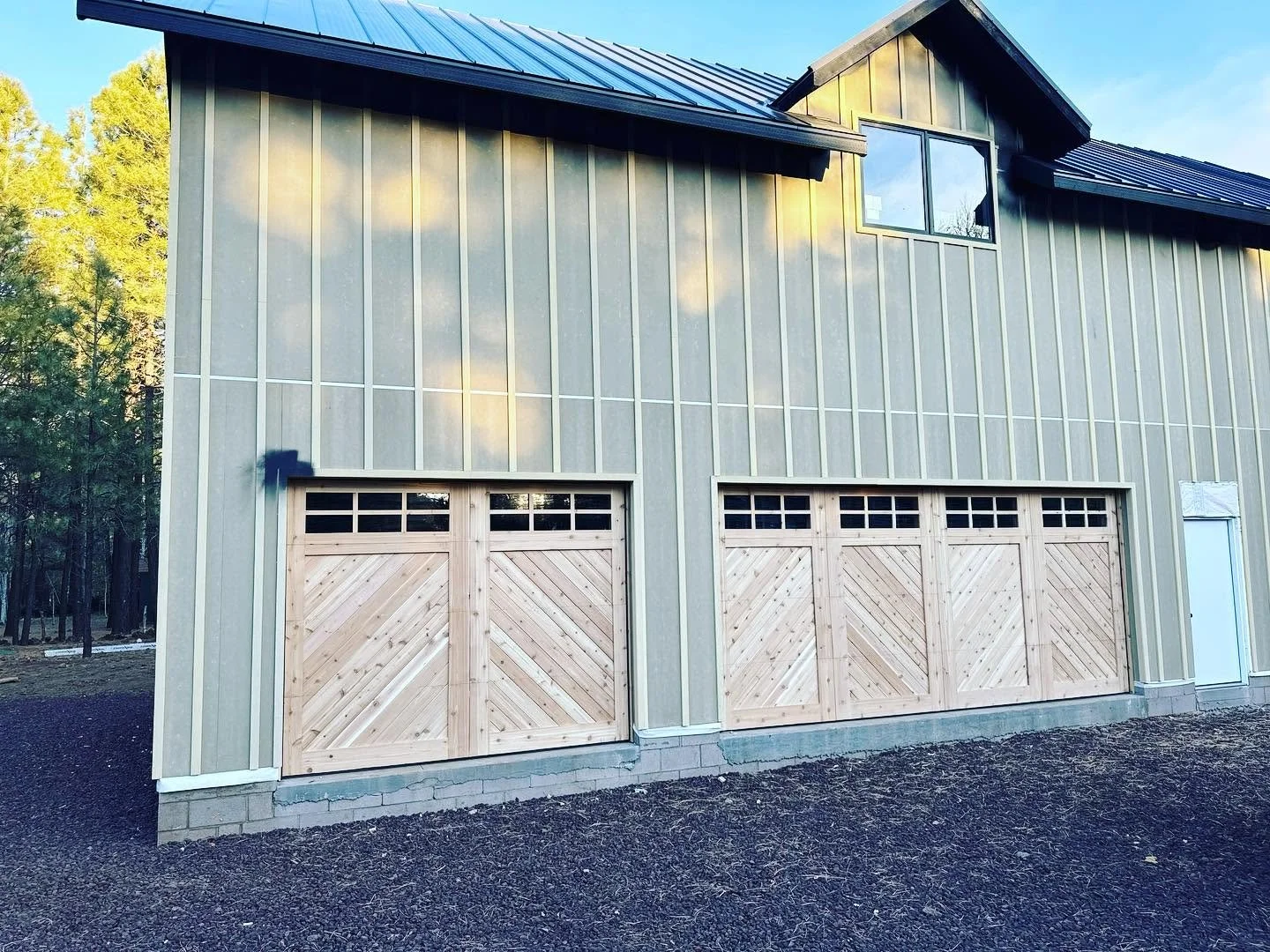 Garage door tune-ups, Mesa & the Phoenix metro
The Number on Every Tune-Up Ad
Shop for a garage door tune-up, and you'll be offered a 21-point inspection, a 25-point inspection, and a 26-point one, depending on whose ad you're reading.
Many companies advertise a 21-, 25- or 26-point inspection without listing the points, and no industry standard sets those numbers. We publish all twenty-two of ours below, plus the six items on DASMA's homeowner checklist that ours does not separately cover.
Our twenty-two points: the actual sequence a technician works through on your door, written by the person who owns this company. Not assembled from a standard, not reverse-engineered from an ad.
And the six checks on DASMA's list that ours doesn't include, printed right underneath. A list that shows you only what a company already does is an ad. One that shows you the gap is information.
Both are below. Check our work against either.
The Twenty-Two Points
In the order they get worked: the door, the counterbalance, the seals, then the opener and its safety systems. The order matters, because the safety tests come last so they run on a door that has already passed everything else.
The door and its hardware
1. Door panels and sections. Inside and out, for fatigue, cracking, delamination and impact damage.
2. Hinges. Secure, undamaged, and correctly numbered for their position. A graduated hinge in the wrong place is a real fault, not a cosmetic one.
3. Rollers. Condition, wear on the stems, and whether they stay on the track throughout the whole travel.
4. Vertical tracks. Plumb, alignment, fasteners, and damage.
5. Horizontal tracks. Level, hangers, and any bind through the curve where most of the trouble lives.
6. Track brackets and jamb brackets. Every fastener present and tight, and the bracket itself undeformed.
7. Flag brackets and bearing plates. Where the vertical track, the horizontal track, and the spring assembly all land. When this moves, everything else goes with it.
The counterbalance, which is where the weight is
8. Torsion or extension springs. Wear, rust, pitting, and coil condition.
9. Spring tension and door balance. Lifted by hand with the opener disconnected: it should move freely, hold where you leave it, and not run away from the hand that moved it.
10. Torsion shaft. Straightness, wear at the bearing points, and play.
11. Drums. Set screws, seating on the shaft, and the condition of the cable groove.
12. Lift cables. Fraying, kinking, and how evenly the two sides are carrying.
13. Bottom fixtures and cable attachment points. Inspected in place only. They sit under the full spring tension of that side of the door, so they get looked at and not loosened.
14. Top fixtures and roller brackets. Secure, square, and not pulling out of the section.
15. Center bearing and end bearings. Noise, play, and wear. A dry bearing is often the whole reason a quiet door stopped being one.
The seals
16. Weather seal and bottom astragal. Condition, and whether it still meets the floor across the full width.
17. Perimeter weatherstripping. Jambs and header, and whether it is doing anything at all.
The opener
18. Opener mounts and rail. Header bracket, hanging iron, and rail. An opener that moves when the door moves puts that movement into the top section.
19. Opener force and travel limits. Set so the door fully opens, fully closes, and rests on the floor without a gap and without straining.
The safety systems, last, on a door that has already passed
20. Photo-eye sensors. Present, aligned, and tested by breaking the beam as the door closes.
21. Automatic reverse. A two-by-four laid flat under the middle of the door. The door should contact it and then return to a fully open position. Battery backup tested at the same time where one is installed.
22. Manual operation, noise, lubrication and the final safety check. Run by hand and under power once more, listened to, lubricated to the manufacturer's specification, signed off.
The Six on DASMA's List That Aren't on Ours
These are the items on the door industry's own homeowner checklist that our twenty-two don't separately cover. Most are label, code, and placement checks: they matter, they are what a home inspector looks at, and they are not what a technician spends a service visit turning a wrench on.
Warning labels. The spring label, the section label, and the entrapment warning by the wall control.
Extension-spring containment cable. If your door has extension springs and no safety cable running through them, that is the single most important thing anybody could find on your garage, and we will tell you whether or not you asked.
The locking device. Working if you use it, properly disabled if you have an opener.
The manual release handle. Red, reachable, and no more than six feet above the floor.
The wall control button. In clear view of the door and at least five feet up, out of a child's reach.
The electrical supply. A self-grounding or GFCI receptacle within the cord's reach, because an extension cord is not permitted and is commonly found.
What We Don't Do on a Tune-Up
Worth saying, because the word "tune-up" gets used to mean anything.
We don't adjust spring tension as a matter of routine. If the balance test fails, that's a finding and a conversation, not a turn of the winding bars while we're there. Adding tension costs spring life, and on a tired spring it can cost a lot of it.
We don't lubricate the tracks or nylon rollers. Both appear on competitors' tune-up lists in this market. Both are things the door manufacturer specifically says not to do, and the next section explains why.
We don't replace parts without telling you first. If the rollers are done, or a hinge has worn oval, or the seal has gone, you're told what it is and what it costs by email before anything comes off the door.
The Lubrication Most Companies Get Wrong
This is the part of a tune-up you can check on any invoice, and it's where the market and the manufacturer disagree.
What gets lubricated.
Clopay's guidance: silicone spray or white lithium grease on the hinges and hinge pins, springs and bearing plates, and on an extension-spring system, the pulleys.
And two flat prohibitions. Do not lubricate the tracks, because that just makes it harder for the rollers to move and forces the opener to work harder. And if the rollers are nylon, do not apply any lubricant to them.
Three companies whose tune-up pages we read list lubricating the tracks as part of the service. That makes the door worse.
In fairness, the manufacturers are not unanimous. Clopay keeps lubricant out of the track; Raynor's table says to lubricate track and hinges. We follow Clopay, because a lubricated track here collects grit and turns a rolling roller into a sliding one.
How often. Clopay says every three to six months, and specifically notes that in dusty climates the lubricant may not last as long and may need to be reapplied more frequently. That is the one manufacturer-sourced statement that genuinely applies to a Mesa garage, and it's a maintenance interval.
WD-40 and oil-based sprays. Clopay's guidance is to avoid them. The practical objection is that they attract dust, and dust in a bearing is what you were trying to prevent in the first place.
How Often, Honestly
Once a year suits most households. That's the interval we work to, and it lines up with the door being a system whose parts wear on a cycle count.
Twice a year if the door works harder than a residential door is rated for. The standard defines a residential door as one expected to run under 1,500 cycles per year, which is about 4 times a day. A household well past that, a door with a room above it, or a workshop cycling the door all day is on a six-month interval.
Lubrication is more often than the tune-up, per the manufacturer's own interval above. That part is a homeowner job and we'd rather you did it than paid us to.
Any time something changes. A new opener, a replaced section, an insulation kit, a repaint. Anything that alters the door's weight or how it's driven is a reason to have the balance checked.
What we won't tell you is that Arizona conditions mean you need this on a shorter schedule. Plenty of pages in this market publish exactly that, with an interval attached. There's no source for any of it: nobody has published a maintenance interval based on desert conditions. Some individual components genuinely do have documented heat sensitivity, and where that's true we say so on the page about that part. What nobody has is a schedule. The one real climate statement bearing on maintenance is Clopay's, about lubricant in dusty conditions, and it's in the section above.
What a Tune-Up Actually Prevents
Not everything. Springs reach the end of their cycle life whatever you do, and a tune-up doesn't add cycles to a spring.
What it does catch is the set of failures that give warning.
A cable fraying at the bottom fitting. Visible for months before it parts, and a parted cable usually takes the door off its track with it.
A door drifting out of balance. Gradual, and by the time you feel it, the opener has been carrying weight it wasn't built for.
Photo eyes drifting out of alignment. The door still works, so nobody notices, until it doesn't reverse when it should.
A reversal test that has quietly stopped passing. Force settings drift, and the door keeps working, so nothing tells you. This is the most important two minutes of the visit, and it's the check most households have never run.
Hardware backing out. A door cycles thousands of times a year, and each one shakes the assembly. A socket and ten minutes prevent a track that's no longer holding the door square.
Rollers going. A roller that's dragging wears the track.
The Two Safety Systems, and Why They're the Point
If you take one thing from this page, take this. A modern garage door opener has two independent systems meant to stop it from closing on someone, and most people know about one of them.
Force sensing is built into the opener. It monitors how much effort it takes to move the door and reverses if it encounters more resistance than expected. That's the system the two-by-four test checks.
Photo eyes are the second system, mounted near the floor on either side of the opening, and they stop the door on a beam break without anything touching. That's the system the wave-something-through-the-beam test checks.
They fail differently, and one can be dead while the other still works. A photo eye knocked out of alignment by a bicycle leaves the door closing on force sensing alone. Force settings that have drifted leave you relying on the beam. A door can pass one test and fail the other, which is exactly why both are on the list and why doing just one at home isn't enough.
Where the two systems came from. The U.S. Consumer Product Safety Commission reported that between 1982 and the early 1990s, forty-eight children aged two to fourteen died after becoming entrapped under doors with automatic openers. Congress responded by requiring entrapment protection on openers manufactured for sale in the United States from January 1991. External protection specifically, meaning photo eyes or an edge sensor rather than force sensing alone, has been required since 1993, which is the date we use on our sensor and opener pages. DASMA's own checklist words the federal cutoff differently again, as openers manufactured after 1992.
What that means practically. If your opener has no photo eyes and no other external protection, it predates that requirement, and the CPSC's position at the time was blunt: openers without automatic reversal should be replaced. That's a finding a tune-up produces, and it isn't a repair.
When the Checklist Turns Up Something Serious
Most visits find small things. Occasionally the list turns up something that changes the visit, and it's worth knowing in advance what those are, because DASMA's instruction on its own checklist is to stop.
Extension springs with no containment cable. Extension springs sit alongside the horizontal tracks and store the same energy as a torsion spring. A safety cable threaded through the middle is what stops the pieces from traveling when one breaks. Doors built before this was routine sometimes have none. It is the single most valuable thing a tune-up can find.
A broken spring. DASMA's instruction is that the door should not be operated until it's replaced, full stop.
A door that won't hold three to four feet up. The counterbalance isn't carrying the door anymore, and the opener is.
A failed reversal test that can't be corrected by adjustment. Sometimes the answer is a force setting. Sometimes it's an opener at the end of its life.
Sections cracking or separating. Fatigue in a section is structural, and it doesn't get better.
An extension cord feeding the opener. Common, easily missed, and not permitted. That's an electrician's job, and we'll say so.
The Part You Can Do Yourself
We would rather you did these than paid us to.
The balance test, once a year. Door closed, opener unplugged, release cord pulled, lift by hand to three or four feet off the floor and let go. It should hold. A slow, gentle drift is acceptable by the opener manufacturer's own guidance. A door that slams shut, shoots upward, or has to be fought to lift is a door to call about.
The reversal test, at the same time. Lay a two-by-four flat on the floor under the middle of the door and close it: the door should touch it and reverse. Then, separately, wave a broom handle through the photo-eye beam while the door is closing: it should stop and reverse.
Lubrication, to the list above.
Look at the cables where they meet the bottom brackets. Rust, fraying, or a strand standing proud means it's time to call.
What Affects the Price
How many doors. A three-door garage is three inspections, and the scope is per door.
Whether anything found needs fixing, which is quoted separately.
Rollers, seals or hardware replaced while we're there, which saves a return visit.
Whether the springs are near the end of their life, because that changes the conversation from maintenance to replacement.
Commercial or high-cycle doors, which take longer and are inspected against different expectations.
A scheduled visit at the $85 service call, or an after-hours or weekend visit at the $250 call fee.
How the Visit Goes
- 1.
You call, and we schedule it.
- 2.
Text reminder before the appointment, and an ETA text on the day.
- 3.
The technician works the twenty-two points in the order above.
- 4.
He stops if something fails.
DASMA's instruction on its own checklist is that a "no" answer ends the inspection and the door goes to a technician. Ours is the same, except the technician is already standing there.
- 5.
Lubrication to specification, hinges, springs and bearings, nothing in the tracks and nothing on nylon rollers.
- 6.
Hardware tightened.
- 7.
You get told what he found, including the things that are fine, because a list of twenty-two points with nothing written next to nineteen of them is not much use.
- 8.
Anything needing a part gets an estimate, and nothing happens until you've approved it.
- 9.
You pay by card, check, cash, Zelle, or Venmo. Financing is available through Wisetack.
Why Bring Us Out
We publish the points, and we say where they came from. You can read them above, before you book, and check them off afterward. On the competitor pages we read that advertise a number in this category, the list itself was not published.
Our list is the one we actually work to, not a number somebody picked. We also show where it lines up with the industry's own checklist and where it goes further, so you can see which is which.
We follow the door manufacturer on lubrication, including the two things it says not to do that we still see done.
We don't sell maintenance on a scare. No manufacturer publishes a shorter tune-up schedule for desert heat, so we won't invent one. Once a year is worth it on its own merits.
Any brand, any age, including doors we didn't install. No minimum job or invoice.
If we get it wrong, we make it right. Ninety days on our labor, and every manufacturer's parts warranty honored.
What Mesa Customers Say
"My door was messed up. I called Quality Door and they came over and took care of my door, with some great advice and a top rated skill set. The technician was very knowledgeable, gave me excellent advice of how I can do some preventative maintenance to help keep my door rolling for years. Thank you quality, I appreciate it!"
Frequently Asked Questions
What does a garage door tune-up include?
The twenty-two points listed above, plus the six DASMA items on request. Anything that needs a part is quoted separately.
Is a tune-up worth it?
The safety tests are the first reason: the reversal systems are the part of a garage door that stops it from hurting someone, and they're the part nobody checks. Beyond that, it catches the failures that give warning signs: frayed cables, drifting balance, misaligned photo eyes, hardware backing out. It does not stop a spring from reaching the end of its cycle life.
How often does a garage door need a tune-up?
Once a year for most households. Twice if the door runs well past the 1,500 cycles a year that the residential standard assumes, which is roughly 4 times a day.
What's the difference between a 22-point and a 25-point inspection?
Usually the advertisement. There's no industry standard behind any of those numbers. What matters is whether the company will tell you what the points are. Ours are on this page, and so are the six we don't cover.
Do you adjust the springs during a tune-up?
Not routinely. If the balance test fails, that's a finding and a conversation, because adding tension costs spring life and doing it to a tired spring can cost a large share of what's left.
Do you lubricate the tracks?
No, and we'd advise against it, whoever is doing the work. Clopay's guidance is that lubricating the tracks makes it harder for the rollers to move and forces the opener to work harder, and nylon rollers shouldn't be lubricated either. Raynor's table is the exception: it says to lubricate track and hinges, and we set out above why we follow Clopay instead.
Can I do this myself?
Some of it, and you should. The balance test, both reversal tests, and the lubrication are homeowner jobs. The springs, the winding cones, the bottom brackets, and the cables are not, and the industry body says so in those terms.
How long does it take?
DASMA puts the inspection alone at about fifteen minutes. A real visit runs longer, because it includes the service work and because most doors turn up something worth explaining.
Does the desert climate mean I need this more often?
Nobody has published an interval derived from it, and the ones circulating locally have nothing behind them. The one manufacturer-published climate statement that bears on maintenance is that lubricant may not last as long in dusty conditions and may need to be reapplied more frequently. Individual parts do have documented heat sensitivity, and those are covered on the pages about those parts.
My door works fine. Why would I book this?
Because the two things most likely to be wrong are invisible when the door works: the balance, and whether the reversal systems still function. Both are on the list above.
Will you find things that need fixing?
Often, though sometimes there is nothing. A tune-up where nineteen of twenty-two points pass and three need attention is the normal outcome, and you should get told about the nineteen as well.
My opener has no photo eyes. Is that a problem?
It means the opener predates the external entrapment-protection requirement, which has applied since 1993. The underlying federal requirement dates from January 1991, according to the CPSC, and is worded as after 1992 in DASMA's checklist. The CPSC's position when the rule was made was that openers without automatic reversal should be replaced. That's a finding, and we'll tell you rather than quietly working around it.
Do the photo eyes and the force reversal do the same job?
No, and that's the point. Force sensing reacts to resistance and photo eyes react to a broken beam. One can be dead while the other still works, which is why both get tested and why testing only one at home doesn't tell you much.
My springs are the kind alongside the tracks. Anything special?
Yes. Extension springs need a safety cable running through the middle of them, which is what contains the pieces if one breaks. Some older doors have none, and finding that is the single most valuable outcome of a tune-up.
Do you service commercial doors too?
Yes. Commercial and high-cycle doors run far more cycles than a residential door is rated for, so they're inspected against different expectations.
Do you tune up doors you didn't install?
Yes, any brand and any age, including doors whose original installer is long gone.
Where We Work
Tune-ups and safety inspections across the Phoenix metro:
- Mesa,
- Gilbert,
- Chandler,
- Tempe,
- Scottsdale,
- Phoenix,
- Queen Creek,
- Apache Junction,
- Glendale,
- Peoria,
- Ahwatukee,
- Fountain Hills and
- Paradise Valley.
Book the annual visit, or do the two-minute version yourself first.
The balance test and the reversal test take two minutes between them, and they're the two that matter most. If either one fails, that's the call to make.