
Garage Door Lockout Help in Mesa, AZ
Door stuck shut and you can't get in? We free jammed lock bars, stuck automatic locks, broken springs and snapped cables across Mesa and the Phoenix metro, without forcing the door. A live person answers after hours. The service call is $85, covering a 22-point inspection and the first half hour of labor. A person answers after hours, and after-hours and weekend work carries a $250 call fee.
- Women-Owned Family Business
- ROC #310144
- Licensed, Bonded & Insured
- 90-Day Labor Warranty
- Google Rated
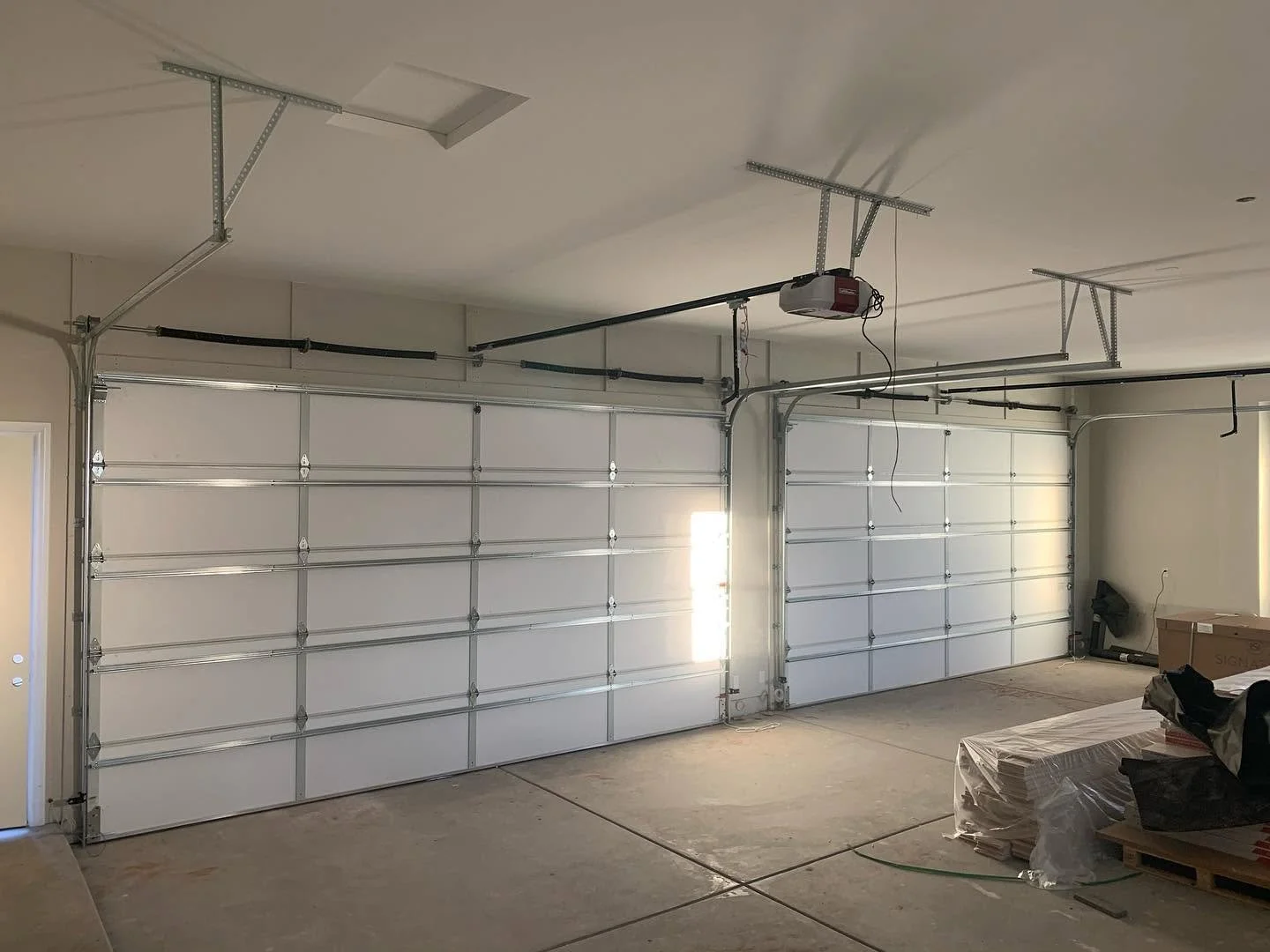
If your garage door will not open and you cannot get in, the cause is almost always mechanical rather than a lock. A thrown lock bar, an automatic lock that has not retracted, a broken spring, a snapped cable, or an opener with no power.
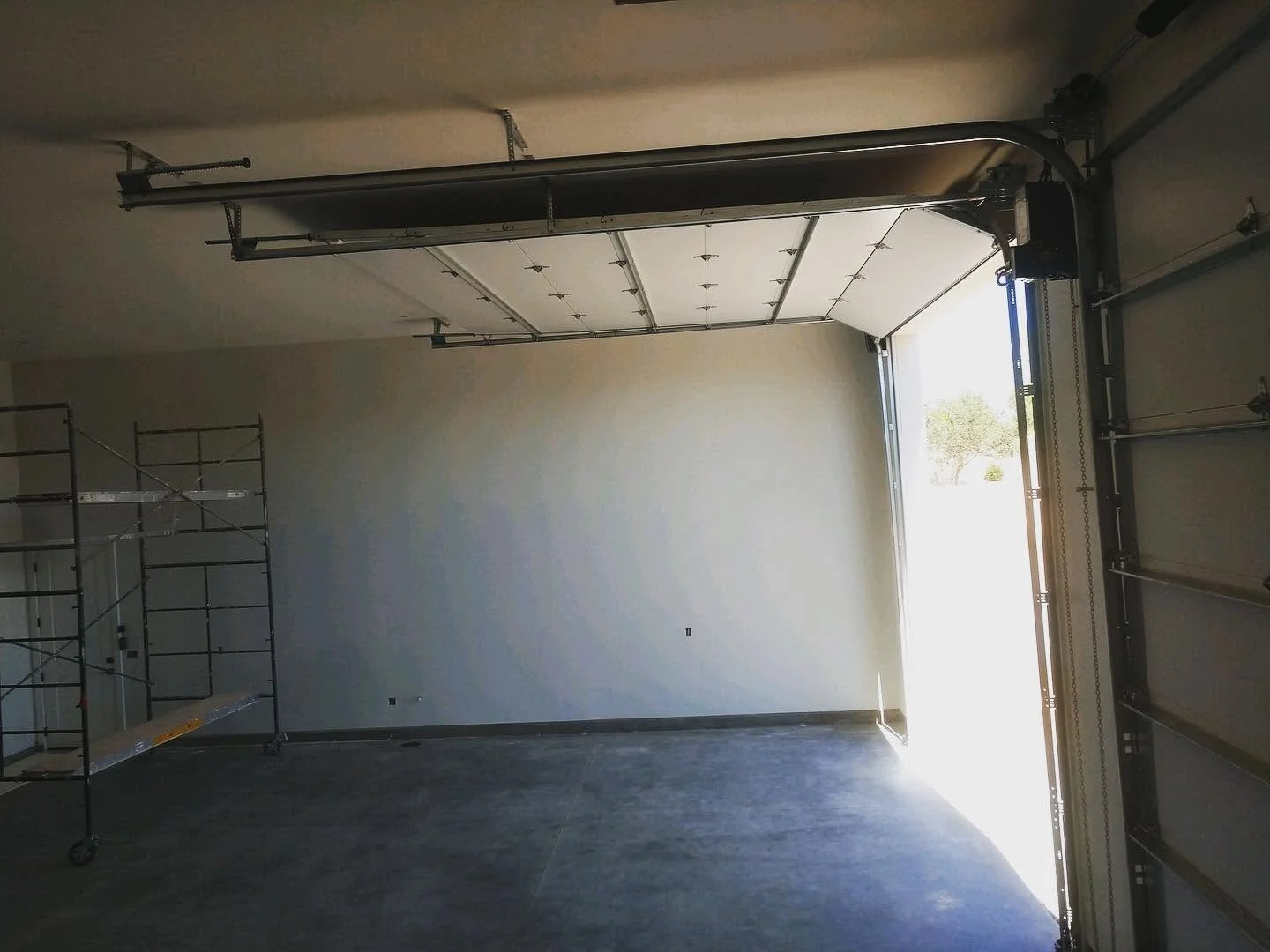
Some of those you can check safely in two minutes. One of them you should not touch at all. This page tells you which is which.
We do not do locksmith work. No car lockouts, no key cutting, no rekeying, no deadbolts. What we do is the door.
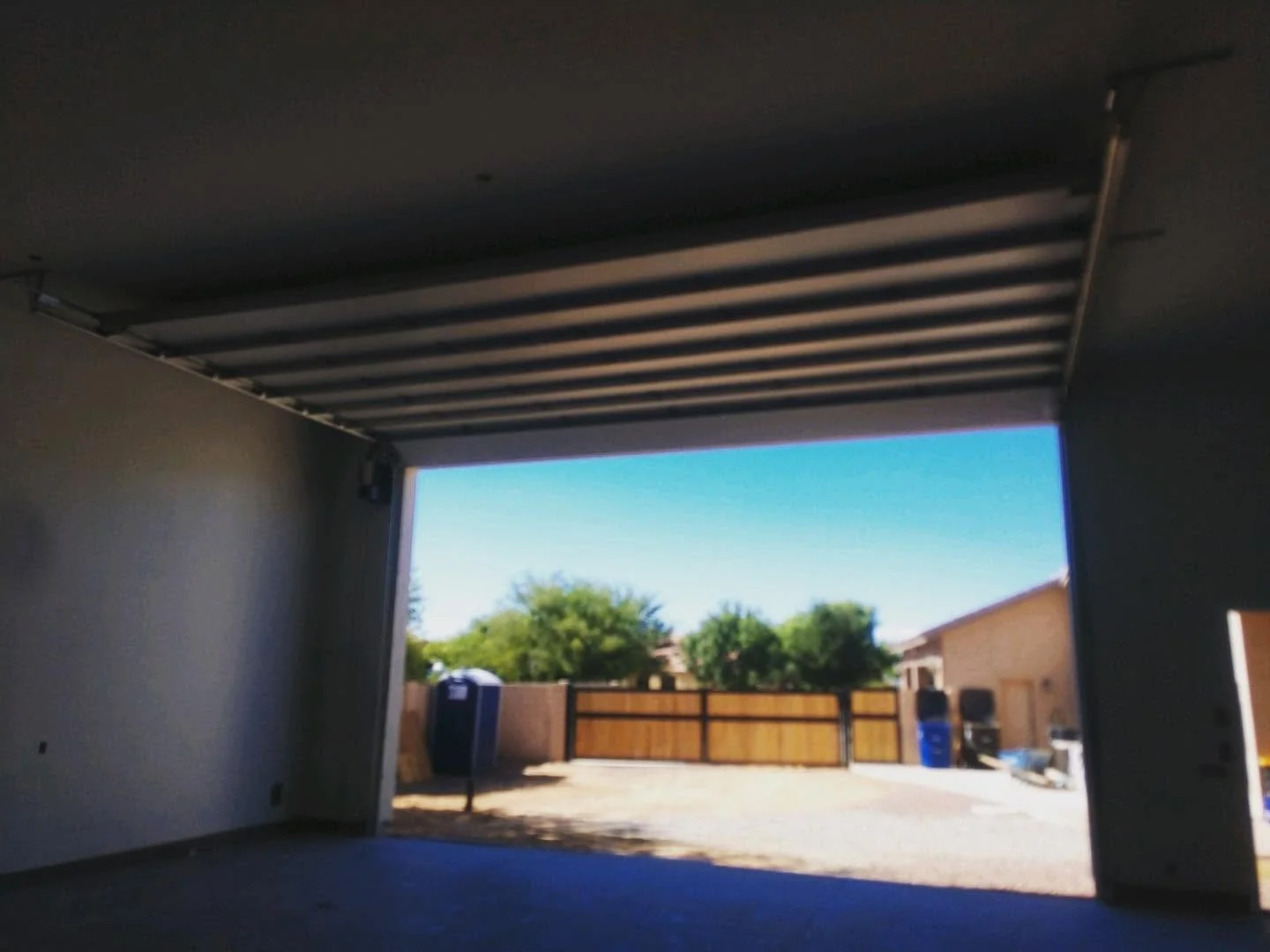 Garage door lockout help, Mesa & the Phoenix metro
The Thing Almost Nobody Knows About Garage Door Locks
Start here, because it reframes the whole problem.
If your garage door has an opener, the manual lock should be gone. Not as a preference. As a federal requirement on the instructions the opener came with.
Opener makers including LiftMaster, Genie, Wayne Dalton and Clopay all say the same thing: once an opener goes in, the manual lock comes off or gets disabled. If yours is still there, it's the most likely reason your door won't move, and we can free it and disable it safely.
So if you are locked out and there is a slide lock on the inside of your door, you have not found a security feature. You have found something that should have been disabled when the opener went in, and it is now the most likely reason your door will not move.
Is a Lock Bar Thrown, and Is It Loaded?
How it presents. The opener runs and the door lifts a few inches and stops or reverses. Or it hums for a second and nothing happens. Or there is one click and nothing.
That is not a guess. LiftMaster's diagnostic chart lists exactly those three symptoms and gives the same instruction for each: manually open and close the door, and check for binding or obstructions such as a broken spring or a door lock. The manufacturer puts a thrown lock in the same sentence as a broken spring, which tells you how common it is.
Now the part you need to be careful about. If the opener has already driven the door against a thrown lock bar, the bar is pinched in the track slot and it is under load.
DASMA's published instruction to a homeowner in exactly that state is to stop. Its guidance on checking a door for damage says: when unlocking a mechanically locked door, if the locking mechanism appears to be under tension from the door, leave the door in the locked position and stop the inspection.
In plain terms: if the lock will not slide easily with your fingers, do not lever it, hammer it or force it. It is holding load and it will let go suddenly.
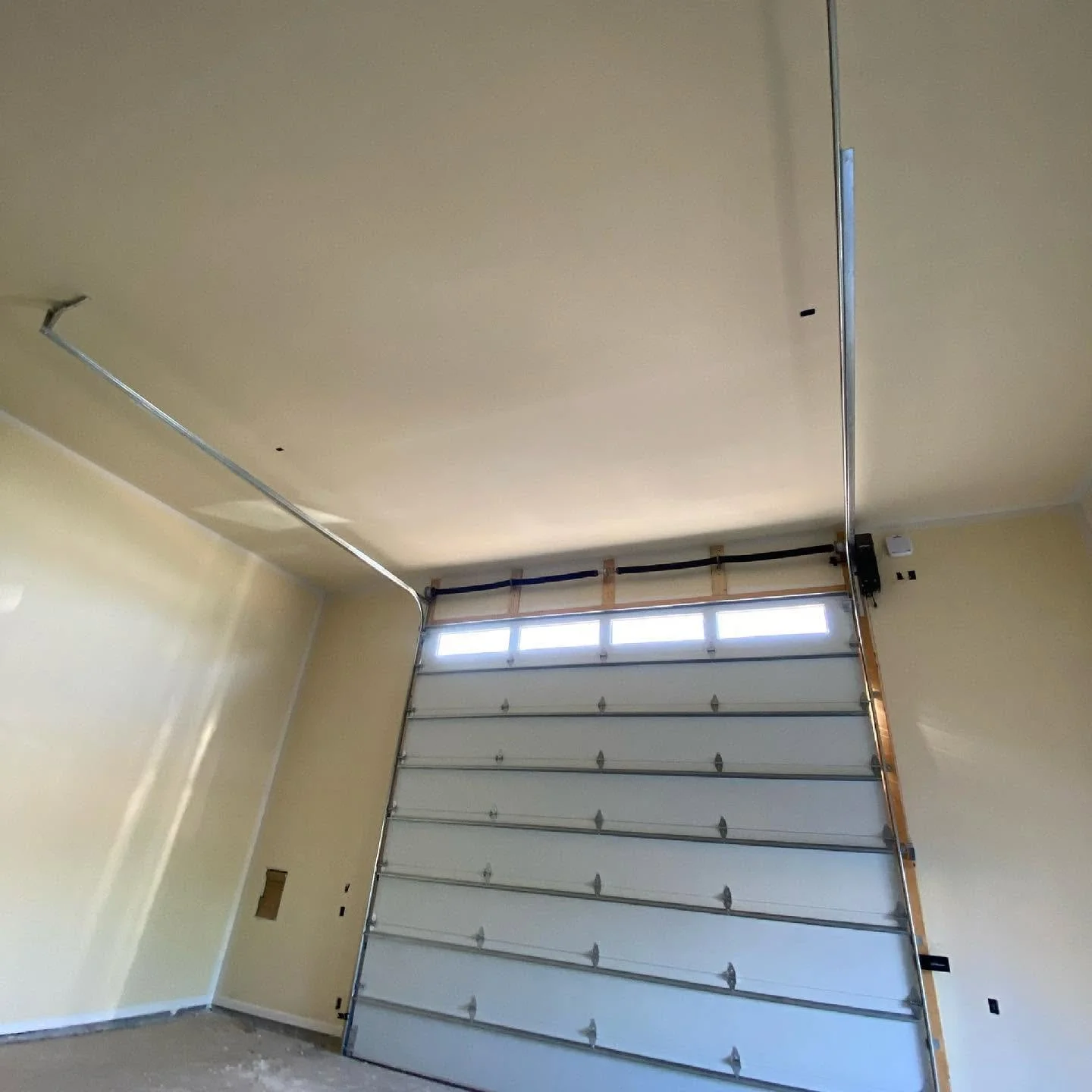
What we do about it. Take the load off the bar, free it, check what the opener did to the section and the track while it was pushing, and then do what should have happened at installation.
Or Is It an Automatic Lock?
Some newer openers are fitted with an automatic lock, and when it fails to retract it gives a very convincing impression of a dead opener.
LiftMaster's automatic garage door lock is a bolt that drives through the track when the door closes. Its own documented normal operation is that the bolt protrudes through the track when the door is closed, retracts before the door begins to move, and re-engages automatically when the door reaches fully closed.
So the tell is what you do not hear. No clunk of the bolt withdrawing before the motor starts, then the door lifting an inch and stopping.
LiftMaster's troubleshooting for a door that does not open completely asks, in order: are any manual locks still on the door, is something obstructing it, is the automatic lock in the locked position, is the door out of balance, are the springs broken.
Raynor's SecureLoc does the same job, sold as a door and Prodigy III opener system that automatically locks when the door closes. Raynor publishes no troubleshooting or manual override for it that we could find, which is worth knowing if you have one.
There is a manual override, and the order matters. On the LiftMaster lock, with the door closed, disengage the automatic lock first by sliding its manual release to the open position, and only then pull the opener's emergency release handle. Pulling the opener release first, against a bolt still through the track, achieves nothing except load in the wrong place.
And in a power outage, LiftMaster publishes that on battery backup the automatic lock unlocks when the door opens and stays disabled until power is restored.
The Red Cord, and the One Rule About It
The emergency release is federally specified equipment, and the specification is worth knowing because it tells you when yours is wrong.
16 CFR § 1211.9(a) requires a means to manually detach the opener from the door.
The gripping surface must be colored red and easily distinguishable from the rest of the opener. It must be capable of adjustment to 6 feet above the garage floor. And it must detach the opener under a maximum of 50 pounds of force with the door obstructed in the down position.
Fifty pounds is what the product is built to.
A release that takes two hands and your body weight is telling you something is binding, and that is a finding.
Now the rule.
The same regulation sets the wording of a safety instruction every opener with an emergency release has to carry: if possible, use the emergency release only when the door is closed. Use caution when using this release with the door open. Weak or broken springs may allow the door to fall rapidly, causing injury or death.
Two more instructions worth having. Never use the release handle to pull the door open or closed, and never use it with anyone in the doorway. DASMA adds the surprise people do not expect: whenever an operator is disengaged, the door may unexpectedly begin to open.
And if a spring has broken, Genie's instruction is not to operate the door at all, manually or with the opener. That is the point at which the answer is a phone call.
The Other Reasons the Door Will Not Open
The wall control is in lock mode. This one is free and it catches a lot of people. When lock or vacation mode is on, the opener ignores remote controls, the opener lights flash twice when you press a remote, and the wall control's LED blinks. Your remotes and your keypad both look dead and the wall control still works. Hold the lock button on the wall control for a couple of seconds to clear it. The trap, in Chamberlain's own words, is that if you are outside the garage you need another way in to reach the wall control.
No power. Nothing at all, no lights, no hum. Check the breaker and check the outlet in the ceiling, which on a lot of Mesa garages is on a circuit somebody else has tripped.
A dead battery backup. LiftMaster publishes about 20 full cycles in 24 hours of standby from a charge, with the battery lasting one to two years. DASMA puts replacement at two to five years. An opener that got you through the last outage will not necessarily get you through this one.
A broken spring. A bang you may have heard hours or days ago, then an opener that strains and gives up. This is the one to stop on.
A snapped cable. The door lifts crooked and jams at one corner, slack cable coiled on the drum.
Off track, or a roller out. The door binds, sways, or will not travel past one point, with a visible gap between a roller and the track.
Seized rollers or a track full of grit. Scraping and juddering, then the opener force-reversing partway.
A door out of balance. The opener has been doing work the springs should have been doing, and one day it stops being able to.
Locked Out With No Other Way in
If the garage is detached, or the only other door is on the far side of a locked house, this is the section that matters.
DASMA publishes guidance on exactly this, framed around getting out during a power outage in a fire or emergency, and its points work in both directions.
Battery backup is the first answer. DASMA's wording is that in areas prone to outages or wildfire, an opener with battery backup is a convenient way of getting the door open, and that it should be tested periodically to confirm it will still open a closed door fully.
An outside emergency key release is the second. Genie describes its kit as designed to provide access to your garage from the outside when the power fails and no other means of entry is available, and says it suits garages that do not have another access door.
Worth knowing if your garage has only one door: LiftMaster's automatic garage door lock carries, as the first line of its own instructions, the words "for use on residential garages with an entry door only." So the manufacturer of the automatic lock says it is not for the garage with no second door, and the manufacturer of the outside key release says that garage is precisely what its product is for. If your garage has one way in, those two sentences should decide your hardware.
What an outside key release will not do is survive neglect. It is a cable and a cylinder, both outdoors, and the failures are a seized cylinder, a stretched cable, or a key that turns while nothing happens at the other end. Turn it twice a year, so you find that out on a Tuesday rather than at eleven at night.
DASMA's closing point on this is worth quoting. All of the above, it says, should help avoid the need to drive a vehicle through the garage door in order to get out, because collapsing a door that way releases the stored tension in the counterbalance and puts the vehicle and its occupants at risk.
The Advice Going Around That You Should Think Twice About
There is a well-known way to open a closed garage door from outside using the emergency release. Phoenix police have described it publicly, local news has covered it, and it has been circulating for years. We are not going to describe the method.
What we will talk about is the fix people are being told to apply, because it is the more dangerous half.
The advice circulating from news segments, community posts and prepper blogs is to zip-tie the release lever in place, or cut the cord off.
We don't recommend zip-tying it. The regulation makes the argument by implication, and we would rather make it explicitly: a security fix that defeats a federally mandated emergency release is a trade, and most people making it do not know they are trading.
There are ways to address the vulnerability that do not disable the release, including shields made for the purpose and, more simply, not leaving a gap at the top of the door that should not be there.
What We Do Not Do, Plainly
We do not do any of the following.
We do not install garage door locks either. If what you want is a lock on the door, we are not the right call, and the federal instruction above is the reason. An emergency key release does the opposite job, and it is a question for us or your opener's maker rather than a locksmith.
What we do is the door and its mechanism. The lock bar that is jamming it, the automatic lock that has not retracted, the spring, the cable, the track, the rollers, the opener and the release.
If you have lost your house keys or locked yourself out of a car, you want a locksmith, and telling you that now saves you a call.
What Affects the Price
What is actually wrong, since a lock bar freed in ten minutes and a broken spring are different jobs.
Whether the door was forced against something before we got there, and what that did to the section and the track.
Whether the counterbalance has failed, which is the difference between a small job and a real one.
Whether an automatic lock or its wiring is at fault.
Whether you want a second way in afterward, which is a conversation.
A scheduled visit at the $85 service call, or an after-hours or weekend call-out at the $250 call fee.
How the Visit Goes
- 1.
Tell us what it does, not what you think it is. Lifts and stops, hums and nothing, dead silent, or clicks. Each one points somewhere different.
- 2.
You call and we schedule it.
There is a live answer after hours.
- 3.
Text reminder before the appointment, and an ETA text on the day.
- 4.
He looks before he touches, in the order DASMA sets out: door, jambs, track, rollers, brackets, springs, sections.
- 5.
He takes the load off anything that is holding it before freeing a lock or a jam.
- 6.
He tells you what caused it, which on a lock is usually that it was never disabled when the opener went in.
- 7.
You get an estimate before anything is fixed.
- 8.
You decide.
Nothing is done until you've approved it.
- 9.
On completion the door is balanced by hand with the opener disconnected, the release is checked, and the safety reverse is tested.
- 10.
You pay by card, check, cash, Zelle or Venmo. Financing is available through Wisetack.
Why Bring Us Out
We know a jammed lock bar is holding load, and that the published instruction in that state is to stop rather than lever it.
We check the release properly. Red, reachable, and letting go easily.
We will tell you if somebody has zip-tied it, and what that has cost you.
We do the thing that should have happened at installation, which is disabling the manual lock on a door that has an opener, because the manufacturer's own instructions have required it all along.
We tell you when you want a locksmith instead, which is not a call we can bill.
Any brand, any age, including doors and openers we didn't install. No job is too small once we're there.
If we get it wrong, we make it right. Ninety days on our labor, and manufacturer parts warranties honored.
What Mesa Customers Say
Frequently Asked Questions
My garage door won't open and there's a lock on the inside. Is that it?
Very likely. If the door has an opener, that lock should have been disabled when the opener was installed, because federal regulation requires the opener's instructions to say so and every manufacturer repeats it. If the opener has already pushed against the thrown bar, the bar is under load. Do not force it. That is the point to call.
The opener hums but the door doesn't move.
LiftMaster lists that symptom alongside "door lifts and reverses" and "one click and nothing", and gives the same cause for all three: check for binding or obstruction, such as a broken spring or a door lock. Those are the two to establish, and one of them is dangerous to work around.
My remotes stopped working but the wall button still does.
Check lock mode on the wall control before anything else. When it is on, the opener ignores remotes, the lights flash twice when you press one, and the wall control is the one thing that still works. Hold the lock button for a couple of seconds. If you are outside, you will need another way in to reach it.
Can I just pull the red cord?
With the door closed, yes, that is what it is for. With the door open or partly open, be careful, because the federally required instruction for openers with a release says weak or broken springs may allow the door to fall rapidly and cause injury or death. If a spring has broken, the manufacturer's instruction is not to operate the door at all.
Should I zip-tie the emergency release for security?
We would think hard about it. That release is federally required equipment, it is what DASMA names as the way a household gets a garage door open during a power outage in a fire, and it is what lifts a door off somebody trapped under it. There are ways to address the security concern that do not disable it.
My garage has no other door. What should I have?
Battery backup on the opener, tested occasionally, and an outside emergency key release. Worth knowing: LiftMaster's automatic garage door lock states in its own instructions that it is for residential garages with an entry door only, so on a single-entry garage that particular product is not the answer.
Do you do car lockouts or rekeying?
No. No car lockouts, no key cutting, no broken-key extraction, no rekeying, no deadbolts and no smart locks. We do garage doors and openers. If it is a key problem, you want a locksmith.
Will you install a lock on my garage door?
No. And on a door with an opener, the manufacturer's instructions have said to remove or disable the lock all along, so it is worth asking what problem you are solving before adding one.
Can you get me in without damaging the door?
Usually, and that is the job. What causes damage is the forcing that happens before we arrive: prying at the door edge, levering a loaded lock bar, leaning on a section. Call before that stage.
Where We Work
Garage door lockout help across the Phoenix metro:
- Mesa,
- Gilbert,
- Chandler,
- Tempe,
- Scottsdale,
- Phoenix,
- Queen Creek,
- Apache Junction,
- Glendale,
- Peoria,
- Ahwatukee,
- Fountain Hills and
- Paradise Valley.
Tell us what the door does, not what you think is wrong.
Lifts a few inches and reverses. Hums and stops. One click and nothing. Completely silent. Those four describe four different faults, and knowing which you have tells the technician what he is walking into.
A live person answers after hours.