
Steel Garage Doors in Mesa, AZ
Single-, two- and three-layer steel garage doors, measured, ordered and installed by a women-owned Mesa family business and Amarr dealer. Feel the difference in our showroom before you choose.
A quote over the phone is free. If you want a technician to come and measure the opening, that visit is $35. A service call on a door that has stopped working is $85.
- Women-Owned Family Business
- ROC #310144
- Licensed, Bonded & Insured
- 90-Day Labor Warranty
- Google Rated
- Amarr Dealer
Most garage doors in this valley are steel, but "steel" covers three very different doors. Here is how to tell which one a quote is actually offering.
The Three Constructions, Which Decide More Than Gauge Does
Every steel door is one of three things. This is the first question, and most people are never asked it.
Single-layer:
One steel skin and nothing behind it. A pan door. It is the lightest, the loudest, and the easiest to dent, and it does nothing for the temperature in the garage. There is a real use for it: a detached shell you walk into twice a day, where the door is a security and weather barrier and nothing more.
Two-layer:
A steel skin with insulation bonded to the back, usually polystyrene board. It is stiffer than a pan door and noticeably quieter, and it begins to do something thermally.
Three-layer:
A steel skin, an insulating core, and a second steel skin behind it. The two skins and the bonded core work together like a sandwich panel, resulting in a structure that is stiffer and more dent-resistant than either skin on its own would suggest. It is what we would specify on a Mesa house.
Here is the consequence that reverses people's instincts. A three-layer door in a thinner gauge is stiffer than a single-layer door in a thicker gauge because the second skin and the bonded core carry loads that thicker steel alone does not. So construction is the first comparison and gauge is the second. Our new doors page has the short version and the industry finding behind it.
Gauge, and Why It Is the Second Question
Lower gauge means thicker steel, and residential skins sit mostly at 24 or 25. That much is on our new doors page. Here is what it buys.
What gauge buys you is dent resistance, and the difference is real at the margins people meet. A thinner skin takes a mark from a bike pedal or a ladder that a thicker one carries without one, and a dent in steel is a crease rather than a compression, so it does not sand out. On a steel door, a dented section is usually a section swap.
Compare gauge only within the same construction type. Across types, the comparison is meaningless, and that is precisely where it gets used in selling. Our new doors page carries the industry's own admission that the gauge ranges leave latitude in how a door can be marketed.
And ask what the gauge refers to. On a three-layer door, there are two skins, and they are not always the same thickness.
The Finish Is a Third Specification, and It Is the One That Ages
The steel beneath a residential door is galvanized, which prevents the panel from rusting on the surface. What you actually look at is a baked-on finish, typically a polyester or polyurethane powder coat applied at the factory and cured, which is a different thing from paint applied in a yard.
Why that matters here more than almost anywhere. Ultraviolet light does not care about galvanizing, but it does break down the polymer binders in a finish. Over enough years, a powder coat chalks and fades while the metal beneath it is completely sound. A baked factory finish holds color far longer than a field-applied coat, which is the single strongest practical argument for buying the finish.
The repair path is different from wood, and worth knowing before you choose. A finish is a thin polymer layer over metal. Once it chalks, the answer is repainting, whereas a wooden door would be sanded and restained. On a door you intend to keep for twenty years, that is a real line in the maintenance plan.
Finish warranties and hardware warranties are separate documents. Steel finishes commonly carry longer prorated terms against fading and chalking than a wood finish could, for the obvious reason that a manufacturer cannot warrant natural wood movement. Hardware terms, meaning springs, hinges, and rollers, are a separate section of the document. Ask for both in writing, and note that ours is ninety days on labor on top of whatever the manufacturer gives the door.
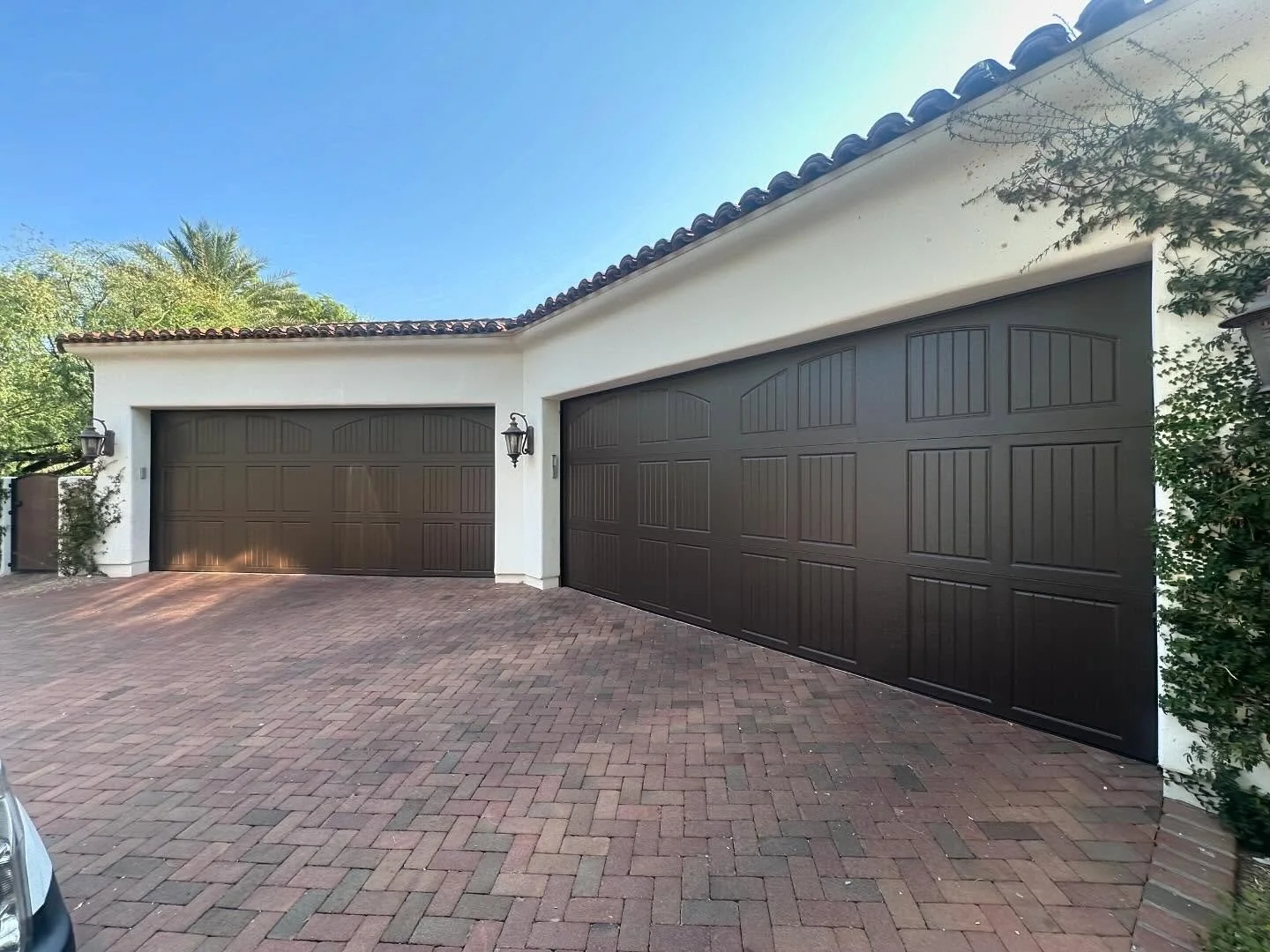
What This Climate Does to a Steel Door
Three things, and only one of them shortens the door's life.
Thermal cycling, which is mostly a non-event. Steel expands with heat, but its coefficient is tiny: roughly six millionths of an inch per inch per degree Fahrenheit. A sixteen-foot door might grow by a fraction of an inch on the worst afternoon of the year. That is not enough to cause a structural problem on its own. Over thousands of cycles, it can stress the finish at the panel seams, where it tends to show its age first.
Sun on the finish, which is the real clock. A west-facing door in unbroken afternoon sun is working harder than the same door on a north elevation, and the finish is where you will see it first. A deep porch overhang or a covered entry sheds direct sun and most of the wind-driven grit, and on a sheltered elevation the finish has an easier life.
The bottom panel, which is where doors actually die. It sits closest to ground moisture, to sprinkler overspray, and to whatever rolls against it in a garage. Rust on a steel door almost always starts at a scratch or chip that exposes bare metal, and a rusted-through bottom panel is one of the most common reasons a steel door gets replaced years before the rest of it has worn out. Two consequences: keep irrigation off the door, and seal a deep scratch when you find one.
One thing we will not overstate. On a foam-core door after many years of extreme thermal cycling, you sometimes see a slight rippling across a panel face as the foam-to-steel bond ages, which installers call oil-canning. Manufacturer data on multi-decade heat aging varies, and there is no firm, universally agreed answer, so we are not going to give you one. In the field it reads as cosmetic rather than structural in most cases, and on its own it is not a reason to replace a sound door.
Where a Steel Door Actually Fails
Years in, with the finish intact, a steel door usually still has crisp panel lines and consistent color. Wear concentrates in two places, and they are both predictable.
The bottom panel, for the reasons given above.
The corners where hardware attaches, because that is where the load goes into thin sheet metal.
That second one is the structural difference between steel and wood, and it changes what a loose fastener means. On a wood door, hinges and brackets are lag-bolted into a stile, and a loose one is a five-minute tightening job. On a steel door, hardware is fastened through the sheet metal, so a bracket that keeps loosening tells you about the metal around the fastener rather than about the fastener itself. That is a finding worth acting on, and it is one of the twenty-two points on a service call.
What does not fail, above the bottom section, is the panel itself in any ordinary sense. Steel sections outlive their finish and usually outlive their hardware.
What We Fit, and Where It Comes from
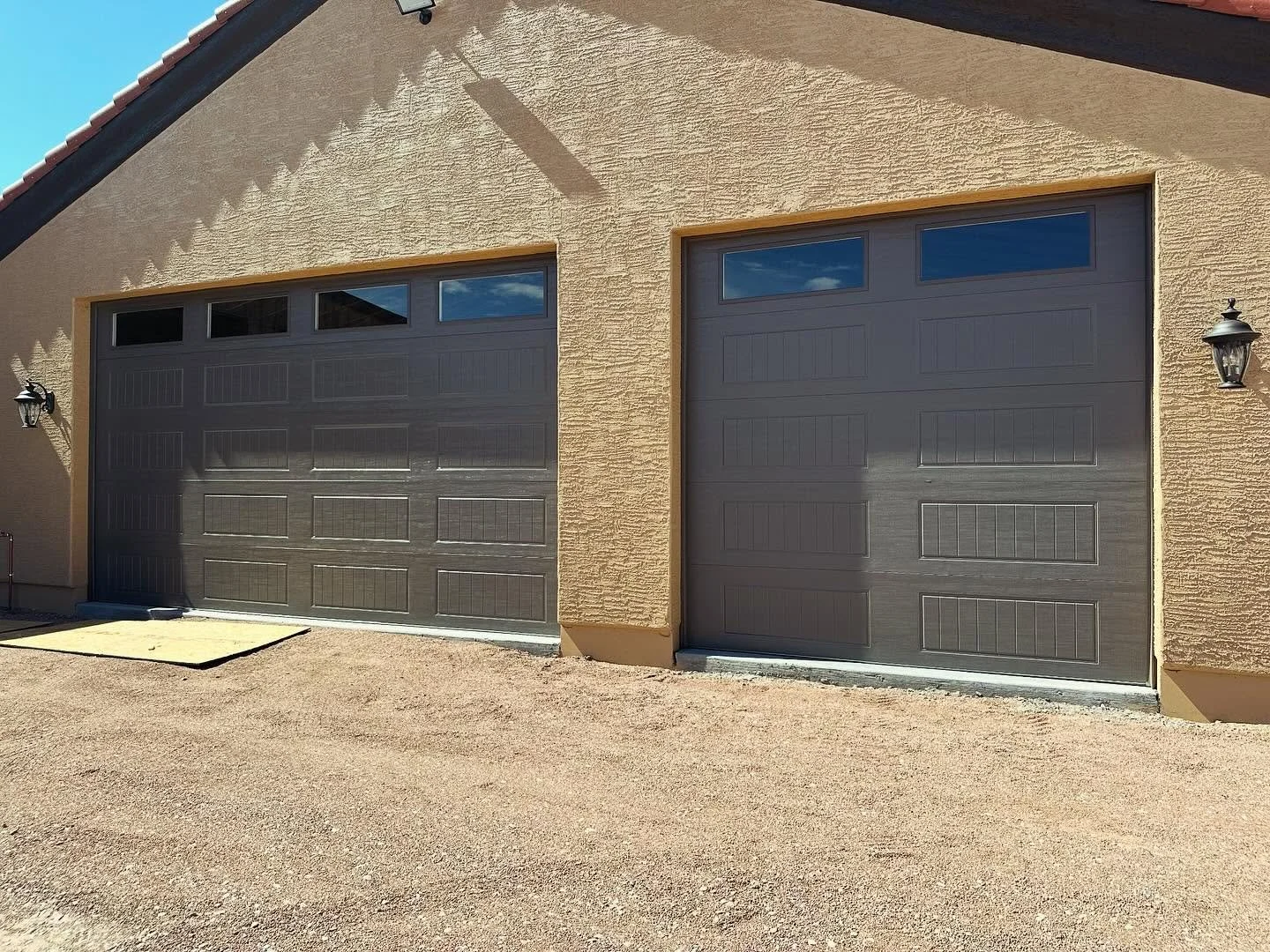
We are an Amarr garage door dealer. Amarr's residential range is steel and aluminum, and its steel collections run from plain traditional panels through stamped and overlay carriage designs. Its Heritage collection, for example, is published as heavy-duty 24-gauge steel with stamped designs and a lifetime warranty, and its Carriage Court sections are published at 1-3/8 inches, which is the section thickness the overlay is applied to rather than a measure of the steel itself.
We also install and service Clopay, whose steel collections include Gallery, Classic, Modern Steel, Bridgeport, Coachman, and Grand Harbor. We are not in Clopay's dealer program, and we say so on this page and on our Clopay page, because it is checkable.
We stock no doors. Our suppliers hold them, and yours is built after it is ordered, so there is a factory lead time between your approval and your door. A made-to-order door requires a 50% deposit, which is non-refundable because the factory is building to a specific opening.
Which collection fits is a question for the opening and the elevation, and it depends on the insulation you want and what the door has to live next to.
What to Ask on a Steel Quote
Six questions. They cost nothing, and they separate a specification from a sales sheet.
"Is it single-, two- or three-layer?" The first question on the page and the one most often missing from a quote.
"What gauge, and which skin does that refer to?"
"What is the finish, and is it factory-baked?"
"What does the finish warranty cover, and for how long, and is it prorated?" Separately from the hardware.
"What is the spring cycle rating on this quote?" Ask for it. The springs are sized from the door's weight, so the rating should already be on a complete quote. Our high-cycle springs page has the arithmetic.
"When will it actually arrive?" Ask for the current lead time in writing, because lead times vary by manufacturer and season.
Windows, and the Three Things They Change
Windows are the most common addition to a steel door and the one with the most knock-on effects, so they are their own question.
They change the weight, and therefore the spring. Glass and its frame are heavier than the steel section they replace. On a door being ordered, that is handled in the calculation; on a door having a window section retrofitted, it is a counterbalance question.
They change the top section's stiffness. A long run of glazing in the top section removes material from the part of the door the opener arm pulls against, which is why a strut across that section is sometimes specified with them.
And they change what the sun does. On a west or south elevation, the glazing choice matters more here than almost anywhere, for heat gain as much as for privacy. Our full-view and glass page covers obscure, frosted, and tinted glazing properly, because on a mostly glass door it is the whole decision.
One practical note. Window placement on a replacement door is frequently constrained by an architectural committee rather than by taste, and some associations in this valley specify which panel the glazing may sit in and require matched placement across a pair of doors. Worth checking before you choose.
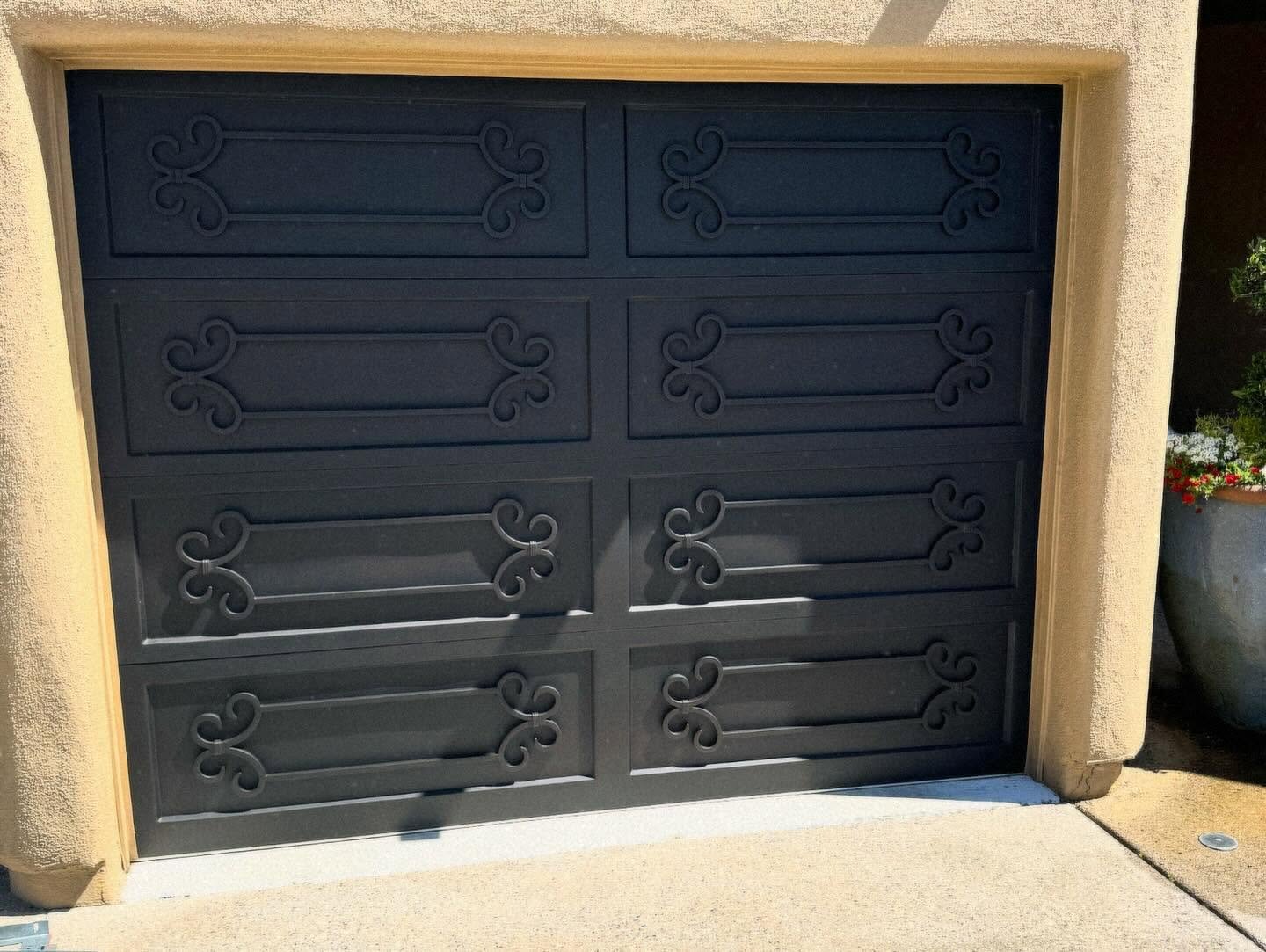 Steel garage doors in Mesa, AZ
What Affects the Price
Construction, meaning single-, two-, or three-layer, is the step that moves a quote the most.
Insulation level within a construction type. Our insulation page covers R-value and why two quotes can disagree on it.
The finish and the color. A standard factory color and a custom one are different orders with different lead times.
Windows, which change the section count, the weight, and sometimes the spring.
Whether the opener and the hardware come with it. A sound opener can often be reused, and we will price it that way.
Financing is available through Wisetack.
If You Are Replacing a Steel Door With Another Steel Door
Most of this page is written for somebody choosing. This section is for the larger group: the door is twenty years old, something has failed, and the question is whether to put the same thing back.
Match the construction, not the appearance. A door that looks like the one coming off may be a different build entirely. If the original was a three-layer door and the replacement quote is two-layer, the garage will be warmer, and the door will be louder, and nothing on the invoice will say so.
Expect the weight to change, and expect the springs to change with it. This is the detail that gets skipped when people shop by looks. A heavier or lighter replacement door needs a spring set wound for its actual weight, and a door that lifts badly on day one is almost always a door whose springs were carried over from the old one. Our spring repair page sets out how that weight is established.
Check whether the opener is sized for what it is now lifting. A sound opener can usually be reused, and we will quote it that way, but "usually" is doing work in that sentence, and it depends on the new door's weight. Our opener installation page covers the sizing question.
And look at the track and the hardware while the door is off. It is the one moment in twenty years when all of it is accessible, and none of it is under tension. Rollers, hinges, bearings, and the shaft are quick to deal with then and awkward to reach later.
Frequently Asked Questions
Is a 24-gauge door always better than a 25?
Within the same construction type, it resists dents better. Across types, the question is backward: a three-layer 27-gauge sandwich door is stiffer than a single-layer 24-gauge pan door.
Will a steel door make my garage cooler?
The steel will not. The insulation behind it might, and whether it does what you want depends on what the garage is for. Our insulation page answers that properly and without the usual arithmetic.
Can a dented steel panel be repaired?
Rarely in any satisfying way. The honest answer is usually a section swap, and our panel replacement page covers whether one section or the whole door is the right call.
My steel door is rusting at the bottom. Is the whole door finished?
Not necessarily, and it is worth checking before you assume the worst. Rust that started at a chip and has stayed local is a different conversation from a bottom panel that has gone through.
Does a steel door need painting?
Not while the factory finish is intact, which is most of its life here. Once it chalks, repainting is the path.
Is steel a bad choice for a west-facing door in this sun?
No. It is arguably the better choice, because a baked factory finish is what the manufacturer warrants against fading and chalking, and a coat applied in a yard is not. The finish is doing the work, so buy the finish.
Can I get a steel door that looks like wood?
Yes, and it is what a lot of people here actually want. Our faux-wood and composite page covers the three different products that claim that look and what separates them.
Do you fit steel doors on commercial buildings?
Yes, and it is a different product with a different specification. Our commercial sectional steel page covers it, and our rolling steel page covers the other kind entirely.
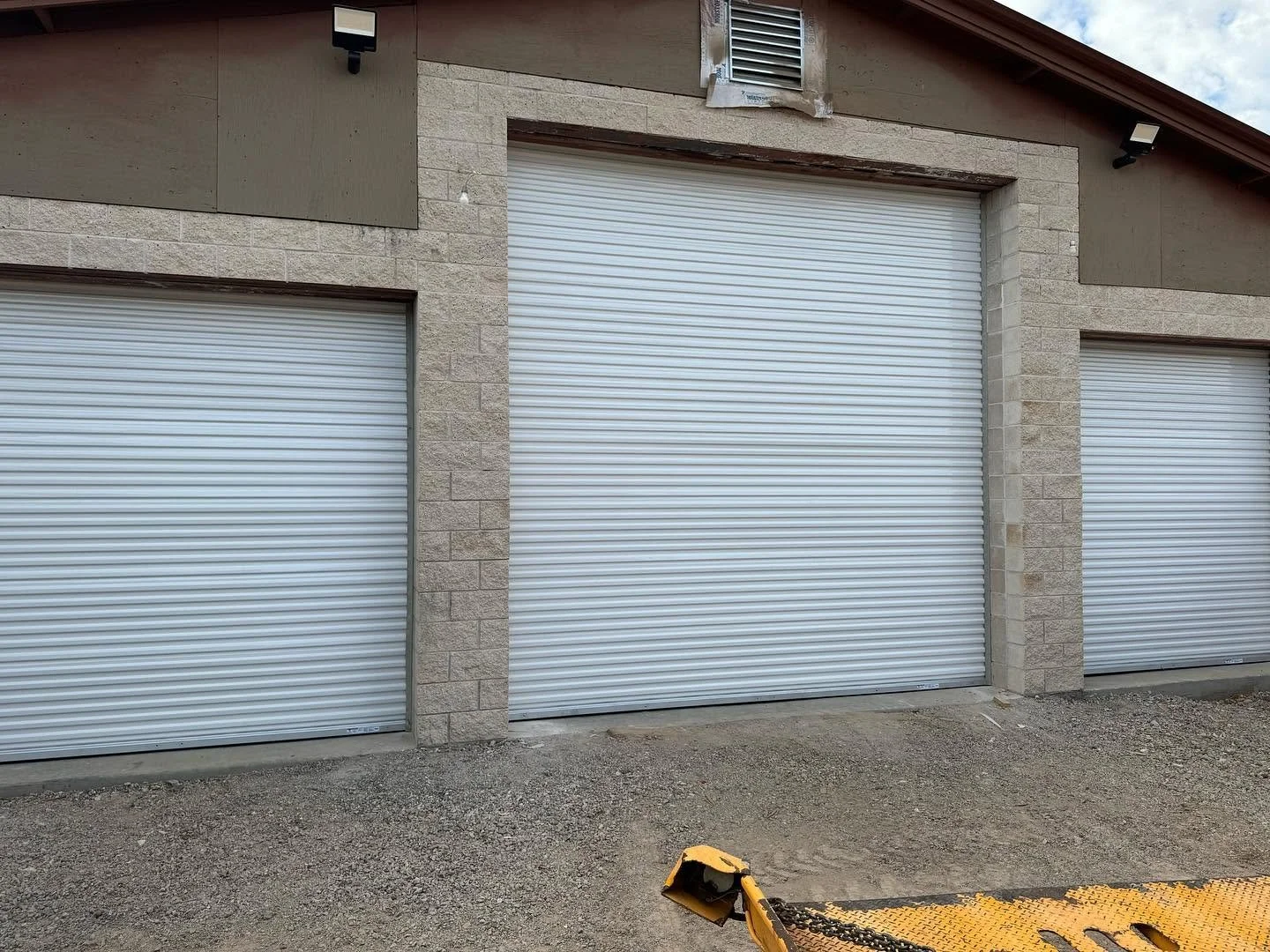
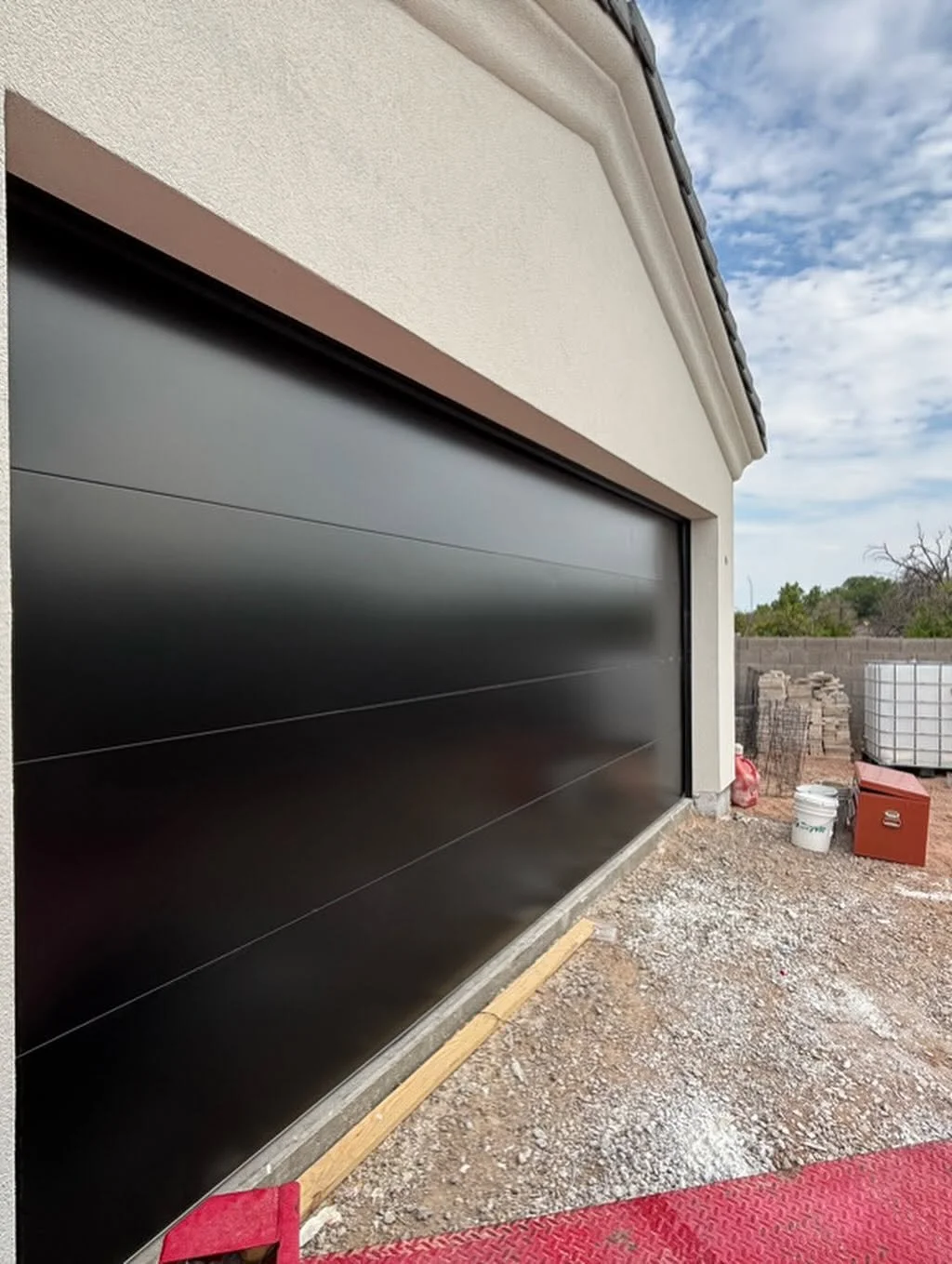
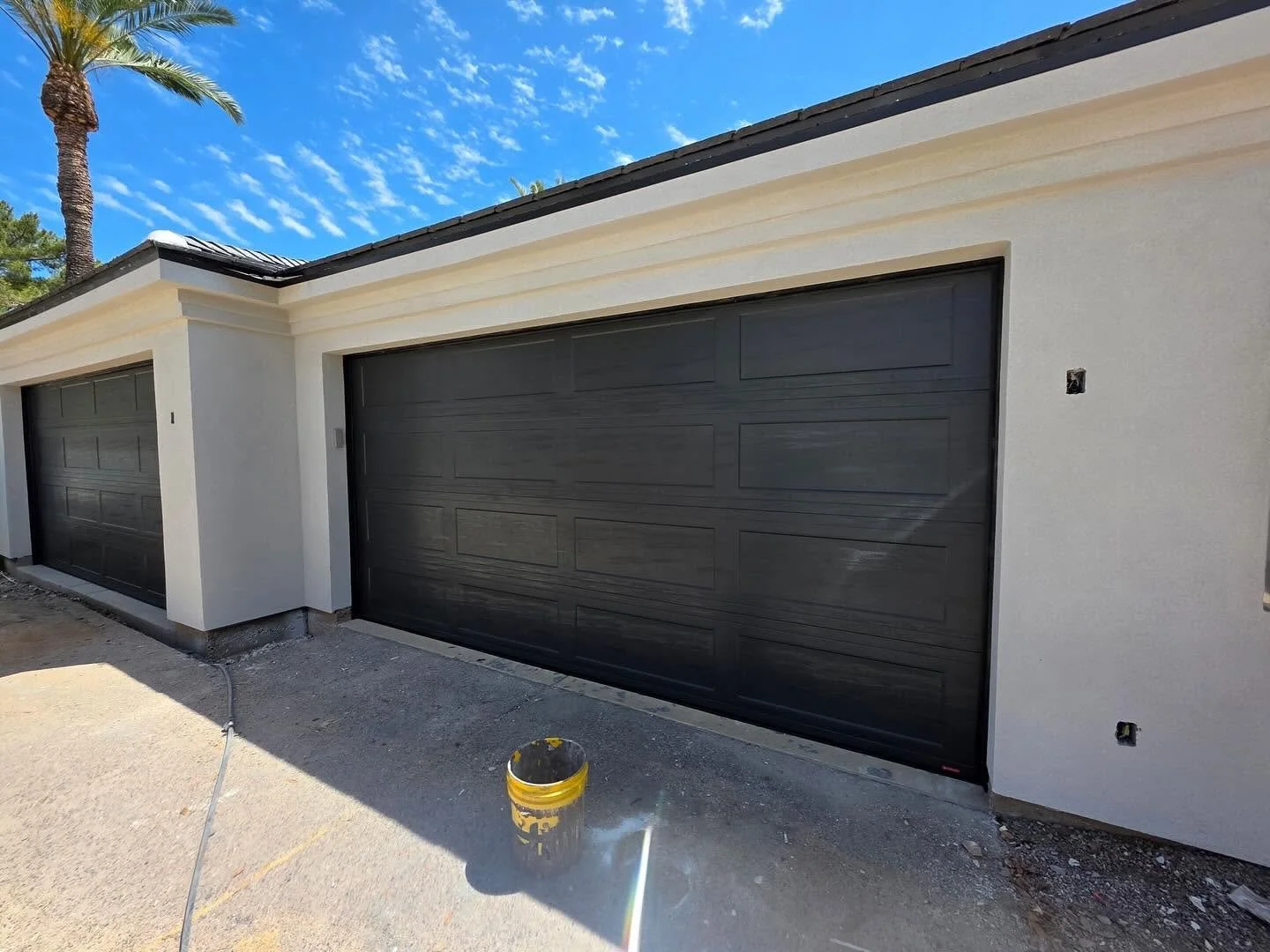
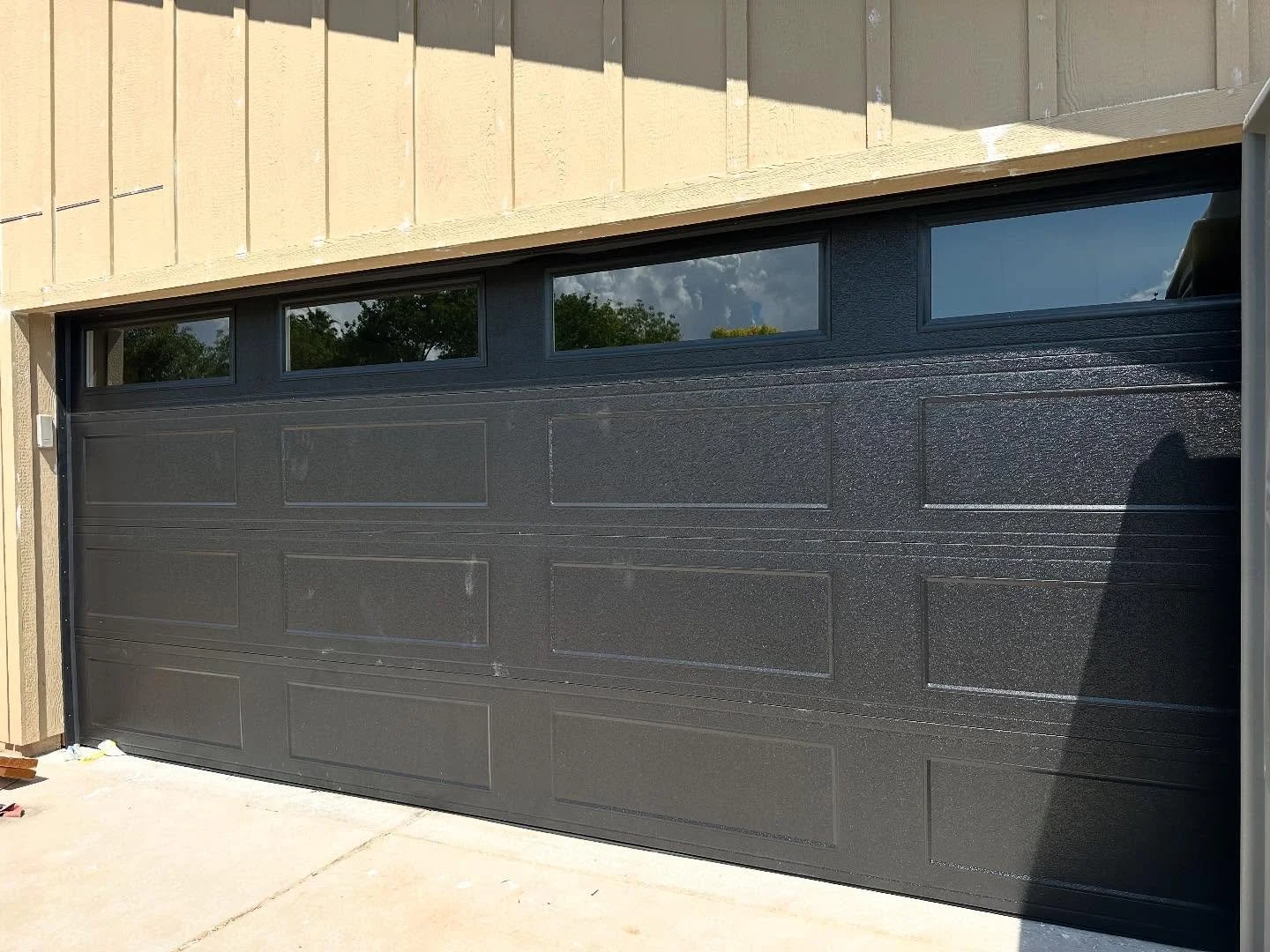
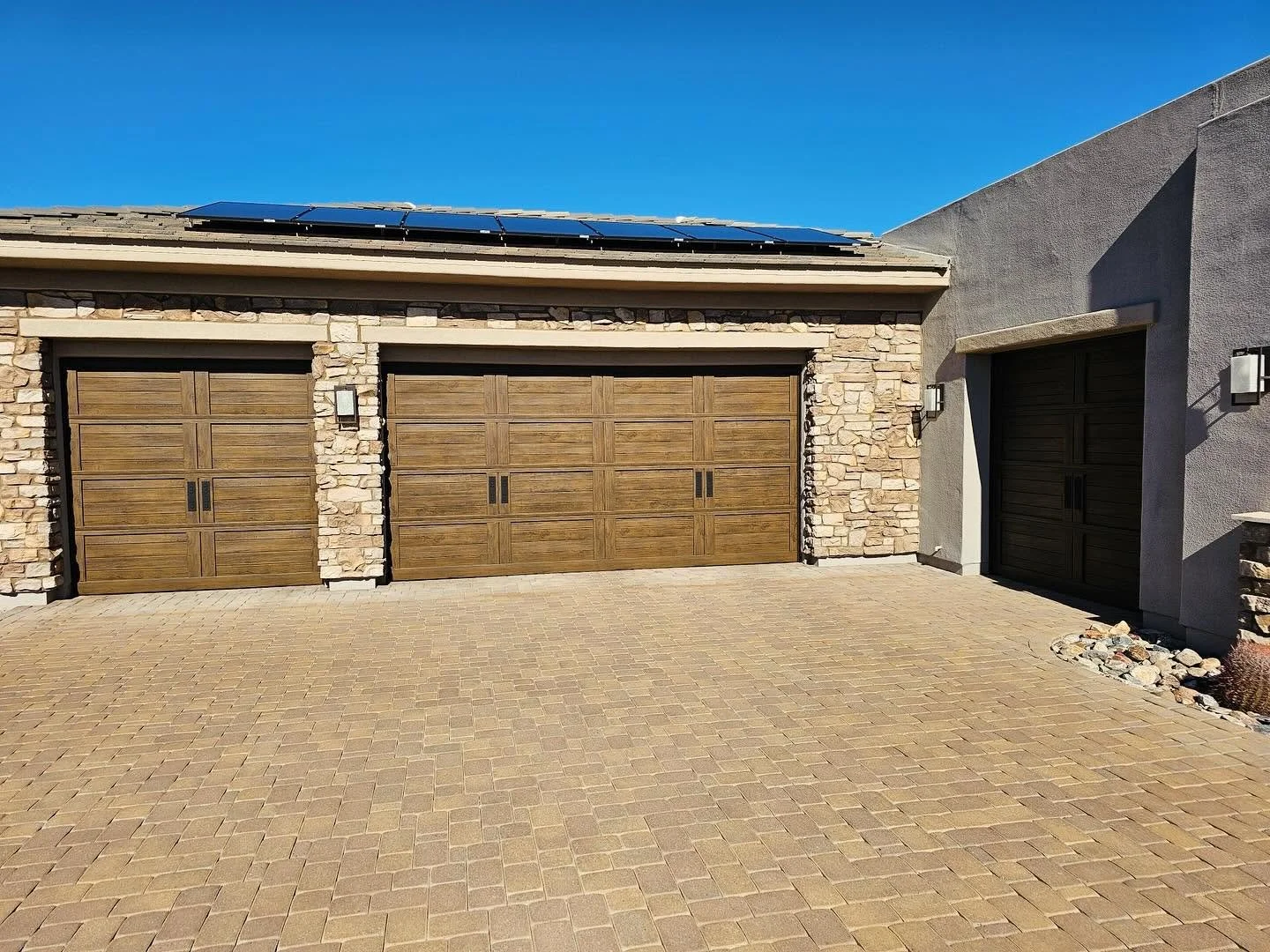
Steel Doors We Have Installed
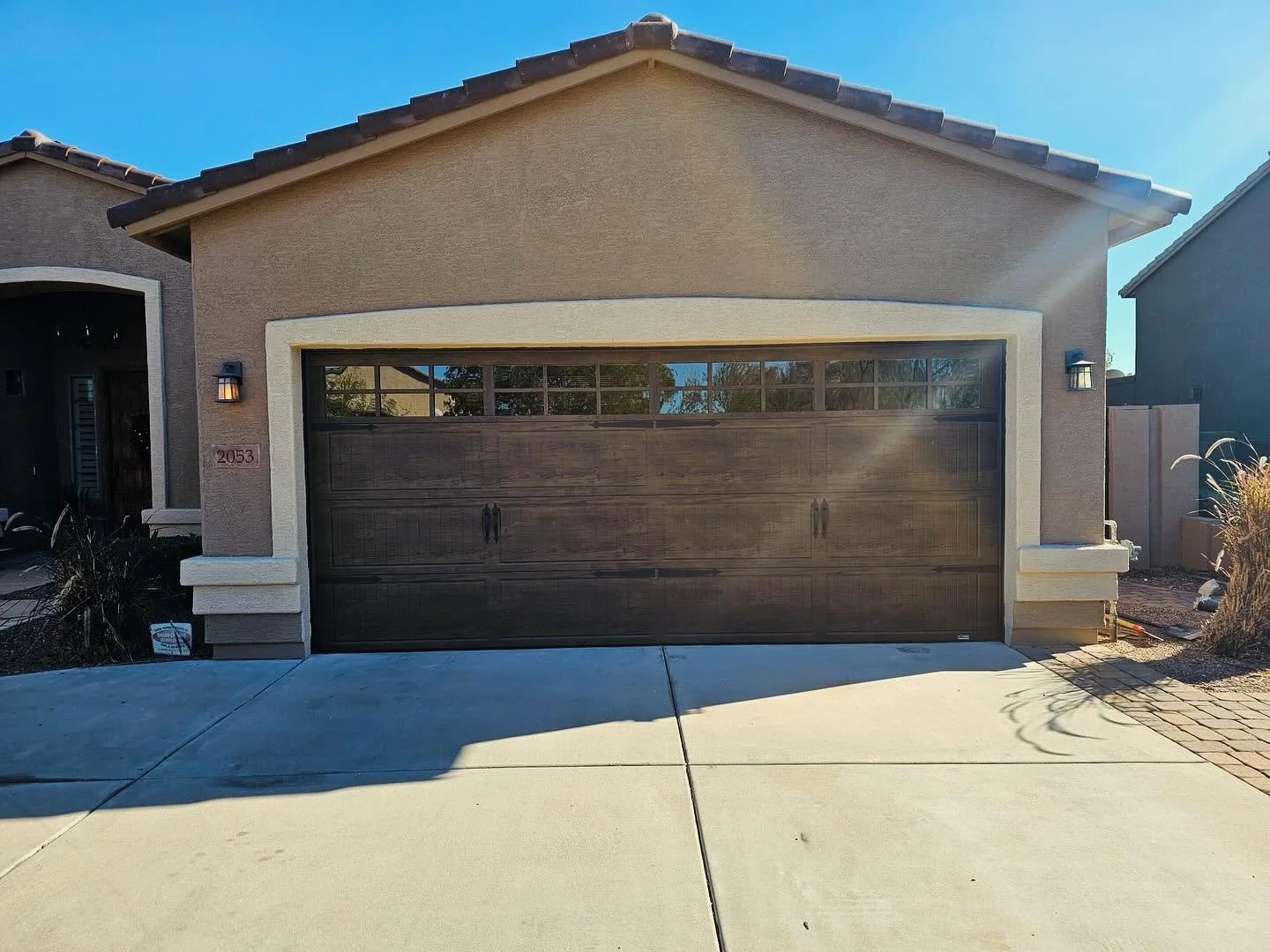
What Customers Say
"Joani has great knowledge of the industry and different manufacturers. She also was extremely responsive."
Where We Work
Garage door repair and service across the Phoenix metro:
- Mesa,
- Gilbert,
- Chandler,
- Tempe,
- Scottsdale,
- Phoenix,
- Queen Creek,
- Apache Junction,
- Glendale,
- Peoria,
- Ahwatukee,
- Fountain Hills and
- Paradise Valley.
Come and put a hand on a three-layer door and a pan door.
The difference is obvious in about two seconds with a hand on each, and it is the difference a brochure cannot show you. The showroom is in Mesa.