
Garage Door Cable & Track Repair in Mesa, AZ
Snapped cable, cable off the drum, or a door hanging crooked in its track? We find what took the tension out, replace both cables to spec, and fix or replace the track so the repair holds.
- Women-Owned Family Business
- ROC #310144
- Licensed, Bonded & Insured
- 90-Day Labor Warranty
- Google Rated
The service call is $85, which covers a 22-point inspection and the first half hour of labor. A person answers after hours, and after-hours and weekend work carries a $250 call fee.
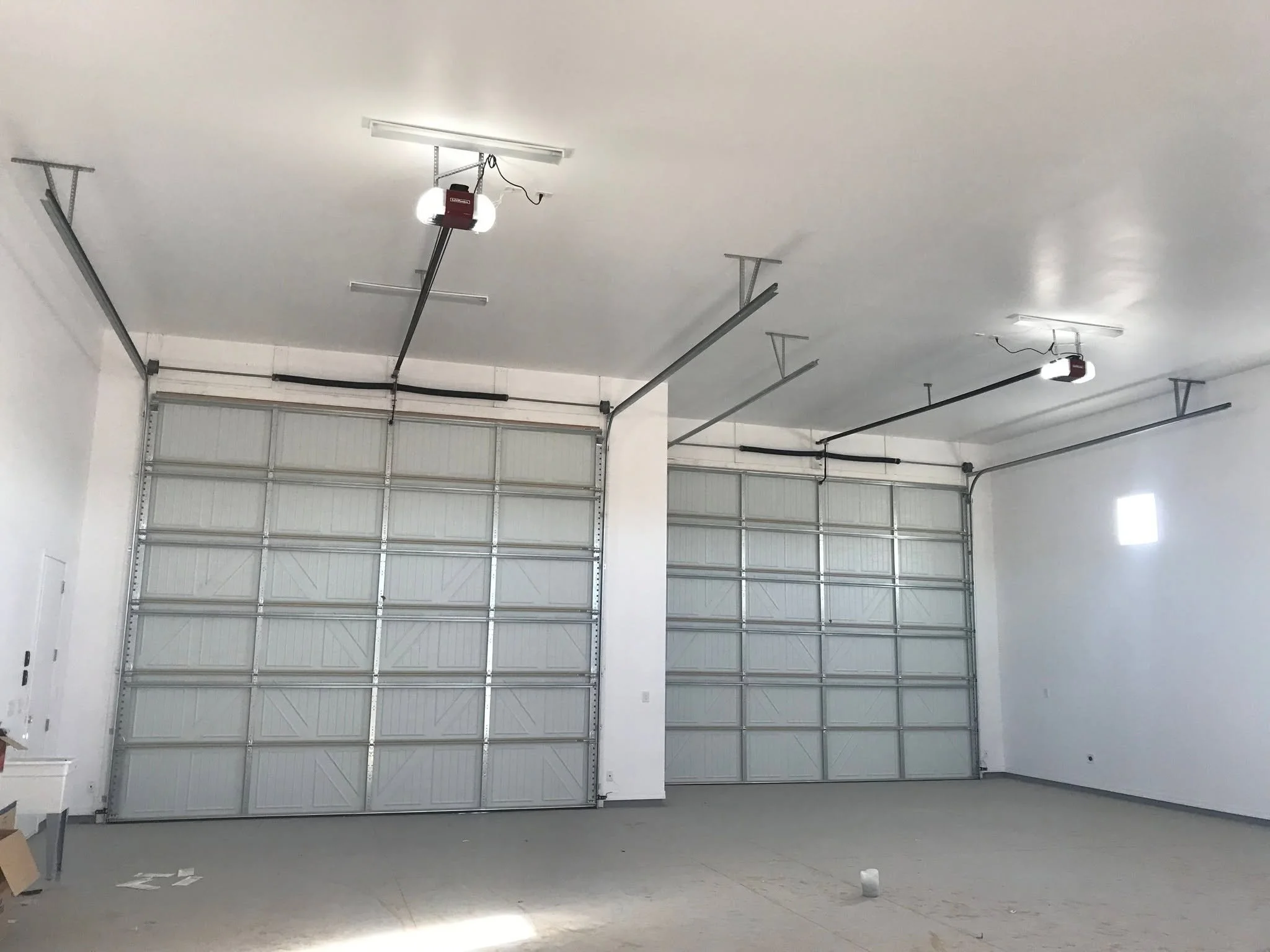
Tension is the only thing holding the cable in its groove on the drum. Take that tension away, even for a second, and the cable is a loose wire sitting on a spinning aluminum wheel. It comes off almost immediately, and the next turn of the drum wraps it somewhere it shouldn't be.
So when we ask what happened before the cable came off, we're not making conversation. Every cause is a version of the same event: something took the tension out. Find that, and the repair holds. Skip it, and you'll be calling somebody again in a month.
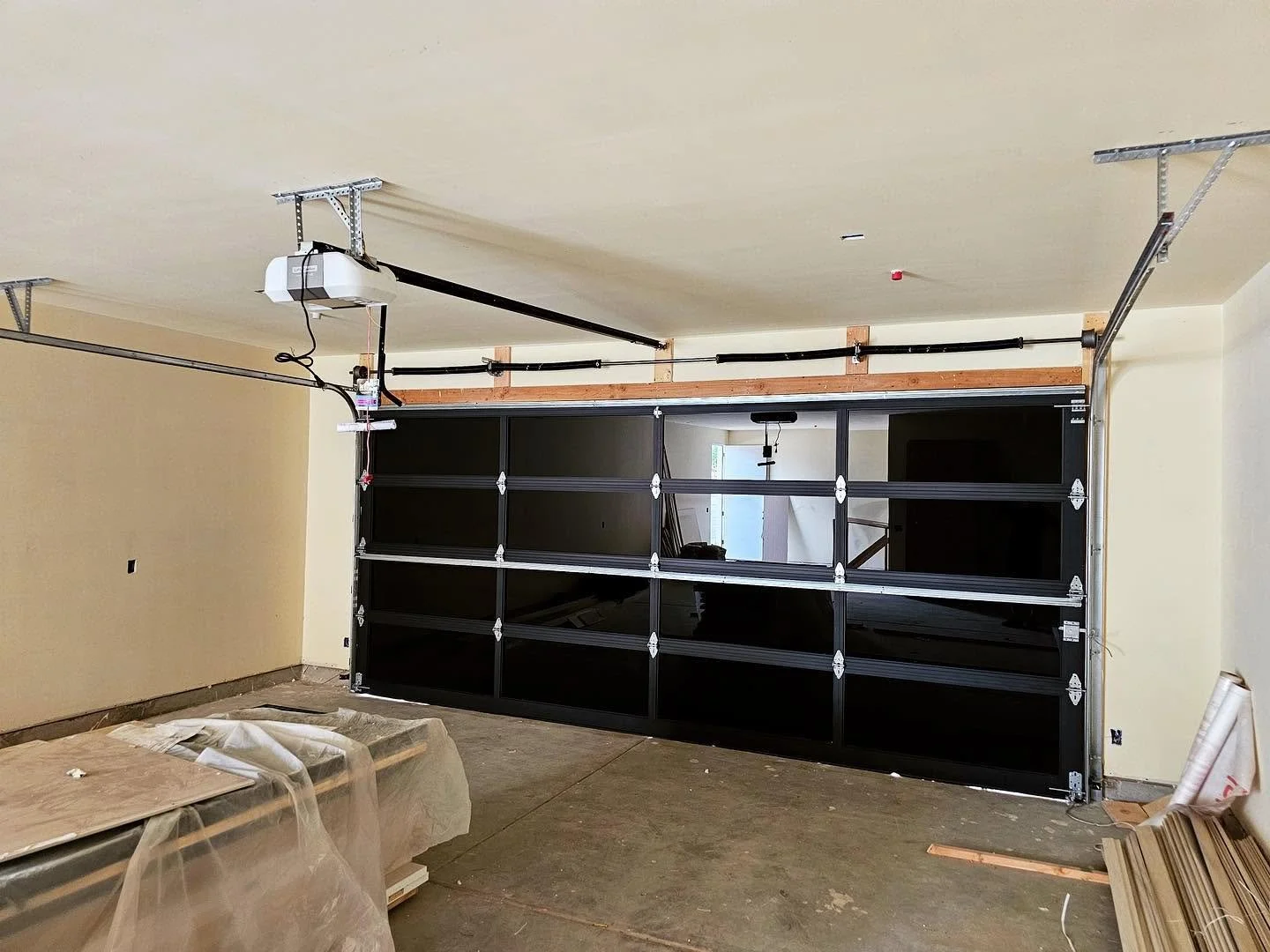 Cable and track repair, Mesa & the Phoenix metro
If a Cable Has Just Gone
Stop using the door.
A door with one cable is supported on one side, and every cycle from here drives the rollers into the track at an angle the track was never built to take. This is the stage immediately before a door leaves its track entirely.
Kill the power at the breaker rather than pulling the release cord.
With a cable gone, you can't be sure what's holding the door up.
Get cars and people out from under it, and leave it where it is.
Don't try to rewind it onto the drum.
The cable is under load; the drum is on a shaft carrying wound spring tension; and the bottom bracket where the cable terminates is the single most dangerous fitting on a garage door.
What Took the Tension Out
Every one of these ends the same way: something took the tension off the cable. It usually starts with one of these six events.
A spring broke. The counterbalance vanishes in an instant, the door drops, and both cables go slack at once. If you heard a bang before the cable problem, this is what happened, and the springs are the actual repair.
The door landed on something: An obstruction at one side, the door stops, the drum keeps unwinding, and that cable goes slack while the shaft is still turning.
The slab has settled, and the door touches down early on one corner. A door that meets the floor on one side a fraction before the other produces a slack cable on that side on every single close, for years, until it finally throws. It is the most commonly missed cause of a cable that keeps coming off the same drum, and it is invisible unless somebody watches the door land. If yours has thrown twice on the same side, look at the floor before you look at anything else.
A drum set screw slipped: The drum is clamped to the shaft by two set screws. If they lose grip, that side stops being wound, and the cable pays out.
The slide lock was thrown: The door runs against its own lock, stops hard, and the drums keep going.
The cable simply failed: Which brings us to why they fail.
Why Cables Break, and Where
We fit galvanized aircraft cable, and on a door that has already thrown a cable we use the more flexible 7x19 type, because it seats cleanly in the drum groove and is less likely to jump off again.
They almost always break at the loop end, at the bottom bracket. Two reasons: that end carries the load, and it lives within inches of the slab, where water sits after a monsoon storm and where corrosion starts.
Corrosion and friction are the two named causes: Corrosion at the bottom. Friction where a cable has been rubbing against track or hardware because something was installed wrong or has since bent.
And then there's shock loading, which is the one nobody explains. When slack builds up in a cable and the door drops even a short distance before the cable catches it, the force is several times what that cable sees holding a stationary door. It's the same reason a snatched tow strap breaks and a steadily pulled one doesn't. That's why slack, specifically, is the enemy, and why a door that has been running with a loose cable for months already has a compromised cable.
The Part of a Cable Job You Can Check
Cables aren't generic. There are four things that have to be right, and you're entitled to ask.
Diameter, matched to the door's weight: The industry uses a five-to-one safety factor, meaning the working load limit is the breaking strength divided by five. A standard eighth-inch 7 by 7 cable has a breaking strength of about 1,700 pounds and a working load limit of about 340. So the selection rule is this: doors up to about 184 pounds take 3/32 inch, up to about 340 pounds take 1/8 inch, and 341 to 560 pounds take 5/32 inch. Most residential doors in Mesa are on 1/8 inch.
One thing worth knowing if you go checking that arithmetic. A door hangs from two cables, so the industry sizes each cable for the full door weight rather than half of it. That is where the real margin comes from, and it is why the published bands look conservative against a five-to-one factor.
The drum determines the maximum, not the cable: The grooves in a drum accept only up to a specified wire diameter. A common residential drum caps at 1/8 inch. Fit a larger cable to a heavier door without changing the drum, and you have built in a thrown cable, because the cable cannot seat properly in the groove. Drum sizes also step with door height, which is why a 13-foot door doesn't use the same drum as a 7-foot one.
Length: For standard-lift torsion, cable length is door height plus 18 inches. For extension springs, it's door height plus 60 inches. A seven-foot door takes a 102-inch torsion cable. It's arithmetic, and it's checkable.
Both sides, replaced together: Not for the reason people assume. The two cables have identical age and identical exposure, but the mechanical reason is matched elasticity: a cable stretches over its life, so a new cable is effectively shorter under load than the stretched one beside it. Fit one, and you have built a permanent rack into the door, which runs it crooked and eats rollers. We replace both.
Lift Cables and Safety Cables Are Not the Same Thing
This gets muddled constantly, including by companies that should know better.
A lift cable carries the door. It runs from the bottom bracket to a drum on a torsion system, or to a pulley on an extension system. It is a load-bearing part, and it is what this page is mostly about.
A safety cable, also called a containment cable, carries no load in normal operation. It threads through the hollow center of an extension spring and does one job: when that spring breaks, it stops the pieces from traveling across your garage. Safety cables are typically 3/32 inch, whereas a lift cable is 1/8 inch.
If your door is on extension springs and there are no cables running through them, we'll fit them. That's the most dangerous configuration still in service on residential doors, and it's a small job.
Track, and the Vocabulary Nobody Explains
"Gauge" means two different things, and it causes real confusion. On track, gauge usually means width: 1 inch, 2 inches, and 3 inches. Two inches is the residential standard. One inch turns up on small specialty doors, three inches on heavy and commercial doors. Separately, the steel thickness is also called gauge. Worth asking which one somebody means.
The radius is the curve at the top, where the vertical track becomes horizontal. Residential is typically 12 inches or 15 inches. Clopay publishes at least 12 inches of headroom for a 12-inch radius and about 14¼ for a 15-inch. The 15 turns the door more gradually: less scrub, quieter travel, less wear. The trade is a couple of inches of headroom.
Track configurations, and what each one needs:
Standard lift: The normal arrangement. Needs about 4½ inches of sideroom and a backroom of door height plus 16 inches.
Low headroom, front mount: Spring above the door, double-track design so the door turns almost immediately. Around 9 inches of headroom, and a backroom of door height plus 23 inches.
Low headroom, rear mount: Spring set further back. As little as 4½ inches of headroom, but 7½ inches of sideroom and a backroom of door height plus 30 inches.
High lift: The vertical track is extended so the door travels farther up the wall before turning. This is what you want with a car lift or overhead storage. Needs the high-lift dimension plus about 9½ inches.
Vertical lift and follow-the-roof-pitch: Specialty setups for specific buildings, where the track runs straight up the wall or follows the roof line.
Bent Track: What Can Be Saved
There's no published threshold for this, so here's the test we actually use.
Repairable: a smooth shallow bow in the vertical run where the roller path is still continuous; a track that has drifted because its lag bolts or brackets worked loose, which is a reset rather than a repair; minor flare where a roller has been riding hard.
Replace it: any deformation of the curve, because the radius is a formed arc and cannot be re-formed by hand without changing the arc, which is exactly what the roller reads. Any kink, meaning a sharp fold rather than a smooth bow, because the steel has yielded there and will fold again under load. Splits or tears at a bolt hole. Deep corrosion. And any track that has been straightened once before.
Bearings, and the Sound That Tells You
Three bearings carry the torsion shaft: an end bearing plate at each top corner, and a center bearing plate above the middle of the opening. The end bearing plate often anchors the top of the vertical track as well, and the cable drum sits on the shaft just inboard of it.
They belong on this page because a worn end bearing throws cable. The shaft droops, the drum stops running true against the bearing face, and the cable jumps the groove under load.
How to tell a bearing from a roller, without tools. A roller noise travels with the door as the panels move. A bearing noise stays in one fixed spot on the wall. That single distinction prevents many misdiagnoses.
How they fail, in order: a sharp metallic chirp on start-up that goes quiet once the door is moving. Then a gritty or hissing note as the grease pack goes. Then black dust or rust streaks on the wall below the bearing, which is old grease mixed with steel ground off the races. Then visible shaft wobble. Then a door that hesitates or stops mid-travel, because the opener reads the friction as an obstruction.
A sealed bearing should outlast several sets of springs. Early failure comes from moisture through failed seals, or side load from a door that's out of balance.
The one thing not to do: don't spray a sealed bearing with WD-40 or a light penetrant. It's the most common internet advice on this, and it is exactly backward. It dissolves the grease pack inside without replacing it, and the bearing fails faster than if you'd left it alone.
When one goes, we'll usually suggest all three. Getting safe access to the center bearing means unwinding the springs, and once the springs are down, the difference between one bearing and three is a few parts and a few minutes.
What Affects the Price
Cables alone, or cables plus what they damaged. A cable caught early is the smallest version of this job.
Drums if the grooves are scored or a set-screw hub is cracked.
Bearings and whether the springs are already coming down.
Track and whether it's a reset, a straighten, or a replacement.
Rollers, which are often worth doing as a set while everything is apart.
Whether the springs are the actual cause.
Whether the door left the track, which is a different and larger job.
A scheduled visit at the $85 service call, or an after-hours or weekend call-out at the $250 call fee.
How the Repair Goes
- 1.
You call, and we'll tell you what to do until somebody gets there.
- 2.
Text reminder before the appointment, and an ETA text on the day.
- 3.
The technician secures and clamps the door before anything is loosened.
- 4.
Power off at the opener.
- 5.
Spring tension comes down under control with winding bars, if the job needs it.
- 6.
He finds what took the tension out before anything is replaced.
- 7.
He measures the door and specs the cable to diameter, length, and drum.
- 8.
He inspects drums, bearings, track, rollers, and the bottom brackets while the system is open.
- 9.
You get an estimate covering the cause and anything it damaged.
- 10.
You decide.
- 11.
Both cables go on, tension is restored, and the door is balanced by hand with the opener off.
- 12.
Cycle test, safety reverse, reconnect.
- 13.
You pay by card, check, cash, Zelle, or Venmo. Financing is available through Wisetack.
Why Bring Us Out
We look for the cause. Rewinding a cable takes minutes and isn't a repair. If it threw once, something made it throw.
We spec the cable rather than matching it. Diameter to door weight, length to door height, and both within what your drums can actually accept.
We check the floor on a repeat call. A slab that has settled produces a slack cable on every close, and it's the most locally distinctive cause of this fault in the valley.
We know the difference between bearing noise and roller noise, and we'll show you the difference so you can hear it yourself next time.
Any brand, any age, including one-piece tilt-up doors, extension systems, and doors we didn't install. No minimum job or invoice.
If we get it wrong, we make it right. Ninety days on our labor, and every manufacturer's parts warranty is honored.
What Mesa Customers Say
"I was highly impressed by the technician Vinny. … He realigned my door, replaced the track on one side, and put all new vinyl rollers on, and even added a foot step to help open and close the door easily."
Frequently Asked Questions
My cable came off the drum. Can I put it back?
Please don't. That cable is under load, the drum sits on a shaft holding wound spring tension, and the bottom bracket where the cable ends is the most dangerous fitting on the door. Something made it come off, and winding it back leaves that cause in place.
Is a broken cable dangerous?
The broken cable itself has already done its damage. What's dangerous now is the door hanging on one side, and it poses a risk to anyone standing under it.
Can I use the door with one cable?
No. That's the stage immediately before it leaves the track, and a derailment is a much larger repair.
Do both cables have to be replaced?
Yes, and the reason is matched elasticity rather than mileage. A new cable is effectively shorter under load than the stretched one beside it, so replacing one builds a permanent twist into the door.
How long do cables last?
Ten to fifteen thousand cycles, which at four openings a day is seven to ten years. Roughly the same clock as the springs, and the same arithmetic: divide the cycle figure by your actual daily use.
What's a safety cable, and do I have them?
Only if your door is on extension springs. A safety cable runs through the middle of an extension spring and contains the pieces if it breaks. Torsion doors don't have them and don't need them, because the shaft holds the spring captive.
Do drums wear out?
They do, in two ways. The grooves score, usually from a cable that was the wrong size or that overwrapped. And the set-screw hub can crack, which lets the drum stop being driven by the shaft. Both cause thrown cables, and neither is visible from the floor.
Why does my cable keep coming off the same side?
Something on that side repeatedly takes the tension out. In order of likelihood, the slab has settled so the door lands early on that corner; a drum set screw is slipping; the drum grooves are damaged; an end bearing has worn; or the shaft is drooping.
Can a bent track be straightened?
The vertical run, sometimes. The curve, no, because the radius is a formed arc and, once it changes, the roller reads it. A kink is a replace regardless of where it is.
What's the difference between 12-inch and 15-inch radius track?
How gently the door turns at the top. The 15 is smoother, quieter and easier on rollers but needs about two more inches of headroom. It also matters if you're ever fitting a wall-mount opener, which needs 15.
My door is noisy. Is that the cables?
Rarely. Noise is usually rollers, hinges, or bearings. There's a quick way to narrow it: a roller noise moves with the door; a bearing noise stays in one place on the wall.
Should I lubricate the cables?
No. Cables want to be clean, dry, and inspected. Lubricant on a cable holds grit, and grit is abrasive. Silicone on hinges and metal rollers, lithium grease on springs, nothing on nylon rollers, nothing in the tracks or on the cables, unless your door's manufacturer says otherwise, as Martin and Raynor do.
How long will the repair take?
Usually, 1 to 2 hours on-site for cables. Longer where drums, bearings or track are involved, or where a section has to be ordered.
Catching It Before It Goes
Cables give you warning. Most people don't know what they're looking at.
Look at both cables once a year, with the door closed and the light on. Follow each one from the bottom bracket up to the drum. You're looking for individual strands lifting away from the bundle, a flattened or kinked section, or rust concentrated near the bottom. A cable that has started to unravel is a cable on a countdown.
Watch the door land. Stand inside and watch the bottom edge meet the floor. It should touch across its full width at the same moment. If one corner lands first, that side goes slack on every close, and that is the usual reason we find behind a cable that throws repeatedly.
Look at the drums while you're there. The wraps should sit in their grooves side by side, not crossing over each other. Cable riding over cable scores the aluminum.
Listen for a chirp at start-up that stays in one spot on the wall. That's a bearing, and a dry bearing is what lets a shaft droop and a drum stop running true.
Keep the tracks clean and dry, and check the track lag bolts once a year. A quarter turn is normal. Loose track is how rollers escape.
And if anything about the door has changed, such as a new noise, a new lean, or a new hesitation, get it looked at early. Cable work, when caught in time, is one of the smallest repairs on a garage door.
Where We Work
Cable and track repair across the Phoenix metro:
- Mesa,
- Gilbert,
- Chandler,
- Tempe,
- Scottsdale,
- Phoenix,
- Queen Creek,
- Apache Junction,
- Glendale,
- Peoria,
- Ahwatukee,
- Fountain Hills and
- Paradise Valley.
Tell us what happened just before it went.
A bang, an obstruction, a door that has been landing unevenly for a while. That's usually the whole diagnosis, and it's the difference between a repair that holds and one that doesn't.