Garage Door Repair in Gold Canyon, AZ
A quote over the phone is free. A service call for a failed door is $85, covering the 22-point inspection and the first half hour of labor. After hours and on weekends, it is $250. Where a technician comes out only to write a quote, that trip is $35.
- ROC #310144
- Licensed, Bonded & Insured
- Women-Owned Family Business
- 90-Day Labor Warranty
- Google Rated
Garage doors have been this family's trade in this valley since 1997, without a break, and we are still family-owned and operated. We cover Gold Canyon for both repairs and new door installations.
You pay for a repair on the day. This page starts where that day ends: the last checks the technician makes before he drives off, the document you keep, and the two clocks on the work.
Garage Door Repairs We Handle in Gold Canyon
Broken springs, frayed cables, doors off track, dented sections, noisy rollers, worn seals, and opener repairs on any brand and any age, including extension springs, Wayne Dalton TorqueMaster and one-piece tilt-up doors. Every visit ends with a hand balance check and a safety reverse test, and the estimate is emailed for your approval before work starts.
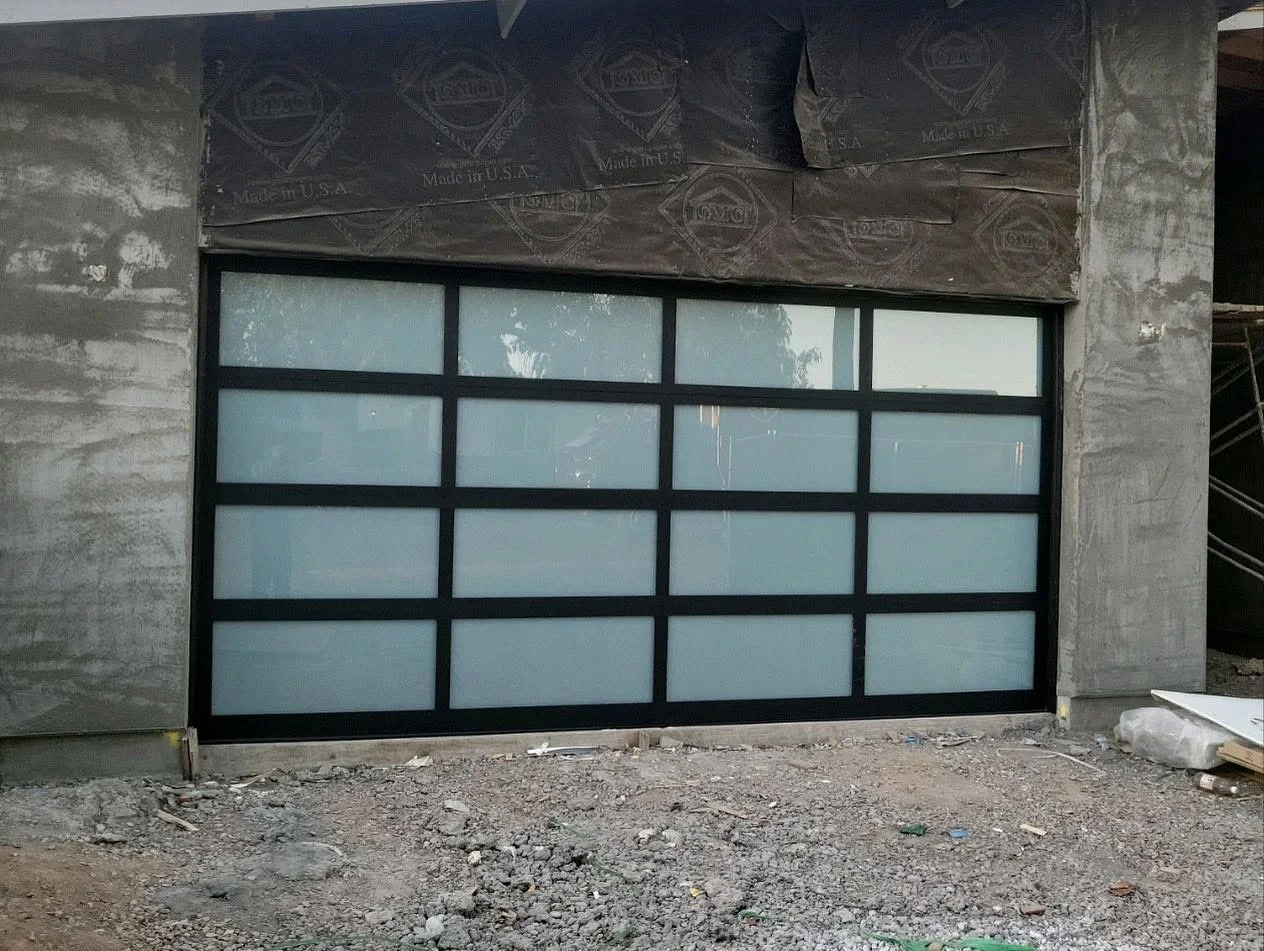 Garage door repair in Gold Canyon, AZ
The Last Two Things He Does Before He Leaves
The balance check comes off the opener, and that is the point of it. He releases the trolley so the door hangs on its counterbalance alone, then lifts it by hand to find out what the springs are carrying. A motor hides that: an opener will haul a door whose springs have stopped doing their share and give no sign of it. He makes the hand check on every visit, and the reason for the booking does not change that.
He tests the automatic reverse on any door with a motor over it. The twenty-two inspection items finish on the safety checks, and that test is among them: he sends the door down, and it has to come back up. On a door with no opener over it, that test does not apply.
Those two are the only parts of a visit that carry no condition. Everything else depends on the garage, including which job he deals with first.
A test result describes the day it was taken. The hand check says what that counterbalance carried that afternoon; the reverse test says the door came back up. Neither is a forecast, and neither is an assurance about a building or about what a part has left in it.
The last of the twenty-two items carries lubrication. He leaves the door lubricated, which starts a clock that is yours from that point on.
The Document You Keep, and the Ones That Are Somebody Else's
The record reaches you before the work does. He diagnoses the door and writes the estimate in the garage from what is in front of him, and it lands in your email for approval while the work it prices is still ahead of him. Where a management company or an HOA looks after the house, the estimate and the invoice both go to the management team, who book the work on the main office line.
What makes it worth keeping is that it names the part. The part installed on the day is written down there by name, and that record stays in your hands. Two years on, a question about that part's own coverage is a question about a named product, and the name is on your copy.
The office a permit comes from here is a county office. Gold Canyon is unincorporated, so a building permit comes from the Pinal County Community Development Department, Building Safety Division, at 520-509-3555.
Two Clocks Start When the Truck Pulls Out
Ninety days, on our labor. That is coverage on the work we did, and the part we installed has its own.
The part's coverage was written by whoever made the part. Manufacturer warranties on parts are honored here on the maker's own terms, and the governing terms are in the document that came with the part.
A house sale separates the two. Our labor coverage does not transfer with the sale of a home. Whether the maker's coverage on the parts carries over to a new owner depends on the maker. Some, including Amarr and Janus, cover only the original purchaser.
Neither warranty is a maintenance schedule. For how often to lubricate, see the door maker's guidance below.
What We Work On, and What We Don't
Any brand, any age, whoever hung it. Hinges and the sections they join. Rollers, and the track they run in. Brackets, bearing plates, both lines of seal. A counterbalance in either family: shaft, drums, cables, end fixtures. Extension springs, a Wayne Dalton TorqueMaster and a one-piece tilt-up slab are ordinary work here. On the opener: rail, trolley, limits, force setting, safety circuit.
The rest of the garage has an owner, and it is somebody else. A locksmith handles locks and rekeying. An electrician has a new outlet or circuit for an opener, and his work comes before ours. A builder has the jamb, framing, drywall, and stucco after a car has been into the door. An association has what it permits on an oversized door: at least one in Gold Canyon publishes dimensional limits on doors built for more than a car, and that document is its own. We put the specification and finish in writing and leave the submission to you. Garage screens, window retrofits, and mobile and manufactured homes are all outside it, and home warranty dispatch is currently on hold. A motor on an opener that has no photo eyes is one we leave alone: secondary entrapment protection has been required on residential garage door operators manufactured on or after January 1, 1993, and we stop short of that motor while still servicing the door underneath it.
A call-back covers the door and the opener above it. There is no minimum job or invoice.
The Interval That Belongs to a Door Maker, and the Hardware That Belongs to Nobody
One interval here has a source, and a manufacturer published it. Clopay's maintenance guidance calls for lubrication every three to six months and notes that dust shortens the duration of an application. A door maker wrote that figure, and it carries no claim about what the air here does to hardware.
What the same guidance says to put on, and what to keep off. Silicone spray or white lithium grease. WD-40 and light oil sprays are the ones it says to avoid, because they draw dust in. Two places stay dry: the track channel, where lubricant makes a roller slide, and a nylon roller.
The makers disagree, so the name on your door decides. Raynor's table and Martin's specification each differ from Clopay's, leaving your own maker's instructions as the only safe option. Which parts take what, part by part, is on our garage door tune-up page.
And the hardware nobody untrained should adjust. DASMA, the trade's standards body, states that no untrained person should remove, repair, or adjust springs or the parts they are anchored to, and that a door with a broken spring should not be operated until the spring is replaced. That covers the springs, their anchors, the cables and the bottom brackets. The office at the Mesa base keeps a walk-in parts counter, open weekdays 7:00 a.m. to 3:00 p.m., no appointment required, and sells any component of a garage door on-site if asked. What a call-back needs from you is a description: what changed, when, and whether the door does it every time. Nothing on that list asks anybody to touch the door.
Whose Account the Months After Belong To
How the months after a visit went is for the people whose door it was to say, and they say it under their own names.
Gold Canyon Garage Door Repair FAQ
Something is not right a week later. Who do I call, and when?
The same number, (480) 999-9417. After hours, a person picks it up (never a voicemail box), and the office arranges Saturday work in advance, because the weekend sits outside the routine week here.
What if the technician decides the door should not be used at all?
Then he tags it out of service and tells you why. That judgment belongs to whoever is standing at the opening. Once he has seen the door, making it safe is the first thing he deals with, and if a part he does not have with him is needed, the door stays tagged out until he is back with it.
He has to come back with a part. Where is it coming from?
A supplier. We carry the common parts, and anything else is ordered, which is also the only way a door arrives: doors are not stocked here at all, and each one is ordered for the job it is going on.
How do you take payment?
Credit card, check, cash, Zelle, or Venmo. Financing is through Wisetack on application; the lender makes the decision, so no rate appears on this site.
The door runs again, but it sounds different. Can you tell me what that is on the phone?
No. Nobody here names a failed part on a door he has not looked at, and that holds for a door we worked on last month as much as for a new caller.
Where We Work
Garage door repair and service across the Phoenix metro:
- Mesa,
- Gilbert,
- Chandler,
- Tempe,
- Scottsdale,
- Phoenix,
- Queen Creek,
- Apache Junction,
- Glendale,
- Peoria,
- Ahwatukee,
- Fountain Hills,
- Paradise Valley and
- Gold Canyon.
A call-back goes to the same number as the first call.
Booking a first visit and calling afterward land on the same line. Ask which fee applies before anyone is dispatched. A phone quote is free.