Garage Door Lockout Help in Phoenix, AZ
Garage door stuck shut with your car inside? We get Phoenix garage doors open when a broken spring, engaged lock, dead opener or failed remote is the cause, and a person answers after hours.
A phone quote is free. A service call on a failed door is $85, covering the 22-point inspection and the first half hour of labor.
- ROC #310144
- Licensed, Bonded & Insured
- Women-Owned Family Business
- 22-Point Inspection
- Google Rated
Garage doors have been this family's trade in this valley since 1997, without a break, and we are still family-owned and operated.
"I am locked out of my garage" tells us where you are standing. It does not tell us what failed, and four unrelated failures put a person there.
The Four Conditions Behind One Sentence
Four callers use the same words for four different machines.
One: the opener has nothing to run on. No lights, no hum, no click.
Two: something on the door is locked. A manual bolt, or an automatic lock still engaged.
Three: a failed part is holding the door down. A spring, a cable, a derailment.
Four: the door and the opener are fine, but the remote or keypad has stopped working.
LiftMaster sorts them the same way. Its troubleshooting list for a door that does not open completely asks, in order: are any manual locks still on the door, is something obstructing it, is the automatic lock in the locked position, is the door out of balance, are the springs broken. A lock and a broken spring share one list because they present alike from outside.
Any of the four can happen anywhere in Phoenix, so the first thing we ask is what the door does when you press the button.
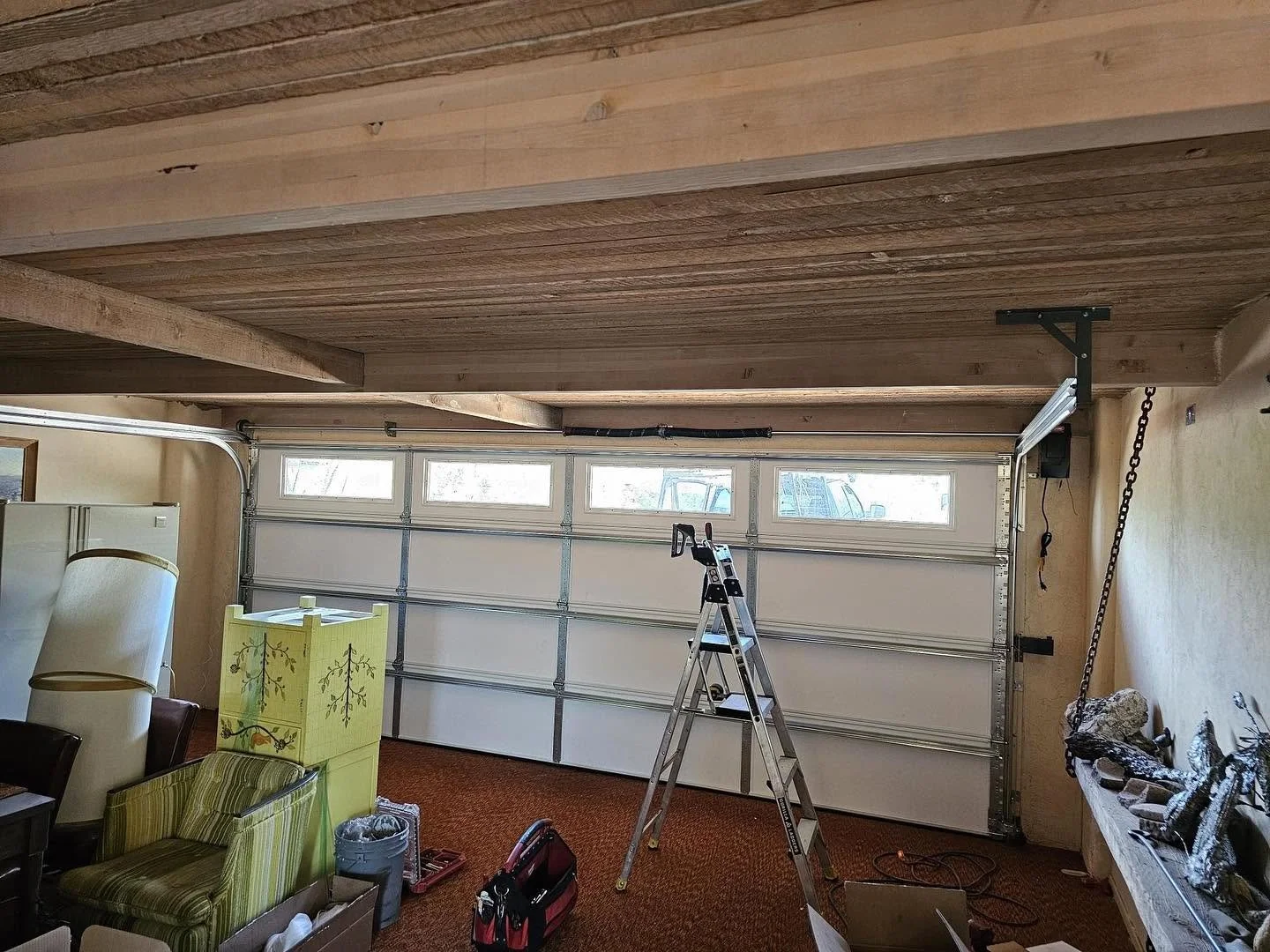 Garage door lockout help in Phoenix, AZ
Condition One: the Opener Has Nothing to Run On
Three causes belong to three trades. A tripped breaker is the household's, and the ceiling outlet is worth a look because it often shares a circuit. A failed opener, logic board or backup battery is ours. A dead circuit or an outlet needing replacement is an electrician's work before it is ours.
Condition Two: Something Is Locked, and the Door Family Decides What That Means
How it presents. The opener runs, the door lifts a few inches, then stops or reverses. Or it hums for a second, and nothing moves. Or one click, then silence. LiftMaster's diagnostic chart gives one instruction for all three: check for binding or obstructions, such as a broken spring or a door lock.
The bolt, and the family it assumes. On a sectional door, a slide lock throws a bar into a slot in the vertical track, and why a door with an opener still has one is set out on our valley-wide lockout page. That mechanism presupposes a sectional door running in track. A one-piece tilt-up is a single slab, hung on arms, that swings out as it rises, and on the jamb-hardware type there is no sectional track for a bar to enter. So we ask what the door does as it opens before we ask about the lock.
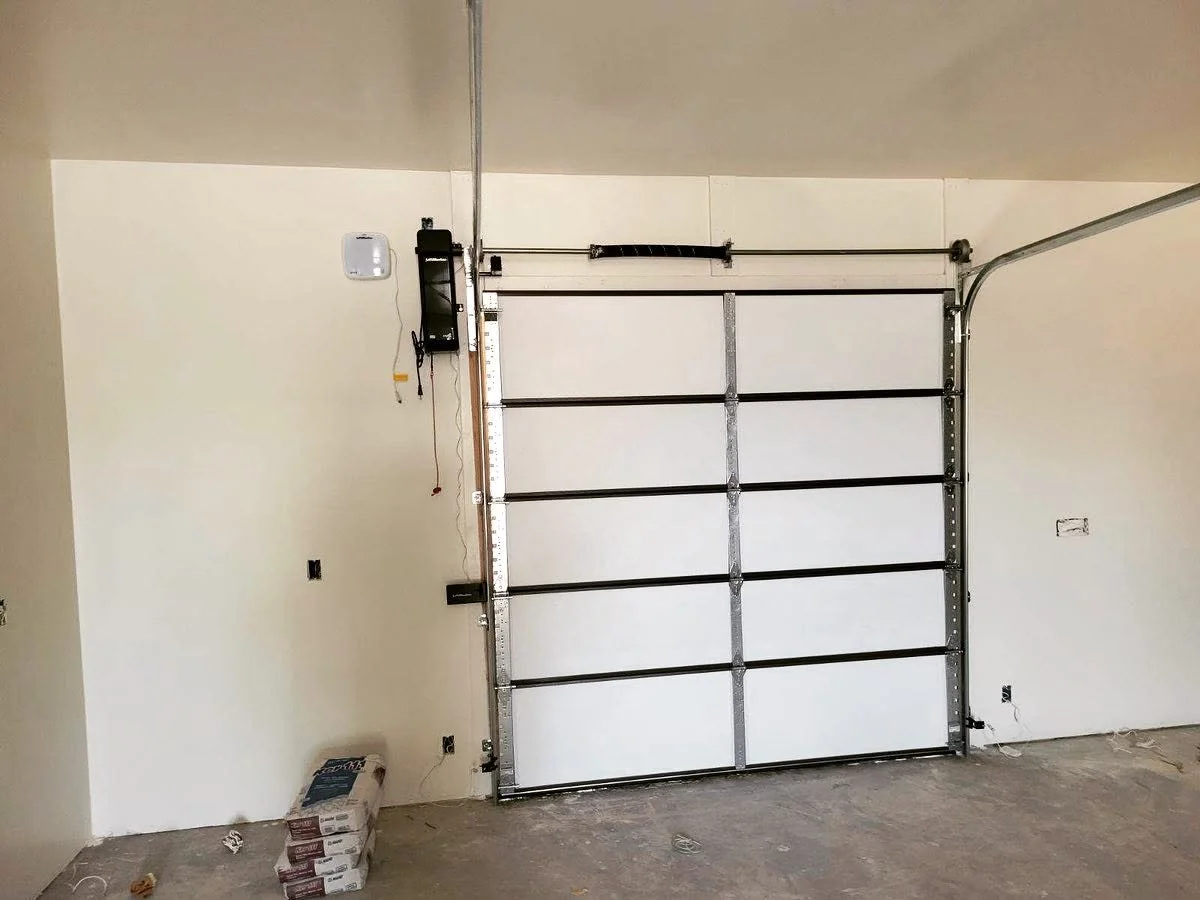
The automatic lock. LiftMaster's documented normal operation is a bolt that protrudes through the track when the door is closed, withdraws before the door moves, and re-engages at fully closed. The tell is what you do not hear: no clunk of the bolt withdrawing, then a door that lifts an inch and gives up. Still engaged, it looks from the driveway exactly like an opener with no power.
The instruction that governs the technician. DASMA's guidance reads: when unlocking a mechanically locked door, if the locking mechanism appears to be under tension from the door, leave the door in the locked position and stop the inspection. The technician works to that.
Condition Three: Nobody Locked It, and a Failed Part Is Holding It
The door has not been secured against you. It came apart, and the weight is on something never meant to carry it.
What points here. A bang heard hours or days ago and an opener that strains and quits. A door lifting crooked and jamming at one corner. A gap between a roller and its track, on a door that has them.
Three counterbalance families, and the family matters. On a sectional torsion door, the springs are wound onto a shaft above the opening. On an extension-spring door, they run along the horizontal tracks. On a jamb-type one-piece, the spring works against the pivot arm. All three reach the person outside as the same sentence.
Here, the published instruction is to stop. Genie publishes that a door with a broken spring should not be operated at all, manually or with the opener. DASMA's position is that it should not be operated until the spring is replaced. We cannot see your opening, so no sentence here says your door is safe to touch, and we are not setting out what to do with the emergency release. The after-hours questions, the red cord among them, are answered on our Phoenix emergency page.
Condition Four: the Door Is Fine, and the Way in Is Not
The door and opener work, but the handset or keypad has stopped. From the driveway, that looks like condition one.
Lock mode is the first thing to rule out. With lock or vacation mode on, the opener ignores remote controls entirely; its lights flash twice when you press a remote, and the command light on the wall control keeps flashing. Chamberlain publishes those tells, and holding the lock button on the wall control clears it. Chamberlain also publishes the caveat that puts this on a lockout page: if you are outside the garage, you need another way in to reach that wall control.
What This Page Will Not Tell You
There is a lot of online material about opening a closed garage door from outside. We are not adding to it, including describing a technique to warn you about it, because the warning and the instruction are in the same paragraph.
So there is no method anywhere on this page. No release-cord technique, no lever, no tool, no way around a bolt or a lock. If the door is secured and you are standing outside it, our answer is a telephone call, and that is the whole of our answer.
Phoenix Lockout FAQ
There is a slide lock on the inside of my door. Is that why it will not open?
It can be. A slide bolt left in the track will stop the door, and opener installers are supposed to remove or disable it. If you can't reach the inside of the garage, call us and we'll work out which of the four problems you have.
What does the visit cost?
A phone quote is free. A service call on a failed door is $85, covering the 22-point inspection and the first half hour of labor. A quote-only visit is $35. After hours and on weekends, it is $250, replacing the $85, and you hear it before dispatch.
Can you get me in without damaging the door?
Usually, and that is the job. Damage comes from what happens before anybody arrives. We explain above why no method appears here.
Do you do car lockouts, keys or rekeying?
No. No car lockouts, key cutting, broken-key extraction, rekeying, deadbolts or smart locks, and we do not fit garage door locks. A failed key or cylinder is a locksmith's call.
My remotes stopped, and the wall button still works.
That is condition four. Lock mode on the wall control is where to look.
What Customers Say
"Everything was great! Ron is a professional!"
Scope on This Job
Ours: the door, its counterbalance and hardware, the track and cables where the door has them, and the opener with its remotes and keypads. Any brand, any age.
A special-order part carries a 50% deposit. Whether a lockout warrants an after-hours call is answered on our Phoenix emergency page.
Two things happen on every visit. The balance gets checked, and the safety reverse is tested before we leave.
We do not do locksmith work: no car lockouts, no key cutting, no rekeying, no deadbolts, and no locks or handles. Any new outlet or circuit, an electrician's job before ours. Jambs, framing, drywall and stucco. Garage screens and window retrofits. Mobile and manufactured homes. The motor on an opener with no photo eyes. Home warranty dispatch, on hold at present. There is no minimum job.
Where We Work
Garage door repair and service across the Phoenix metro:
- Mesa,
- Gilbert,
- Chandler,
- Tempe,
- Scottsdale,
- Phoenix,
- Queen Creek,
- Apache Junction,
- Glendale,
- Peoria,
- Ahwatukee,
- Fountain Hills and
- Paradise Valley.
Tell us what happens when you press the button, and whether there is another way into the garage.
Those two answers sort three of the four conditions before anybody drives anywhere. A phone quote is free, and a live person answers after hours.