Garage Door Spring Repair in Surprise, AZ
A quote over the phone is free. A service call on a failed door is $85, covering the 22-point inspection and the first half hour of labor. After hours and on weekends, it is $250. A visit to look and quote is $35.
- ROC #310144
- Licensed, Bonded & Insured
- Women-Owned Family Business
- 22-Point Inspection
- Google Rated
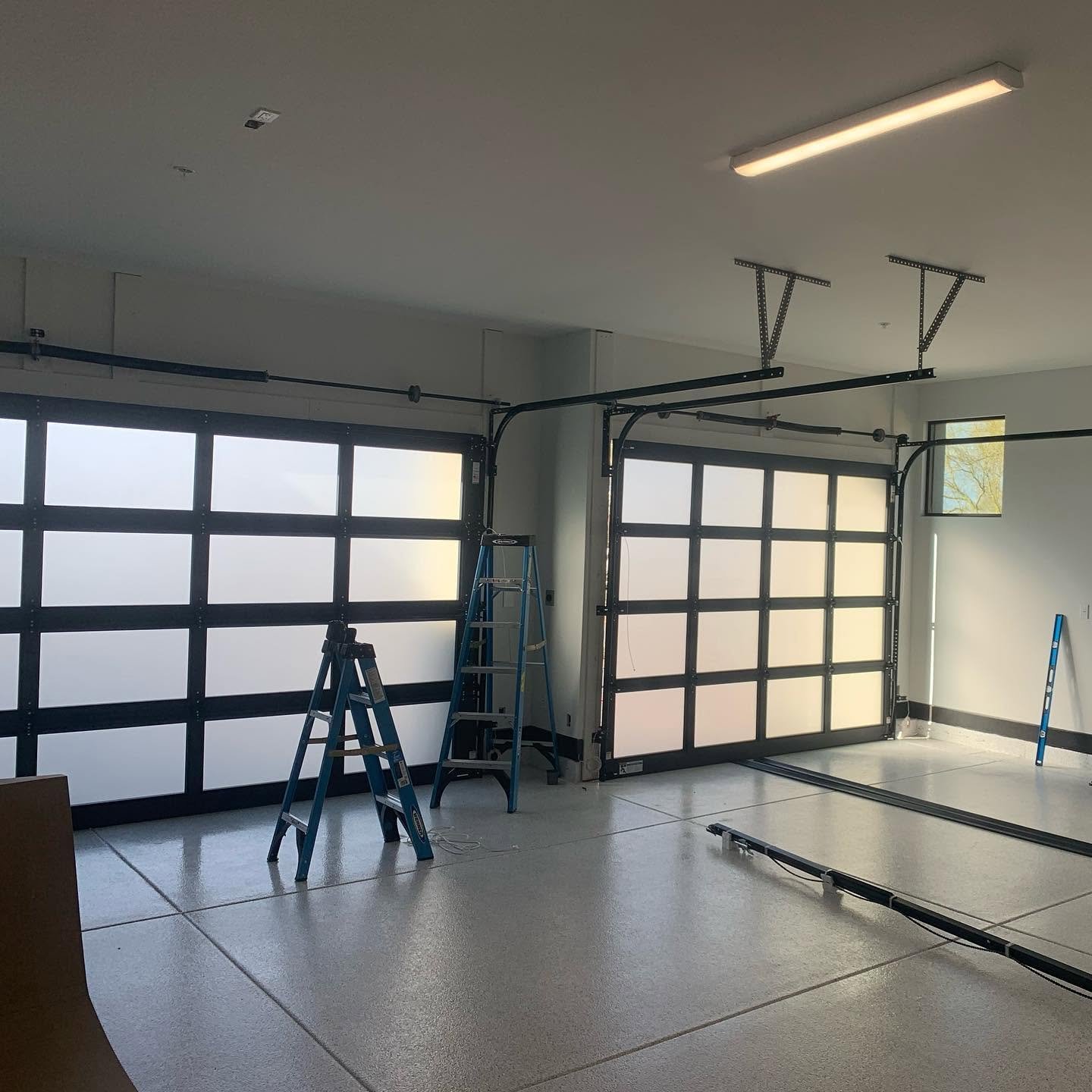
Broken garage door spring in Surprise? We replace torsion and extension springs from 10,000 to 100,000 cycles, sized to your door's weight, and check what wore out the old set.
What a Cycle Rating Is, and What It Quietly Assumes
A cycle is one trip up and one trip back down, not two. The definition is the door industry's own, in ANSI/DASMA 102.
The rating is a design life. DASMA's technical data sheet on spring cycle life states that spring cycle life may not necessarily coincide with door cycle life, and carries no cycle figures of its own. There is no industry table turning a rating into years, and the figures that exist come from the spring manufacturer and are not independent test results. What a higher rating buys is size: a bigger spring, longer or heavier in the wire, so each cycle works the steel less.
Then the arithmetic. ANSI/DASMA 102 calls a residential door one normally expected to be operated under 1,500 cycles a year, about four times a day. A 10,000-cycle set is the lowest rating we supply, and at that usage, it works out to a little under seven years. At 20,000 it gives about thirteen. At 50,000, about thirty-three.
Treat 33 years as paper math. A spring won't outlast the door, and its real life depends on correct sizing, winding, bearings and door weight.
 Spring repair in Surprise, AZ
What Retires a Spring Long Before Its Rating
Six things, and each one sits in a published record.
A wire size that was never right. A torsion spring is four numbers: wire diameter, inside diameter, length, and wind direction. Two of the common sizes, .2343 and .2375, look identical in the hand. Door Doctor Manufacturing, a spring supplier, puts the share of manufacturers and service companies that mix wire sizes on a replacement at roughly 30 percent, and notes that a properly matched pair is what lets a system reach its rated cycle life.
Stretch, which gets less attention than it earns. DASMA documents it. Set too tight and the coils rub against one another through every cycle; set too loose and the spring wanders along the shaft and rubs there instead. It can go wrong during winding or arrive later due to movement in the shaft, so a spring can be correct, properly fitted, and still run under a stress nobody specified.
A door that no longer weighs what it used to. DASMA's point is that a repainted door can fall outside the specification it was counterbalanced to, because paint has mass. A strut, a replacement section, or an insulation retrofit does the same. Where springs keep failing and nobody can say why, this is often it.
Rust, with a specific mechanism. DASMA's finding is that surface corrosion reduces the effective area of the wire, and that a pit is where a fatigue crack begins and then propagates.
A bearing that has stopped turning cleanly. The spring is wound onto a shaft that turns in bearings. Clopay's published guidance for dusty conditions is that lubricant may not last as long there and may need to be reapplied more frequently, and that a bearing running dry is a bearing with a short life. A shaft that no longer turns freely puts its load somewhere.
A door out of balance. A balanced door holds roughly where you leave it, three or four feet off the floor with the opener disconnected, and Chamberlain's guidance allows a slow, gentle drift. A door that slams down or pulls up no longer matches the spring holding it, and every cycle after that asks more of the spring than the rating assumed. We check the balance on every visit.
What Customers Say
"Called quality overhead door for a broken spring repair. Lou was the tech who came out and got everything fixed and running great. A+ service!"
What We Ask Instead of Assuming
All of that needs one number that no address supplies: how many times your door goes up and back down on a normal day. That is what turns a rating into years, and two houses with the same door and springs can sit a decade apart on it. Nobody has counted it for you, so we ask.
Our Surprise page carries the city's housing figures and what they do and do not tell you. A date on a deed suggests what a builder is likely to have hung above the opening. It reports nothing about the specification somebody installed afterward, or how long a bearing has been dry.
Surprise is one of the newer additions to our repair map. Behind every visit is a family that has worked in the valley's garage door trade since 1997, ROC #310144, with ninety days on our labor. We'll give you an honest arrival time when you call.
We ask enough on the phone that a technician arrives with the questions already narrowed.
Surprise Spring FAQ
There is a cycle rating on the quote. What should I do with that number?
Divide it. Count how many times the door opens on an ordinary day, multiply by 365, and divide the rating by that. The answer is the best case for that spring on a door in good order: a useful upper bound, a poor prediction.
What will it cost to get a technician out here in Surprise?
A quote over the phone is free. A service call on a door that has stopped working is $85. After hours and on weekends, the call fee is $250, and you hear that before dispatch. A visit purely to look and quote, on a door that still works, is $35.
Nothing is broken. Is there any reason to have the springs looked at?
There can be. Rust, stretch, a dry bearing, and a door drifting out of balance are all detectable before anything lets go, and they decide how much of the rating your springs actually reach. We will not tell you your door is safe, because we have not seen it.
If the rating is only a ceiling, is a higher-rated spring still worth fitting?
A bigger spring doing the same work under less stress per coil has a longer design life. What it does not do is fix anything around it.
Can you fit a set that will reach its rating?
We can fit the correct specification, wind it to the calculated figure, set the stretch properly, replace both springs on a two-spring door, and tell you what else we found loading them. Whether it reaches a manufacturer's ceiling is not something anybody can promise.
What We Do About It on the Visit, and Where We Stop
The spring is the part you called about; the audit around it is what the visit is for. The technician reads the old spring for its four numbers, establishes the door's weight, and looks at the cables, drums, shaft, and bearings while the counterbalance is apart, the only moment they are all exposed. Six of the twenty-two points sit there: spring wear and rust, tension and balance, the shaft, drums, cables and bearings.
Then the findings and the figures come to you in writing. The estimate is emailed before anything is wound or ordered, and no work starts until you approve it. The door is then balanced by hand with the opener disconnected, the opener's force and travel limits are reset to the new spring, and the safety reverse is tested before the technician leaves.
The one decision that is genuinely yours is the rating, and our high-cycle springs page sets out the case for each one. We supply 10,000-cycle through 100,000-cycle springs. High-cycle sets are made to order against your door's calculated weight, so there is a lead time and a 50% deposit.
Where we stop. The motor on an opener with no photo eyes. Electrical work, which is an electrician's job first. Jambs, framing, drywall and stucco. Locks and rekeying. Mobile and manufactured homes. There is no minimum job, and where we judge a door unsafe to run, we tag it out and say so.
And one thing the phone will not get you is a verdict on which part failed. We make no claim that a described fault can be identified over a phone line.
Where We Work
Garage door repair and service in Surprise and across the Phoenix metro:
- Mesa,
- Gilbert,
- Chandler,
- Tempe,
- Scottsdale,
- Phoenix,
- Queen Creek,
- Apache Junction,
- Glendale,
- Peoria,
- Surprise,
- Ahwatukee,
- Fountain Hills and
- Paradise Valley.
Tell us what the door did, and how many times a day it usually opens.
The first answer narrows the fault. The second turns a cycle rating into a number of years, and it is the one thing an address cannot tell us.