Garage Door Opener Repair in Gilbert, AZ
Logic boards, drive gears, sensors, travel limits and remotes on any brand of opener in Gilbert. We check the door's balance first, so you don't pay for an opener that was not the problem. The $85 service call includes a 22-point inspection.
Office hours are Monday to Friday, 7:00 a.m. to 3:00 p.m. A person answers after hours, and after-hours and weekend work carries a $250 call fee.
- ROC #310144
- Licensed, Bonded & Insured
- Women-Owned Family Business
- 90-Day Labor Warranty
- Google Rated
If the motor runs and the door does not move, if the door starts down and reverses back up for no reason you can see, or if the remote works some days and not others, you are on the right page.
Two of those three are usually the opener. One of them, and it surprises people, is something sitting on the garage floor.
We Look at the Door Before We Look at the Opener
This is the order we work in, and it is the single most useful thing on this page.
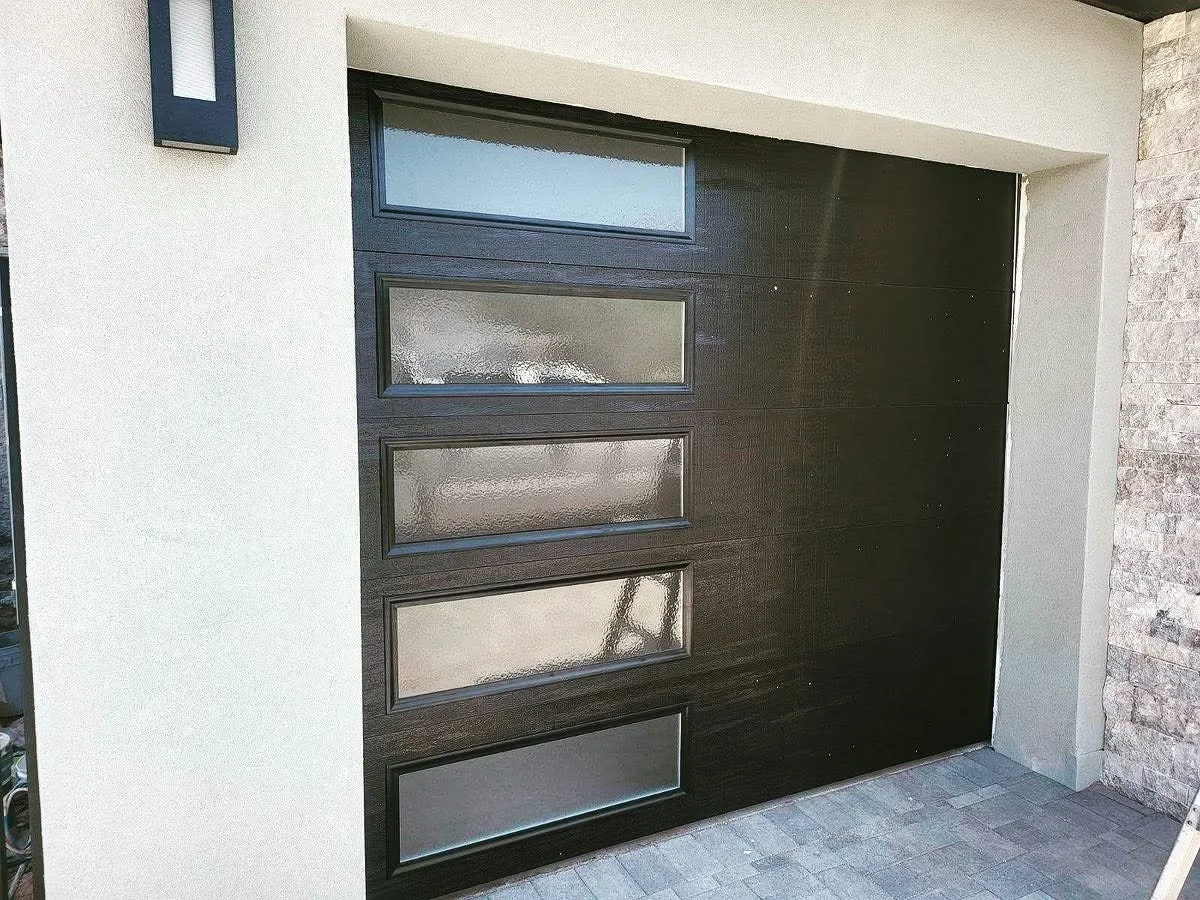
An opener is a small motor moving a very large object that is supposed to weigh almost nothing. The springs carry the door's weight; the opener only has to overcome friction and start it moving. When the counterbalance drifts out, the opener stops being a motor that nudges a balanced door and becomes a motor that lifts 150 pounds several times a day. It will do that for a while. Then it stops.
So a large share of "my opener is broken" calls turn out to be openers that were killed by something else. A tired spring, a dragging roller, a track pinched out of line by a low-speed knock. Replace the head on a door like that, and you have bought the same failure again, on a newer unit, at a date that will surprise you.
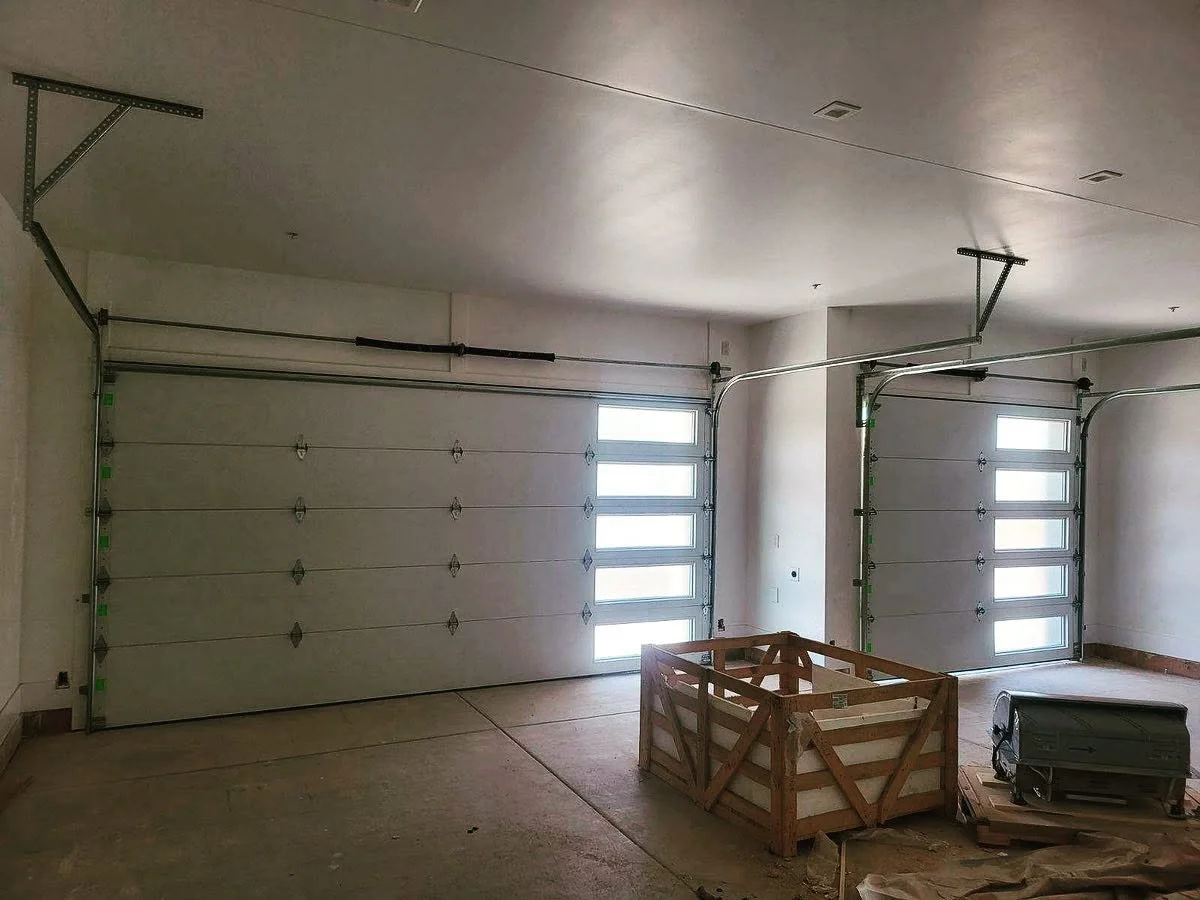
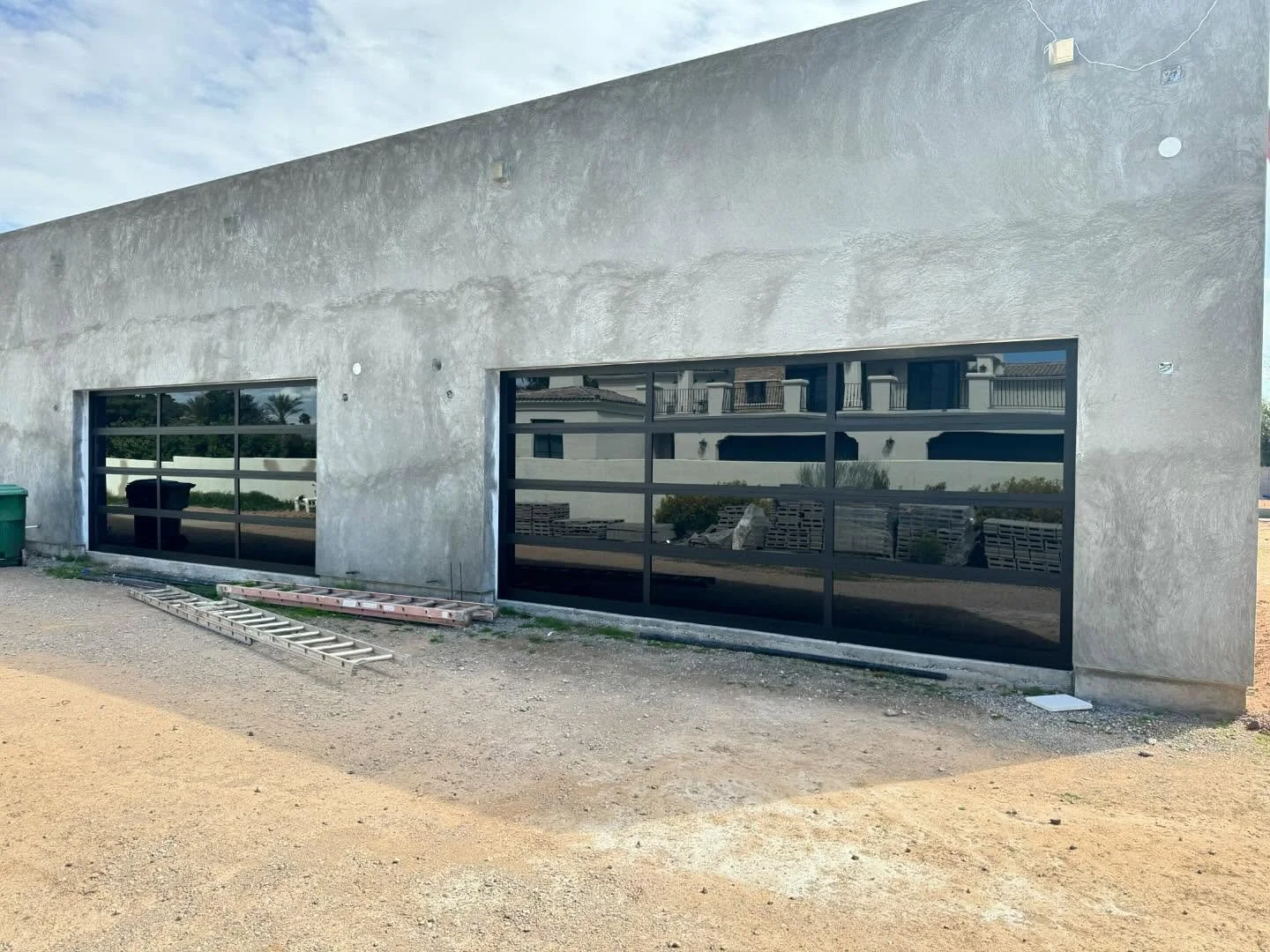
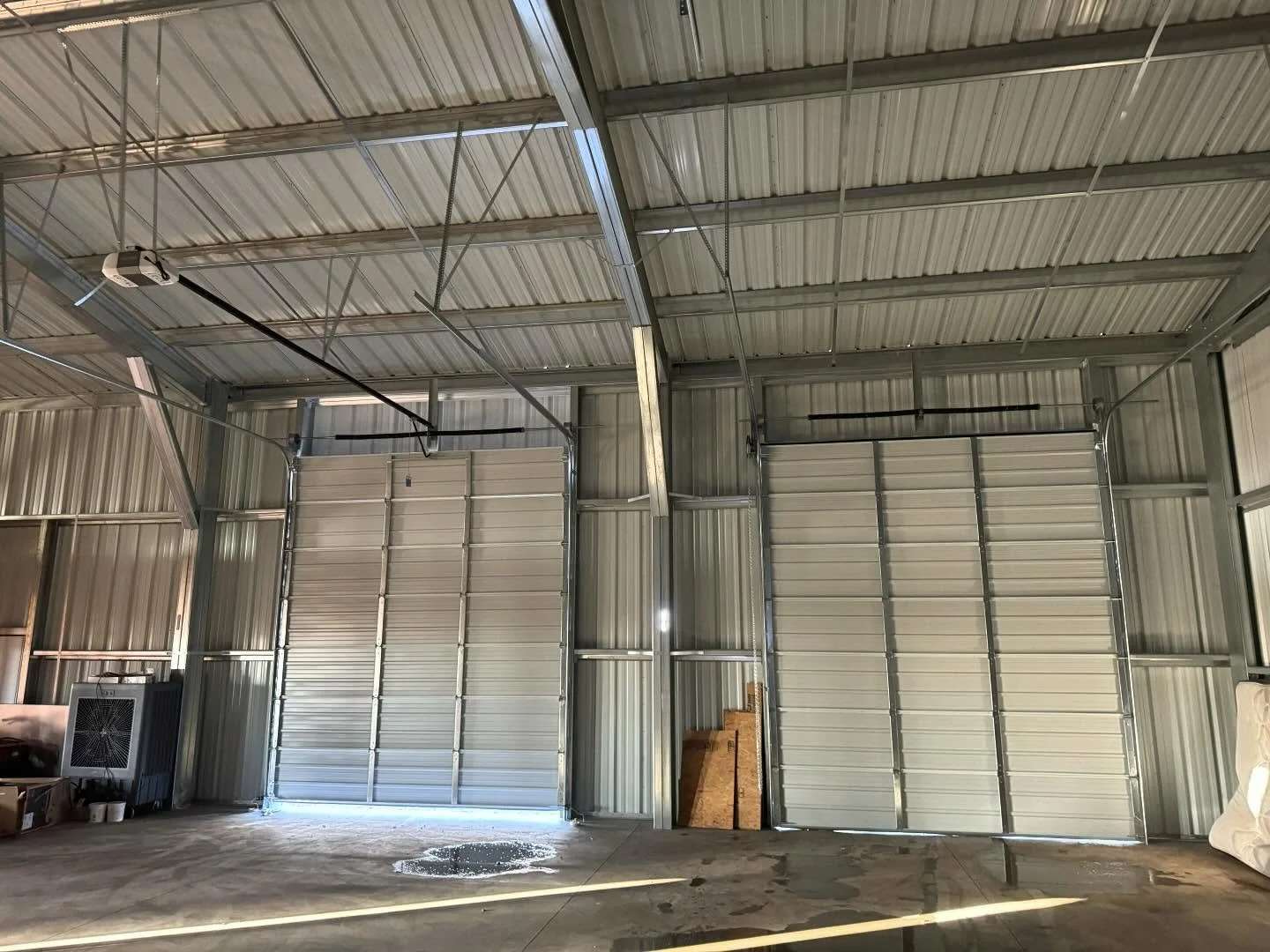
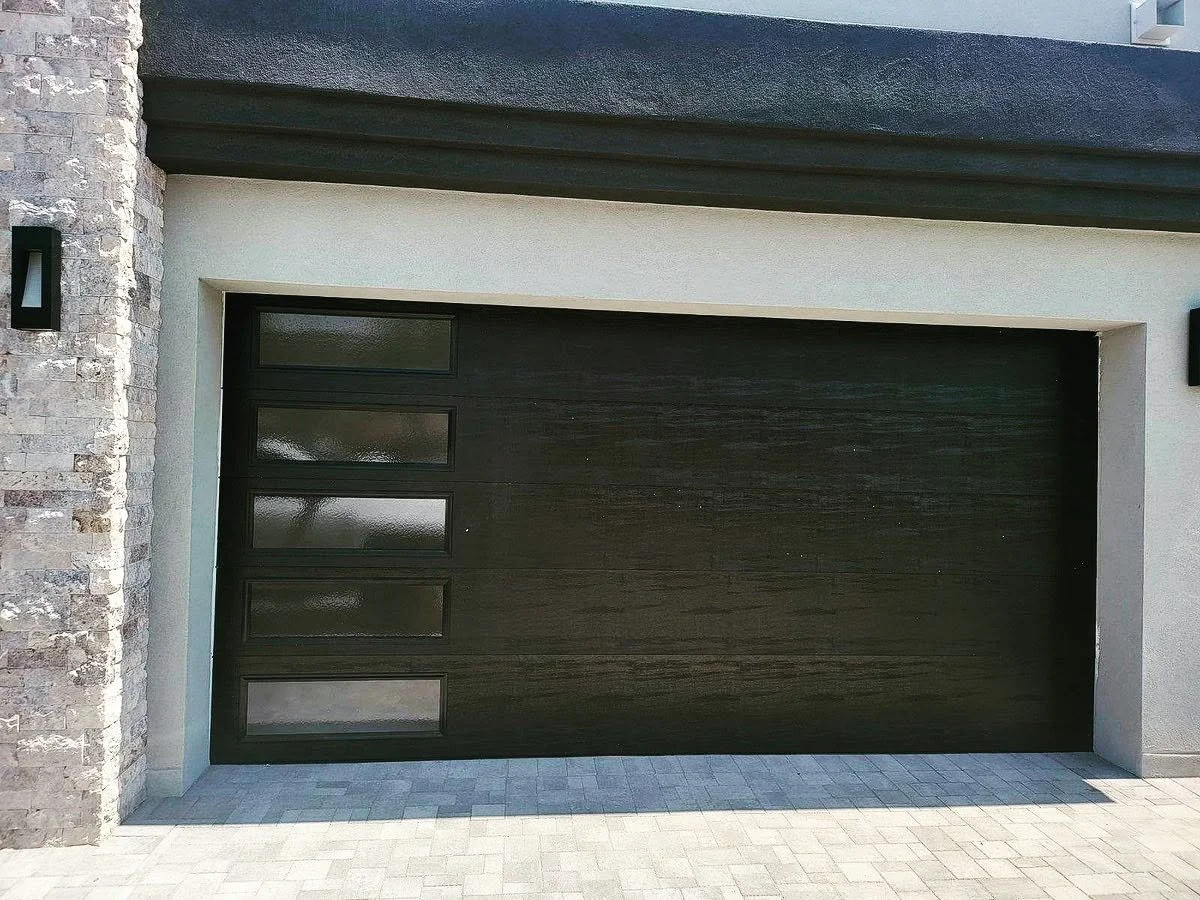 Opener repair in Gilbert, AZ
The order of elimination we actually run.
Pull the release and lift the door by hand. If it fights you, or drops, or climbs, the counterbalance is the problem, and the opener is a symptom. If it moves easily and holds around waist height, the head is genuinely next.
Then the safety circuit. A door that reverses is usually obeying an instruction. Photo eyes near the floor on either side of the opening: lenses, alignment, indicator lights.
Then travel and force, which are settings, and where a surprising number of visits end.
Then the head itself: board, gear, capacitor, trolley.
What that means for what we quote you. Sometimes the answer is that your opener is fine and your springs are tired. That is a different repair from the one you called about.
Gilbert garages tend to be full, so we check for obstructions early: a box or a bike in the sensor beam looks exactly like a failed opener.
What Actually Fails on a Gilbert Opener
A young housing stock means openers from a narrow band of production years, and their failures cluster.
The logic board. The most common genuine opener failure we see on 2000s and 2010s units, and the most awkward to diagnose from a description, because the symptoms vary: nothing at all, intermittent response, a unit that runs but ignores the wall button, lights behaving oddly, or a machine that works perfectly for a week and then sulks for an afternoon. Boards for current models are generally available.
The drive gear. On a chain or belt drive with a plastic main gear, the tell is a motor that runs happily while nothing moves. Often a repair, and worth asking about before anyone quotes a new opener.
Travel limits drifting. The opener learns where "closed" and "open" are. When those drift, the door stops short, hits the floor and bounces, or reverses on contact. Frequently an adjustment.
Force settings. Too tight and the door reverses on its own weight; too loose and it misses a real obstruction. Both get set against a door that is already balanced.
Remotes and keypads. Batteries, a lost learn code, or a keypad that has been in Arizona sun for a decade. The smallest job on this list.
And sometimes the head is fine. See We Look at the Door Before We Look at the Opener: the door is the first thing we check, and often enough it is the answer.
Repair or Replace
We give you a straight answer here.
Worth repairing: a board, a gear, limits, force settings, sensors, remotes, a broken trolley, and most things on a unit from the last fifteen years where the part is still made.
Worth replacing: anything where the part has gone out of production, a unit that has already undergone two significant repairs, or a head old enough to predate the entrapment-protection requirement.
When a new head is the answer, we are a LiftMaster dealer and can supply and fit one, and we will tell you why the repair was not worth it.
In Gilbert, an opener with no photo eyes is uncommon because most homes were built after 2000. But roughly one home in seven predates 1990, and openers often outlive an owner, so we still find them.
Smart Openers, and What Actually Goes Wrong with Them
Connected openers are now common enough here that we get calls regularly, and they fail in ways older units do not.
Most "my smart opener is broken" calls turn out to be the network. The unit has lost the house Wi-Fi after a router change, the app account has been signed out, or the network moved to a band the opener cannot see. The tell is that the wall button and the remote still work: if the physical controls run the door, the motor and the drive are fine and what you have is a connectivity problem.
Network support sits outside what we do, and we say so on the phone. What we will do is help you work out which of the two you have, because that decides whether a visit is worth booking at all.
Where it is genuinely ours: a connected opener whose door has stopped moving, whose sensors have failed, whose travel limits have drifted, or whose logic board has gone. A board failure on a connected unit looks identical to one on a plain unit.
One thing worth knowing before you buy. Battery backup is a benefit, not an Arizona legal requirement. A door that still opens in a power outage is worth having. Anyone telling you the state mandates it is describing a different state's law.
How the Visit Goes
On the phone. We ask what the door does, roughly when the house was built, and whether you know the opener's brand, and we tell you the cost of the visit before we book it.
On arrival. The door first, then the head, in the sequence set out under We Look at the Door Before We Look at the Opener.
The diagnosis. We tell you what it is, what it will cost, and whether it is worth doing, in that order. If the answer is a replacement head, we explain why.
The work. We carry the common opener parts. Anything special-order gets a lead time before you commit.
Before we leave. The safety reverse gets tested, the photo eyes get checked for alignment, and the door gets run through a full cycle with the opener connected and again by hand. We also show you where the manual release is, because the number of people who have lived with a door for a decade and never been shown where it is would surprise you.
What We Do Not Do
No electrical work. A new outlet or circuit for an opener is an electrician's job, and we will tell you plainly if that is what you have.
No locks, handles or rekeying. That is a locksmith's work. Track, rollers, hinges and brackets are ours.
No jamb, framing, drywall, or stucco; no garage screens; no window retrofits into an existing door; and no mobile or manufactured homes. Home warranty dispatch is currently on hold.
There is no minimum job.
What Customers Say
"They were very nice and didn’t take long at all. The tech told me what I needed and didn’t try to hustle me in any way. Very satisfied customer here."
Gilbert Opener FAQ
My door reverses right before it closes and nothing is in the way.
Check the floor along the whole opening first, then the two sensors near the ground on either side. A dusty lens or a knocked-out-of-line sensor reads exactly like an obstruction. If both are clear and the lights look normal, it is alignment, wiring, a sensor fault, or the door binding on the way down.
The motor runs, but the door does not move.
Most often, a stripped drive gear; sometimes, a disconnected trolley. Both are usually repairs.
Do you work on openers you did not install?
Yes, whoever installed them and whoever made them.
Is it worth fixing a fifteen-year-old opener?
Often, if the part is still made and the unit has been through fewer than two significant repairs. We will tell you which side of that line yours is on.
My garage is full, and the door keeps stopping. Is that the opener?
Very likely not. Gilbert's code keeps a garage a garage, and a space that has to stay clearable is a space everything else gets stacked around. Check the floor along the opening and the two sensor lenses before you book anything.
Can you make my opener quieter?
Sometimes the opener, often the rollers. Builder-grade steel rollers get loud in their second decade, and a roller set is one of the smallest line items available on a builder-grade door.
My remote works but the wall button does not.
Usually, the wall control or its low-voltage wiring is the issue, and it's worth checking before the head.
Where We Work
Garage door repair and service across the Phoenix metro:
- Mesa,
- Gilbert,
- Chandler,
- Tempe,
- Scottsdale,
- Phoenix,
- Queen Creek,
- Apache Junction,
- Glendale,
- Peoria,
- Ahwatukee,
- Fountain Hills and
- Paradise Valley.
Tell us what the door does, in order.
Whether it moves, whether it reverses, and whether the motor makes a noise while nothing happens. Those three answers narrow it a long way before we arrive.