Garage Door Opener Installation in Peoria, AZ
We take down the old opener properly, fit a new one matched to your door, and test the safety reverse before we leave.
A phone quote is free; a technician visit to quote is $35.
- ROC #310144
- Licensed, Bonded & Insured
- Women-Owned Family Business
- 90-Day Labor Warranty
- Google Rated
Most opener installations in Peoria are replacements. How the old opener comes down decides where the new one can go, so we plan the removal at the quote.
The Job Starts with a Removal
An opener installation sounds like it begins with a box and a ladder. On a replacement, it begins with somebody else's work, done years ago by a crew that was never going to meet whoever came next.
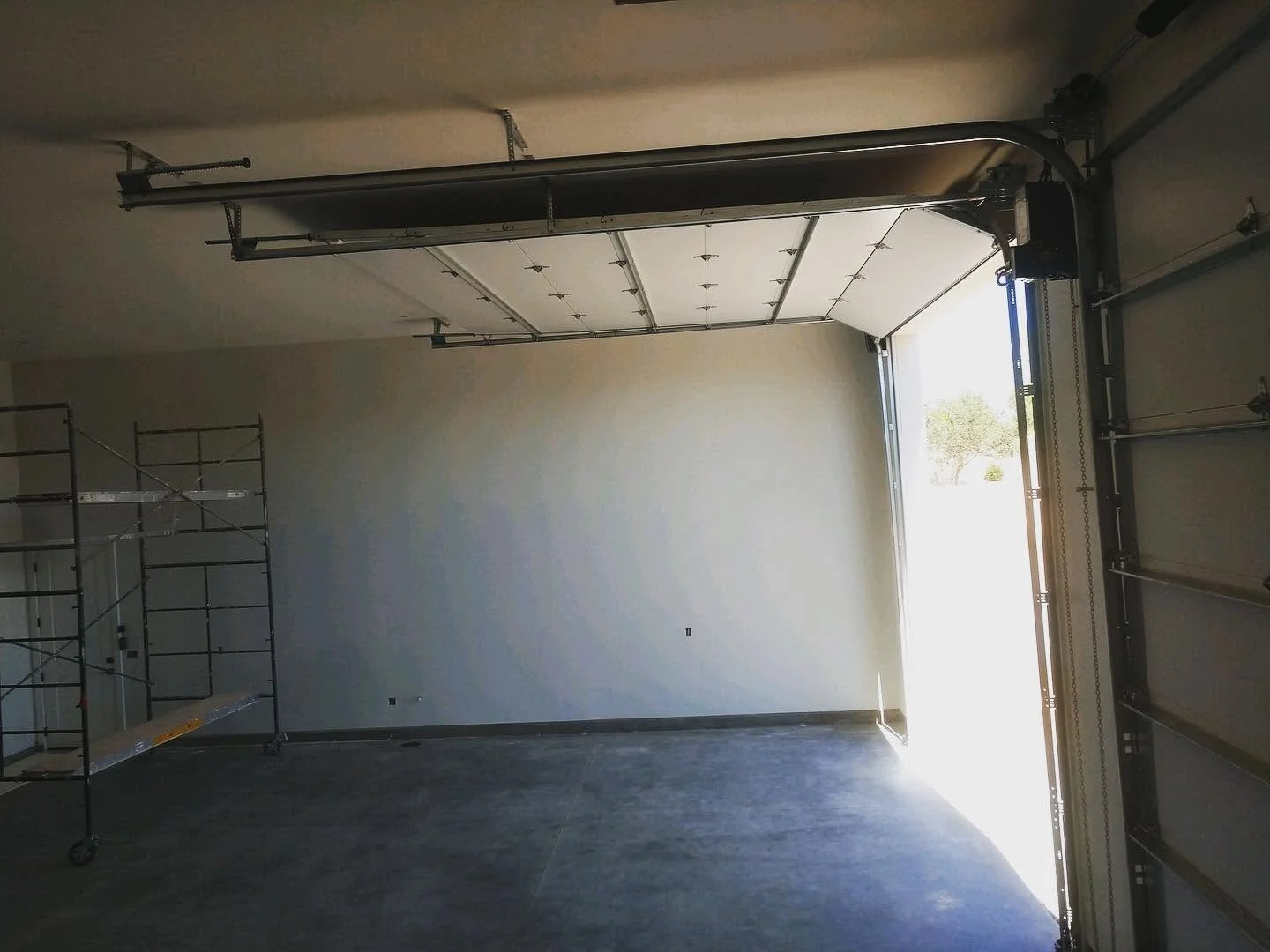
That work is a set of decisions, and they are all still there. Where the rail's front end was fixed to the header. Where the back of the rail was hung from, and off what. Where the arm bracket was bolted through the top section of the door. Where the low-voltage wire for the photo eyes was run and stapled, and where the wall control was put. Every one of those is a fastener driven into wood, drywall, or steel, and a fastener is a hole whether or not anything is still in it.
A new head is not a drop-in replacement for an old one, and this is the part people are surprised by. Rails are matched to their own heads. They are not interchangeable between makes, and often not between generations of the same make. Header brackets differ. Arm geometry differs. So the question is never whether the new one fits the old holes. It is which of the old fasteners are usable, which leave a hole somebody has to live with, and which have to be left alone because they are in something that matters.
The heads we take down in Peoria come from a narrow set of vintages, for the reason our Peoria page gives about when the city was built. That has a practical consequence for you. A narrow band of vintages means a photograph of the old head's label usually identifies the unit from a short list, which is what lets the parts and bracket conversation happen at the quote. For older, more mixed housing, that identification takes longer, and the question waits until the unit is down.
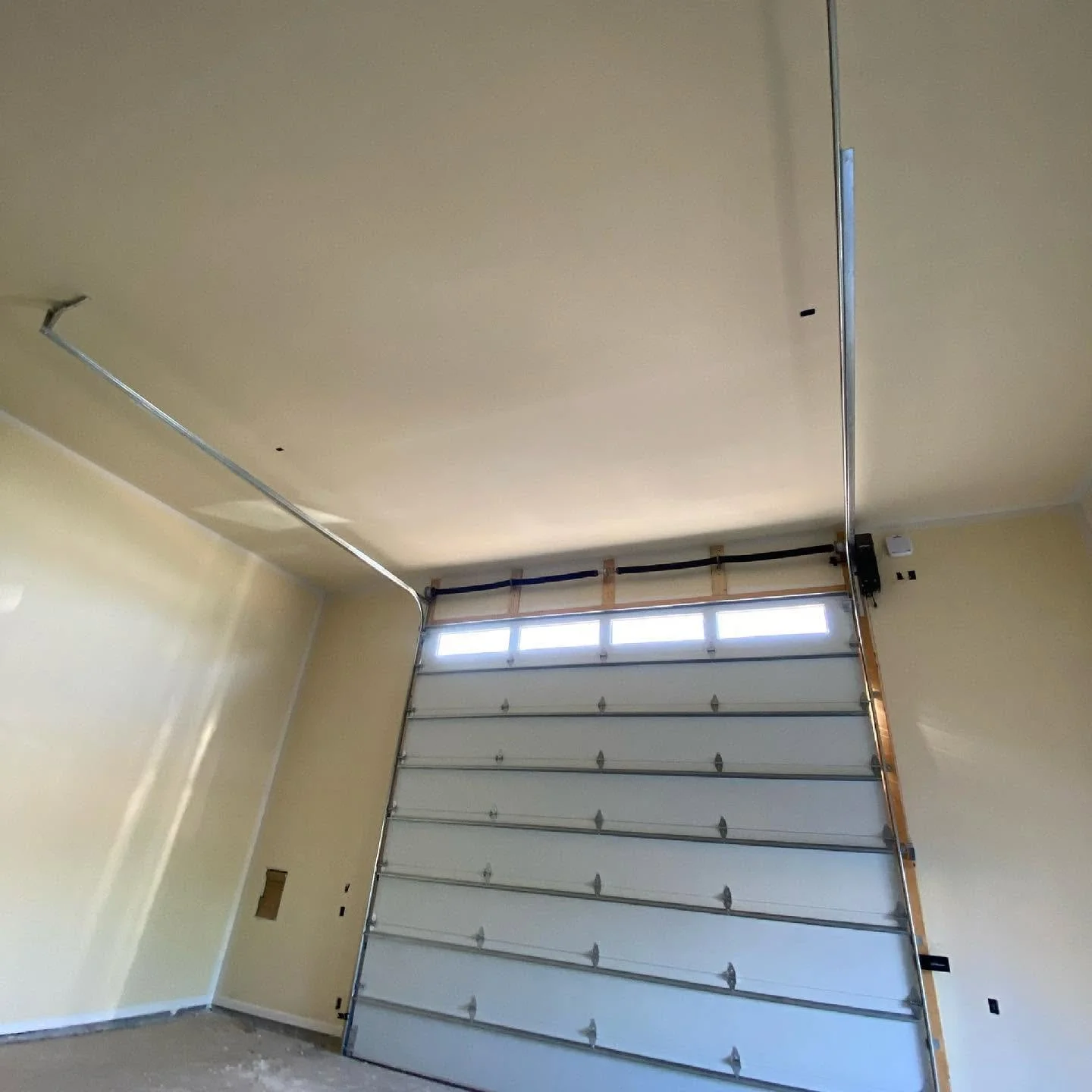 Garage door service in Peoria, AZ
Choosing the New Opener
Belt drive if the garage sits under a bedroom, chain drive if it doesn't and you would rather put the money elsewhere. Battery backup, so a monsoon outage doesn't trap the car, and Wi-Fi and phone control if you want to check the door from work. We are a LiftMaster dealer, and we fit new openers to doors we did not install.
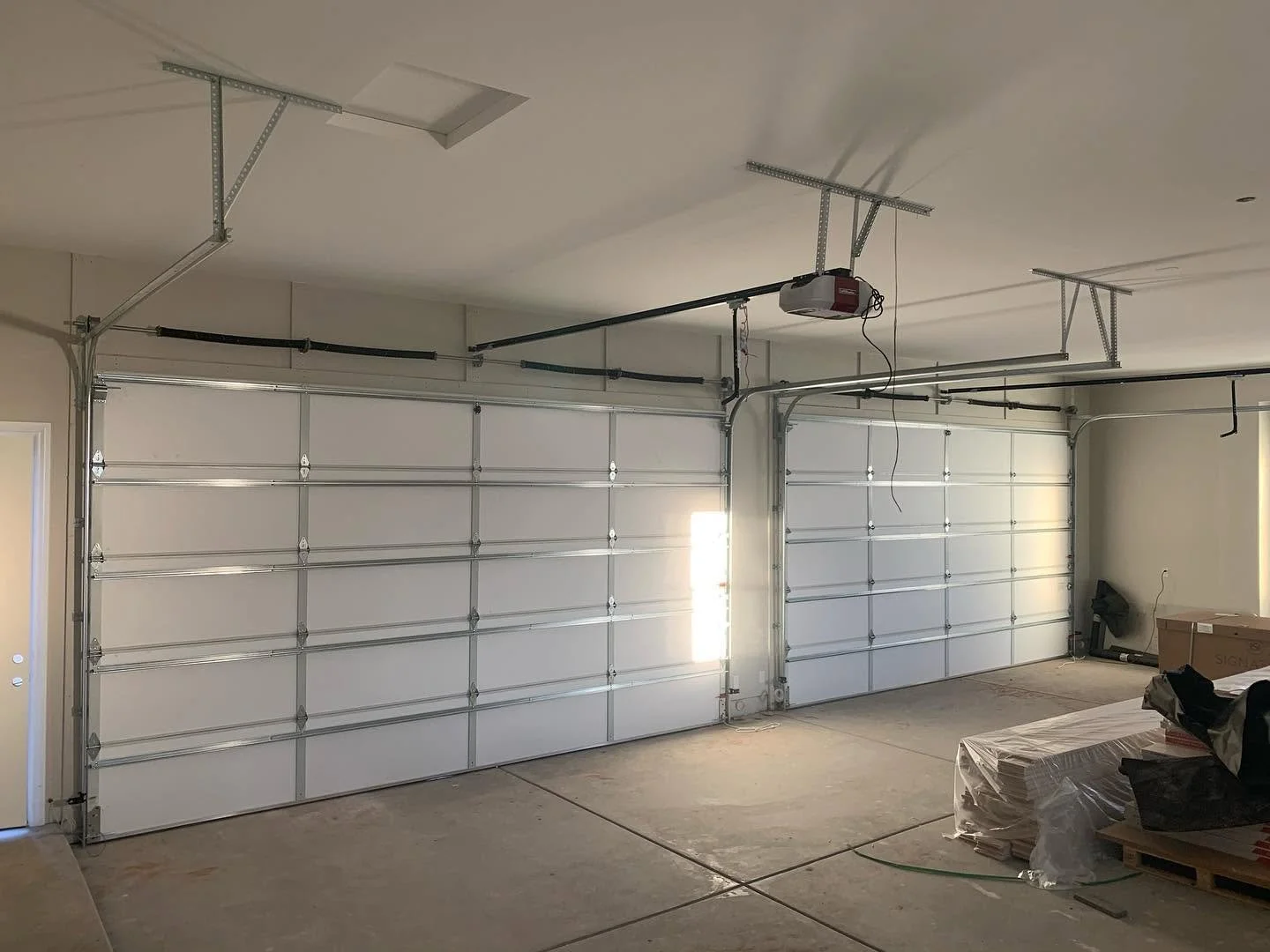 Opener installation in Peoria, AZ
What Comes Down, and What Stays Up
Comes down. The head itself. The rail and the trolley. The arm between the trolley and the door. The header bracket, in most cases, because the new rail needs its own. The hanging brackets or angle iron at the back, if the new rail's length and angle do not match the old one. On some units, an external radio receiver is bolted to the housing or to a nearby joist; on older heads, it was a separate box and not part of the board.
Stays up. The structure. Whatever the old brackets were fixed into is part of the building, and the building is not ours. The ceiling structure and the power supply belong to the building, and we check both at the quote so there are no surprises on installation day.
Stays up, usually. The photo-eye brackets at the bottom of each jamb, if the new sensors mount the same way, and the low-voltage wire, if it is intact and long enough. The low-voltage wiring for the photo eyes and the wall control is ours. A new outlet or circuit is not, because that is an electrician's job before ours.
Comes down and does not go back. Anything improvised. We find wood shims behind brackets, a bracket lengthened with a second bracket, and wire held up with whatever was in the van that day. Those get removed. Working around them is how they got there.
What the Old Installation Decides About the New One
Four things, and the quote is where they get settled.
1. Where the rail can sit. A rail runs square to the door and centered on it, and it has to clear the top section through the whole arc of travel. If the old rail was installed off-center, which happens, then the new one cannot simply follow the line that is already there, and the old fasteners are in the wrong place.
2. Whether the arm bracket can be reused. The arm bolts to a bracket through the top section of the door. That bracket is part of the load path, and it has already been drilled once. Whether a new arm can use it depends on the bracket, the section, and the arm, and it is something to look at before deciding. Where it cannot, the new bracket goes on the same section and the old holes stay in the door.
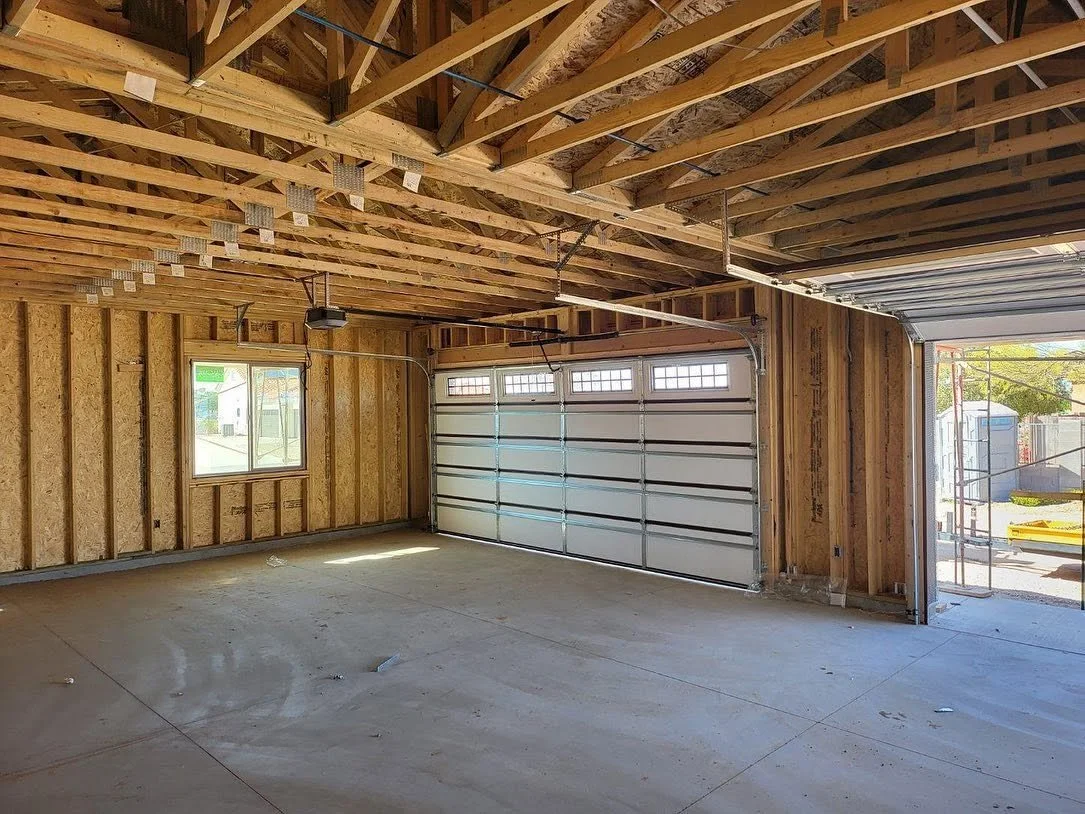
3. How much rail length is available. A longer rail for a taller door, or a rail that requires a different hanging angle, changes where the back can be hung. That is where the structural question comes back in, and it is why we ask for a photograph of the ceiling with the quote.
4. Whether the existing controls carry over. A wall control on two low-voltage wires usually does. A wall control with a lock button, a light button, and a display usually does not, because it is specific to its own head. Remotes and keypads are a question about the new unit, not the old one.
What We Do Not Reuse
Short list, and each item is on it for its own reason.
The rail. Matched to its head. Keeping the old one is not the better job.
The arm, in most cases. Arm geometry sets how much the trolley has to travel for a given door movement. The wrong arm still works, badly, and nobody investigates a door that moves.
An external receiver box. If the old head had its radio in a separate box, that box goes with the head. The new unit has its own.
Anything bent. A hanging bracket that has been pulled, a header bracket that has opened out, an arm with an elongated hole. All of those have moved under load once already.
And one thing we will not reuse even where it still works. A photo-eye pair that does not match the new head. Sensors and boards are a matched safety circuit, and mixing generations is not something we do. Our Peoria page sets out the rule we work to on openers without photo eyes at all.
Scope on This Job
Ours: the opener head, its rail and trolley, the arm and brackets, the safety circuit and its sensors and low-voltage wiring, the travel and force settings, the programming of the controls the unit supports, battery backup where the unit we fit has it, and the door hardware the opener depends on.
Outside our scope: a new outlet or circuit, which is an electrician's job before ours. Locks, handles and rekeying, which is a locksmith's job. Jambs, framing, drywall, stucco and any carpentry needed to give a bracket something to anchor to, where the door and the opener are ours, and the building around them is not. Mobile and manufactured homes. The motor on an opener with no photo eyes. Home warranty dispatch, which is on hold at present.
There is no minimum job. Where we judge a door unsafe to run, we tag it out and say so rather than leave it in service.
What Customers Say
"Ron was great. He was friendly, knowledgeable, and efficient."
Peoria Opener Installation FAQ
Can you just put a new motor on the rail that is already there?
No. The rail, trolley, and head are a matched set. A head from one maker on a rail from another is an arrangement that happens to move a door.
Will the new opener use the holes the old one used?
Some of them, sometimes. The arm bracket on the door is sometimes reusable. The header bracket usually is not. Either way, it is a thing to settle on the quote and not with the old unit already down.
What happens to the holes left behind?
They stay where they are. We do not patch drywall or stucco, which the scope above sets out. The building side of those fasteners is not ours to judge either. Holes through a door section are a different matter, because the door is our part of the job, so we point out what we are leaving and where instead of letting you find it.
Do I need an electrician before you come?
Often not, and where it is needed, it is because the old head's outlet is not where the new rail puts the motor. The quote is where that gets settled. Our opener installation page follows up on the question.
The door is twenty years old, and somebody else hung it. Does that change the install?
Only through the fasteners. An older installation has usually been adjusted at least once, so the bracket positions are not always where the original crew put them, and that is the thing we read before we take anything down.
Our garage has a finished ceiling. Does that change anything?
It changes what we can see before we start, which is why we ask for a photograph of it with the quote. What a ceiling is being asked to carry is a question about the building, and our opener installation page is where that gets answered.
Will my remotes and keypad still work?
Usually not. It depends on the new unit, and programming the controls it does support is part of the job. Our opener installation page sets out what gets set and tested before we leave. Our remote and keypad programming page includes procedures specific to each maker.
Where We Work
Garage door repair and service across the Phoenix metro:
- Mesa,
- Gilbert,
- Chandler,
- Tempe,
- Scottsdale,
- Phoenix,
- Queen Creek,
- Apache Junction,
- Glendale,
- Peoria,
- Ahwatukee,
- Fountain Hills and
- Paradise Valley.
Send us a photograph of the old head's label and the bracket at the top of the door.
Those two tell us what comes down and what has to be new, before anybody comes out. The phone quote is free.