High-Cycle Garage Door Springs in Phoenix, AZ
Longer-life torsion springs for Phoenix garage doors, from 10,000 to 100,000 cycles, sized to your door's weight so you replace springs less often.
A phone quote is free. On a door that has failed, the service call is $85 and takes in the 22-point inspection plus the first half hour of labor. After hours and on weekends, $250. To come out and quote only, $35.
- ROC #310144
- Licensed, Bonded & Insured
- Women-Owned Family Business
- 22-Point Inspection
- Google Rated
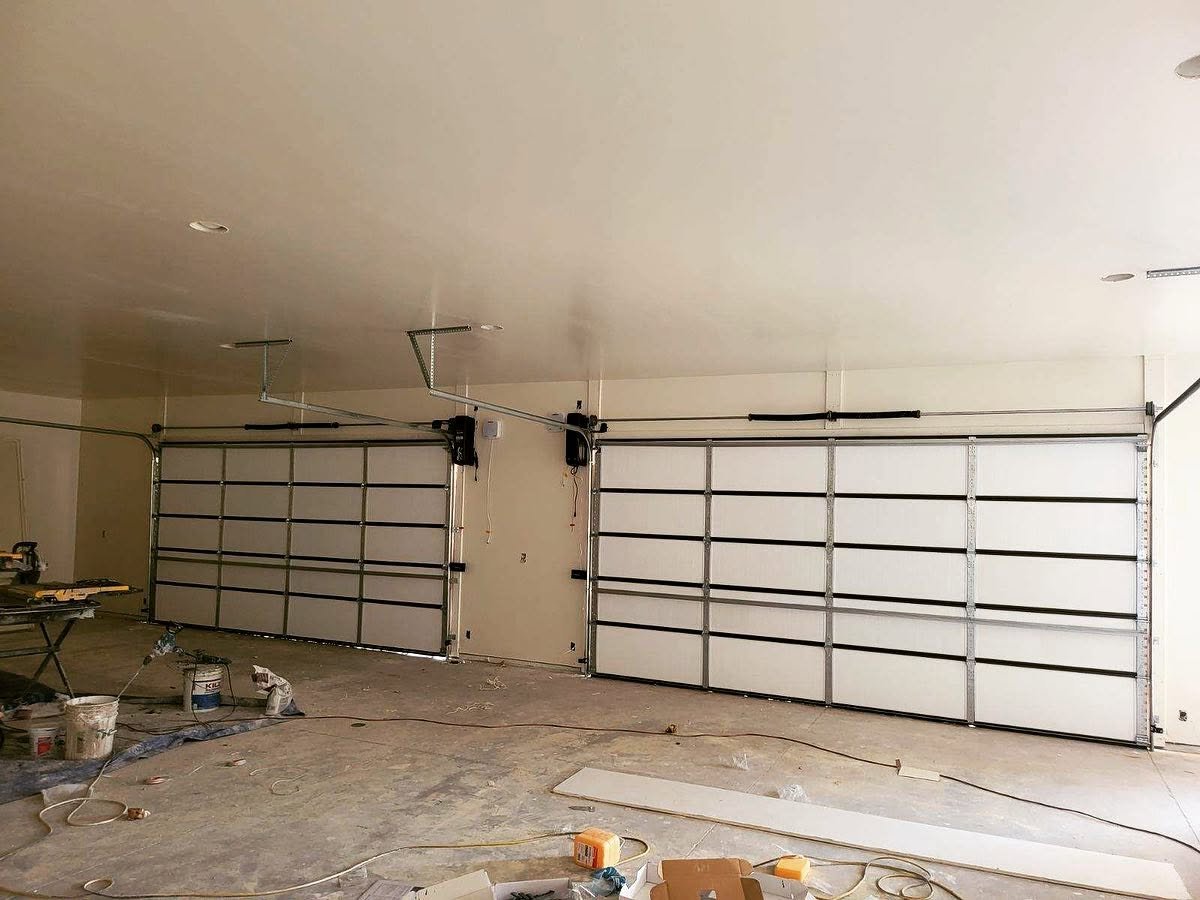
A standard builder spring is rated for about 10,000 cycles, roughly seven years for a door used four times a day. A higher-cycle spring is a larger spring built for more trips, so a busy household goes far longer between breaks. Count how often your door runs and we will match the rating to it.
The Rating Is a Quantity, and It Reads Like a Grade
We supply from 10,000 cycles up to 100,000. In a row, those numbers read as basic, better and best.
The mechanism says otherwise. A higher-rated spring is not different steel and carries no coating or additive the one below it lacks. It is a physically larger spring, longer or heavier in the wire, producing the lifting torque your door already needs while asking less of the metal each trip. The number grades nothing. It is a quantity: how many movements the spring was sized to make.
And a quantity means nothing undivided. People buy a stretch of years, and the way from one to the other is to divide the rating by how often the door runs. The rating comes from the spring. The other input comes from you.
For example, at four cycles a day: a 10,000-cycle spring lasts about 7 years, a 25,000-cycle spring about 17 years, and a 50,000-cycle spring about 34 years. Your own count may be higher or lower, so use it in place of four.
 High-cycle springs in Phoenix, AZ
What Customers Say
"Lou does a great job. Fully recommend them and Lou."
What Counts as One Cycle, and Why One Errand Is Two
One cycle is one full open plus one full close. Up, then down, is one. That definition comes from ANSI/DASMA 102, the trade's own standard for sectional doors.
Which is where guesses go wrong. You leave in the morning: up, the car out, down. One cycle. You come home: up, in, down. A second. A single errand is two cycles, because the unit is a movement of the door and not a journey of yours. Ask how often a garage door opens and the answer comes back in trips, which halves the figure before the arithmetic starts. Duration is irrelevant too: a door left open all afternoon has done one cycle.
One usage figure here has a standards body behind it. The same standard calls a residential door one normally expected to be operated under 1,500 cycles per year, which works out to roughly four times a day. Read it for what it is: a class definition, an assumption inside a document. It never measured your house.
What to Count, and How to Count It
Three things decide the figure. None is a fact about your door; all three are facts about your household, which is why looking at the door settles nothing.
How many vehicles come and go through the opening. Each one leaving and returning once is two cycles, so count the drivers who keep a vehicle behind that door and how often each goes out on an ordinary day.
Whether the garage is how the household walks into the house. If the door from the garage to the kitchen is the one everybody uses, the garage door is worked by foot traffic too, and people leave that out, because walking in never feels like a trip.
Whether anything besides the cars opens it. A trash can out to the curb and back, a yard tool, a vehicle that lives on the drive and comes in when the weather turns.
Then tally it. Put paper and a pen on the shelf by the wall button, mark every movement, up or down, whoever moves it, and divide the marks by two for cycles. Run a full week and divide by seven, because a Tuesday and a Saturday are not the same door. Counting touches nothing: nothing here is an instruction to go near the springs, cones, cables, or brackets.
Phoenix High-Cycle Spring FAQ
So how do I turn my count into years?
Divide the rating you are quoted by your daily count, then divide by 365. Nothing to look up and no coefficient to supply.
What does it cost to get somebody out to the springs in Phoenix?
A phone quote is free. The service call is $85 on a door that has stopped working, and it takes in the 22-point inspection plus the first half hour of labor. After hours and on weekends, that becomes $250, and we tell you before anyone is dispatched. To look and quote only, $35. A made-to-order set takes a 50% deposit.
I have no idea what my count is. Can you work it out for me?
Not exactly, because a garage door has no meter. If you haven't counted, the technician will estimate it with you from who drives in and out and how often, and the estimate will state the usage it assumed.
My springs run along the tracks on either side of the door. Is this page about my door?
Not directly. Going up the cycle range is a torsion specification, because what buys the extra cycles is a larger spring on the shaft above the opening. Doors with springs along the horizontal tracks have no winding cones at all, so there is nothing to wind there, and a one-piece tilt-up slab is a different counterbalance. We work on all three families.
My count came out higher than I expected. Is something wrong with the door?
A high count is a fact about your household, not a reading of your hardware. Whether anything is wrong with your door is a question for the visit. What a high count changes is which rating the division points to.
What the Division Gives You, and What It Does Not
It gives one figure: a number of years for that rating at that usage. It is a design life you can check.
It is neither a lifespan nor a term of sale. DASMA addresses this in its data sheet on spring cycle life, whose finding is that spring cycle life may not necessarily coincide with door cycle life, and that sheet prints no cycle numbers anywhere in it. Nothing in the trade converts a rating into years for you, so a flat span of years is somebody turning a rating into a promise the standard does not make.
The rating is manufacturer-stated and not independently tested, which is how we attribute it when we name one on your estimate.
And it describes a best case, because a rating assumes a spring whose specification, winding, bearings, and door weight all match the calculation behind it. That is a separate subject.
Its use is making the decision once, with arithmetic in it. The case for one rating over another is on our valley-wide high-cycle springs page. The input it needs is your count.
Why a Count Does Not Hold Still
Your count can change. A driver who moves out, a job that stops needing a commute, a vehicle that starts living on the drive: each one changes the number you divide by, and none is a fault in the door. A falling count stretches the answer, and a rising one shortens it, so the figure on a quote is never a date. If yours is about to move in a direction you can name, say so.
What We Do With Your Number, and Where We Stop
The rating comes from your count. The spring comes from your door. The technician establishes the door's weight and reads the four numbers off the old spring on the shaft: wire diameter, inside diameter, overall length, and wind direction, so the rating you picked becomes a spring for that weight. The same rating means a different part on a light door than on a heavy one.
Then the figures reach you in writing. Nothing is wound or ordered until the estimate has reached you by email and you have approved it, with the rating and the usage it assumes named on it. Sets above the stocked range are built to your door's calculated weight, which means a lead time and a 50% deposit.
The safety reverse is tested before the technician leaves, and the balance check happens on every visit we make. Labor carries a 90-day warranty, and manufacturer warranties on parts are honored.
Where we stop. The motor on an opener with no photo eyes. Electrical work, an electrician's job first. Jambs, framing, drywall and stucco. Locks and rekeying. Mobile and manufactured homes. There is no minimum job, and where we judge a door unsafe to run, we tag it out. We will not tell you a door we have not seen is safe, and we make no claim that a described fault can be identified on a phone call. Behind the work is a trade this family has worked in this valley since 1997, without a break.
Where We Work
Garage door repair and service across the Phoenix metro:
- Mesa,
- Gilbert,
- Chandler,
- Tempe,
- Scottsdale,
- Phoenix,
- Queen Creek,
- Apache Junction,
- Glendale,
- Peoria,
- Ahwatukee,
- Fountain Hills and
- Paradise Valley.
Count the door for a week, then call us with the number.
One mark every movement, divided by two. That figure determines which rating belongs on your Phoenix door more than anything a technician can read off the hardware, and it is the one thing we cannot establish for you.