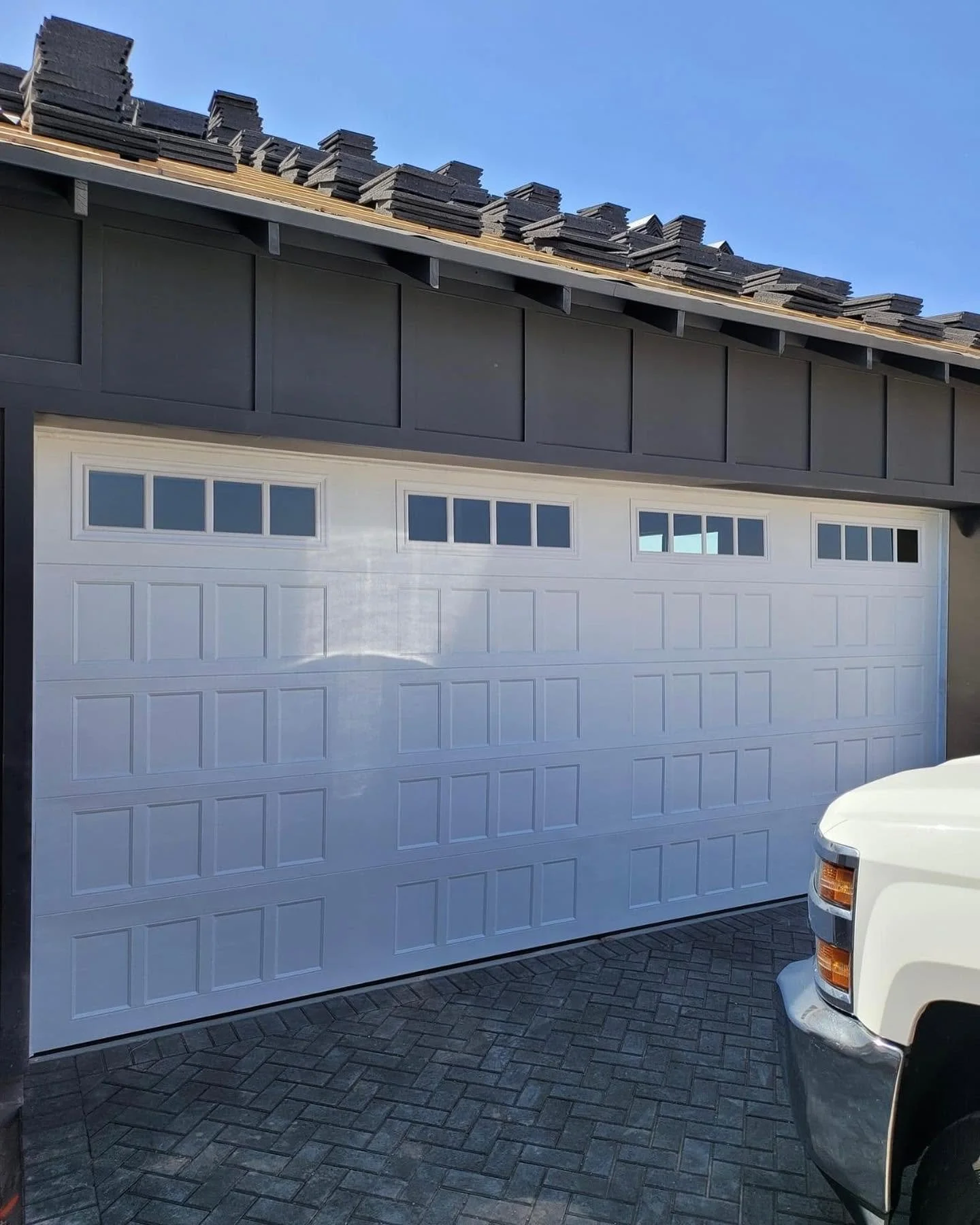


Garage Door Opener Installation in Phoenix, AZ
New garage door openers installed across Phoenix by a LiftMaster dealer, set to your door's travel and force, with both safety reverse tests run in front of you before we leave.
A quote over the phone is free. If you want a technician to come and measure, that visit is $35. A service call on a door that has stopped working is $85.
- ROC #310144
- Licensed, Bonded & Insured
- Women-Owned Family Business
- 22-Point Inspection
- Google Rated
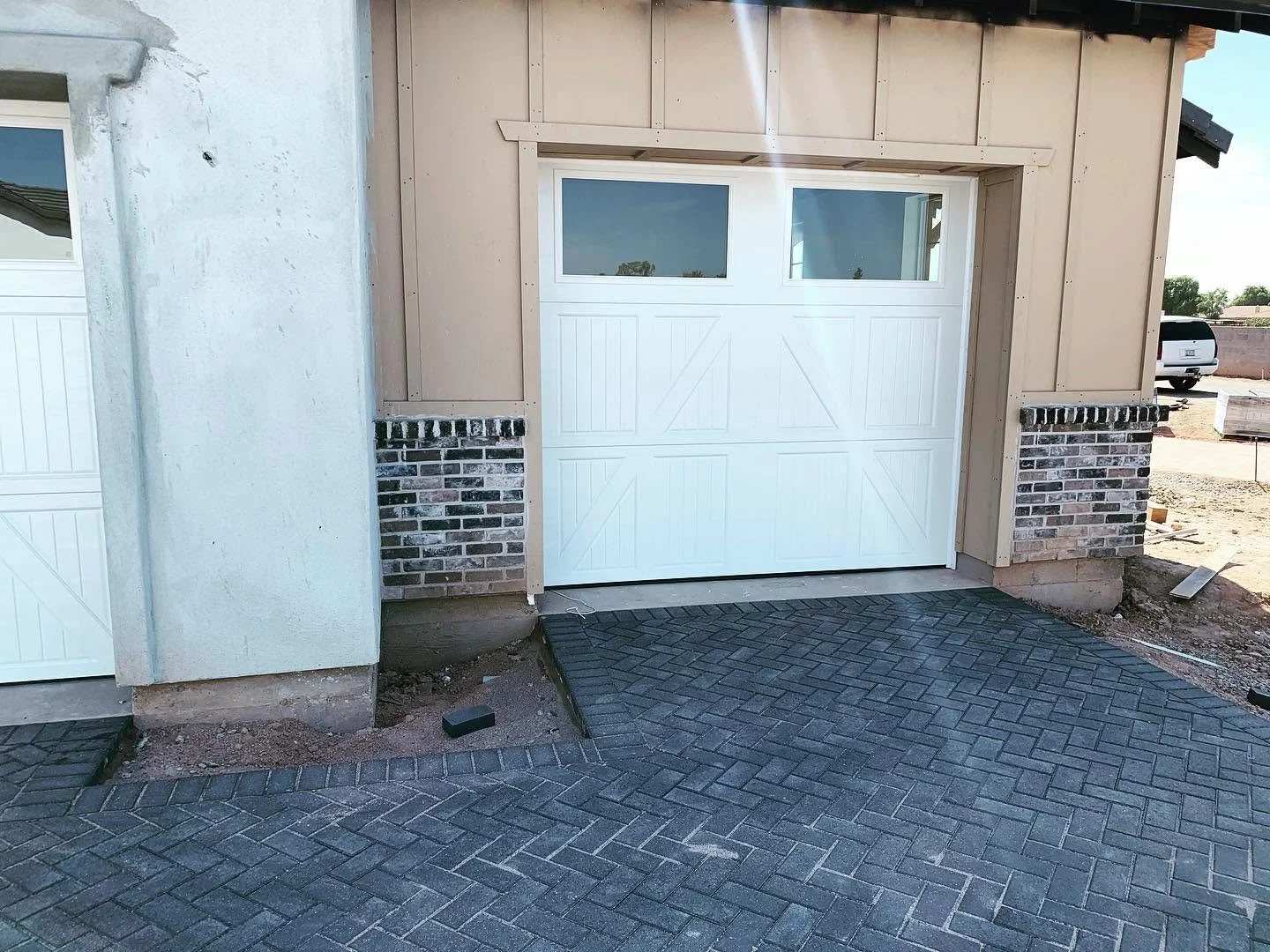
Two identical openers on two different doors need different settings. We set yours from your door, so it closes fully, reverses when it should and doesn't wear out early.
What Commissioning an Opener Means
We mount the opener first, and that is the straightforward half. The motor goes up; we fix the rail to the header, connect the arm to the top section, put the eyes on at the bottom of the track, and plug it in. At that point, the door will open and close, and often that is where the work stops.
A mounted opener and a commissioned opener do different things when something goes wrong. Commissioning is the part where the machine is taught the door it has been given: how far the door travels, how much effort that travel legitimately takes, and what to do when it meets resistance that is not the floor.
Get those wrong, and the door still works. It works until a seal stiffens, or a roller drags, or something is left where the door comes down. Then the difference shows up all at once.
What a miscommissioned opener looks like later is usually mistaken for something else. A door that stops an inch off the floor and has to be nudged. A door that bounces back up for no visible reason, with the force setting reading ordinary friction as an obstruction. A door that closes hard enough to shake the panel, which is travel set past the floor. People live with all three for years and describe them as the door getting old. None of the three is worn, and all three are numbers.
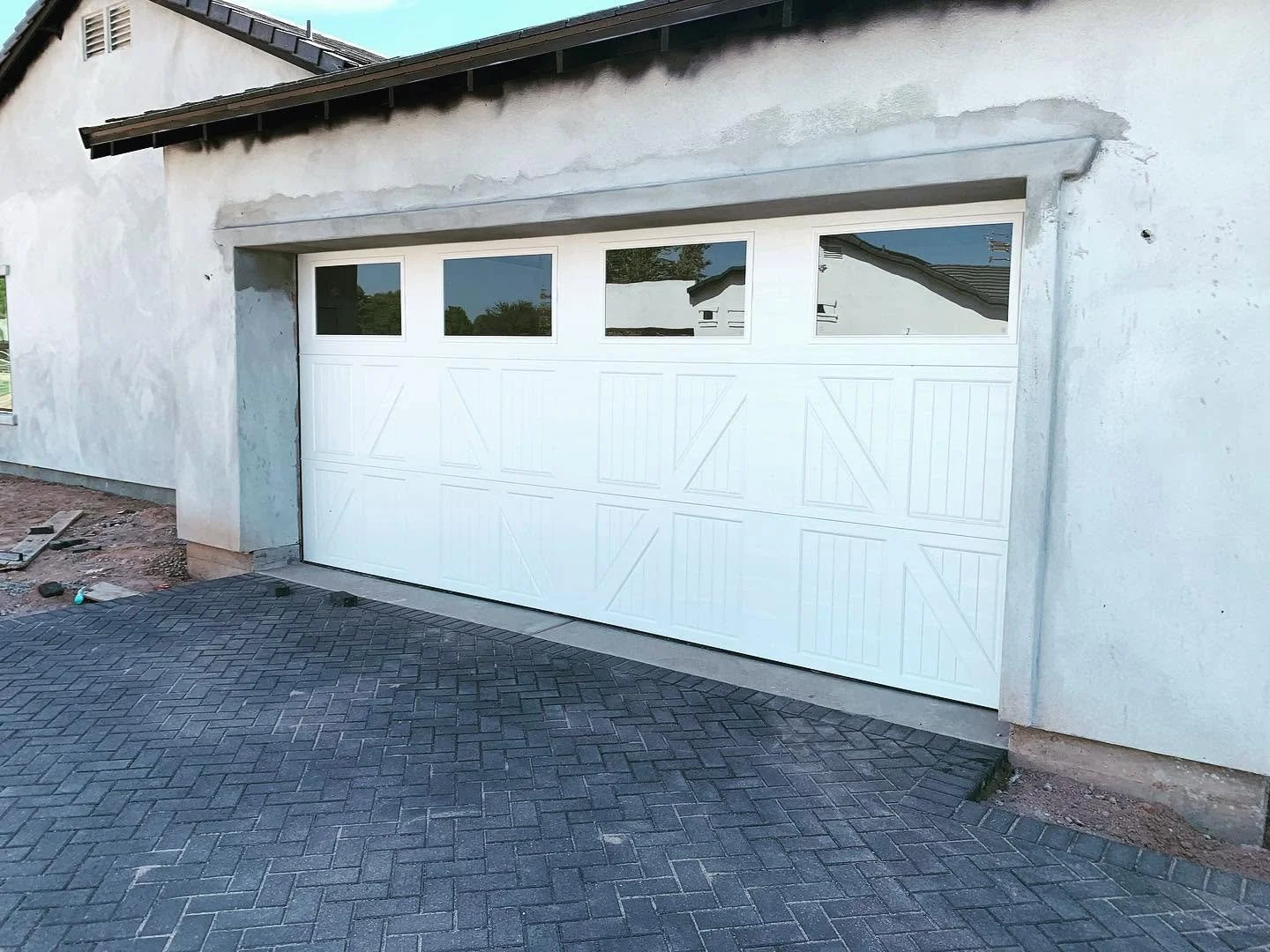 Opener installation in Phoenix, AZ
The Settings Come from Your Door
Three things get set on a residential opener, and the door decides all three.
Travel: Where the door is fully open and where it is fully closed, measured on this opening. A travel limit set a little short leaves the bottom seal off the floor, and one set a little long drives the door into the floor and then fights it.
Force: How much effort the opener is permitted to apply before it decides something is wrong. This is the setting we take most care over, and the one people get wrong most often, because turning it up makes an awkward door behave and also disables the thing that was protecting you. An opener with its force wound up will keep closing on an obstruction it should have reversed off.
The reverse itself: The opener has to reverse on contact and on a broken beam.
All three depend on the door being balanced first. An opener commissioned against an unbalanced door inherits the imbalance as though it were normal, so the numbers it learns are wrong from the first cycle.
Phoenix Has No Default Settings
Travel and force are numbers, and numbers carry over. On a street where the doors are broadly the same height, weight, and age, the settings that worked on the last job are a fair starting point for the next one.
Here they are not. Phoenix houses run from 1950s ranches to new builds, and doors on the same street differ in height, weight and age, so the last job's numbers tell us nothing about yours.
So we set them on your door, on the job, from a balanced starting point. We do not arrive with a figure in mind, and we will not leave the last job's numbers in your opener.
What We Set
We check the counterbalance and balance the door by hand before the opener goes back on. Then we set travel at both ends, with the seal meeting the floor and the door not driving into it. Then we set the force from the travel at the lowest setting that moves the door reliably through its full range. Then the safety circuit: we align and square the eyes at the bottom of the track, and run the wiring where a car door cannot find it.
Last, the things that are yours and not the door's: the wall control, the remotes, the keypad, if there is one, and the battery backup where specified.
We write down what we installed and what we set it to, so the next person working on this door doesn't have to guess. We are a LiftMaster dealer. Your opener carries the manufacturer's warranty, and our installation labor carries a 90-day warranty.
What We Test Before We Leave
Four tests, and we will run all four in front of you where you can be there.
The balance test with the opener disconnected, where commissioning started and where we confirm it. The balance check is part of every visit we make.
The contact reverse. We put an obstruction on the floor in the door's path and run the door onto it. It has to stop and reverse.
The beam test. We break the photo-eye beam as the door closes. It has to stop and reverse.
The manual release. We pull it, move the door by hand while it is disconnected, and reset it.
The safety reverse is tested before we leave on every visit. That is true of an installation, and it is equally true of a service call unrelated to the opener.
The Handover
This is the part worth insisting on, from us or from anybody. Before the installer leaves, you should have been shown:
Where the manual release is and what it feels like to pull. Most owners have never been shown this.
How to run the contact reverse test yourself so it is a thing you can repeat.
Where the photo eyes are and what knocks them out of alignment, which is usually a bicycle, a trash can, or a bag of mulch.
How to add or erase a remote, because the time you need that is the time somebody has lost one.
What the wall control's buttons actually do, including the lock function, which is responsible for a good share of the calls where nothing is broken.
What is on your estimate, including the model and the settings we left it on.
What Has to Be True Before We Can Fit One
Two things, and the quote is where you want to hear them. Older Phoenix garages often lack an outlet near the motor or a door balanced well enough to run an opener.
There has to be power within reach of the motor's location. If there is not, that is an electrician's work before ours. A new outlet or circuit is not ours. Our opener installation page sets out what the motor needs and where.
The door has to be worth driving. An opener installed on a door with a tired counterbalance will fail early, and we will say so in the quote. Where the door needs the counterbalance sorted first, that is a separate line on the estimate, and it is up to you to decide.
Phoenix Opener Installation FAQ
Can you fit an opener to a door you did not install?
Yes, and most of the doors we fit openers to were hung by somebody else. We assess the door first, for the reason we set out above.
Can I keep my existing opener on a new door?
Often, yes. A new door's weight is carried by its springs and the opener moves what the springs have balanced, so a working opener on a correctly weighted door usually stays. Our Phoenix page covers the one thing that rules out an opener: the absence of photo eyes.
Do I need the strongest opener available?
That question is really about the door, and our opener installation page properly covers horsepower and force. A balanced door does not require a powerful opener to move.
Can you look at the door and quote before I commit to anything?
Yes. A quote over the phone is free, and if you want the opening measured and the door assessed in person first, that visit is $35. Where the counterbalance needs work before an opener is worth fitting, it comes back as its own line.
Do I need to be there when it is finished?
Be there if you can. The handover we describe above is the part that only works in person, because being shown the release and the reverse test is different from reading that they were done. If nobody can be there, we will leave the estimate with the settings noted and talk you through the tests over the phone.
Will you program my car and my phone?
Built-in car buttons and app setup are part of the handover, where the opener supports them. Tell us what you want paired, and we will tell you whether that generation of unit will do it. The house network itself is not ours, so if the problem turns out to be the Wi-Fi and not the opener, we will say so.
Scope on This Job
Ours: the opener head, its rail and trolley, its safety circuit and eyes, its travel and force settings, its programming, battery backup where specified, and the door hardware the opener depends on to do its job properly.
Outside our scope: all electrical work, including any new outlet or circuit, which is an electrician's job before ours. Locks, handles and rekeying. Jambs, framing, drywall and stucco. Garage screens and window retrofits into an existing door. Mobile and manufactured homes. The motor on an opener with no photo eyes. Home warranty dispatch, which is on hold at present.
There is no minimum job.
What Customers Say
"He thoroughly explained all my options to replace my old garage door opener. After the smooth installation, he then explained in detail all the instructions involving the operation of the door controls as well as setting up the app for wireless use."
Where We Work
Garage door repair and service across the Phoenix metro:
- Mesa,
- Gilbert,
- Chandler,
- Tempe,
- Scottsdale,
- Phoenix,
- Queen Creek,
- Apache Junction,
- Glendale,
- Peoria,
- Ahwatukee,
- Fountain Hills and
- Paradise Valley.
Ask whoever fits it to show you the reverse test.
A quote over the phone is free. If you want the opening measured and the door assessed before you choose, that visit is $35.