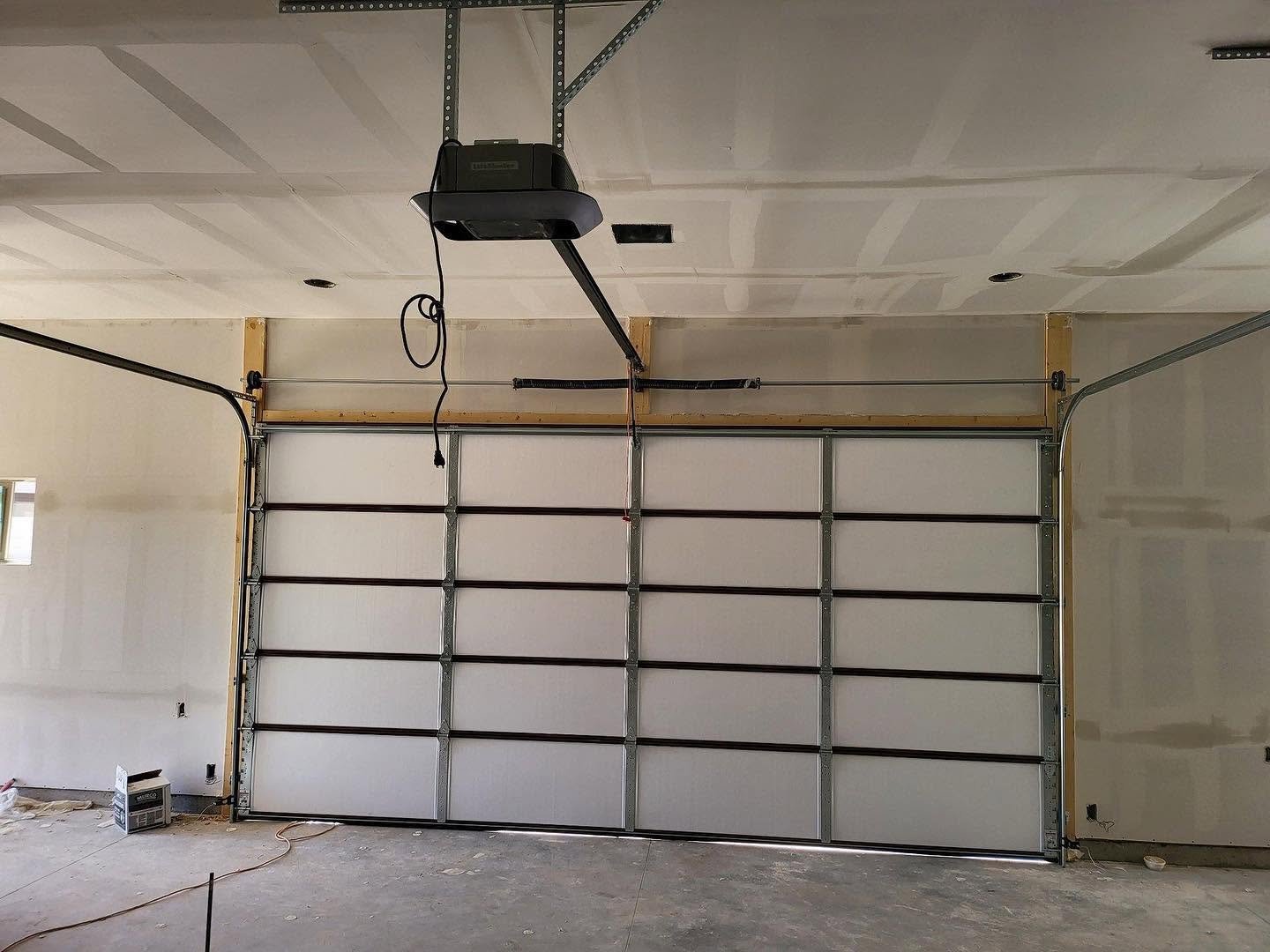

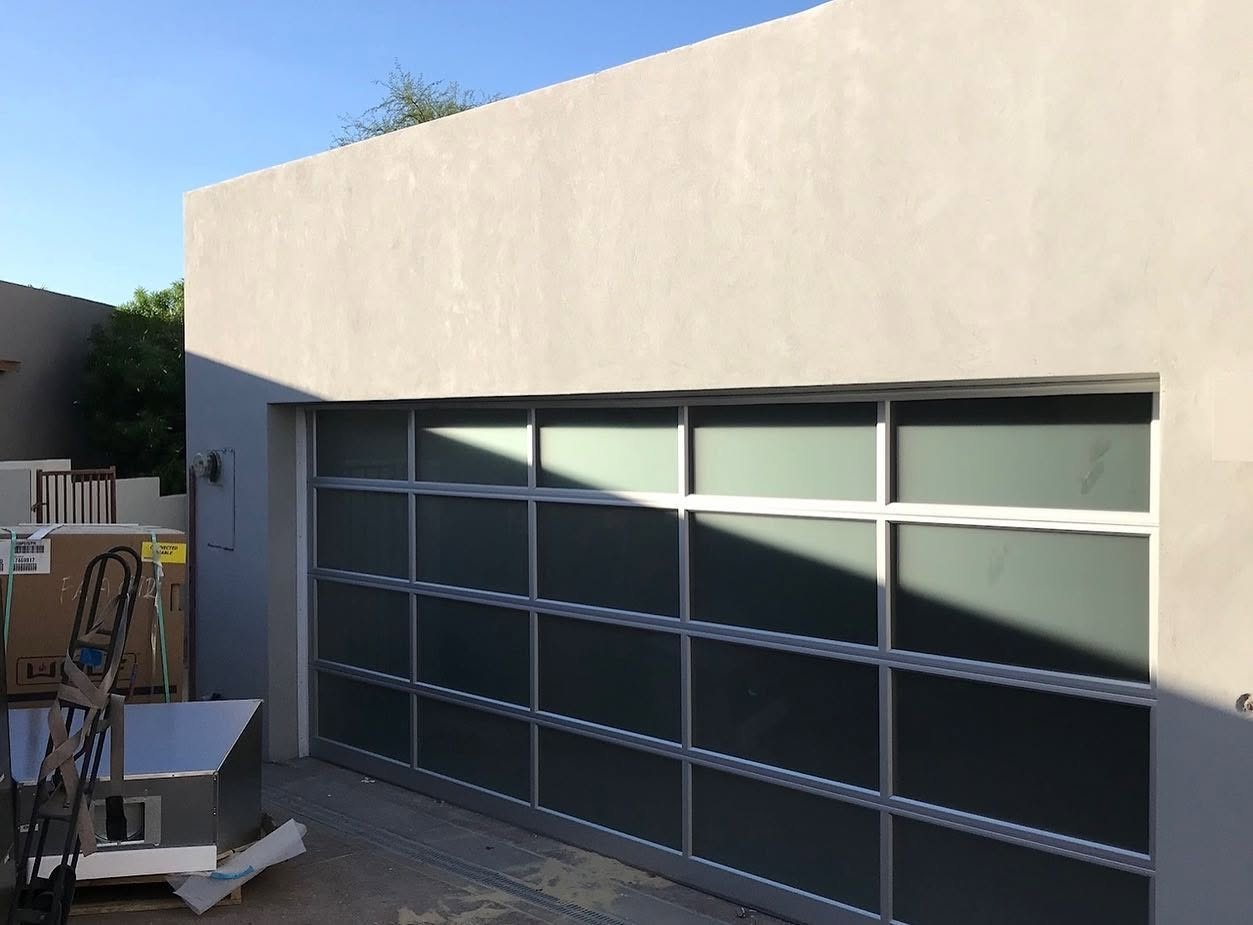
Garage Door Opener Repair in Phoenix, AZ
Garage door opener repair in Phoenix for every brand and age. Read us the model and year from the label, and we can often tell you on the phone whether the part is still made before anyone drives out.
A quote over the phone is free. A service call is $85, which covers a 22-point inspection and the first half hour of labor. After hours and on weekends, it is $250.
- ROC #310144
- Licensed, Bonded & Insured
- Women-Owned Family Business
- 22-Point Inspection
- Google Rated
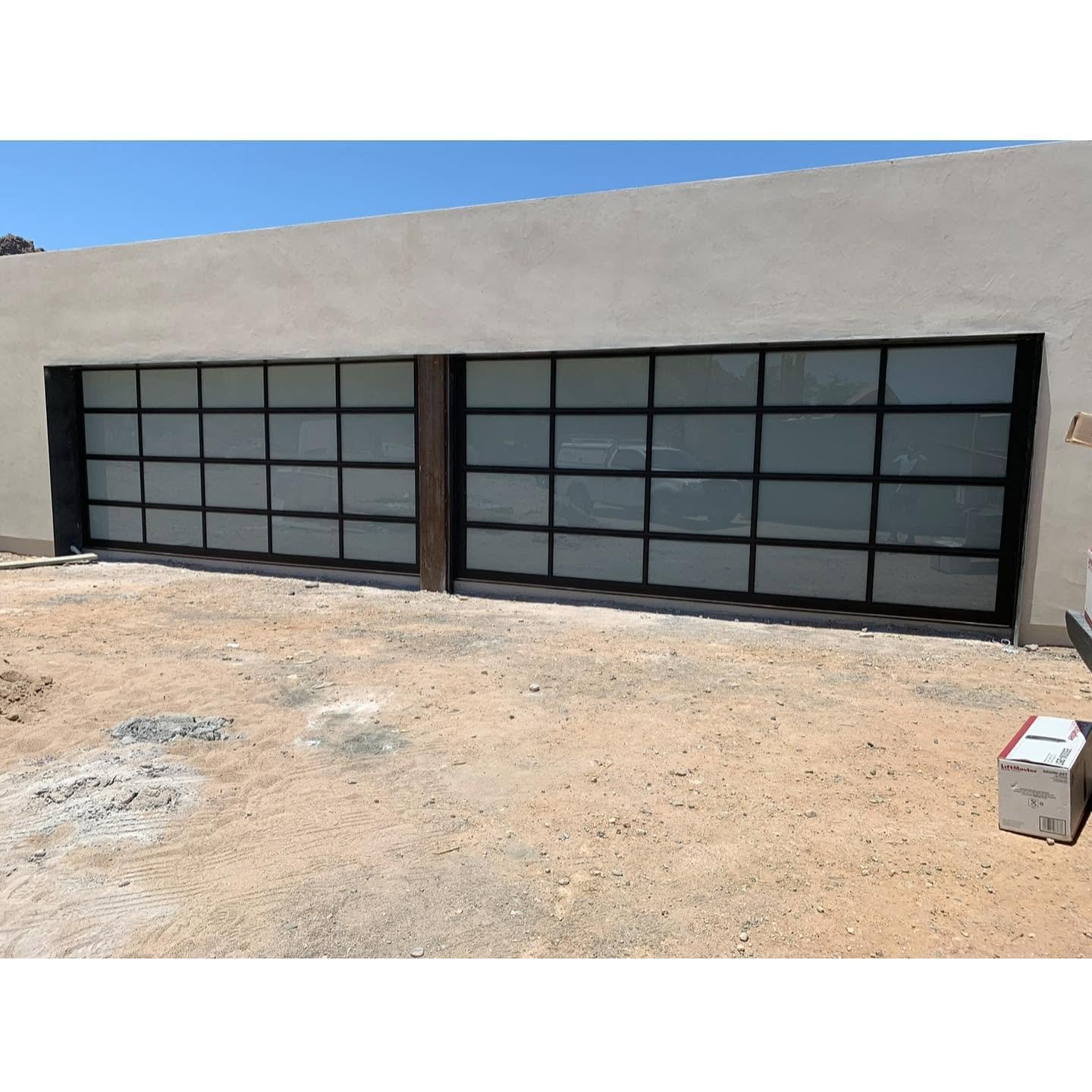
There is one fact about your opener that changes almost every answer we can give you on the phone, and it is printed on the unit. It is the year it was built. Most people have never looked, which is reasonable, because nothing about owning a garage door ever asks you to.
Opener Problems We Fix in Phoenix
Openers that hum but do not move, stripped gears, broken belts or chains, failed logic boards, doors that reverse or stop short, misaligned safety sensors, and remotes or keypads that stopped pairing. Any brand, including openers we did not install.
Why the Date Is the First Useful Fact
When someone describes an opener fault over the phone, the description usually fits several generations of machines at once. "It hums and does not move" has been true of openers built across four decades. So the description narrows the fault a little and narrows the machine not at all.
The build year narrows the machine immediately. It tells us which logic board generation we are dealing with, whether the safety system on it is the original one, which accessories will pair with it, and whether the parts that commonly fail on it are still made.
And it bears on the one boundary we will not move. Federal rules require secondary entrapment protection on residential garage door operators manufactured on or after January 1, 1993, satisfied by a photo eye, an edge sensor, or an equivalent device. The boundary itself is the eyes and not the year, and our Phoenix page sets out exactly where it falls and why a newer opener can end up on the wrong side of it. The date tells you how likely it is that eyes were ever installed.
Phoenix is where that matters most, as our Phoenix page explains. On a stock this mixed, an opener is more likely to be from a generation whose parts have gone out of production, and the build year is the quickest, most honest way to find out whether yours is one of them.
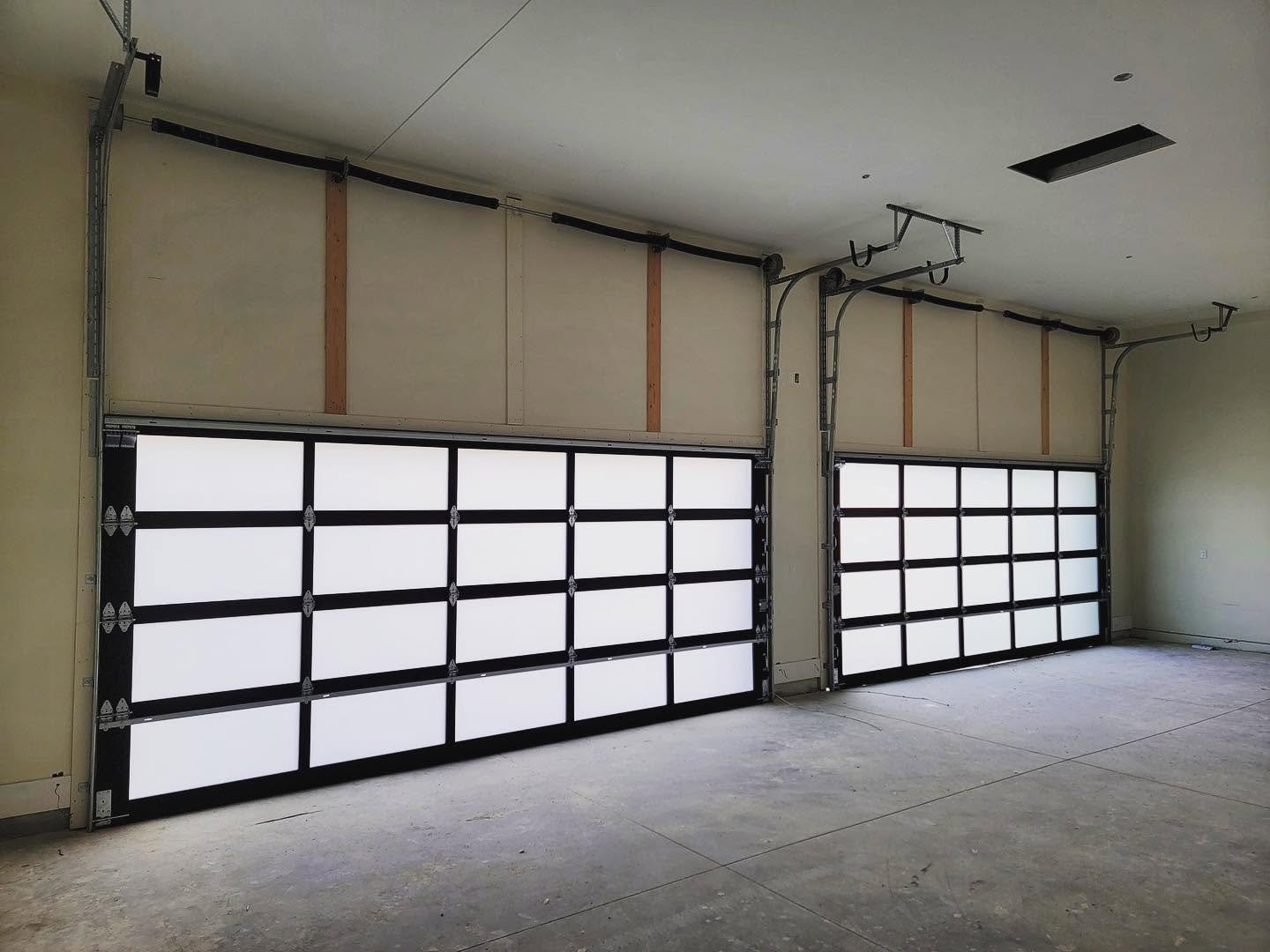 Opener repair in Phoenix, AZ
Where the Date Actually Is
Five places, in the order worth trying. You will need a step stool and a flashlight, and the opener should be unplugged before you put your hands anywhere near it.
1. The label on the side or back of the motor housing. This is the usual answer. Look for a block of small print carrying a model number, a serial number, and, on most makes, a date. On many units the date is printed plainly as a month and year.
2. The serial number itself, where no date is printed. Some manufacturers encode the build date in the serial. Read us the serial and the model number, and we will tell you what we can establish from them.
3. The back of the light lens or inside the lamp cover. On some units, the label sits where it stays legible, which is inside the housing rather than out in the dust on top of it.
4. The logic board, visible once the cover comes off. Boards usually carry their own date, which is often different from the one on the housing. That difference is information, and we explain below what it means.
5. The wall control and the photo eyes. Both carry their own markings. If the eyes are visibly newer than the motor, somebody has worked on the safety system, and we want to know that before we arrive.
A few other things are worth noting while you are up there, because they travel with the date. The model number, which sits beside the serial and identifies the unit precisely. The drive type, which you can see from the ground: a chain, a rubber belt, or a threaded steel screw running the length of the rail. And whether the rail is one piece or sectional tells us something about the era of the installation, even where the housing label has gone. Read those over the phone with the date, and most of what we would otherwise have to establish on arrival is already established.
What the Date Decides
Four things, and they are the four questions people most often want answered on the phone.
Whether the motor is one we can work on. The hard line is the photo eyes, not the date, as we set out above.
Whether the failed part is still made. Logic boards, gear and sprocket kits, carriages and travel-limit assemblies all have production lives. On a unit of a certain age, the honest answer is sometimes that the part exists in the aftermarket and sometimes that it does not, and that answer is available with a date and not without one.
Whether the accessory you want will pair with it. Keypads, extra remotes, battery backup, and app control are all generation-dependent. A remote made for one board generation will not always learn to another, and knowing the generation saves you from buying the wrong thing twice.
Whether the safety system on it is the original. An opener whose eyes and wiring have been changed behaves differently from one that has never been touched, and the date on the board, compared to the date on the housing, usually shows that.
None of those four is pure guesswork once you have the year. That is the whole reason we ask you to go and look: four answers you would otherwise get at the end of a visit are narrowed before it starts, and two of them bear on whether a visit is the right thing to book at all.
What the Date Does Not Tell You
It is a strong first fact, and it is not a diagnosis, so it is worth being clear about its limits.
Use varies more than age does. A 2012 opener on a door cycled four times a day has lived a different life from a 2012 opener on a door cycled twenty times a day, and the label is identical on both.
Repairs leave no mark on the label. A board replaced under warranty, a gear kit installed by a previous owner, a rail swapped after a collision: all of those leave the housing label saying what it always said.
It does not tell you whether the opener is the problem. This is the important limit. An opener that strains, hesitates, or reverses is very often reporting a condition that is not its own, and our Gilbert opener page works through why the door gets assessed first. The date tells us what the machine is. It does not tell us that the machine is at fault.
And it does not tell you whether to repair the unit or replace it. That depends on what has failed, what is available, and what the door in front of it needs, which is a visit rather than a phone call.
Phoenix Opener Repair FAQ
Do you repair openers you did not install?
Yes, any brand. Most of the openers we touch were installed by somebody else.
I cannot see a date anywhere. Does that mean it is very old?
Not necessarily. Labels fade, get painted over, and sit in dust. Send a photograph of the label area and, if you can read it, the model number; that is usually enough.
Is it worth repairing an opener, or should I replace it?
Repair is usually worth it when the part is still made and the unit has not already had several major repairs. The date settles the first half of that, and our opener repair page sets out the rest.
My opener works, but the remote does not. Is that an opener fault?
Often it is neither the opener nor the remote, and programming is a small job. Tell us the model, and we will tell you what pairing it takes.
Is the part for mine still made?
That is the question the date answers soonest. Some generations are still fully supported, some have an aftermarket, and some have neither, and we would rather tell you which one on the phone than order a part and find out. Read us the model and the year.
Can you work on an opener with no photo eyes?
Not the motor. We will still service the door itself completely, and we will quote you a replacement head so the choice is in front of you. Our Phoenix page explains the rule behind it.
Scope on This Job
Ours: the opener head, its rail and trolley, its logic board, its safety circuit and the eyes, its travel and force settings, its programming, and the door hardware that determines whether the opener has a fair job to do.
Outside our scope: all electrical work, including any new outlet or circuit, which is an electrician's job before ours. Locks, handles and rekeying. Jambs, framing, drywall and stucco. Garage screens and window retrofits into an existing door. Mobile and manufactured homes. The motor on an opener with no photo eyes. Home warranty dispatch, which is on hold at present.
There is no minimum job.
What We Do with the Answer
On the visit, the opener comes out of the equation first. The door is released and lifted by hand, and the balance check is part of every visit we make, because an opener's behavior is only meaningful once we know what it has been asked to move.
Then the machine itself: the safety circuit and the eye alignment, the travel and force settings, the rail and trolley, the gear and the board. The date you found tells us which of those is a likely cause and which is a dead end, so the part of the visit you can do in advance is already done when we arrive.
The safety reverse is tested before we leave on every visit, and anything we fit or adjust is written on the estimate with its specification.
What Customers Say
"Service tech handled it and gave us some pointers for future needs."
Where We Work
Garage door repair and service across the Phoenix metro:
- Mesa,
- Gilbert,
- Chandler,
- Tempe,
- Scottsdale,
- Phoenix,
- Queen Creek,
- Apache Junction,
- Glendale,
- Peoria,
- Ahwatukee,
- Fountain Hills and
- Paradise Valley.
Find the date first. It answers half of what we would otherwise ask you.
A quote over the phone is free, and a photograph of the label is the surest way to get a useful answer out of one.