
Garage Door Repair in Phoenix, AZ
Springs, cables, rollers, off-track doors and openers, repaired on any brand across Phoenix. We find the real cause before we replace anything, and the $85 service call includes a 22-point inspection.
- ROC #310144
- Licensed, Bonded & Insured
- Women-Owned Family Business
- 22-Point Inspection
- Google Rated
Something on your door has changed, and you can describe it: it will not close, it is loud, it reverses halfway, the opener sounds like it is working harder than it used to. That description is the right place to start a phone call and the wrong place to start a repair.
The Symptom You Call About Is Usually Downstream of the Fault
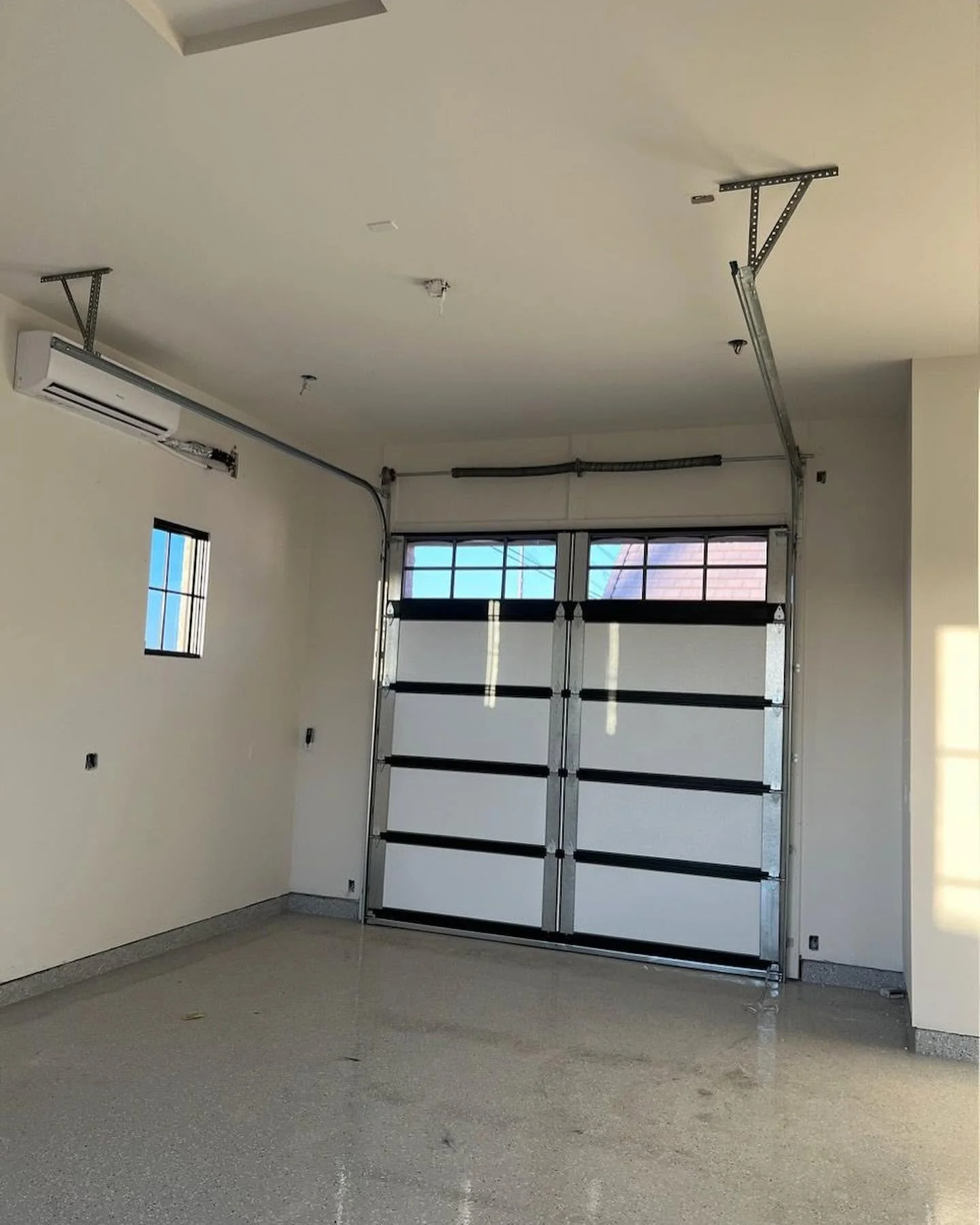
A garage door is a counterbalanced system. The springs carry the weight of the door; the cables and drums transfer that load to the bottom of the door; and the opener moves a load the springs have already taken. Nothing in that chain is independent of the rest.
Our garage door repair page explains what the fault usually is. This page is for the step before that: why the symptom points away from the fault in the first place, and what we do about it during the visit.
A door that will not close is often read as a sensor problem, and sometimes it is. It is also what a door does when the travel limits were set for a door that moved more freely than this one now does.
A loud door gets read as rollers. Rollers do get loud. So does a door that drags on one side because the lift is no longer level, and the noise in that case is a symptom of the load.
An opener that sounds strained is the clearest case of all, and it is the one our Gilbert opener page works through properly: an opener is sized to move a balanced door, so a motor that sounds like it is lifting one is usually reporting the door.
A door sitting unevenly is the one people most often live with. One side higher than the other reads as cosmetic until you understand that the two sides share one counterbalance, so an uneven door is a door whose load is no longer shared. The track and the rollers on the low side are taking the difference.
None of that means your description was wrong. It means a description is evidence, not a diagnosis, and the gap between the two is where money gets spent on the wrong part.
 Garage door repair in Phoenix, AZ
Why the Inspection Is in the Visit and Not an Upgrade
On a Phoenix address, we cannot narrow the door from where you live. Our Phoenix page has the reason. The counterbalance family, the section profile, the track gauge, and the opener generation all have to be read off the door itself.
That is why the 22-point inspection is included in the $85 service call rather than listed alongside it as an optional add-on. On a door we cannot predict, the inspection is not a courtesy we add. It is how we find out what we are working on.
The Order We Work In
Six steps, in this order, on a residential repair call. Our Gilbert opener page sets out the general version of this order of elimination; what follows is the whole-door version, and the order is the point because each step changes what the next one means.
1. The door comes off the opener. We pull the release and take the opener out of the equation before we judge anything, because the opener hides the condition of the door it is moving.
2. We lift the door by hand. A correctly counterbalanced door moves with moderate effort and stays under control throughout its entire travel. The useful information is where in that travel it changes: a door that is heavy at the floor and light at the top describes its spring tension, and a door that binds at one point in the track describes something else entirely.
3. The balance test. We set the door at waist height and let go. A balanced door holds roughly where it is put. A door that drops is telling us the springs no longer match it; a door that climbs is telling us the opposite. We do this on every visit, including the ones booked for something completely different.
4. The counterbalance itself. Springs, cones, the shaft, the drums, the cables, and the bearing plates read as one assembly, not six parts. A cable that is fraying at the drum and a spring that is tired are frequently the same story.
5. Then the hardware the door runs on. Rollers, hinges, track alignment, the bottom seal, the struts if it has them, the lift points at the bottom brackets.
6. The opener last, and the safety circuit with it. Photo eyes and their alignment, travel and force settings, the manual release, and the safety reverse. The reverse is tested before we leave on every visit because it is the one function on the door whose failure has consequences beyond the door.
By step three, we usually know whether this is a counterbalance job or a hardware job.
What Working in That Order Catches
Three things, consistently, and all three are things a symptom-first visit can miss.
A fix that would not have lasted. Replacing a worn roller on a door that is dragging will quiet it for a while. The drag is still there, so the new roller wears the way the old one did.
A second fault sitting behind the first. A door that has been running out of balance has been loading everything downstream of the springs, so the cable, the drum set screws, and the opener's gear have all been working harder than they were designed to. Finding that at step four is a different conversation from finding it on a second visit.
A part that did not need replacing. This runs the other way, and it is the one worth saying out loud. A door that reverses at the floor is often read as a failing opener. Sometimes the travel limit has simply drifted, and the door is reaching the floor sooner than the opener expects. That is an adjustment, and an adjustment is what goes on the estimate.
One thing we ask of you, and it helps more than people expect. Tell the technician what the door was doing before it started doing this. A door that got gradually louder over a year is a different story from one that changed character in a week, and you are the only person who holds that information. We will ask. It is worth thinking about before we get there.
Phoenix Garage Door Repair FAQ
Do you work on doors and openers you did not install?
Yes, and it is worth saying what that means in practice: we will not have your original paperwork, so the first visit establishes what is on the door before it establishes what is wrong with it.
Is the 22-point inspection an extra I have to ask for?
No. The $85 service call covers the inspection and the first half hour of labor. It is the method the visit runs on, so there is nothing to add on.
Does the $85 still apply if I decline the repair?
Yes. It covers the visit and the inspection, and it is not credited against a repair you go ahead with. Our what to expect page has each fee written out.
My door only does it sometimes. Is it worth having someone out?
An intermittent fault is usually a clue because the conditions that cause it are often the diagnosis. Tell us what it does and when, and we will tell you on the phone whether it sounds like something we can establish on a visit.
Can you tell me what it will be before you come?
We can usually narrow it to a family of causes over the phone, and a phone quote is free. We will not name the part, because a description cannot settle which one it is.
My neighbor had the same symptom, and it was the sensors. Is mine the same?
Possibly, and it is worth saying anyway because it is useful evidence. On most streets that inference is reasonable. On a Phoenix street it is weaker than it looks, because the two doors may be decades apart and two counterbalance families apart.
My door is from the 1970s. Can you still get parts for it?
Usually, yes. When a part has gone out of production, we will tell you during the visit rather than order something and hope it fits. We also work on one-piece tilt-up doors and extension springs. The limit that matters is an opener with no photo eyes, and our Phoenix page explains where that line falls.
Scope on This Job
Ours: the door, its track, its counterbalance, its hardware, its safety circuit, and the opener.
Outside our scope: locks, handles, and rekeying, which are locksmiths' jobs. A new outlet or circuit for an opener, which is an electrician's job before ours. Jambs, framing, drywall and stucco, where the door is ours, and the building around it is not. Garage screens and window retrofits into an existing door. Mobile and manufactured homes. The motor on an opener with no photo eyes. Home warranty dispatch, which is on hold at present.
There is no minimum job.
What Customers Say
"He was extremely though and made sure everything was perfect before he left. Very respectful of our garage space and all the stuff inside."
Where We Work
Garage door repair and service across the Phoenix metro:
- Mesa,
- Gilbert,
- Chandler,
- Tempe,
- Scottsdale,
- Phoenix,
- Queen Creek,
- Apache Junction,
- Glendale,
- Peoria,
- Ahwatukee,
- Fountain Hills and
- Paradise Valley.
Tell Us What Your Door Is Doing, and We Will Tell You What the Visit Needs
A quote over the phone is free, and the service call includes the inspection.