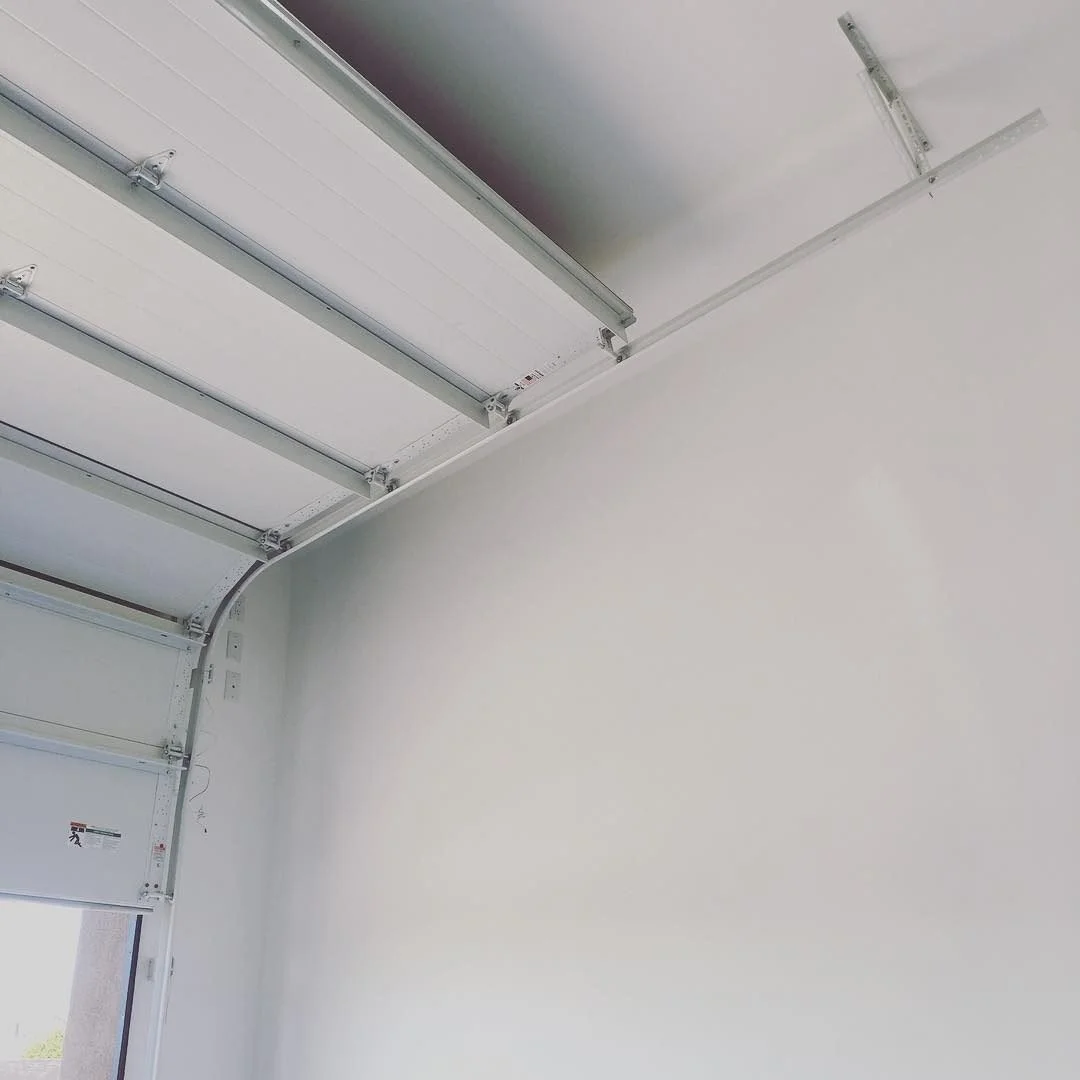


Noisy Garage Door Repair in Phoenix, AZ
Grinding, squealing, rattling or scraping? We find the real cause in order (opener, balance, lubrication, then hardware) so your Phoenix garage door stays quiet instead of going quiet for a few weeks.
A phone quote is free. A service call on a failed door is $85, covering the 22-point inspection and the first half hour of labor. After hours and weekends, $250. A visit to look and quote, $35.
- ROC #310144
- Licensed, Bonded & Insured
- Women-Owned Family Business
- 22-Point Inspection
- Google Rated
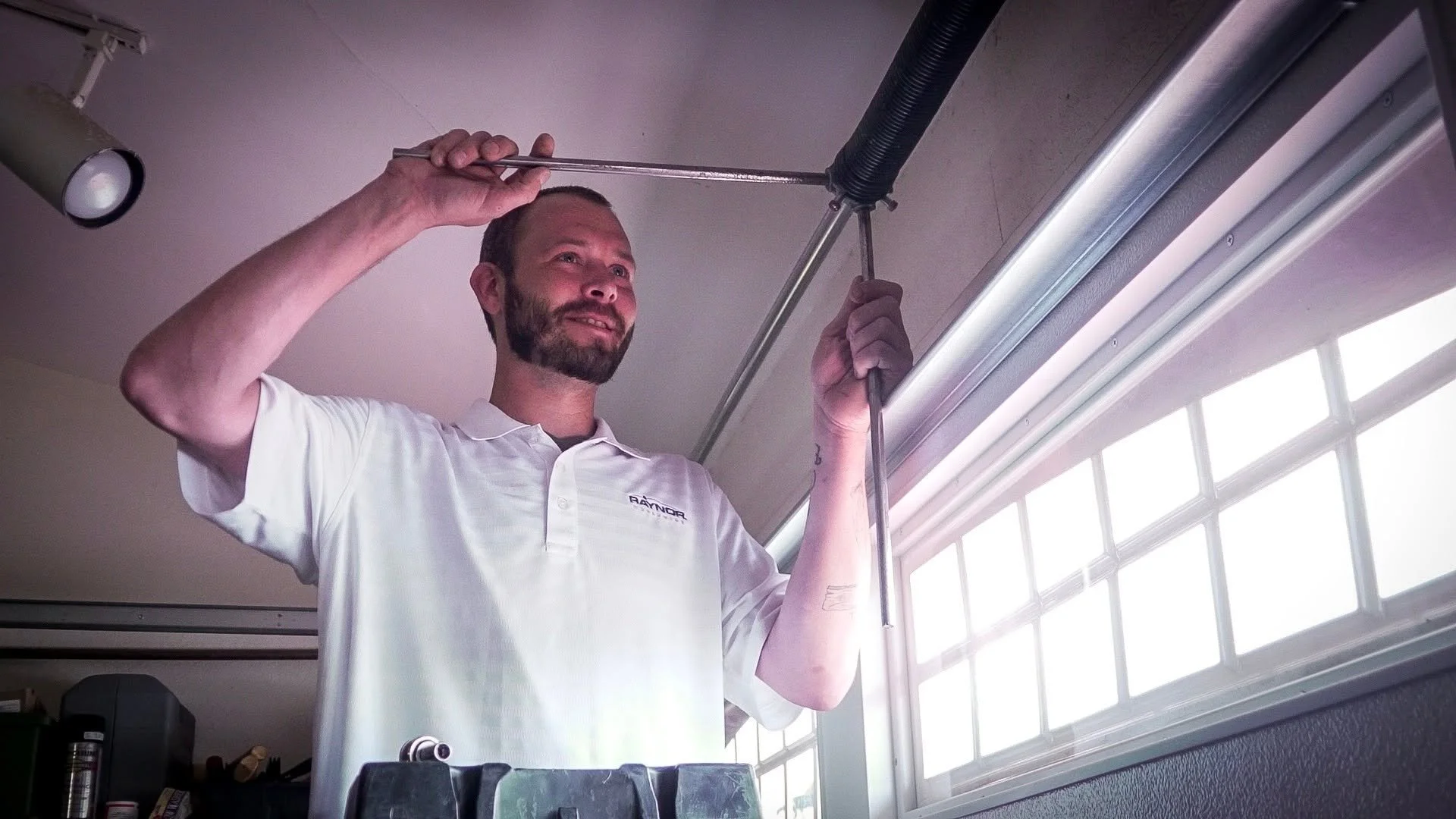
A loud garage door has a short list of causes. What turns one visit into three is the order they get ruled out in: the quickest thing to reach for is not the likeliest to be wrong, and a fix applied out of order can quiet a door without touching what made it loud.
One noise is different, and it belongs first. A single loud bang, like a gunshot, and the door is heavy afterward. That is a spring. Stop using the door.
The Short List
This is the full list of factors that make a sectional door loud. It is shorter than the list of sounds people describe.
Steel rollers running metal on metal in a steel track, and a roller bearing that has stopped turning, so the wheel slides instead of rolling.
Dry hinges, fourteen to twenty on a sectional door, each one a pivot under load.
Loose hardware: hinge bolts, roller brackets, track lag bolts.
The shaft bearings carrying the torsion bar. A dry one chirps at start-up, then grinds.
A dry or dirty track, since grit in the channel is abrasive, and the rollers push through it.
The panels, since a single-layer steel section is a thin sheet with air behind it and amplifies the hardware.
The door being out of balance, which is not a noise. It makes everything above it work harder, and harder is louder.
Nothing on that list announces itself, several items produce nearly the same grind, and the last one changes what the others mean.
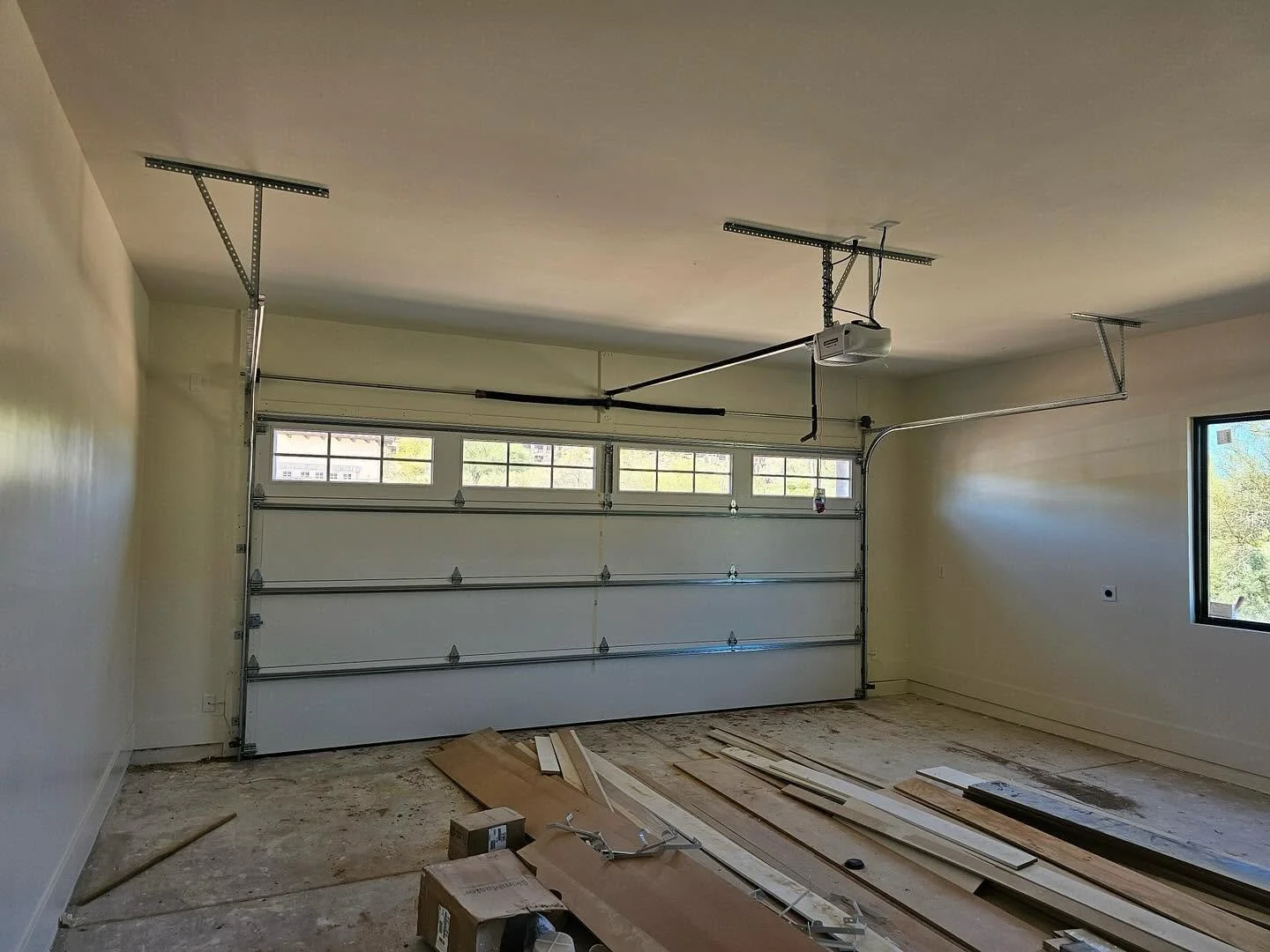 Noisy door repair in Phoenix, AZ
Why the Easiest Check Does Not Go First
The three-visit version of this job is familiar. Somebody sprays the door, and it goes quiet for a few weeks. Then the loudest-looking part gets replaced, which helps, but it does not finish it. Then somebody checks the balance, which was carrying the whole thing. That is the order of convenience: at each stage, the easiest thing available is what gets done.
The order that works is set by information. A step earns an early place when its answer rules out whole branches. Lubricating is the easiest thing on the list and eliminates almost nothing: a door quiet after a spray may be a dry door repaired or a worn door muffled, and on the day, you cannot tell which. Taking the opener out of the picture removes a whole machine and costs nothing.
On a Phoenix call, that matters, because the door in front of us may be running either counterbalance family and either generation of hardware, so the sequence gets run and not guessed from the street.
The Order We Rule Them Out In
Five steps. The first two are yours and they take five minutes.
Step one: separate the door from the opener. With the door closed, unplug the opener, pull the emergency release cord, then raise and lower the door by hand and listen. Noise still there belongs to the door. Noise that disappeared belongs to the opener and its rail: a chain slapping, a worn trolley, a dry rail, a failing gearbox. Never pull the release with the door open, because if the counterbalance has failed, the trolley may be the only thing holding it up. Re-engage with the door closed.
Step two: read the balance while your hands are on the door. A counterbalanced door lifts with moderate effort and holds roughly where you leave it, three or four feet up. Chamberlain's guidance allows a slow, gentle drift, and what fails is a door that slams shut, shoots up, or has to be fought. Check this second, because a door out of balance overloads every part below the springs, so a worn roller found later may be a result of the bad balance rather than the cause of the noise. Chamberlain and LiftMaster also state that an unbalanced door may not reverse when it should. The balance check happens on every visit.
Step three: lubricate correctly, and treat it as a test. Clopay's published spec is silicone or white lithium grease on hinges, springs and bearing plates, nothing on nylon rollers, nothing in the track, since lubricant in the channel makes the rollers harder to move, and no WD-40. Done that way, the result is evidence: a pivot that goes quiet and stays quiet was dry, one that comes back in weeks was worn. A dry hinge squeaks; a worn one clicks, its pin hole gone oval. Clopay's interval is three to six months, and in dusty conditions, lubricant may not last as long and may need to be reapplied more frequently, so in Phoenix dust, a door lubricated last spring probably needs it again now.
Step four: now read the sound. The split that pays is when, during the travel, you hear it. Once per cycle at the same point is geometry: a bent track, a panel catching, debris in the channel. A noise running the length of the travel is a part doing it continuously. Then character narrows it: a squeal is a dry pivot, a grind is metal on metal, a rattle near the top of travel is fasteners, and a pop is a section flexing at the hinges, usually behind a loose strut.
Step five: tighten and align last, in that order. A door that cycles four times a day runs around 1,500 cycles a year, and hinge bolts, roller brackets, and track lag bolts back out under that. Snugging them takes 10 minutes, and it goes last because a lag bolt that has let the track drift is not fixed by re-torquing it to where it drifted. Then the door goes back on the opener and the safety reverse is tested before we leave.
What Customers Say
"Called up Quality garage door because my unit was sounding ragged. … changed my rollers and lubed up all the moving parts. My garage door sounds better than ever now."
The Squeak, and the Bang
A squeak from a spring is usually normal, and the industry body says so. DASMA's wording is that springs can squeak and be noisy, that this comes from normal use, and that it does not necessarily indicate a problem. Coils move against each other, and white lithium grease quiets the squeak. There is one real noise fault in the counterbalance, which DASMA attributes to the spring's winding and to side-to-side shaft movement. Nobody diagnoses that from the driveway.
What is genuinely urgent is the bang, and the door that got heavy with it. A door that changed character in a week is reporting that something broke or moved, which is the call to make sooner.
Rollers, and the Number We Will Not Give You
Swapping steel rollers for sealed-bearing nylon rollers is one of the most noticeable upgrades on a loud door, because nylon runs quietly on a steel track. How much quieter depends on your door.
Ball count is a load rating and not a noise grade, which our noisy door repair page settles against the trade's own published engineering. Ask for nylon, a sealed bearing, and the right stem length.
Scope on This Job
Ours: rollers, hinges, bearings, track, struts, fasteners and springs, the opener and its rail, the balance check and the safety reverse test, on any brand or age, including doors we did not install.
Outside our scope: locks, handles and rekeying. Any new outlet or circuit is an electrician's job before ours. Jambs, framing, drywall and stucco. Garage screens and window retrofits. Mobile and manufactured homes. The motor on an opener with no photo eyes. Home warranty dispatch, on hold at present.
There is no minimum job. If we get it wrong, we make it right. Ninety days on our labor, and every manufacturer's parts warranty honored.
Phoenix Noisy Door FAQ
Can I just spray it and see what happens?
Yes, if it is the right spray in the right places: silicone or white lithium on hinges, springs and bearings, nothing on nylon rollers, nothing in the track. Then note what went quiet and whether it comes back.
Is a noisy garage door dangerous?
Noise by itself is usually wear, though grinding, scraping and clicking mean parts are wearing against each other. We will not tell you a door we have not seen is safe. The ones to stop for are the bang, a door gone heavy, and a visibly damaged cable or spring.
It went quiet after the last visit and came back a month later. Why?
Usually because lubrication was the whole of the fix, and something mechanical sat underneath it: often a worn hinge or a balance that had drifted. How long the quiet lasted is a diagnosis in itself.
The noise only happens at one spot near the top. Is that serious?
Usually geometry and not a worn part: the track, a section catching, debris in the channel. It gets worse as hardware loosens.
My door is from the 1970s and so is the opener. Can you work on it?
We work on one-piece tilt-up doors, extension springs and openers others installed, so age is rarely the obstacle. The firm limit on older Phoenix stock is an opener with no photo eyes: we service the door and do not touch that motor. Our Phoenix page says where the line falls.
Where We Work
Garage door repair and service across the Phoenix metro:
- Mesa,
- Gilbert,
- Chandler,
- Tempe,
- Scottsdale,
- Phoenix,
- Queen Creek,
- Apache Junction,
- Glendale,
- Peoria,
- Ahwatukee,
- Fountain Hills and
- Paradise Valley.
Tell us what you hear and where in the travel you hear it.
Those two answers, plus whether the sound survived the by-hand run, shape the visit before anybody drives out. A phone quote is free, and a visit to look first is $35.