
Garage Door Tune-Up in Tempe, AZ
A 22-point tune-up on any brand and any age of door, including doors with replacement parts from other makers. We give you the tune-up price on the phone, free, before anyone is dispatched.
A quote over the phone is free. A service call on a door that has failed is $85, and that fee carries the 22-point inspection plus the first half hour of labor. After hours and on weekends, it is $250; a quote-only visit is $35.
- ROC #310144
- Licensed, Bonded & Insured
- Women-Owned Family Business
- 90-Day Labor Warranty
- Google Rated
A tune-up catches worn springs, frayed cables and loose hardware before they strand your car, and it stops the opener working harder than it should. On an older Tempe door with parts from several repairs, we also check that each part belongs where it is.
If your Tempe door has had work done on it more than once, and by more than one pair of hands, that is the visit you are booking. Our Tempe emergency page states the premise: on a forty-year-old door, this is rarely the first repair.
What a Checklist Assumes Before It Starts
Our owner wrote the 22-point list, and it runs in order: the door, the counterbalance, the seals, the opener, and the safety tests last. Read it closely, and several points assume something about the door.
Point two, hinges. On a sectional door the hinges carry numbers saying where they belong, and a graduated hinge installed in the wrong position is a genuine fault and not a cosmetic one. The check assumes there are numbers to read. A hinge from another maker may carry no number, or a number from a different scheme, and then point two is settled only by reading the sequence up the whole door to find where it breaks.
Points eight and nine, the counterbalance. Point eight reads each spring on its own, for wear, rust, and pitting. Point nine reads: with the opener released, the door is raised by hand and should travel freely, stay where it is put, and not take off in either direction. On an original matched pair the two agree. Where the springs went on at different times, they can disagree, and point nine decides.
Point twelve, the lift cables. Her wording for it is already a comparison: "fraying, kinking, and how evenly the two sides are carrying." One cable says little on its own. Two read against each other say what the door has been doing.
Point six, the brackets. Every fastener present and tight. "Present" is a count, and a count needs a number to count against.
The list does not change on a door with a history. What changes is how many points can only be answered by comparing one part of that door against another.
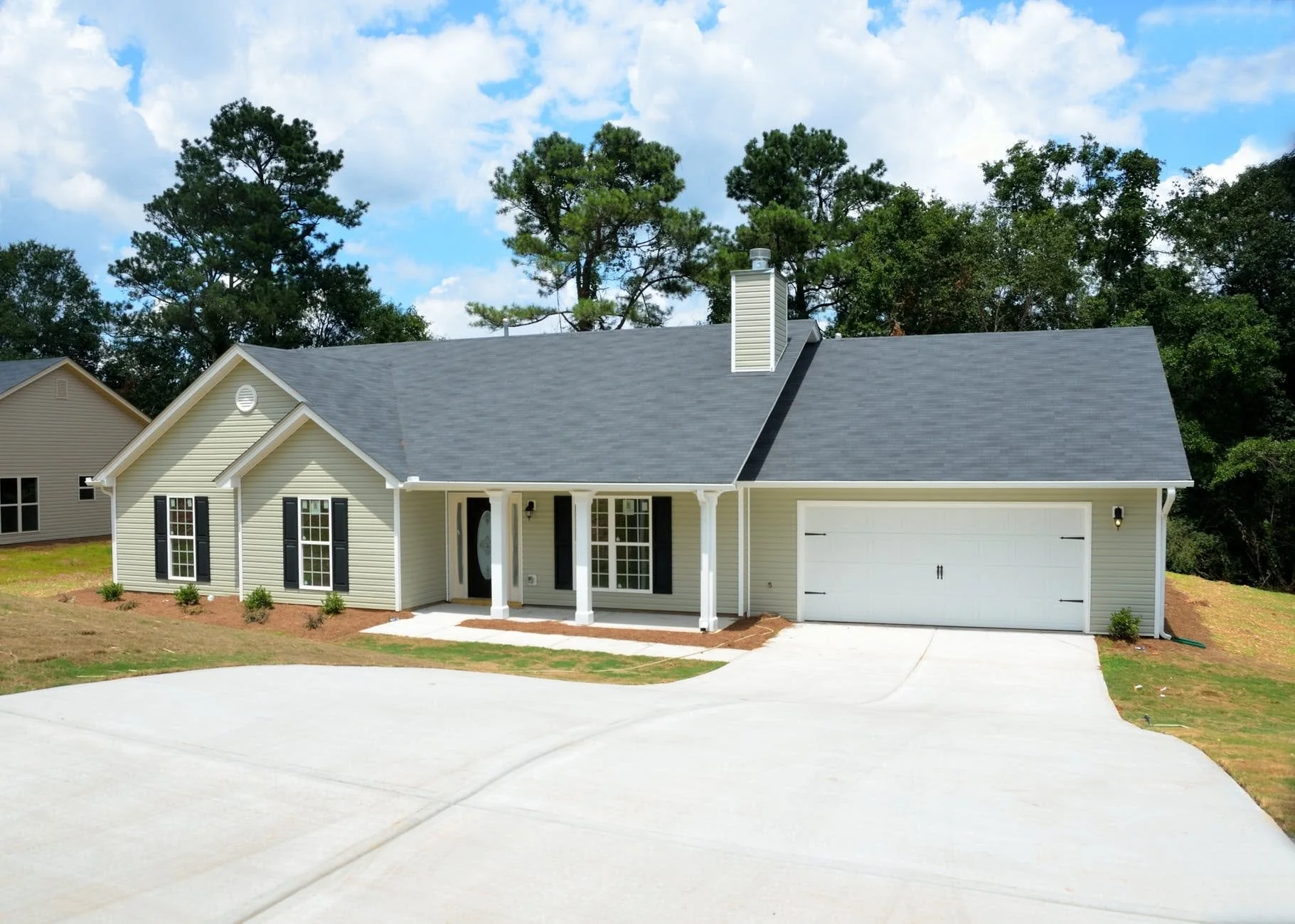 Garage door tune-up in Tempe, AZ
Reading the Door Against Itself
On a door with its original hardware, the reference for nearly every point is the door's own design. Where the hardware arrived from several places over several decades, that reference has to be built out of the door in front of us. Three comparisons carry it, and one setting gets checked last.
Side against side. Springs, cables, drums, vertical tracks, bottom and top fixtures: the door has two of each, and they went on as a pair. Where one side has been replaced, and the other has not, the difference between them is the useful fact of the visit, and looking at one side hides it.
Section against section. On a sectional door the hinges, rollers, end stiles and the section profile run up the door in a sequence, and a sequence that changes partway up is a date and a rough map of where somebody worked. A roller spec that is one thing on the bottom two sections and another above them is the plainest case, and it is why point three gets read roller by roller.
The label, which may not be the door's. Where there is a manufacturer label, it sits inside an end stile or on the back of a section. Our Tempe page sets out what identifying the door decides about parts. The narrower caution: on a door that has had a section swapped, the label may have arrived with the section and not with the door, so it gets checked against the hardware and the profile first.
Point nineteen catches up last. Opener force and travel limits get set so the door reaches both ends of its travel and sits down on the floor with no gap and no straining, against the door as it stood that day. A section replaced since, a strut added or an insulation kit installed each changes what the opener pulls, so the point checks a setting against a door that may have moved on.
Tempe Tune-Up FAQ
My door has been worked on a few times. Is a tune-up still the right visit?
Yes. It is the visit that establishes what is actually on there. The points are worked the same way on any door; more are answered by comparison, and fewer at a glance.
Can you tell me over the phone what is on the door?
No. A quote over the phone is free, and you are welcome to one, but naming the hardware on a door nobody has looked at is different, and nobody can do that from a phone call.
My garage door is one rigid panel that swings out. Does the list still apply?
Much of it. A one-piece tilt-up has no sections hinged together, so the points written for sections, hinges, and a torsion shaft either do not apply or land on the pivoting hardware. The counterbalance, the seals, the opener points and both safety tests do. What we service on these doors is on our Tempe page.
The opener has no photo eyes. Will you still look at the door?
We inspect and service the door itself, counterbalance, track, hardware and seals included. The head of an opener with no photo eyes is the one thing we do not touch, and our Tempe page explains why.
Will you work on a door carrying parts from more than one manufacturer?
Yes. Any brand, any age, and any mix, including doors and parts we did not fit. The mix is something to read and no reason to decline the visit.
How do I know the twenty-two points were worked?
They are numbered and published in full on our tune-up page before you book, so the list is checkable against the visit. On a mixed door, the parts worth reading are the comparisons: which side, which section, which part is the odd one.
The Two Checks That Do Not Ask Where the Part Came From
Twenty of the twenty-two points read a part. Two read the door as a whole, and those two are what a mixed door cannot hide from.
Every visit includes the balance check, whatever it was booked for. It runs with the opener out of the picture, and it does not have to establish whose spring is on there, because what it reads is the door as assembled rather than the parts list behind it.
Nobody leaves before the safety reverse has been tested. It asks the opener how it behaves against the door it is actually driving, which by then is the only version that counts.
Everything else produces a finding, and on a door that has been worked on before, a finding is usually a comparison with a date on it.
What Customers Say
What Gets Quoted, and Where We Stop
The inspection and anything it turns up are two separate numbers. Three visit fees are published on this site and each carries a condition.
The $85, and its condition is a door that has failed. It covers the twenty-two points and the first half hour of labor, which means that, on a failed door, the inspection is already included in the fee.
The $35 buys a technician's trip out to look and quote, with no work on that visit.
The $250 takes the place of the $85 after hours and on weekends.
A door that is still working has not failed, so the price of a tune-up is not one of those three. A quote over the phone is free, and you are told the figure before dispatch.
Anything the list turns up is quoted separately, written and emailed before work starts, so you have the number before the work happens. We carry the common parts. A part for a door, changed piece by piece, is sometimes a special order and carries a 50% deposit. There is no minimum job, and the labor warranty is ninety days.
Where we stop: locks and rekeying; new outlets and circuits, an electrician's job before ours; jambs, framing, drywall and stucco; screens and window retrofits; mobile and manufactured homes; the motor on an opener with no photo eyes; home warranty dispatch, on hold.
Where We Work
Garage door repair and service across the Phoenix metro:
- Mesa,
- Gilbert,
- Chandler,
- Tempe,
- Scottsdale,
- Phoenix,
- Queen Creek,
- Apache Junction,
- Glendale,
- Peoria,
- Ahwatukee,
- Fountain Hills and
- Paradise Valley.
If somebody worked on this door before you owned it, this is the visit that reads it.
The door is the thing we read, and it does not need you to remember anything. If the answer is a part and not an adjustment, the number reaches you in writing first.