
Garage Door Remote & Keypad Programming in Phoenix, AZ
A phone quote is free. A service call for an opener that has failed is $85, covering the 22-point inspection and the first half hour of labor, and $250 after hours or on weekends.
- ROC #310144
- Licensed, Bonded & Insured
- Women-Owned Family Business
- 22-Point Inspection
- Google Rated
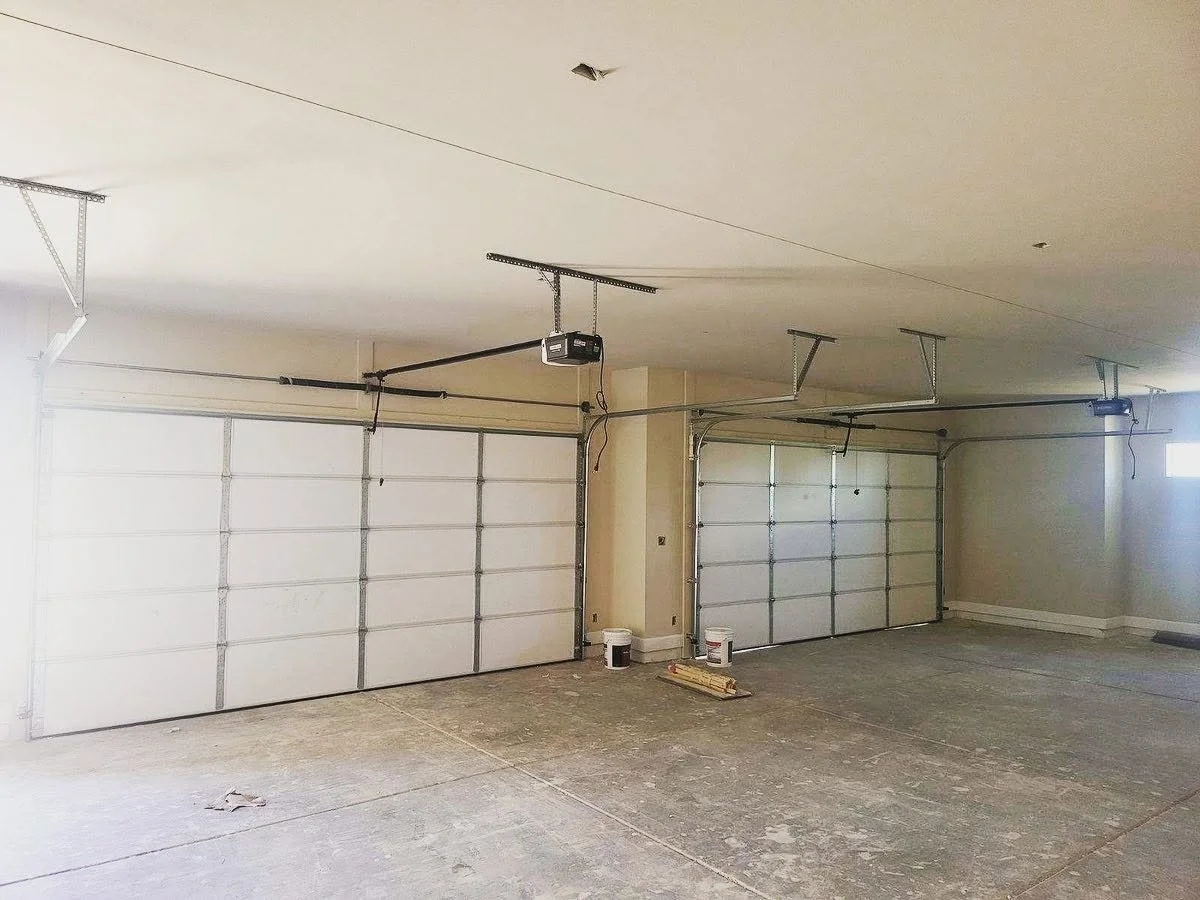
A remote that will not program gets treated as a programming problem. It is a matching problem first. Your transmitter and the receiver in the motor head each belong to a radio generation, and where those differ, no sequence of button presses will put them together.
So, the first question is what radio is in the head.
Tell us the learn button color and we'll tell you on the phone which remote or keypad will pair. On a visit, the technician programs your remotes, keypad and wall control, and tests the safety reverse before leaving.
Start With the Opener, Not the Remote
Two houses on the same Phoenix street can have openers from different decades, so the only way to know which remote will work is to read the opener itself. The learn button color usually tells us in seconds.
 Remote & keypad programming in Phoenix, AZ
The Four Answers a Compatibility Check Can Give
Once the generation is identified, the answer falls into one of four categories. Two of them are not a part at all.
Genuine accessories are still made for it. The manufacturer lists current remotes and keypads for that generation, and the job is programming, as everybody assumed.
A universal accessory is the only thing that will pair with it. Several generations are marked as discontinued, with universal remotes as the only remaining option. The part is no longer the brand's own.
Nothing will pair with it. Some rows list no replacement accessory at all and mark the technology as no longer supported. There is no remote to buy and no sequence to try.
The head itself is what the question has become. An opener can run perfectly well and still have no route to a new transmitter because a machine's mechanical side and its radio side are produced separately.
What a Radio Generation Is, in the Manufacturer's Own Table
Two published ways exist to match a transmitter to a receiver. The oldest residential systems carry a row of small switches in the transmitter and a matching arrangement at the receiver, and Linear states the consequence for its switch formats: a replacement has to be the same format with its switches set the same way. Everything with a learn button works the other way. In Linear's account of its MegaCode format, receivers and transmitters contain no coding switch; each transmitter is preset at the factory to a unique code, and the receiver is programmed by a signal sent to it from the transmitters it will use.
Chamberlain publishes an identification table covering Chamberlain, LiftMaster, and Craftsman residential openers, and for those three, the color of the learn button indicates the generation. Its technology, frequency, and accessory columns:
| Learn button | Antenna | Technology | Frequency | Replacement accessories |
|---|---|---|---|---|
| Gray, white or square yellow | Gray | DIP switch | No longer supported | None |
| Green | Gray | Billion Code | 390 MHz | Universal only |
| Red or orange | Gray | Security+ rolling code | 390 MHz | Universal only |
| Blue | Gray | Security+ rolling code | 433 MHz | None |
| Purple or brown | Purple | Security+ rolling code | 315 MHz | Universal only |
| Yellow (round) | Yellow | Security+ 2.0 | 310, 315 and 390 MHz | Genuine and universal both available |
| White (round) | White | Security+ 3.0 | 315 MHz plus Bluetooth | Security+ 3.0 accessories only |
Colors fade, and Chamberlain says which. Purple may appear brown and red may appear orange. Where a cap has faded past reading, the part number confirms the frequency.
Its year-of-manufacture column is left out here. Dating an opener is a separate question, and garage door opener repair in Phoenix has the method.
What Customers Say
"A++++ company and Lou the technician was awesome"
What Overrides the Brand on the Cover
A box bolted to the opener or wired into it, carrying its own model number. Where one is there, that receiver governs which remotes will work, and the opener does not. Linear names its external receiver families with model numbers beginning MDR, MGR, RE, AP or AE. That check can reverse the answer, because a head with no accessory route may sit under a receiver that has one.
And the brand name, because one brand can span several incompatible radios. A remote that never worked at all is a generation question before it is anything else. Linear publishes five formats and no compatibility chart: MegaCode at 318 MHz and learn-based, Multi-Code and Stanley Compatible at ten switches each, Delta3 at eight switches and 310 MHz, and LPA PRO at nine three-position switches and 318 MHz for open, close, and stop. It publishes no model-to-remote cross-reference, which is why the switch-or-learn test is the route to an answer there.
An unfamiliar name on the cover is not a dead end. Chamberlain publishes a supported-brands list naming Access Master, Do-It, Master Mechanic, Moore-O-Matic and Raynor among others.
Where we stand. We are a LiftMaster dealer, one of only two manufacturer relationships we hold, and we service any opener of any age, including brands we do not sell. We are not a Linear, Nice, or ProControl dealer.
Keypads Are a Separate Compatibility Question
A keypad is a transmitter too, so the generation decides it the same way. Three things make it its own question.
Keypad and remote listings do not always share a scope. Chamberlain's Craftsman material is the published example: its brand remotes and keypads are listed for Craftsman openers manufactured after 1997, and its universal remote, universal keypad, and video keypad after 1993.
Some models are published as excluded by name. On the same material, the Craftsman Series 100 and the R-200.57933 are listed as incompatible with LiftMaster or Chamberlain keypads and remote controls. A named exclusion beats a guess, so the model gets read first.
And the switch-or-learn fork turns up elsewhere. Genie publishes a separate instruction set for fixed-code openers alongside its ordinary one.
Everything else about a keypad is on the programming side, and our valley-wide remote and keypad programming page covers it: batteries, mounting requirements, PIN behavior, and the mistake that erases an opener's memory.
Phoenix Remote and Keypad FAQ
Will this replacement remote work with my opener?
Two things: the radio generation, and whether a separate receiver is in the circuit. Read us the color of the learn button or the antenna wire, plus the model number if you have it, and we will tell you what the table says.
My remote has little switches in the back. What does that mean?
Switches mean one of the older switch-set formats, so a replacement must match both the format and the settings. No switches and a learn button mean the learn-based kind, where the code is factory-fixed, and the receiver gets taught it.
Why will a remote with my brand on the box not program?
A brand name covers several incompatible radio generations, so a box that is right about the brand says nothing about the generation. The color settles it.
What does it cost to have remotes and a keypad programmed in Phoenix?
A phone quote is free. A service call is $85, covering the 22-point inspection and the first half hour of labor, and $250 after hours or on a weekend. A first-look visit is $35, and a special-order part requires a 50% deposit.
Can you program a remote to an opener with no photo eyes?
No. The motor on an opener with no photo eyes is outside our scope, and teaching a transmitter to it is motor work. We will service the door in full and provide a quote for a replacement head. Our Phoenix page has the rule.
Scope on This Job
Ours: identifying the radio generation on the head and on any separate receiver; programming remotes, keypads, and the wall control to it; the travel and force settings where the work touches them; the balance check that happens on every visit we make; and the safety reverse test before we leave. Any brand, any age, including machines we did not install.
Outside our scope: all electrical work, including a new outlet or circuit, which is an electrician's job before ours. Locks, handles, and rekeying. Jambs, framing, drywall and stucco. Garage screens and window retrofits. Mobile and manufactured homes. The motor on an opener with no photo eyes. Home warranty dispatch, on hold at present.
There is no minimum job.
Where We Work
Garage door repair and service across the Phoenix metro:
- Mesa,
- Gilbert,
- Chandler,
- Tempe,
- Scottsdale,
- Phoenix,
- Queen Creek,
- Apache Junction,
- Glendale,
- Peoria,
- Ahwatukee,
- Fountain Hills and
- Paradise Valley.
Read us the color of the learn button before you buy anything.
Chamberlain's own instruction is to look on the same side of the opener where the wires from the door control and the safety sensors connect. An antenna wire hangs beside it carrying the same information. Tell us that color, the model number if you can read one, and whether anything is bolted to the opener carrying its own model number. Those three answers put your opener in a row of the table.