Garage Door Opener Installation in Tempe, AZ
A quote over the phone is free. If a technician comes out to quote rather than to work, that visit is $35.
- ROC #310144
- Licensed, Bonded & Insured
- Women-Owned Family Business
- 90-Day Labor Warranty
- Google Rated
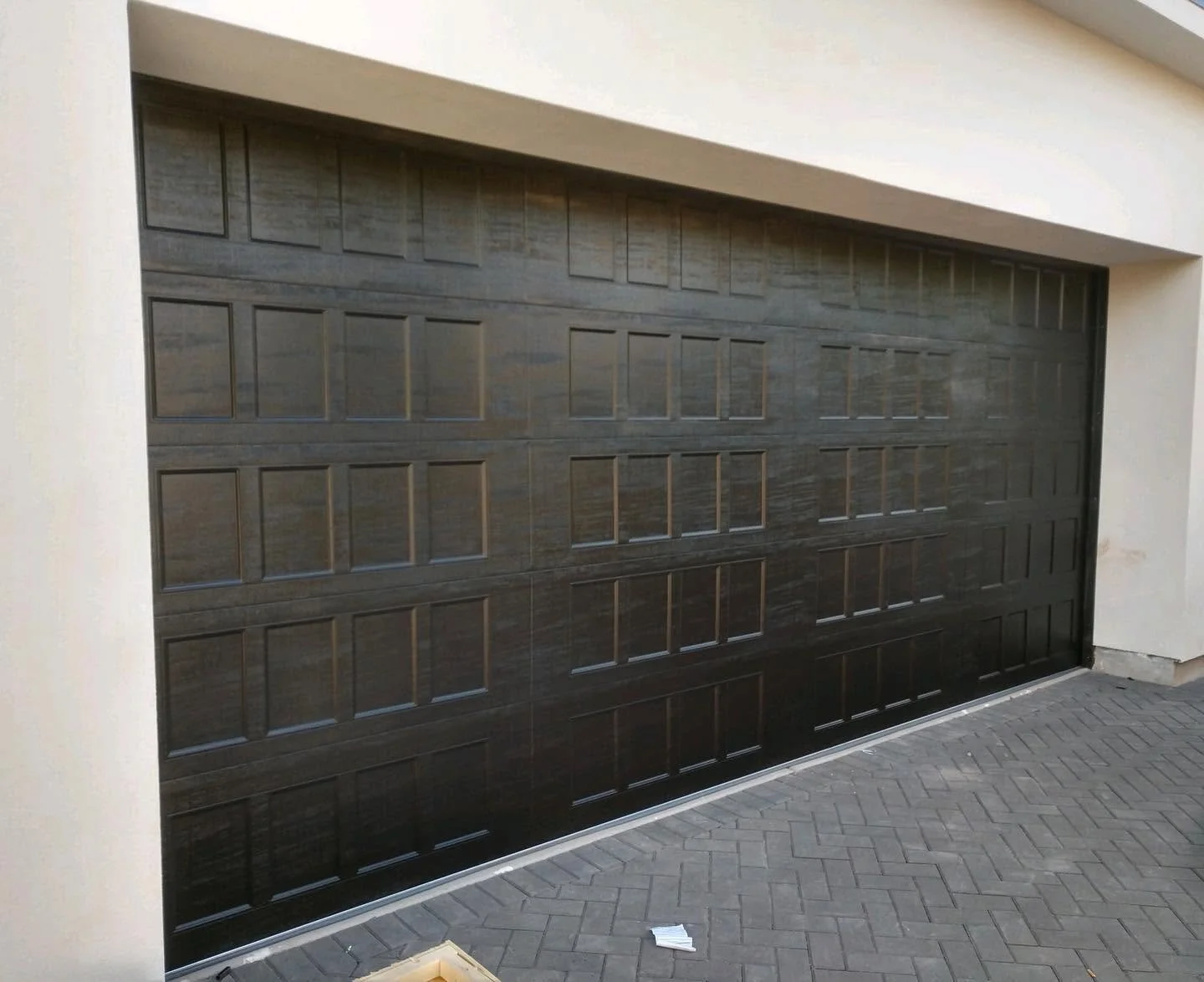
New garage door openers for every Tempe garage, including one-piece tilt-up doors that need the right arm, bracket and settings to run safely. Free phone quote; a measure-and-quote visit is $35.
Opener instructions assume a sectional door first. If yours is one rigid panel on pivot arms, the arm, the travel and the force all behave differently, and the first question is whether the head is suitable for it at all.
Why Tempe Is Different
Opener instructions, installation advice, and the sizing conversation all start from a sectional door: panels hinged together, running up a curved track.
Our Tempe page sets out why Tempe still has one-piece tilt-up doors in numbers when newer towns effectively do not. Our Tempe spring page describes the door itself, which pivots rather than folds and has its own counterbalance family.
Here is the consequence, and it is why Tempe needs its own answer. A homeowner in a town built after 2000 can read the standard opener answer and it will be their answer. A homeowner in Tempe cannot assume that, because there is a real chance their door is the exception the standard answer was not written for. Nobody tells you which one you have. You have to look, and the look takes one glance: one rigid panel, or several hinged ones.
If it is several, what covers you is our valley-wide opener installation page. If it is one, we carry on from here, because the part that differs most is also the part that gets improvised most.
 Opener installation in Tempe, AZ
Opener Installation on Sectional Doors in Tempe
Most Tempe garages have a sectional door. We install the opener head, rail and trolley, mount and align the photo eyes, set travel and force to your door, and program your remotes and keypad. Ask about battery backup when we quote.
A Pivoting Door Is a Different Problem for a Motor
The door moves through an arc, and the opener pulls in a straight line. A rail is straight and a trolley runs along it in one direction. Connecting a straight pull to a rotating panel is the engineering problem of this installation, and it gets solved at the arm.
The travel is not the height of the door. On a sectional the trolley moves roughly as far as the door rises. On a tilt-up the panel rotates about its pivots, so the point the arm attaches to describes a much shorter path than the top of the door does. Travel limits set against a sectional's numbers will be wrong.
The load is not even across the cycle. A pivoting panel is heaviest to get moving and the geometry then works with you. A sectional is closer to constant. That changes what the force setting has to tolerate at the start without becoming a setting that will not reverse when it should.
The Arm Is Where It Gets Solved
Our Tempe opener page says that a tilt-up needs the right arm and bracket for that door and that the mounting is different. Here is what that actually involves, because it is the part that decides whether the installation is sound or merely finished.
The attachment point has to be where the door can take it. A one-piece door is strong across its face, but not at any arbitrary point on it. The arm applies its load in one place, repeatedly, and that place has to be a reinforced part of the panel or a bracket spreading the load into one.
The connection must allow the panel to rotate. It cannot be effectively rigid like a sectional's top-section bracket, because the panel's angle relative to the rail changes continuously throughout the cycle. That is a geometry requirement, not a matter of preference.
The bracket is often not the one in the box. Opener kits ship for the common case. On a tilt-up, the arm, the bracket, or both are frequently separate parts, and establishing that in the quote is the difference between one visit and two.
And the side hardware is already crowded. Our Tempe spring page outlines what lives along the sides of one of these doors. An opener arm has to coexist with it.
The Two Doors, Side by Side
| Sectional door | One-piece tilt-up | |
|---|---|---|
| How it moves | Panels hinge and run up a curved track | A single rigid panel swings out and up on arms at its sides |
| What the arm connects to | A bracket on the top section, effectively rigid | A reinforced point on the panel, through a connection that lets it rotate |
| Trolley travel against door rise | Roughly comparable | Much shorter, because the arm's point moves on a small arc |
| Force through the cycle | Closer to constant | Heaviest at the start, then easier |
| Where the counterbalance is | A torsion bar above the opening, or extension springs above the tracks | Its own family, at the sides. Our Tempe spring page has it |
| Whether a given head suits it | Usually | The maker's answer, and one we check |
What Has to Be Sound Before a Motor Goes On
The panel itself. A one-piece door is a single structural element and the opener loads it at one point. Our Tempe spring page states the position on a cracked or delaminating panel, and the same holds here, more so, because adding a motor adds cycles.
The balance. The door has to balance first, which our Tempe opener page covers.
The pivot hardware. Arms, brackets, and pins carry the door through its arc. Wear there shows as a door that does not come down square, and a motor will not improve it.
The structure overhead. A rail has to hang from solid framing overhead; where there's nothing to anchor to, carpentry comes first.
And the supply. The opener needs an outlet near the head. If there isn't one, an electrician adds it before we arrive.
What We Will Not Do, and What We Cannot Tell You
A head its maker does not call suitable for a one-piece door is not a head we fit, and what we find out about yours goes to you. We publish no list of which heads those are, because any list we printed would be out of date before you read it. We check yours.
An improvised arm on a pivoting panel is a load path nobody designed, so it is not how we do this.
And three things we cannot settle from here. Whether your panel will take an opener, because that depends on the door, its condition, and where the arm would have to go. Whether a particular head suits it, because that is the maker's answer and not ours. Whether an existing opener can be moved onto a tilt-up, because it may be the right head on the wrong geometry.
A photograph alone will not answer those either. What answers them is coming and looking. If a technician comes out to measure and there is no work to do, the visit is $35, and the phone conversation beforehand costs nothing.
Scope on This Job
Ours: the opener head, its rail and trolley, the arm and the bracket that connects it to the door, the safety circuit with its sensors and low-voltage wiring, the travel and force settings, the programming of the controls the unit supports, battery backup where the unit we fit has it, and the door hardware the opener depends on.
Outside our scope: a new outlet or circuit, which is an electrician's job before ours. Locks, handles and rekeying, which is a locksmith's job. Jambs, framing, drywall, stucco, and any carpentry needed to give a bracket something to anchor to, where the door and the opener are ours and the surrounding building is not. Mobile and manufactured homes. The motor on an opener with no photo eyes. Home warranty dispatch, which is on hold at present.
There is no minimum job.
Tempe Opener Installation FAQ
The door is being replaced with a sectional. Does the opener carry over?
Possibly. It depends on whether the existing head is rated for the new door and has working photo eyes. We check both when we quote.
Will the opener make the door swing farther out into the driveway?
No. The arc belongs to the door. What changes is that the door will now travel it on its own, which is worth a thought if you park close, and our Tempe spring page describes how one of these doors moves.
What gets set up before you leave?
We set travel and force to your door, test the safety reverse and photo eyes, program the remotes and keypad the unit supports, and show you how the release works.
What Customers Say
"My garage door operates smoothly, quietly and correctly. It was not doing this before he completed the job."
Where We Work
Garage door repair and service across the Phoenix metro:
- Mesa,
- Gilbert,
- Chandler,
- Tempe,
- Scottsdale,
- Phoenix,
- Queen Creek,
- Apache Junction,
- Glendale,
- Peoria,
- Ahwatukee,
- Fountain Hills and
- Paradise Valley.
One rigid panel, or several hinged ones?
That one glance decides which of two quite different installations we are talking about, and the phone quote is free either way.