Garage Door Opener Repair in Tempe, AZ
Chain, belt and screw drive openers on any brand, including older Tempe garages that were never built for one. We check the door first, so you pay for the real fault. The $85 service call includes a 22-point inspection.
Office hours are Monday to Friday, 7:00 a.m. to 3:00 p.m. A person answers after hours, and after-hours and weekend work carries a $250 call fee.
- ROC #310144
- Licensed, Bonded & Insured
- Women-Owned Family Business
- 90-Day Labor Warranty
- Google Rated
A motor that hums while nothing moves. A door that reverses halfway down for no visible reason. A wall button that works when the remote will not. All ordinary calls and we take them on any brand.
The part that is different here is what happens when the answer is a new opener, because a garage built in 1974 was not built with one in mind.
Four Things a New Head Needs That an Old Garage Often Does Not Have
Our Tempe page has the census: four in ten homes here predate 1980. Those garages were generally built before anybody assumed an opener, and the following turn up on them regularly.
A grounded outlet in the ceiling, near where the motor goes. Plenty of older garages have one outlet by the side door and an extension cord run over a rafter to whatever is hanging up there. A new opener needs its own outlet in the right place. That is an electrician's job, and it is outside what we do, which is exactly why we would rather you heard about it at the quote than on installation day. We will tell you where the outlet needs to be so you can have it done before we come.
Something solid to hang from. A ceiling-mounted opener carries its own weight and then takes a shove every time the door starts and stops. It needs to be fixed to structure. Where the ceiling is open rafters, or a low flat ceiling with nothing to reach, blocking has to go in first. That is carpentry, and it is also outside our scope, though we can tell you what the mounting needs before anyone climbs a ladder.
A door that already balances. This one is ours. A head installed on a door that drags, sits crooked, or is over-sprung spends its life doing work it was not built for. On older stock, we check the counterbalance before we talk about the head at all, and on a fair number of calls that turns out to be the whole answer.
A clear line across the floor for the photo eyes. The sensors mount low on both sides of the opening, and they need to see each other across an empty floor line. Old garages accumulate: shelving pushed against a jamb, a workbench, a softener, a stack of tiles that has been there since a bathroom job. Any of it in the beam and the door will refuse to close and blame you for it.
And the rail has to fit. Standard rails need a certain run back from the opening and a certain clearance above it.
 Opener repair in Tempe, AZ
What We Find on Heads That Have Been up There a Long Time
Sensors that are gone, bypassed, or taped somewhere convenient. Sometimes original, sometimes removed by somebody who got tired of a door that would not close. Either way, the answer is the same.
Force settings wound up at the stops. The classic old-garage compromise: the door got heavy, so somebody turned the force up until it went again. The opener is now overriding its safety, and the underlying problem is still the door.
Rails that have been extended or made up. A longer garage, a moved opening, a head relocated once. Joins in a rail are a source of noise, chain slap, and a trolley that binds at one point in its travel.
Wall control wiring that has gone brittle. Two-conductor bell wire stapled along a joist fifty years ago will crack at a staple long before the button fails. Quick to trace once somebody looks, and easy to blame on the wrong part.
Chain, Belt or Screw, and Why It Changes the Repair
Three rail-driven types cover most of what is hanging in Tempe garages, and a city with heads from four decades has all three. Wall-mounted jackshaft units are a fourth arrangement, and they behave differently again. What you have narrows the diagnosis before anybody touches it.
Chain drive. A bicycle-style chain running along the rail to pull a trolley. The oldest and the loudest of the three. Chain slap, a sprocket with wear on it, and a chain that has stretched enough to need taking up are all ordinary and all fixable. A chain drive that has been ignored for twenty years usually still runs, which is a major reason there are still so many of them.
Belt drive. A reinforced rubber belt in place of the chain. Quieter, which is the whole reason people buy them, and the reason to have one where a bedroom sits over the garage. Belts wear at the ends where they clamp to the trolley more often than they fail in the middle.
Screw drive. A threaded steel rod down the middle of the rail, with the trolley riding on it. Common on units from the eighties and nineties, and a good share of what is still hanging on this housing stock. They need the right grease on the thread, and they get unhappy without it. A screw drive that grinds, slows in one part of its travel, or runs hot is usually a lubrication and wear issue rather than a motor issue, and the diagnosis is different from anything on a chain.
Why we ask before we drive out. The part that fails is different on each of the three, the noise means something different on each of the three, and on the older screw and chain units the availability question arrives sooner. Telling us which one you have, or sending a photograph of the rail, moves the conversation a long way.
Tempe Opener FAQ
My opener has no sensors at all. Will you service it?
We will service the door completely, and we will not work on the motor. Our Tempe page explains that in full. We will also provide you with a quote for a replacement head, so the choice is in front of you.
The door reverses just before it touches the floor.
Start with the floor itself and both lenses. On an older garage, the beam is far more often interrupted by something on the ground than broken by something electrical.
Can I put a new opener on a one-piece tilt-up door?
Usually yes, with the right arm and bracket for that door, and with the door balanced first. Tell us it is a tilt-up when you call, because the mounting is different and so is the arm.
Do I need an electrician before you come?
Only if there is no grounded outlet in the ceiling near where the motor mounts. An extension cord over a rafter does not count. Tell us what is in the ceiling now, and we can usually settle it on the phone.
Is it worth repairing a twenty-year-old opener?
If the part is available and the door is sound, often yes. Availability is what decides it, and on a screw or chain drive of that age it is worth asking about before anything else.
Can you move the opener to the other end of the garage?
The head and the rail, yes, where there is structure to mount to at the new position. The power supply to that position is an electrician's, and it is worth settling that before anything comes down.
How We Work Through It
What we ask on the phone. The drive type if you can see it, whether the door is sectional or a single tilt-up slab, and what is holding the opener up.
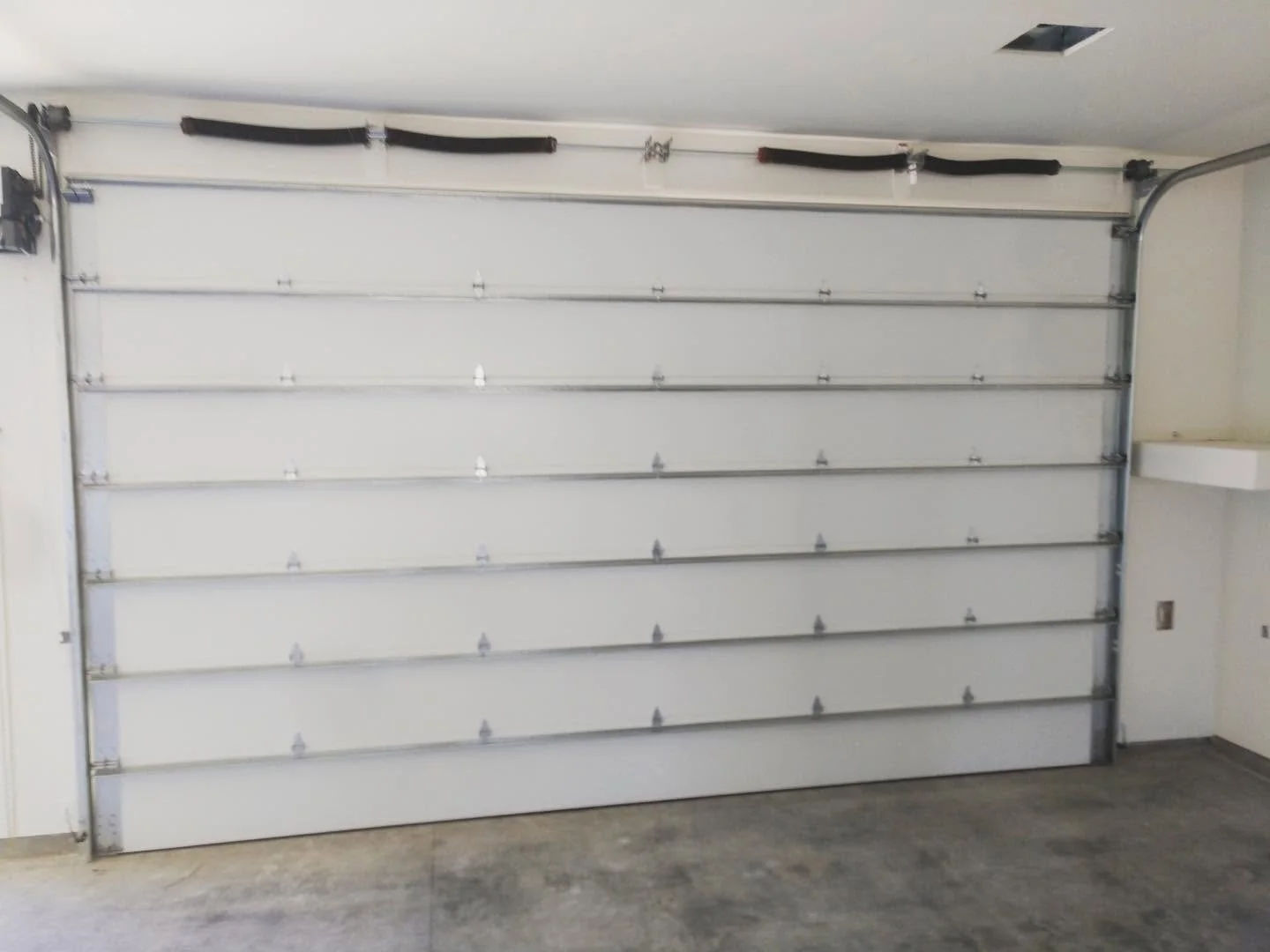
On arrival, the door. Release the trolley and lift by hand. What the door does without the opener attached settles a surprising number of these calls, and it takes about a minute. A door that fights you, sits crooked, or climbs on its own has already told us where to look, and no amount of work on the head will change what it is doing.
Sensors, then limits and force, then the unit itself. Two of those three can be ruled out in minutes, and they account for a good share of what people assume is a dead motor.
Then the number. What failed, what putting it right takes, and whether doing it is sensible on a unit of that age. We carry the common parts. Anything that has to be ordered comes with the supplier's lead time attached before you agree to it. If a new head is the better answer, we are a LiftMaster dealer and will quote one alongside the repair.
On the way out, the safety reverse is tested, and the door is run under power and by hand wherever the repair allows both.
And you get told what we left alone. On a garage of this age, there is usually something we noticed and did not touch: a rail joint, a bracket, a run of brittle wire. It goes to you in writing. What happens next is your decision.
Scope
Ours: the opener and everything it is made of, the rail, the trolley, the sensors and the programming, plus the counterbalance and track that decide how hard it has to work.
Outside our scope: the outlet or circuit a new opener needs, which is an electrician's job before ours. Framing, blocking, jambs, drywall and stucco. Locks, handles and rekeying. Garage screens and window retrofits. Mobile and manufactured homes. Home warranty dispatch is on hold at present.
There is no minimum job.
What Customers Say
"Service provider, knowledgeable,efficient, and very reasonable in their charges. I am a contractor and have been using these guys for over 10 years."
Where We Work
Garage door repair and service across the Phoenix metro:
- Mesa,
- Gilbert,
- Chandler,
- Tempe,
- Scottsdale,
- Phoenix,
- Queen Creek,
- Apache Junction,
- Glendale,
- Peoria,
- Ahwatukee,
- Fountain Hills and
- Paradise Valley.
Tell us what is in the ceiling now.
An outlet, a rafter, a rail, or a cord running somewhere it should not. On an older Tempe garage, that is usually the difference between one visit and two.