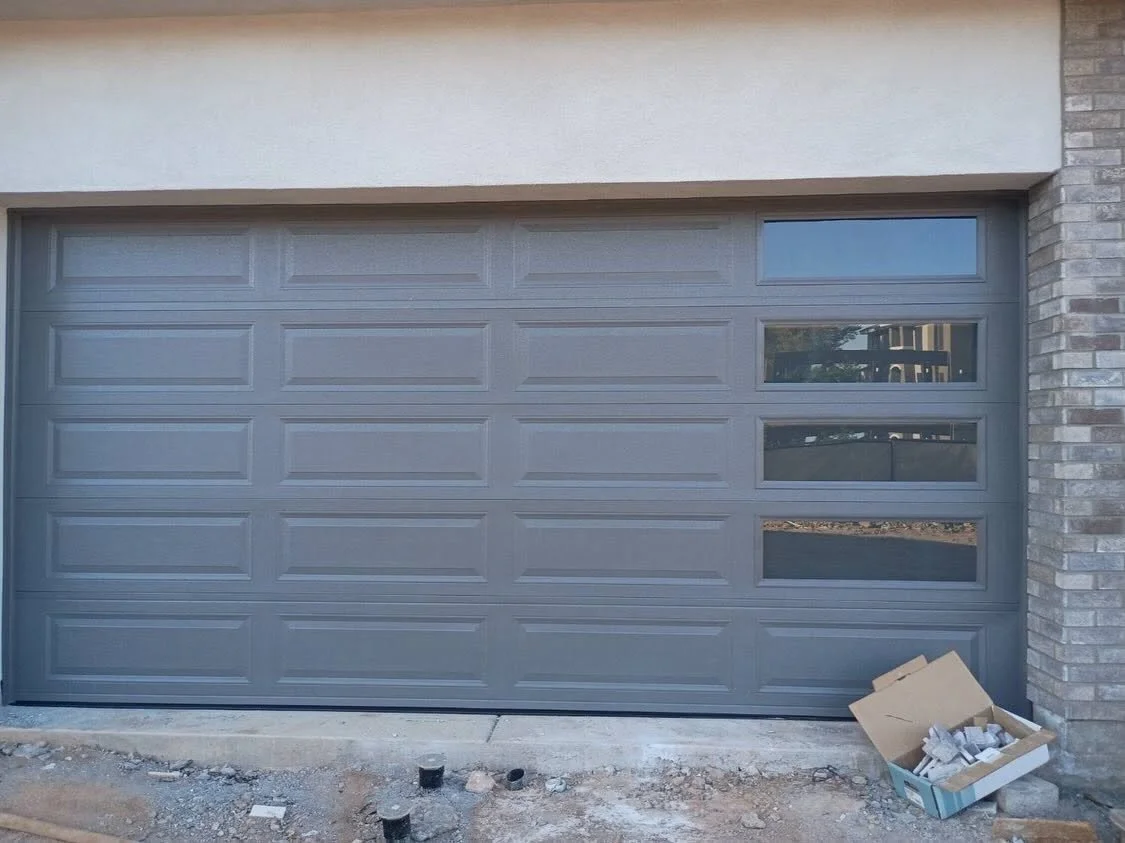

New Garage Doors in Tempe, AZ
Replacing the door on an older Tempe home? Many older garages aren't a standard size, so we measure your opening first and order a door built to fit, with removal of the old door included.
- ROC #310144
- Licensed, Bonded & Insured
- Women-Owned Family Business
- 90-Day Labor Warranty
- Google Rated
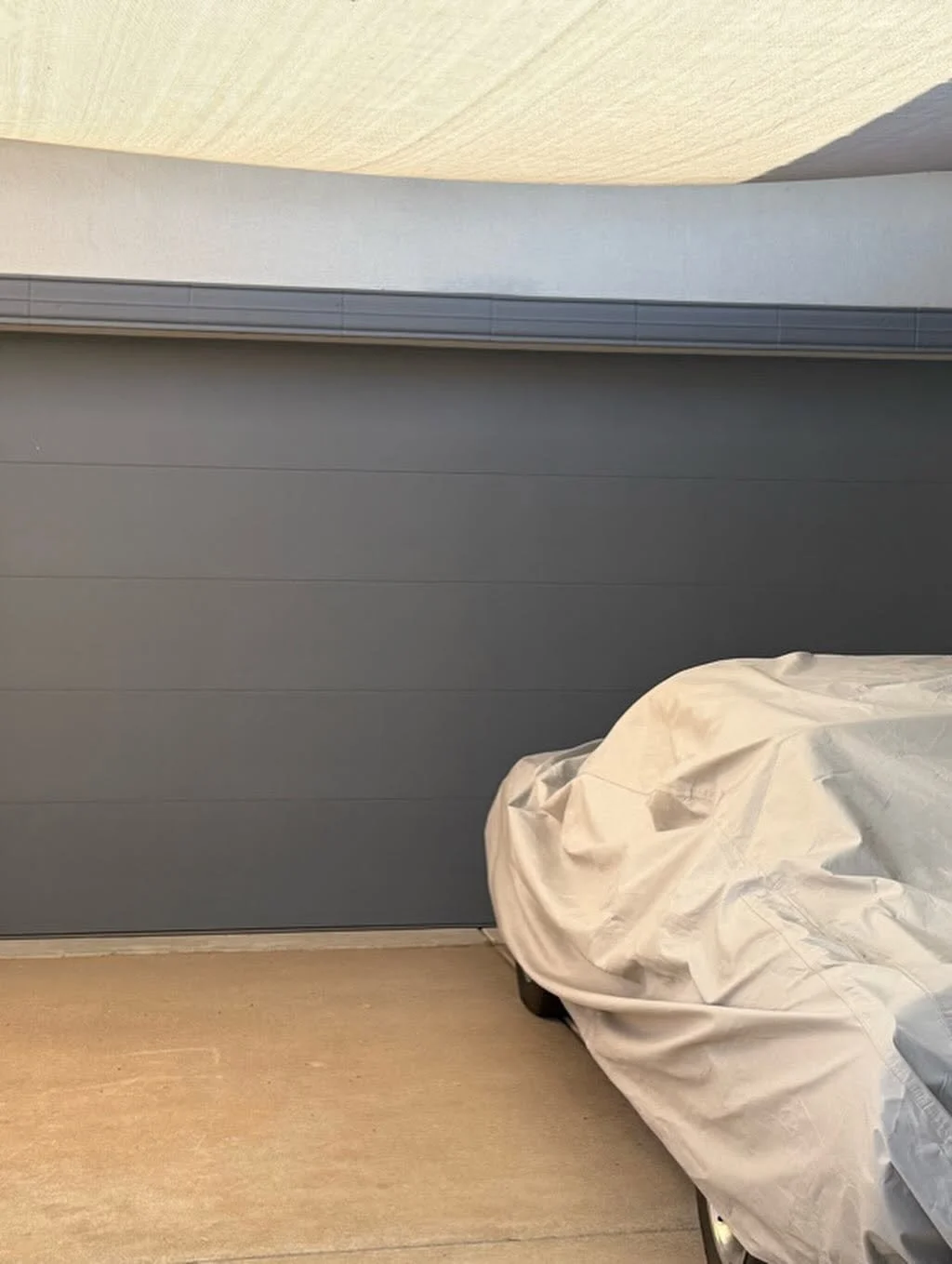
If you are replacing a door on an older Tempe house, there is one thing worth finding out before anything else: whether your opening is a size anybody still builds doors for.
On a good many of them, the answer is no, and it changes the whole shape of the job.
Older Openings Predate the Sizes Doors Are Made In
According to Census figures, four in ten Tempe homes predate 1980, and the median house here was built in 1984. Our Tempe page covers what that means for repairs. On a replacement, it means something narrower.
Common sizes exist, and older garages were not always framed to them. Today, a great deal of what is made and stocked comes in a handful of widths and a couple of heights. A garage framed in 1972 was framed to suit the car, the plan, and the lumber, and more than fifty years of slab movement have taken care of whatever squareness it started with.
So the openings we measure on these older houses come in sizes nobody stocks. Singles narrower than the current common width. Doubles short of the usual width. Heights under the usual height. Openings that are no longer square from one side to the other.
That is why the tape comes out before the catalog does. We measure the opening, both diagonals included, before we talk about doors at all. A quote from the driveway on an older Tempe garage is for a door that may never have existed.
And the answer is often better than people expect. A non-standard opening means a made-to-order door, and made-to-order is a long way from impossible. What it will never be is a door you decide on today and have on Friday, and knowing that at the start saves a lot of trouble.
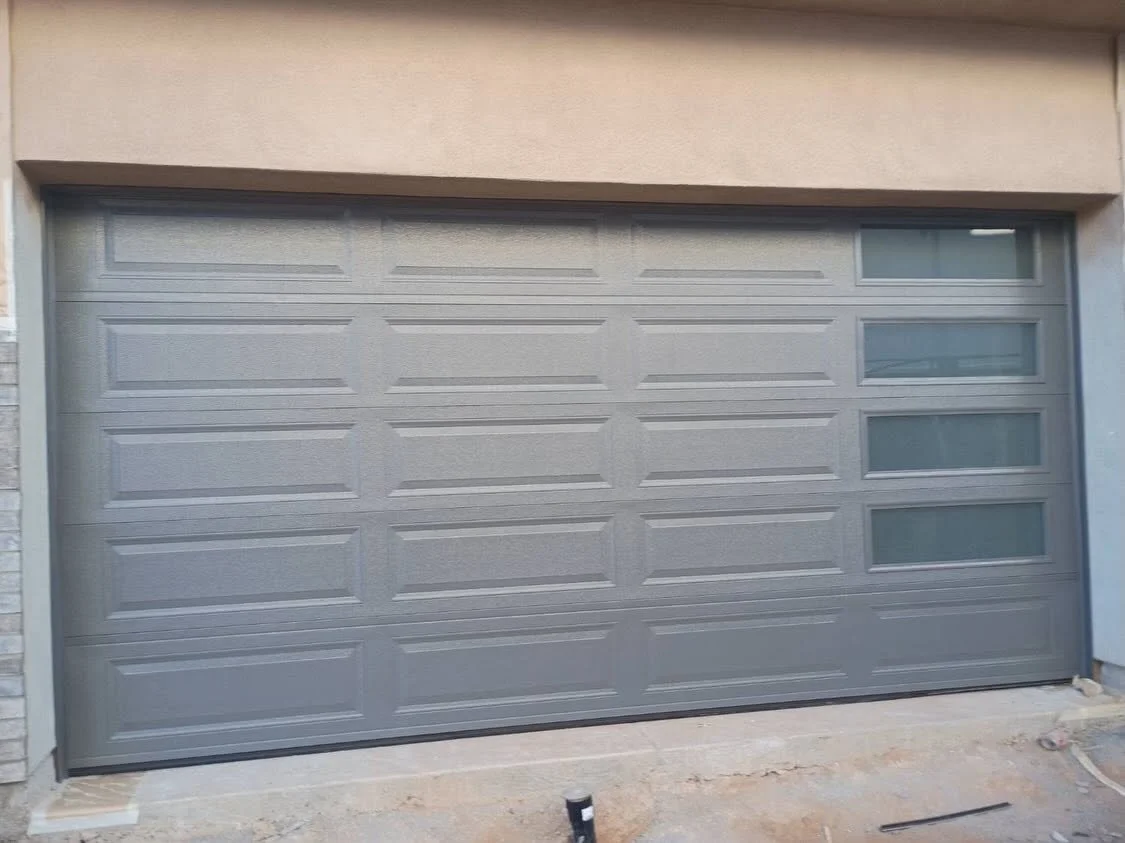
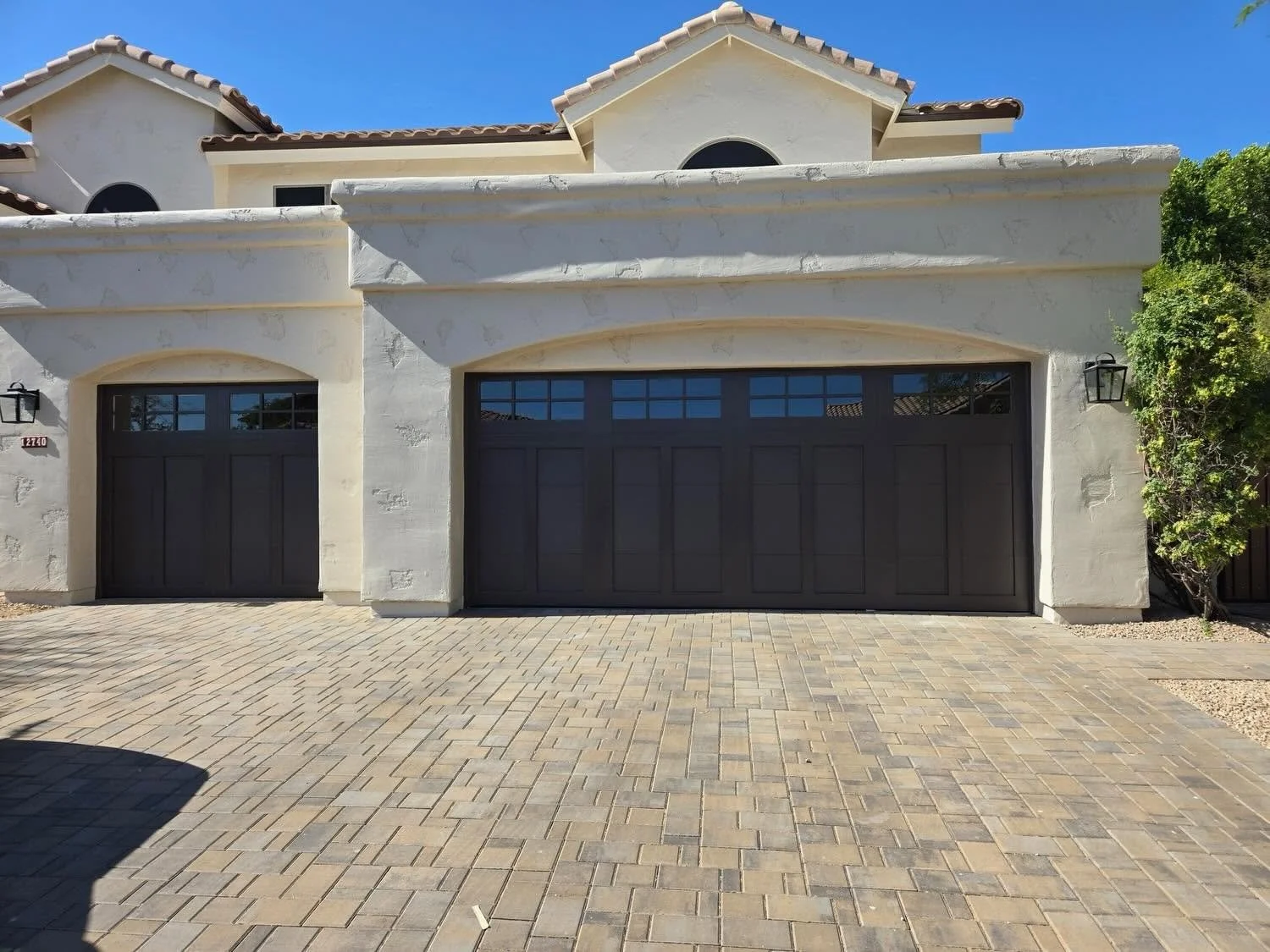 New door installation in Tempe, AZ
What a Non-Standard Opening Actually Changes
Lead time, first. Standard sizes and colors move through the supply chain quickly. Anything built to a size is built when it reaches the front of a queue, and that queue belongs to the supplier. You get the lead time we have been given before you commit to anything.
The choices narrow. Not every manufacturer builds every model to a custom size, and some do it only in certain constructions or finishes. In practice, that means the design conversation and the size conversation happen together, which is the opposite of how most people expect to choose a door.
Ordering wrong stops being recoverable. A stock door that turns out to be the wrong choice goes back. A door built to your opening does not, and nobody can put it back on a shelf. That is the whole reason we measure the finished opening and order from the measurement.
And there is another option people do not know they have. Where the opening is only slightly off a common size, reframing it to that size is sometimes the sensible route. That is a carpenter's job and outside what we do, though it is worth putting on the table alongside the made-to-order door, because on some openings it opens the whole catalog back up.
What Has to Be Sound Before a New Door Goes On
A new door is only as good as what it is fixed to, and on a fifty-year-old garage that is not guaranteed.
The jambs, particularly at the bottom. Wood jambs at the slab are where water sits, where a hose gets left running, and where termites arrive. A track fixed to a jamb that is soft at the base will loosen, and it will loosen at the point carrying the most load. We check it, and we will tell you what we find.
The header above the opening. It carries the counterbalance on a torsion system, so it has to be solid enough to mount to. Our Tempe page covers the headroom question, which is separate; this is about what the header is made of and what condition it is in.
The floor line. A slab that has lifted, cracked, or worn away at the opening decides whether a bottom seal will ever close properly. It also changes where the safety sensors sit. In an older garage, this comes up often and is nearly always solvable, sometimes with a threshold and sometimes with concrete.
What You Get to Choose, and When
On a made-to-order door, decisions arrive in order, and taking them out of order stretches a project.
Size is first, and it is not really a choice. It is a measurement. Everything else waits on it because size determines which manufacturers and which model lines are still in the conversation.
Construction comes second. Steel, insulated steel, wood, wood-clad, full-view aluminum and glass. This is where the finished door's weight settles, and that weight determines the counterbalance and what the opener has to do. On an older garage, it also interacts with the header, so we would sooner have this conversation before the order than after.
Finish and hardware come third, and they are the part everybody wants to start with. Color, panel design, whether there are windows in the top section, and the look of the handles and hinges. All of it matters to how the house reads from the street, and none of it can be settled until the first two are.
Then the opener. A new door changes what the opener is lifting, so the head gets chosen or checked against the finished door rather than the old one. Our Tempe opener page covers what a new head asks of an older garage.
And there is one thing to decide early that nobody mentions. Whether the garage is going to be a room somebody uses. That answer affects the construction decision more than anything else about how the door looks, and it is much easier to answer at the start than to revisit once a door is in production.
Tempe New Door FAQ
How do I find out if my opening is a standard size?
Measure the width and height of the finished opening on both sides and in the middle, and tell us all six numbers. If they disagree with each other, that is information too.
Can I keep the opening and just get a better door?
Usually, yes. Non-standard means made to order, and it does not mean impossible.
We have a one-piece tilt-up and want a sectional.
That is a real change of system and our Tempe page sets out what it involves. Worth reading before you get a number from anybody.
What happens to the old door?
Removal and disposal are included in the quote, so they are agreed in writing before installation day. If you want to keep any of it, say so early, because once a section is off a door it is awkward to store and heavier than it looks.
The opening is out of square. Does that rule out a new door?
Almost never. A door hangs in a track, and the track can be shimmed, within reason. What being out of square does change is the bottom seal and how the door meets the floor, and that is worth showing you on site so you know what to expect before the order goes out.
Can we reuse the opener?
If it is sized for the new door, the door balances, and the opener has photo eyes. On this housing stock the third condition is the one that catches people, and our Tempe opener page covers it.
How long will it take on installation day?
A straightforward replacement is usually a day, and we will tell you at the measuring visit if yours is not one of those. An older opening where the jamb has to be repaired first is two visits, and we will book it that way at the start if we can see it coming.
Installation Day on an Older Garage
The old door comes off under control. Whatever counterbalance it has is released in a known sequence first, and on an older system that step takes longer and matters more.
Everything the door runs on is new. Track, rollers, hinges, brackets, cables, and the counterbalance. Fitting a new door onto forty-year-old track puts a new door on the geometry that wore out the last one.
The counterbalance is specified for the door going up, which is weighed on the floor first; for a made-to-order door, that is the only way to do it, because there is no equivalent door to copy from.
Balance, then the safety reverse. With the opener disconnected, the door should hold roughly where you leave it. If it does not, the counterbalance is wrong for it and we deal with that before anybody signs anything.
Scope
Ours: the door, its track, its counterbalance, its hardware, and the opener.
Outside our scope: framing, headers, jambs, drywall and stucco. A new outlet or circuit for an opener, which is an electrician's job before ours. Garage screens and window retrofits into an existing door. Mobile and manufactured homes. Home warranty dispatch is currently on hold.
There is no minimum job.
What Customers Say
"We had a problem with our garage door on a Saturday afternoon that prevented us from closing the door completely, as our house is brand new and we had a warranty. We contacted Quality Overheard Door. They came out Monday afternoon to fix our door. The technician was very professional. He ensured our garage door was working properly with minimal noise. I would recommend their service."
Where We Work
Garage door repair and service across the Phoenix metro:
- Mesa,
- Gilbert,
- Chandler,
- Tempe,
- Scottsdale,
- Phoenix,
- Queen Creek,
- Apache Junction,
- Glendale,
- Peoria,
- Ahwatukee,
- Fountain Hills and
- Paradise Valley.
Six numbers before you look at a single door.
Width and height of the finished opening, measured at both sides and the middle. On an older Tempe garage, those six numbers decide what the rest of the conversation can be about.
Office hours are Monday to Friday, 7:00 a.m. to 3:00 p.m. A person answers after hours, and after-hours and weekend work carries a $250 call fee.