Garage Door Spring Repair in Scottsdale, AZ
Broken spring on a wide, heavy or custom door in Scottsdale? We weigh the door and check the shaft, center bearing, drums and cables as well as the spring, so the door runs level for years.
A person answers after hours, and after-hours and weekend work carries a $250 call fee.
- ROC #310144
- Licensed, Bonded & Insured
- Women-Owned Family Business
- 90-Day Labor Warranty
- Google Rated
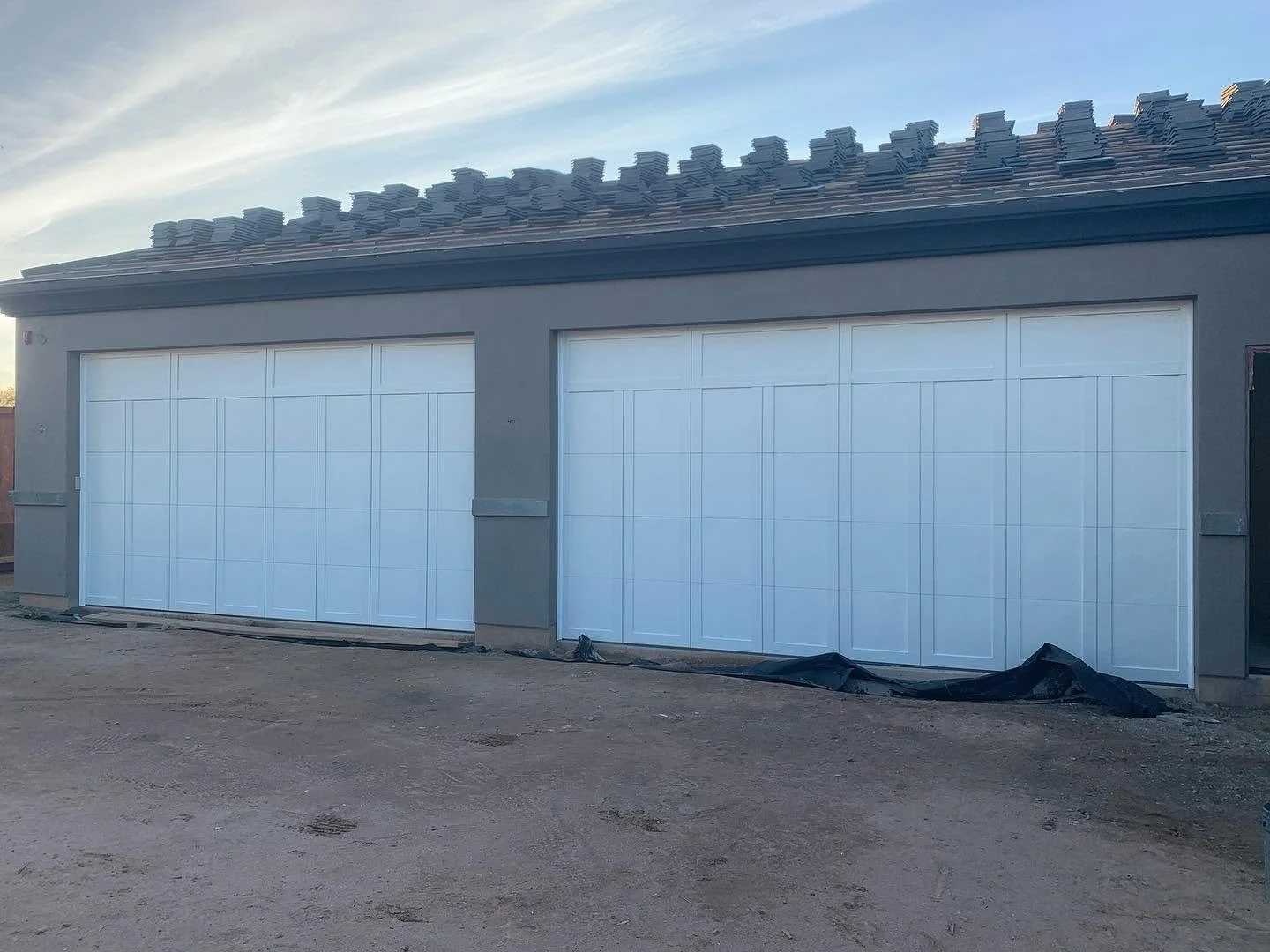
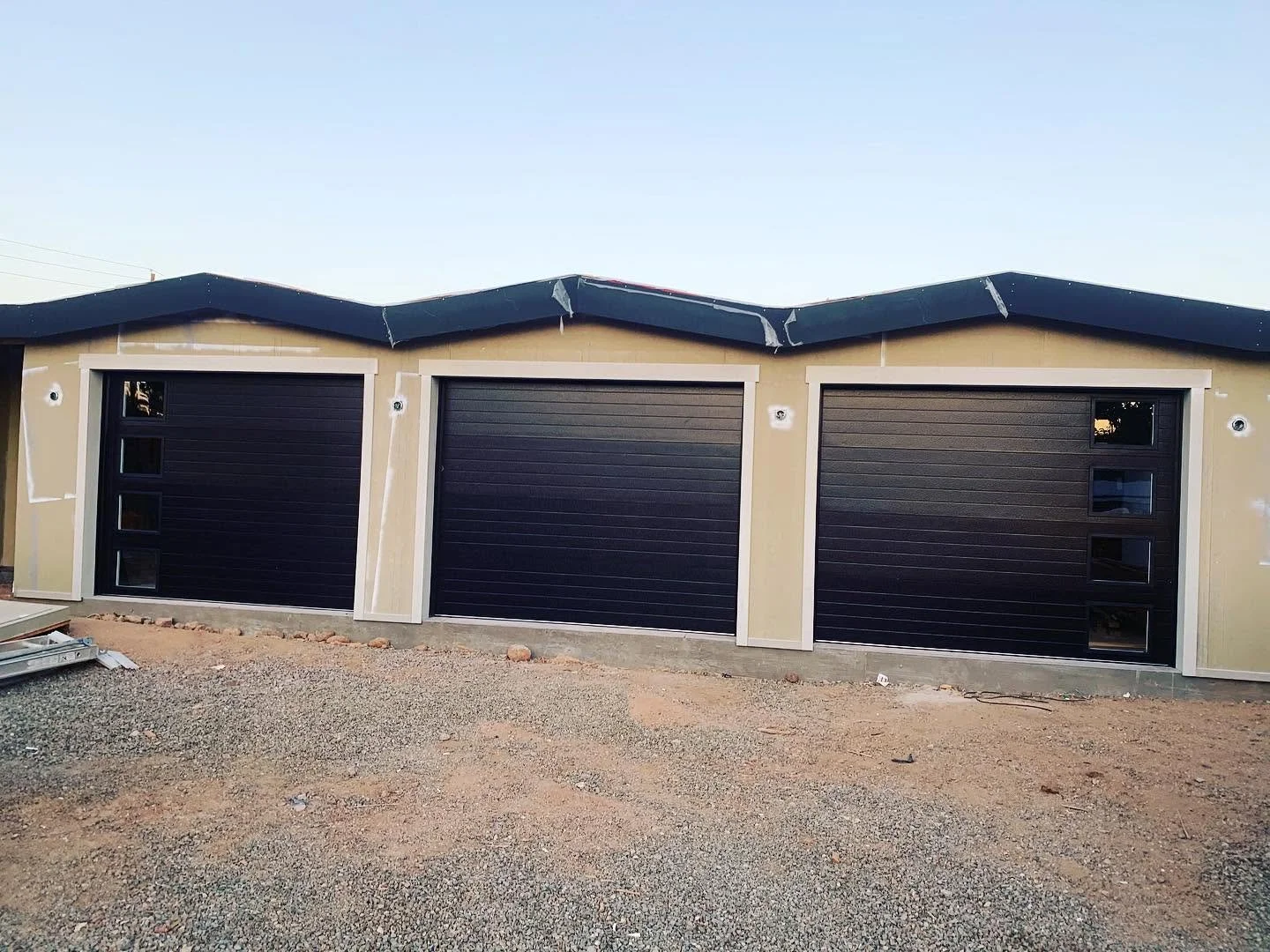
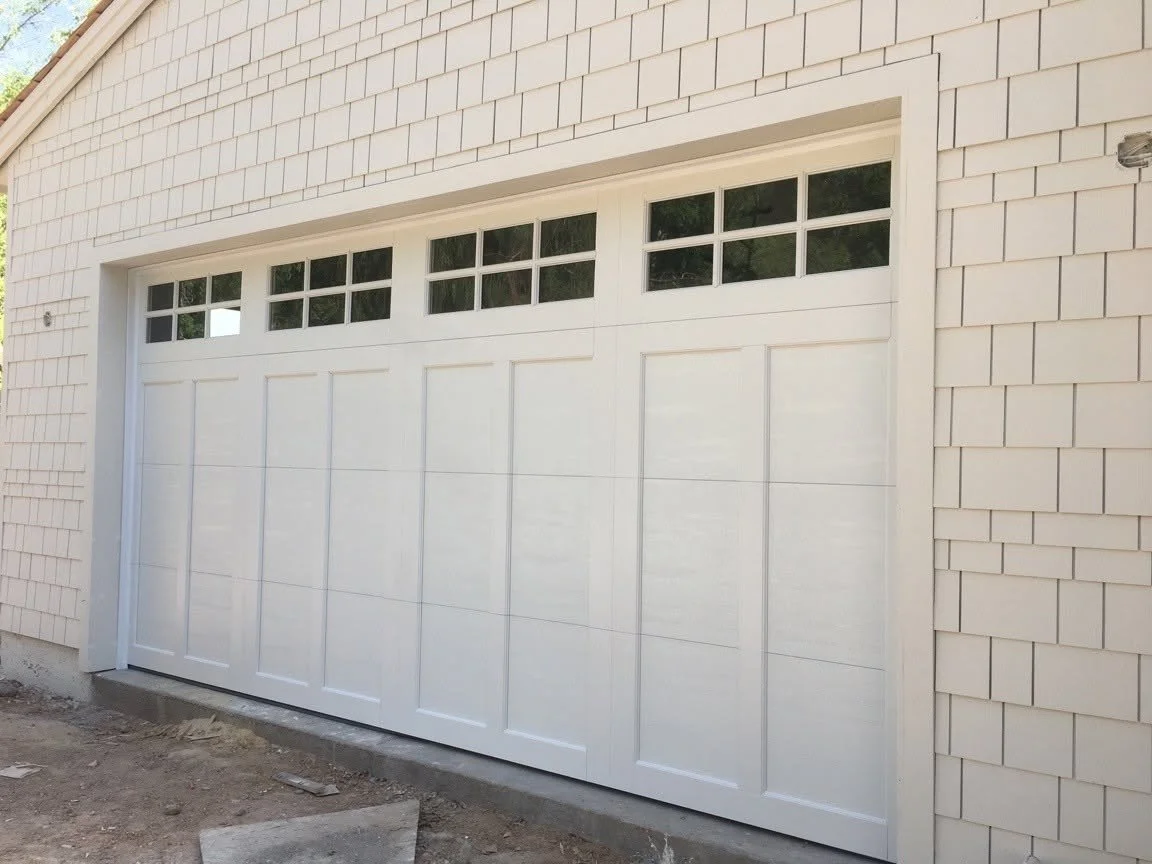
Most broken springs are the same broken spring wherever the house is. Some are not, and the difference lies in how wide the opening is.
A Wide Door Is a Different Machine, and the Spring Is the Small Part of It
Our Scottsdale page covers the custom door side, including that a heavy door needs a spring specified to its real weight. That is true, and it is not the interesting half. The interesting half is what happens to everything the spring is mounted on.
A torsion system turns a shaft that spans the opening. On a single door, the shaft is short and behaves like a solid bar. On a double, and more so on a triple, it is long, and a long steel tube under torque twists a little along its own length before the far end moves at all.
Which means a long shaft flexes under load in a way a short one does not. A shaft that sags or twists does not wind both springs evenly; the two cables stop carrying equally, and over years the door starts to sit crooked, the rollers work against the track, and the wear shows at the bottom brackets before it shows at the spring.
The shaft needs holding up in the middle. A center-bearing bracket, fixed to the header, carries the shaft between the two end-bearing plates. On a wide opening, this is structural rather than optional. Where one is missing, undersized, or fixed into something soft, the shaft sags and every bearing on the system wears unevenly for the rest of its life.
Two springs on a wide door are as much about the shaft as about the load. They sit on either side of the center bracket and load it from both directions. Replacing only one on a wide door leaves the shaft carrying an unbalanced twist, which is a slower failure than the one you called about and a larger one when it arrives.
And the drums have to match the door and each other. Drums are sized to the cable and to how far the door has to travel, and the cable has to wind in the same groove on both sides. A drum that has slipped on the shaft, even slightly, shows up as a door that racks in the opening.
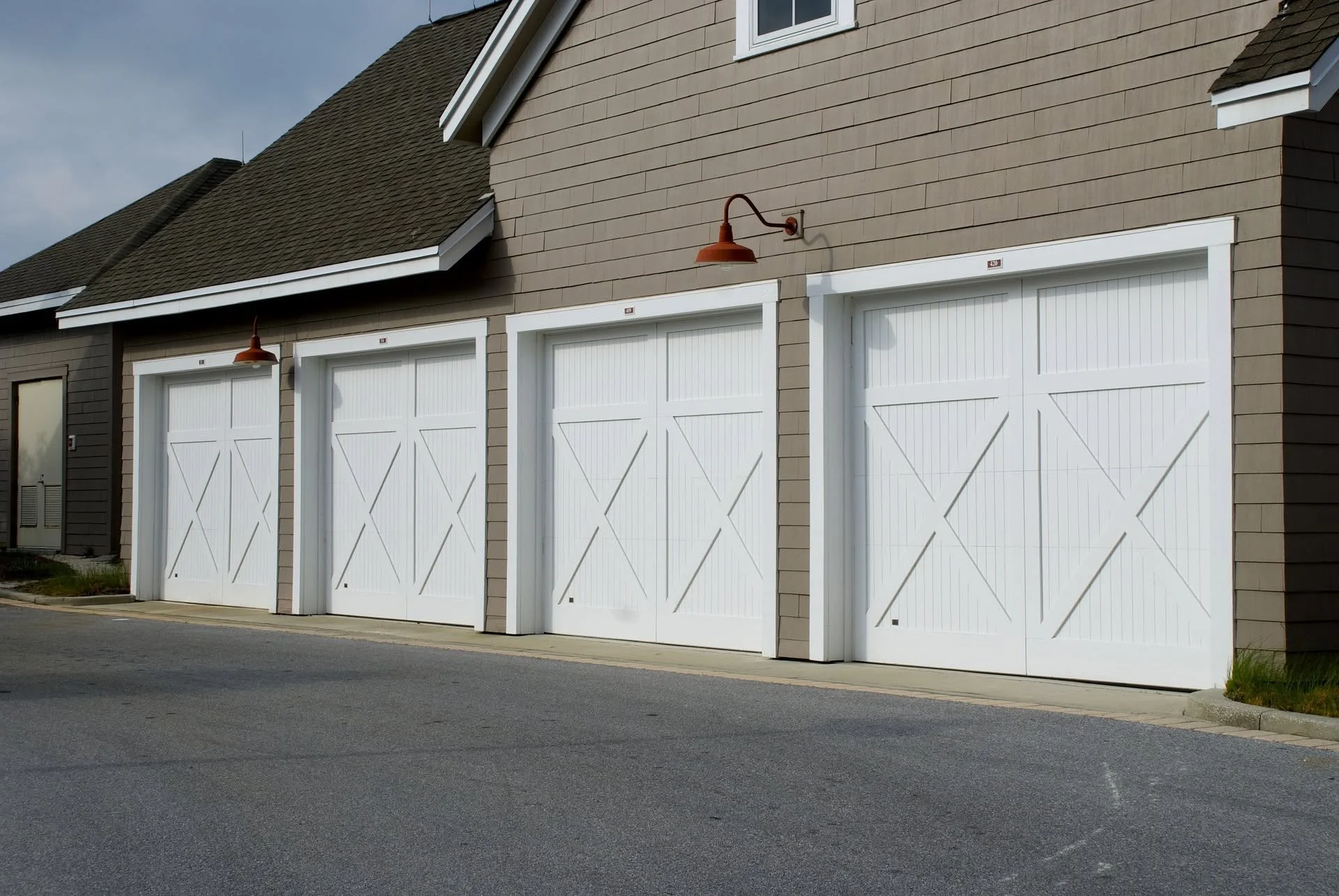 Spring repair in Scottsdale, AZ
So What We Look at on a Wide Opening
The center bearing. Whether there is one at all, what it is fixed to, and whether the shaft turns freely in it. In a wide opening, the missing center bearing is the most consequential thing we find, and it is invisible from the floor unless someone looks up with a light.
Both end-bearing plates. These carry the shaft at the ends, and they are where a long-running imbalance eventually shows. A bearing that has been running dry announces itself long before it fails, and on a wide door it is worth catching at that stage.
The drums and their set screws. Position on the shaft, wear in the groove, and whether both have the same amount of cable wound on with the door closed.
Cable length and tension, side to side. On a wide door, these have to be equal. Where a previous repair has taken up slack on one side only, the door sits slightly out, and a new spring on its own does not correct it.
And If Your Track Goes Straight up Before It Turns
Where a garage has a ceiling well above the door, and somebody has taken advantage of it, the track is not a standard configuration.
Standard track turns the door back into the garage almost immediately. The curved section starts just above the opening, and the door spends most of its life horizontal over your car.
High-lift track carries the door vertically for several feet before the curve. It is done to get the door clear of a tall opening, to leave the ceiling free, or simply because the room allows it. Vertical-lift track goes further and carries the door straight up with no horizontal section at all, which is a commercial arrangement that occasionally turns up in residential buildings.
Here is why it belongs on a spring page. The drums wind the cable, and the cable has to be long enough to reach from the bottom bracket to the drum throughout the whole travel. Raise the travel and the cable gets longer, which means the drum has to hold more of it. Standard drums do not, so a high-lift door runs stepped or high-lift drums that are a different part with a different profile.
Which means the counterbalance is not interchangeable. A spring specified for the same door on standard track is not the right spring for the same door on high lift, because the drum has changed the geometry the spring is working through. Anybody quoting a high-lift door by its size is quoting a different door.
So tell us if your track goes up before it turns. It is visible from inside with the door closed, and it takes ten seconds to check. It changes the parts, the wind count, and how long the job takes.
What the Visit Looks Like
- 1.
Weigh the door.
On the floor, disconnected, on a scale. On a wide or heavy door, the guess is further out than people expect, and the consequences of getting it wrong are larger.
- 2.
Measure what the spring has to work with.
Drum size, track radius, and the height of the opening, along with the shaft length and diameter the hardware has to suit. Those, with the weight from the step above, determine the spring, and on an oversized door there is less room to be approximately right.
- 3.
Replace in pairs, always on a wide door.
The two springs load a shared shaft from either side, so an odd pair puts a permanent twist into it.
- 4.
Set the whole system, not just the spring.
Drums positioned, cables equal, bearings checked, then the wind count.
- 5.
Balance and test.
With the opener disconnected, the door should hold roughly where you leave it and sit level in the opening at every height, which, on a wide door, is the check worth watching.
- 6.
And walk the door with you.
On a wide opening there is usually something worth pointing out that is nobody's emergency: a roller with nothing left in it, a hinge that has opened up, a strut that has worked loose across the top section. It goes to you in writing.
What We Do Not Do on This Call
We do not take on the header or the framing the counterbalance mounts to. Where a center bracket has pulled, or the header behind it has gone soft, that is a carpenter's job, and it has to happen before the door does. We will show you what we found.
We do not touch the motor on an opener with no photo eyes. We will still do the springs.
And outside our scope entirely: all electrical work, jambs, drywall and stucco, locks and rekeying, garage screens, window retrofits, and mobile or manufactured homes. Home warranty dispatch is currently on hold.
There is no minimum job.
Scottsdale Spring FAQ
Our garage door is eighteen feet wide. Is that a special job?
It is an ordinary job done properly rather than an exotic one. What changes is that more of the system has to be right at the same time, which is why the visit takes a little longer.
The door sits crooked in the opening. Is that the spring?
Sometimes. It is at least as often the cables, the drums, or a bearing, and on a wide opening it can be the shaft itself. It is worth a look regardless, because a door that runs crooked wears everything it touches.
We have extension springs on a wide door.
That happens on older stock, and it works. What we check first is the containment cable, and our Tempe spring page explains what it does and what it does not.
Is a heavier door harder on springs?
It is harder on everything, which is the point of this page. The spring is sized for it. What people miss is that the shaft, the drums, and the bearings also have to be sized for it.
How long should springs last on a big door?
The same arithmetic as any other door: cycles used against cycles rated. What is particular to a wide door is that changing it means taking the whole shaft down, so a longer-life spring's lead time is worth planning for rather than discovering.
Do you work on wood and full-view glass doors?
Yes. They weigh differently from steel, and they go on the scales like everything else.
Is a two-car door twice the job of a single?
Not twice, and not the same either. The extra work is in the middle of the shaft rather than at the ends, which is why we book more time for a wider door than the size difference suggests.
Can you tell anything from photographs before you come?
Quite a lot. What we want is one picture of the whole door from a few feet back with it closed, one of the bar above the opening showing the springs and the center bracket, and one of a bottom corner. On a wide door, those three settle most of what we would otherwise find out on arrival, and they let us bring the right parts more often than not.
What Customers Say
"Great company. Owner has integrity and stand behinds what she sells and services. As a contractor , I have no problem referring them out to my clients ."
Where We Work
Garage door repair and service across the Phoenix metro:
- Mesa,
- Gilbert,
- Chandler,
- Tempe,
- Scottsdale,
- Phoenix,
- Queen Creek,
- Apache Junction,
- Glendale,
- Peoria,
- Ahwatukee,
- Fountain Hills and
- Paradise Valley.
Tell us how wide the opening is and how many springs are on the bar.
On a double or a triple, those two numbers change what we bring and how long we book.
Office hours are Monday to Friday, 7:00 a.m. to 3:00 p.m.